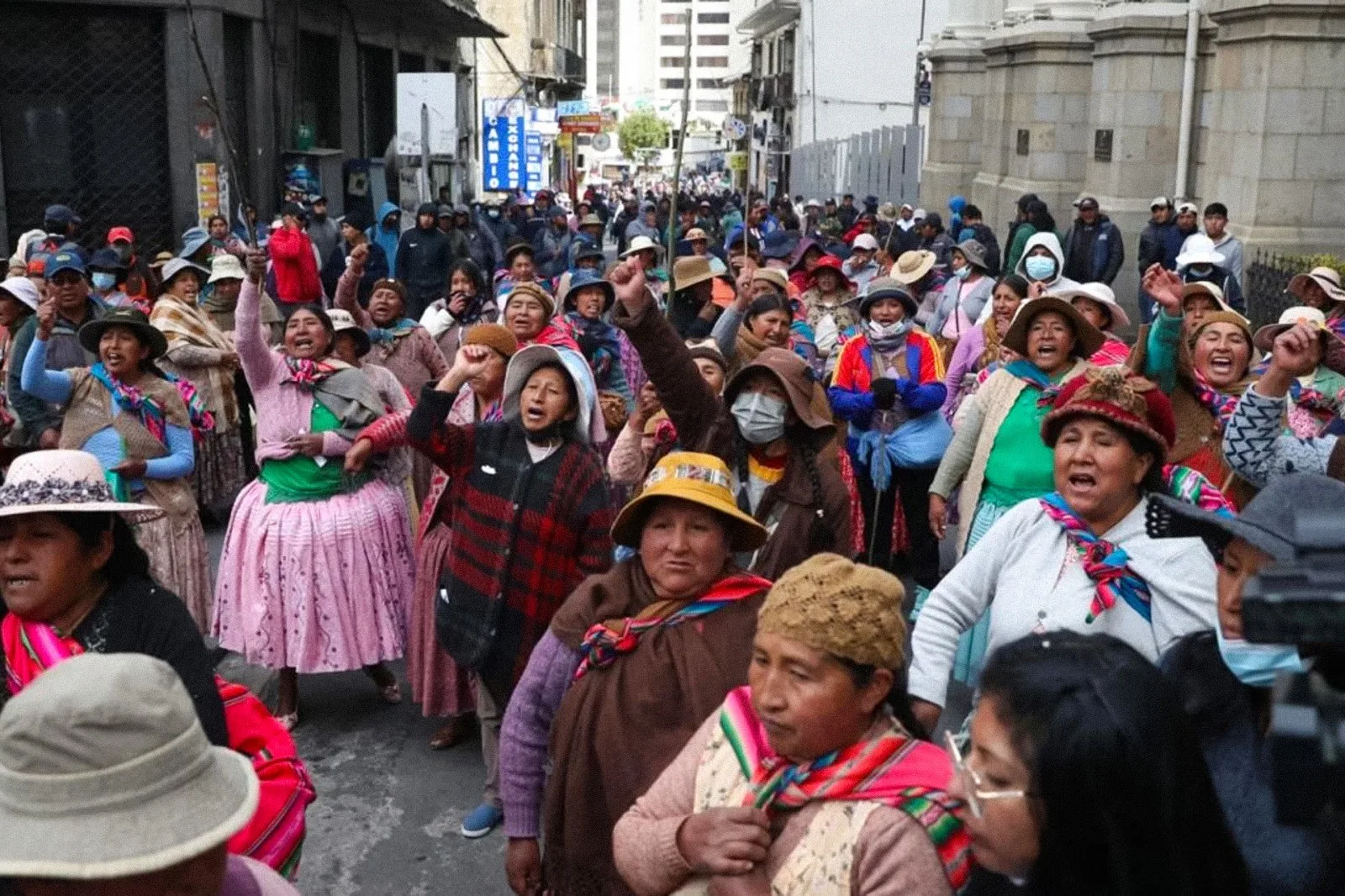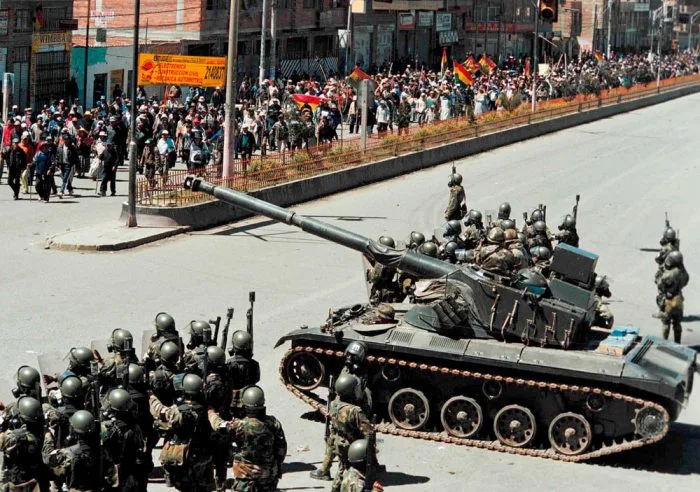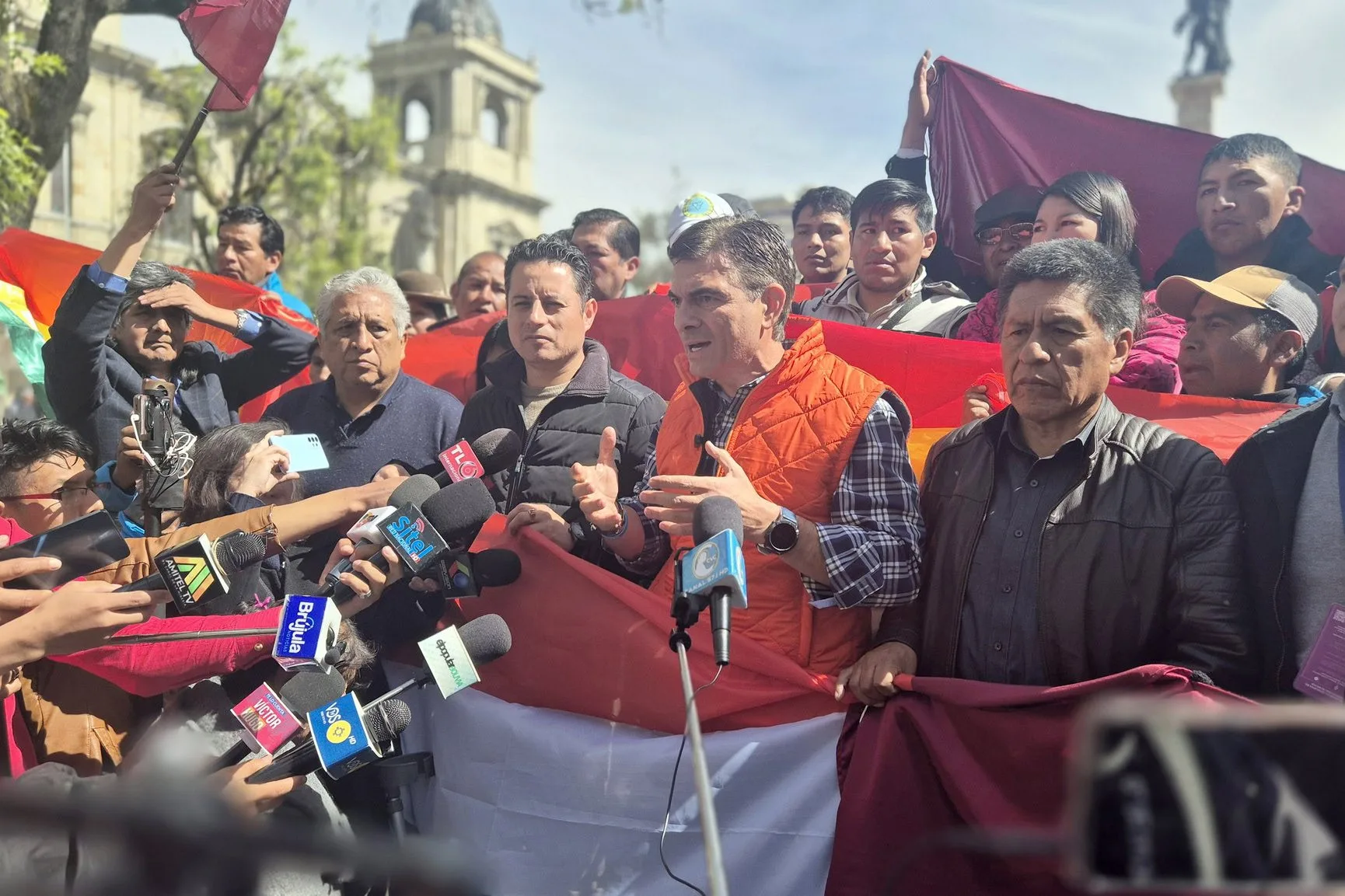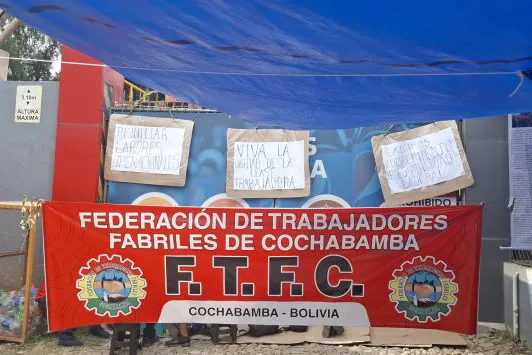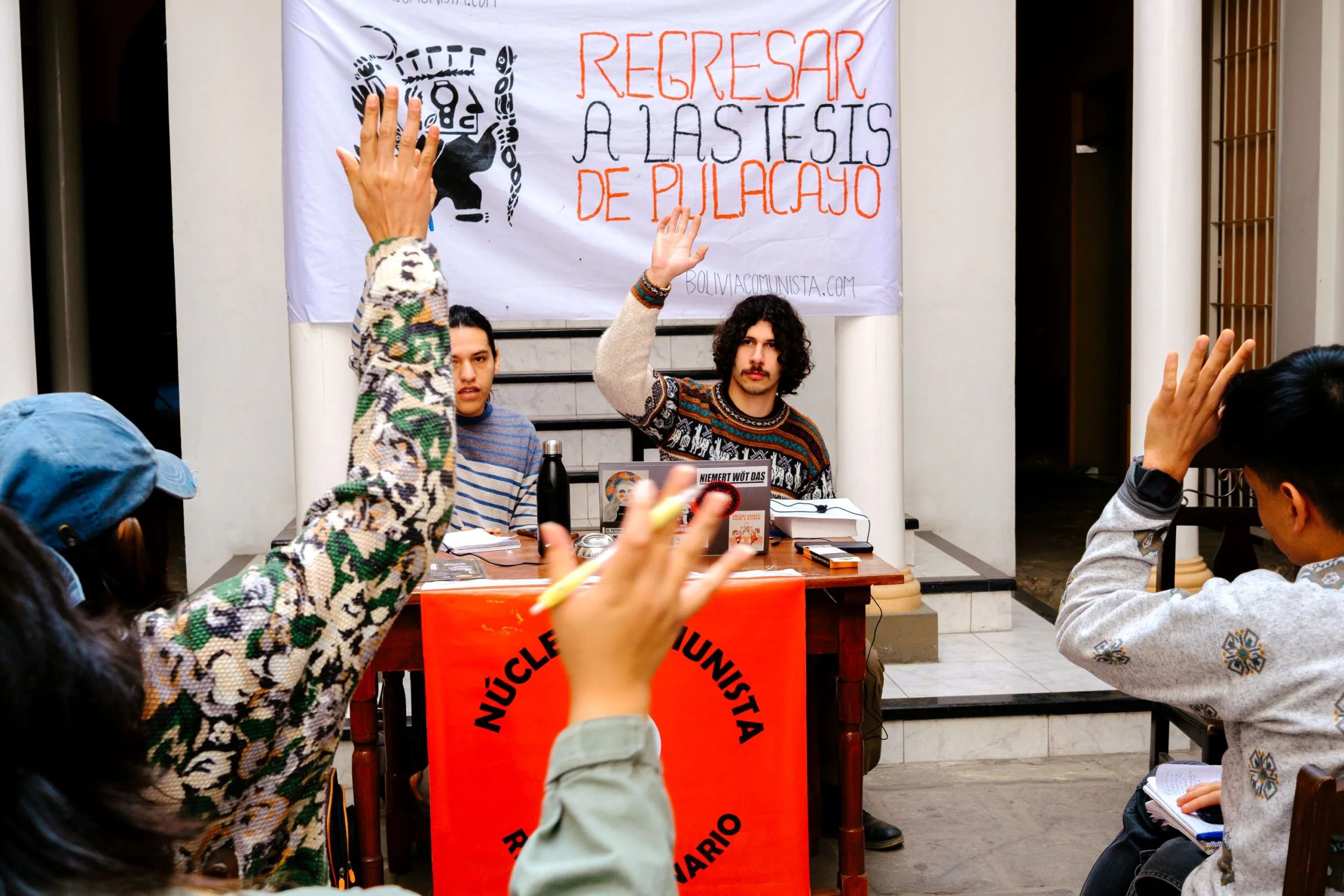
More than sixty blockades choked the country on the first day of the founding congress of the Revolutionary Communist International in Bolivia. By the second day, the state had declared martial law, and by the third, the mass movement had been thoroughly crushed and demobilised. This is the pace of events amidst which the Revolutionary Communist Nucleus of Bolivia held their first congress.
The revolution in this environment is anything but abstract. It's a real living thing. The mass movement which erupted in Bolivia this past month had the potential to overthrow capitalism, had it spread and been given centralised leadership by the main trade union federation, the COB.
The fact this movement ended in defeat only underlined the reason to build a revolutionary leadership. Because Bolivia, a country with immense poverty and backwardness that is dominated by imperialism, needs a revolutionary party more than ever.
The Bolivian group of the RCI was started by one comrade who was recruited by our Swiss section while studying there. He moved back to the country in October 2023 with a single goal: grow the party that will overthrow capitalism in Bolivia.
The group is now 14 young, energetic comrades. They've published the first issue of their paper, Bolivia Comunista, just in time for the congress.
The meeting was held in the centre of Cochabamba. Comrades from La Paz and Oruro could not attend due to the blockades, but followed the congress online.
The first day opened with a world perspectives discussion on the same day as the US-Iran peace talks in Switzerland were cancelled, as Israel continued to bomb Lebanon. We discussed the roots and repercussions of this event, as well as the encirclement of the Cuban Revolution, the US’ advance into Latin America, and the war in Ukraine.
“If there’s one thing you write down this entire talk,” I told the comrades, “it’s that the driving conflict in our world is the relative decline of US imperialism and rise of China as an imperialist power.”
Comrades were looking far beyond the borders of the country for lessons they could apply at home. Brenda, who works as a journalist, said "to have the tools to analyse these types of scenarios is what guides our concrete action at every step," adding, “Being able to use Marxism as a tool and analyse events allows us to understand what situation we are in and how we can organise at a national level."
State of exception
The next day started with a discussion on national perspectives, mere hours after the state had declared a ‘state of exception’, suspending civil liberties and giving the police and army permission to isolate and destroy the blockades which paralysed much of the country.
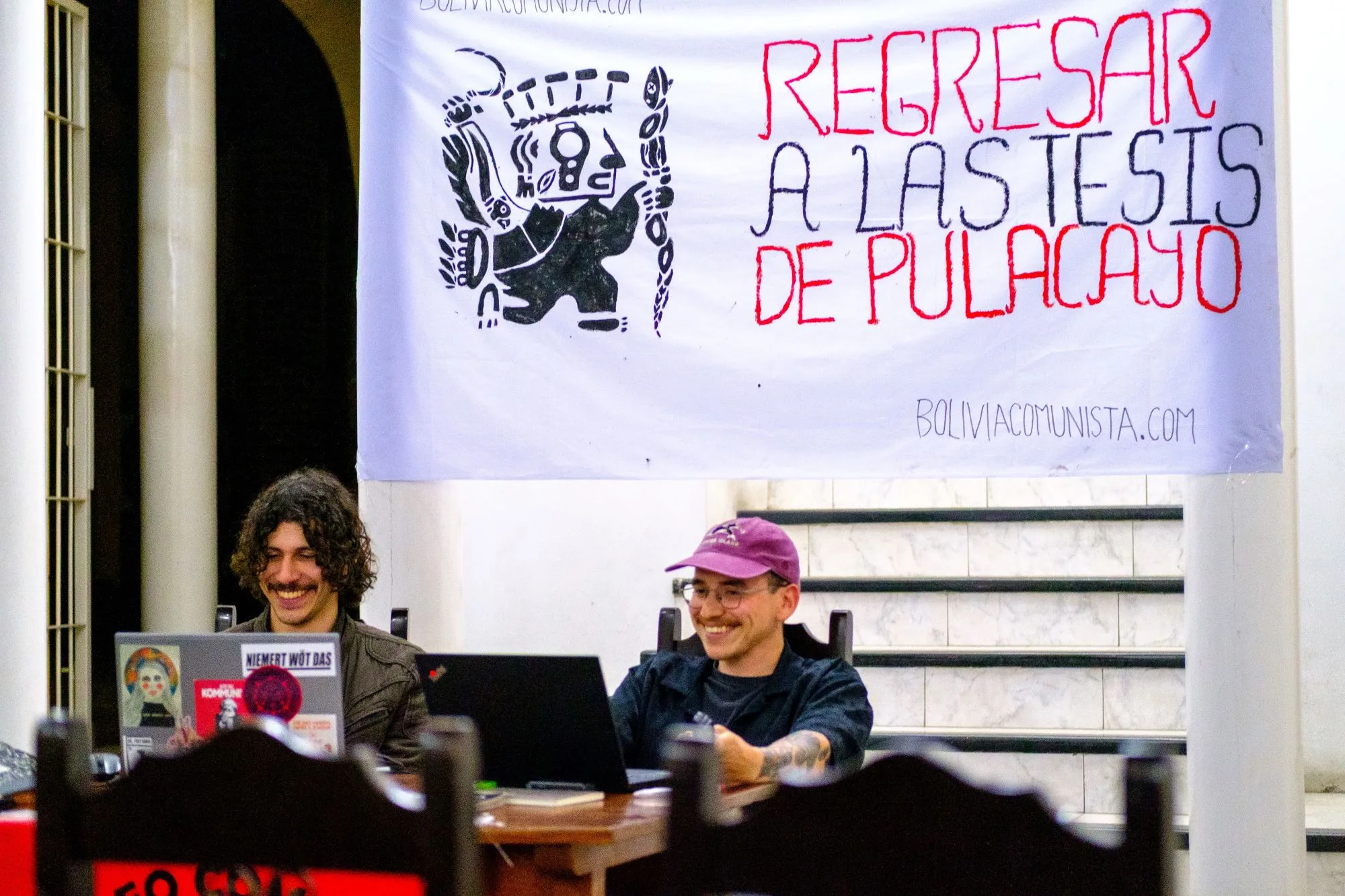
I asked Alfonso what he thought about having this discussion on the same day the movement was crushed. “We need to understand the nature of the movement and not be frustrated after its fall,” he said. “It's part of a process and not a total defeat, but we need to know the masses will draw their conclusions and it's not the end, it's going to come back stronger. That gives us more motivation to organise for the next one.”
Comrades debated why the blockades failed to spread beyond their initial strongholds, and discussed the material roots of this movement. “Bolivia, like the rest of the world, is going through capitalism’s organic crisis,” said comrade Teto in his summary, adding:
“This crisis is evident in the movements we’re seeing every day, but these don’t come out of nowhere. They stem from genuine anger and necessity. These 51 days of conflict, these 46 days of blockades, and the simple fact that you’re here right now are proof that people need change and are willing to fight for it.”
The second day began with a discussion on a document titled, Marxism: our most powerful weapon in the class struggle, which covered the history of philosophy and the development of dialectical materialism. A central point was the rejection of subjective idealism and the idea that we can’t understand the phenomena that surround us. “This is the bourgeoisie’s main philosophical justification for its system,” said Rafael Zabalaga, adding:
“Wherever you look, there’s decline, there’s ruin, there’s misery, there’s destruction, there’s war. The capitalist system is collapsing, so it's much harder for the bourgeoisie to say, ‘What a tremendous system!’ They instead succumb to philosophical subjective idealism. They say that understanding the system is impossible, and so is fighting for a better one.”
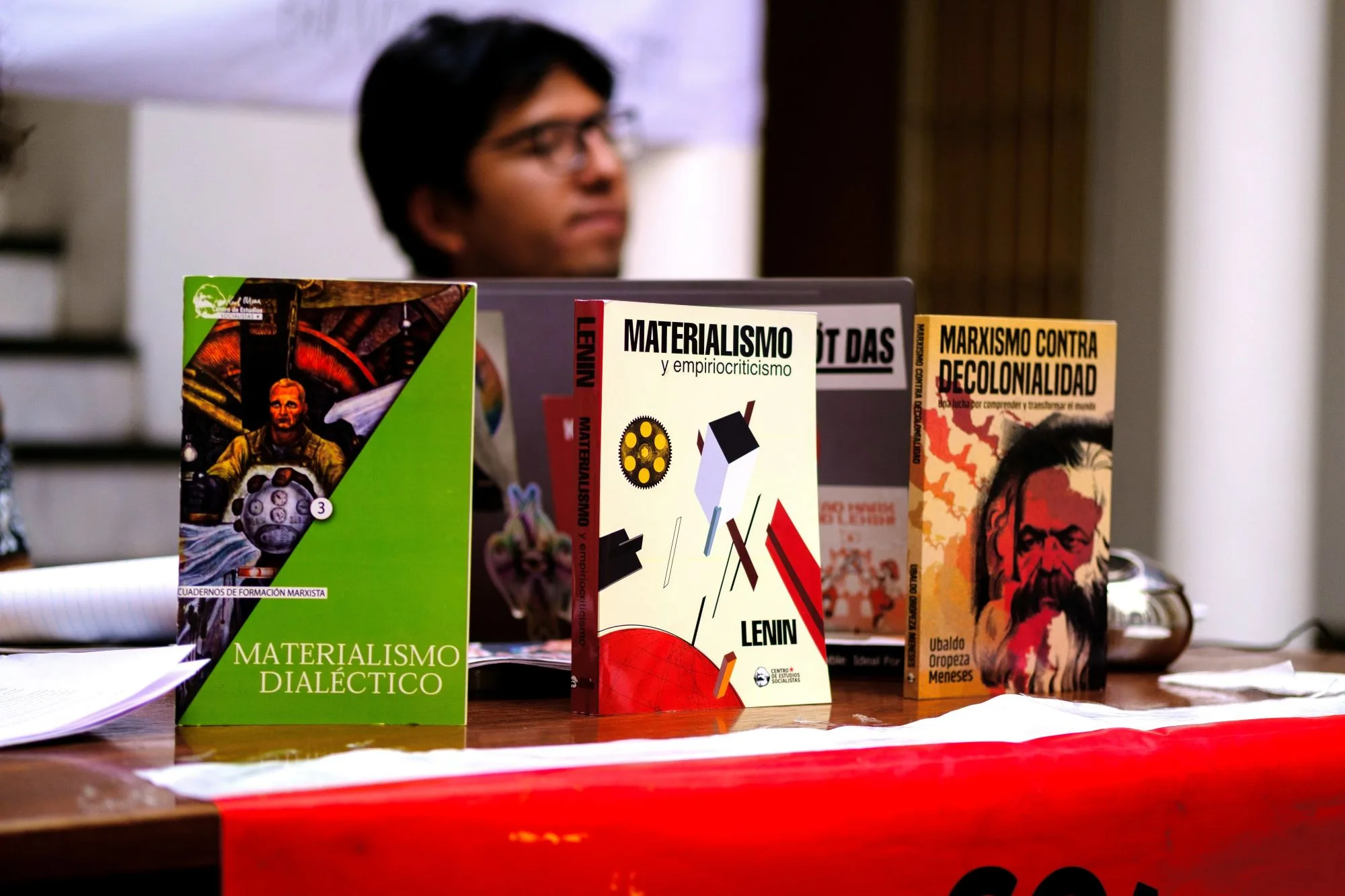
There was a dash to the literature table after this talk, where our Mexican section’s Marxism vs. Decolonialism proved popular.
“I think decolonialism at its core plays a reactionary role in the social movements in Bolivia,” said Sofia, with a fresh copy in her hands. “This fragmentation starts by putting identity above the class struggle, and it’s something that’s very strong inside the feminist movement especially,” she added.
Building the party
The organisational discussion linked our previous talks with the task of building the party. Comrades gave critical analyses of their participation in marches and demonstrations, the importance of diligent contact work, and set themselves the target of growing to 30 members by the end of the year.
The last day opened with a discussion on finances. The RCI’s Panamerican School will be held in Mexico City this December, and comrades launched a campaign to purchase a comrade’s ticket, costing 8,000 bolivianos ($1,200 USD), or nearly 2.5 times the monthly minimum wage. The comrades raised 4,660 bolivianos in the Congress, confident they’ll raise the rest by their deadline.
“If we look around there’s so much misery, poverty, destitution,” comrade Rafael told me when I asked why he gave to the fund. “So many organisations ask for money: the church, charities, but they only look to alleviate the symptoms of capitalism. But for every one that you give a roof to, there's two capitalism throws in the street. We need a socialist revolution. For that we need the party, and for that the party needs funds,” he added.
The day closed with a report on the Revolutionary Communist International, where I detailed the advances of the International in every country where we are active. Comrades eagerly asked for updates on Europe, Asia, the Ehsan Ali campaign, the growth of the British section, and more.
“I really don’t know where we’d be without the International,” one comrade told me in passing. “The fact you can fly here, share lessons from the International, give us presentations, it’s a huge help. I don’t know how we would do it if it was just us.”
I spoke to the comrade Rafael as we were leaving the venue on the last day, discussing the balance sheet of the congress. “I want to hear the new comrades’ point of view. How did it seem to them? What impact is it having? What is motivating them?” he asked. “During the presentations, I love to see when you say something and it illuminates the faces of the comrades. Something has clicked. Those are the moments that motivate me the most to continue the work."
The banner behind the speakers read “Return to the Thesis of Pulacayo.” This short document was approved by the Congress of the Bolivian Federation of Mining Workers' Unions in 1946, and outlines a revolutionary programme which would pave the way to socialism in Bolivia.
“The proletariat, even in Bolivia, is the revolutionary social class par excellence,” it begins, outlining the need to nationalise the mines under workers control, arm the working class, and fight imperialism with the international proletariat. This is the programme we defend today, and the one we are building the party to carry out.