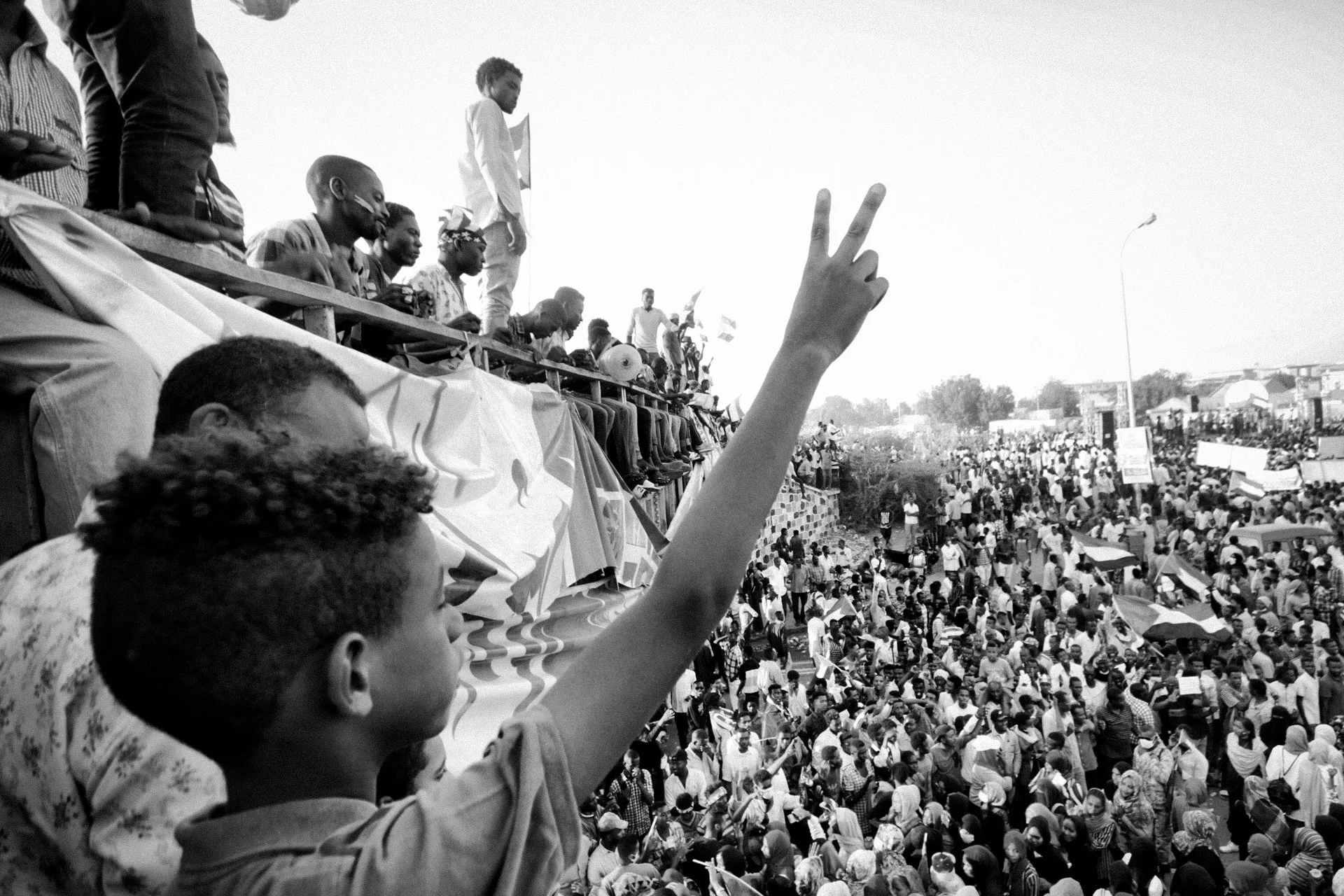
The Sudanese Revolution of 2018-21 was one of the most powerful movements of the masses so far this century. In this article, Thomas Soud explores the background to the revolution, its incredible potential, and how it was defeated – leading to the barbarism we see in the region today.
[This article was originally published as part of issue 52 of In Defence of Marxism magazine – the quarterly theoretical magazine of the Revolutionary Communist International. Subscribe and get your copy here]
The counter-revolution has pulled Sudan into the depths of barbarism.
In 2019, the workers had power in their hands, but the reformist leaders betrayed them and handed power back to the regime. By 2022, the revolution was lost.
A year later, the revolution’s executioners turned their guns on each other, each backed by a constellation of different foreign powers. Now they have laid waste to Khartoum, launched a genocide in Darfur, and unleashed the world’s most catastrophic famine in 40 years.
To date at least 400,000 people have been slaughtered, 4 million have fled the country, and a further 7 million have been internally displaced. More than 30 million are in need of humanitarian assistance, of which 6.3 million face extreme levels of starvation. Two and a half years of war have effectively ripped the country in half.
Socialism or barbarism is not an empty phrase, but exactly the perspective that faced Sudan in 2019. Revolutionaries must absorb the lessons of Sudan to prepare for future battles.
Sudanese capitalism
The British conquered Sudan in 1898, and through a brutal occupation, set about transforming the Sudanese economy. Before the British, capitalism was non-existent in Sudan. Via their rule, the country’s subsistence peasant farmers were brought into the world market, growing cotton and other agricultural products in the arable Nile Valley.
Although industry remained absent outside of the capital, Khartoum, the world market spurred on the railways to crisscross the desert. By 1950, the railway sector employed 100,000 workers, 10,000 of whom worked in the central office in Atbara alone. It was under these conditions that railway workers became the first to unionise in 1949, three years after the founding of the Sudanese Communist Party.
British capitalism dominated the Sudanese economy. The British controlled the railways, the industries that processed raw agricultural exports, and the banking system. A native Sudanese capitalist class was nearly non-existent. To stabilise their rule, the British undertook the artificial construction of such a class. They opened Sudan’s first schools and, following a pattern seen across the empire, cultivated a comprador bourgeoisie – a class wholly dependent on imperialism, lacking an independent economic or political base.
So weak and enfeebled was this Sudanese bourgeoisie that when the first bourgeois-democratic government came to power following independence in 1956, it soon invited the military to take over to stabilise the country. Imperialist domination meant that most of the limited industrial infrastructure was either directly controlled by the British, or indirectly through their grip on finance. This stunted the development of an independent bourgeoisie, but simultaneously amplified the relative strength of the proletariat, which held the potential to lead the masses to the conquest of power.
This process was far from unique. It aligned with the theory of permanent revolution, as articulated by Trotsky in 1906 in reference to Russia. According to this theory, the bourgeoisie in countries of belated capitalist development cannot play a progressive role. This was fully confirmed in Sudan. The country saw three bourgeois-democratic governments: 1956–1958, 1964–1969, and 1985–1989. In each case, the bourgeoisie was weak, divided, corrupt, and terrified of the working class. Each period ended in a military dictatorship.
In all three instances, the working class could have taken power. It was the Sudanese workers, through mass general strikes, who toppled the military in the October Revolution of 1964. The 1969 coup, led by Colonel Nimeiri, was driven by the discontent of petty-bourgeois ‘Free Officers’, who echoed the example of Nasser in Egypt and looked to the Soviet Union for leadership. And once again, it was the working class that brought down Nimeiri in 1985, as his regime degenerated into an Islamist dictatorship.
The role of the Sudanese Communist Party (SCP) should have mirrored that of the Bolsheviks in 1917: to show the masses that capitalism offers no solution, and that only the seizure of power by the working class, in alliance with the peasantry, could offer a way forward. But the SCP failed in this historic task.
By the late 1960s, the SCP had become the second-largest communist party in Africa, with over 10,000 disciplined members. It led both the trade unions and the student movement. Yet this tremendous potential was squandered due to the limitations of Stalinist theory.
Under the guidance of the Soviet bureaucracy, the SCP adhered to the Menshevik-inspired ‘two-stage theory’ of revolution, which asserted that the revolution in Sudan could only be bourgeois-democratic in nature. Hence the communists were ordered to play the role of merely assisting a ‘progressive’ bourgeoisie to come to power. Some within the party even identified themselves as ‘revolutionary capitalists’, and formed an outright bourgeois wing.
As a result, the party broke under the hammer blows of events. Its participation in the 1964 government caused internal splits. Nimeiri’s rise in 1969 caused another rupture. The failed Communist-led coup of 1971 shattered what remained.
By the time of the 1985 revolution, the SCP was discredited. Its failure to lead, compounded by the global retreat of the workers’ movement, allowed the dictatorship of Omar Al-Bashir to consolidate power for the next 30 years, reducing the party to a marginal, ageing rump.
When the ‘Glorious Revolution’ of 2019 struck, the limited role the SCP played was not due to mass support, but instead because of a thin layer of veteran leaders, who were quickly able to manoeuvre themselves into influential positions in the movement using their previous connections, rather than due to any real influence amongst the revolutionary youth.
The regime of Al-Bashir
Al-Bashir’s coup of 1989 was the victory of the counter-revolution, ending the revolution of 1985. A black reaction descended as Al-Bashir ruled side by side with the Islamists. Trade unions were forced underground, prices were hiked, and the minimum wage was slashed.
Al-Bashir understood that despite the immense defeat the workers had suffered in 1989, rule by the sword alone was insufficient to maintain his regime. Eventually, though it might take a generation, the working class would recover its strength, the regime would split, and its power would falter. The situation for Al-Bashir was precarious, but rising oil prices offered him room for manoeuvre.
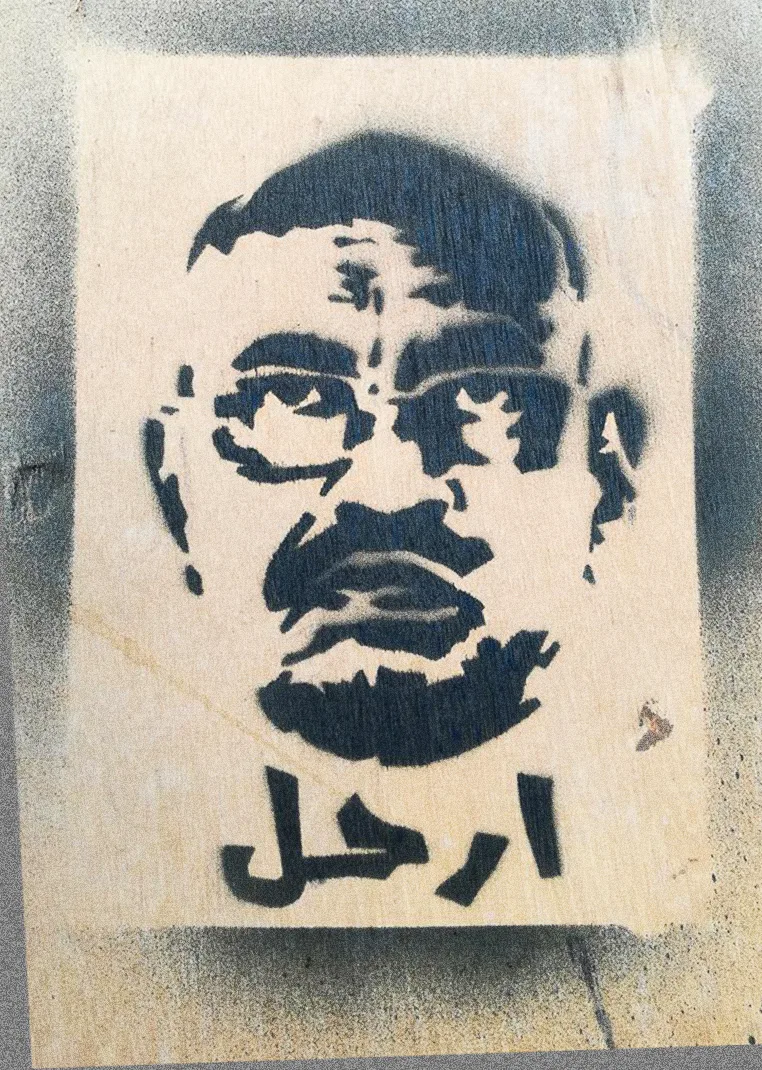
In the late 1990s, an oil boom allowed for a rapid expansion of state spending. Parts of Khartoum began to look like Dubai, as huge infrastructure projects sprouted throughout the city. Between 1999 and 2013, the government budget increased thirteenfold. Huge food subsidies were given to the workers and peasants, while the army was showered in wealth. Al-Bashir included himself in this, allegedly syphoning off $9 billion to his personal account by 2019.
Simultaneously, he continued to whip up ethnic tensions in the west, particularly in Darfur, leading to the 2005 genocide where over 300,000 people were slaughtered. The perpetrators were the Janjaweed, aka the ‘Devils on Horseback’. In 2013, this genocidal militia was organised into the Rapid Support Forces (RSF): a paramilitary specifically created by Al-Bashir to coup-proof himself. By balancing between the official Sudanese Armed Forces (SAF) and the RSF, he believed his rule would be secure.
These beliefs were misplaced. In 2011, South Sudan — with the backing of US imperialism, succeeded in gaining independence. The US had a tense relationship with Al-Bashir.
National independence did not bring liberation to the South. Instead, ethnic divisions and imperialist meddling paved the way for the South Sudan Civil War. Between 2013 and 2020, 400,000 people were killed.
In 2013, with oil revenues from South Sudan gone, Al-Bashir began an austerity campaign. Fuel subsidies were cut, doubling prices overnight. Riding the wave of the Arab Spring, the Sudanese masses stormed onto the streets. Al-Bashir immediately showed his ruthlessness, slaughtering 200 people in an attempt to maintain his power. With the opposition parties playing no role, terrified of the regime, and with no political programme to solve Sudan’s deep crisis after a century of imperialist plundering, the movement was temporarily cowed.
The temporary defeat of the movement in 2013 coincided with the discovery of vast gold reserves across Darfur. For a moment, it appeared that the regime would stabilise. Gold rapidly became the country’s main export, and was used to maintain the vast payments to the armies and the limited subsidies for the working class.
But Sudanese gold forged a poison chalice. The vast majority was very close to the surface, and spread out over a large area. Rather than encouraging highly centralised production funded by large monopolies and the central government, gold production instead developed vast numbers of small artisanal mines. These were controlled by various tribal leaders, with mercenary groups enforcing the most horrific conditions. The result was that the central government could not easily enrich itself. It is estimated that 50 per cent of gold production is smuggled out of Sudan illegally.
It was through the blood-drenched gold of Darfur that the RSF was being transformed into a powerful organisation. Gold trader, smuggler, border guard and counter-revolutionary militia all in one, it began to clash with the official Sudanese Armed Forces (SAF). Al-Bashir had succeeded in balancing between these two armed bodies of men, but his options were running out.
Oil from the south had been cut off, gold in the west rarely made its way to Khartoum, and the global economy was stumbling from one crisis to another. By 2016, the economy was in freefall: GDP per capita fell by 31 per cent, inflation rose to 122 per cent, and the government went cap in hand to the IMF. The IMF agreed to bail out Sudan, but only if subsidies for basic goods were ended – in other words, the crisis must be passed on to the working class. The government obliged.
Unemployment rose to 20 per cent. With subsidies removed, the price of bread tripled, and 45 per cent of the population now stood below the poverty line. All whilst the army, as part of Al-Bashir’s coup-proofing strategy, dazzled itself in luxury, consuming up to 70 per cent of government revenue.
It was these conditions that convinced a small number of protesters to take to the streets in December 2018. They were the spark that ignited a blaze.
The revolution begins
On 13 December 2018, a few dozen protesters bravely marched in the town of Ad-Damazin, demanding that subsidies on bread be reinstated. They were under the leadership of the Sudanese Professionals Association (SPA), a small coalition of six white-collar unions. Within a year, they would become the leading body of the Sudanese Revolution.
Immediately, the protesters were arrested, and the doctors’ union, as part of the SPA, called for further protests. On 19 December, workers outside of the SPA in Atbara rallied to the call and came out in support. Marching under the symbol of bread, they shouted “Down with the rule of thieves!”[1] and burned down Al-Bashir’s party headquarters in the city. Now that the starting pistol had been fired, demonstrations then broke out throughout the country.
The movement of the masses shook the opposition parties. Since 2005, the dictatorship had marginally expanded political freedoms. However, rather than using this space to challenge the regime, the liberal parties accommodated themselves to it. Meanwhile, the Communist Party, still clinging to the ‘two-stage theory’, tailed the liberals.
When spontaneous youth-led protests previously emerged in 2012 and 2013, the opposition played no decisive role. Among the youth, these parties were described as “hopeless and senile”. Now events threatened to make them completely irrelevant.
Thus, on 1 January 2019, they decided to unite with the SPA into a broad coalition called the Forces for Freedom and Change (FFC). This coalition included everyone who wasn’t directly part of the regime, from the Communist Party, to the liberals, to disaffected Islamists in Darfur.
Despite the SPA being the largest force, it was the bourgeois faction of the FFC who came to dominate it. FFC leaders such as former prime minister and aristocrat Sadiq Al-Mahdi, or the darling of big business Al-Digair, were not found on the streets in the spring of 2019, but rather in boardrooms and palaces throughout the Arab world.
The FFC’s programme was vague and broad, limited to only those demands that would be acceptable to the capitalist class. They called for a transitional government to deliver peace, democracy, justice, women’s rights, and economic development. However, the impotence of this coalition became evident in its inability to agree on concrete demands – even the question of repealing Sharia law was left unresolved.
Whilst the leadership of the revolution was busy building this coalition, Al-Bashir wasted no time. On 17 January, state security forces were sent to terrorise the masses.
Police grabbed protesters and smashed their heads into the pavement. It did not matter if they were men, women, children or the elderly – the regime did not discriminate. Security forces tear-gassed worshippers outside mosques, and when a doctor attempted to provide emergency care, they shot him in the street. But the movement continued to grow. Five thousand turned up for the funeral of the slain, and the chants of “Down! Down! Down!” rang through Khartoum.
Al-Bashir banned demonstrations, but this did not stop them from growing in size. The masses had lost their fear of the government.
The women of Sudan led the way, comprising up to 70 per cent of protesters, for they had borne the brunt of the regime. Each year, 40,000-50,000 women were arrested and flogged for wearing ‘obscene’ clothing, which included the act of wearing trousers.
On 8 March, International Working Women’s Day, the women of Sudan reminded the world of its real revolutionary traditions. Tens of thousands of women marched, chanting “Women be strong!” and “This revolution is a woman’s revolution!” They descended on Khartoum’s main women’s prison and forced the regime to release all female detainees who had been arrested for participating in the revolution.
This victory filled workers across the country with confidence. By the end of March, 15 out of Sudan’s 18 provinces were experiencing mass protests, as all layers of the toiling and oppressed masses joined the struggle.
The fall of Al-Bashir
As revolution swept the entire country, the SPA had been firmly pushed behind the position that Al-Bashir must fall. They called for a mass movement on 6 April to march on the military complex in Khartoum.
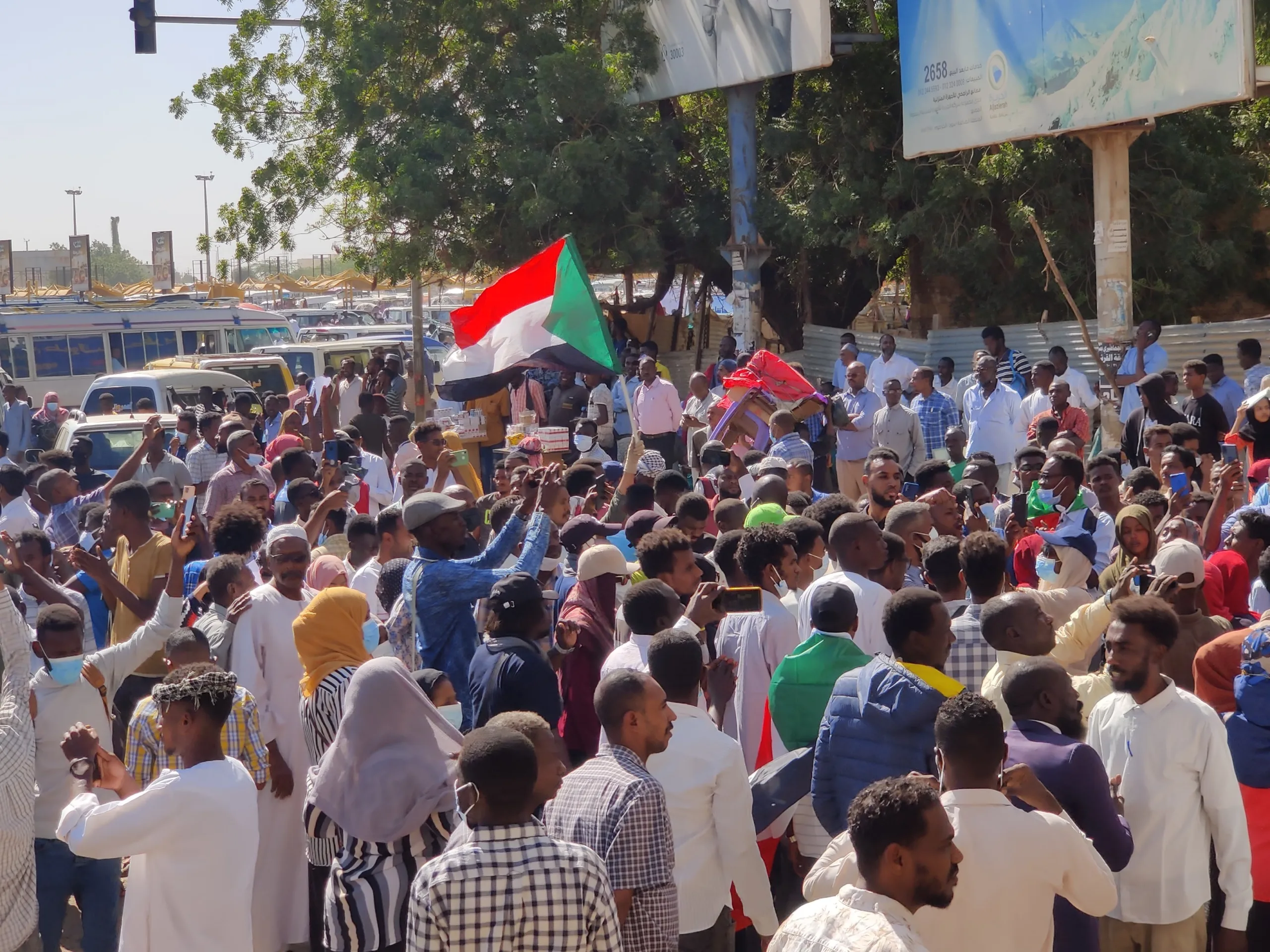
The morning of 6 April began as a trickle. Some protesters doubted how many would come, but as the day progressed, more workers poured forward onto the streets. By the time the march approached the military complex, an estimated 800,000 had joined. Inspired by the Egyptian revolution of 2011 and the iconic occupation of Tahrir Square, the SPA called for a mass sit-in until the regime fell:
“At this historic moment, we urge you to stay the course on the streets surrounding the Headquarters of the Armed Forces, and in every site across the country, until the tyranny is dismantled once and for all.”[2]
Through the sit-in, the revolutionaries created a city within a city, blockading the government inside their palaces. Traffic ground to a halt, and the masses were jubilant. One sign read “Sorry for the [traffic] delay. Uprooting a regime”. [3]
The regime now faced a choice: reform to placate the movement, or repress to crush it. Al-Bashir decided that the most brutal force was necessary. On the morning of 10 April, he began preparing the RSF to slaughter the masses. His main cleric was on the verge of issuing a fatwa to say it was permissible to kill 30 per cent of the demonstrators to restore order.
But that morning, the rest of the regime flinched. They knew power was passing out of their hands and shifting into the street. They sensed the army itself was cracking as fraternisation between protesters and soldiers grew day by day. Perhaps the government could order the massacre of 30 per cent of the revolutionaries, but they feared it would be their last command.
Recognising the shifting balance of power, Vice President Ibn Auf met with high-ranking generals of both the RSF and SAF, and together they decided that Al-Bashir must go.
The vice president announced to the country that Al-Bashir’s 30-year rule had come to an end. He declared himself the new head of state, and announced that the military would rule for two years until democratic elections were held. He demanded that the encampment must disband, and that a military curfew would enforce this.
The masses did not accept. The previous day, on 9 April, they had demanded “Fall, that’s all”, so on 10 April, they chanted “Fall again!” The curfew was simply ignored. The real situation of power was clear for all to see. The new president brought not an ounce of extra stability. So on 11 April, the generals acted once more. The new president was removed, and the Transitional Military Council, an alliance between the SAF and the RSF, took control.
Two dictators had been overthrown within 24 hours. Power had been lying in the streets, yet the SPA had allowed the generals to pick it back up. The face had changed twice, but the regime remained in place. Why had the masses not been able to take power into their own hands? Why had their leaders failed to seize the moment?
To answer this question, we must first analyse the different groups that composed the Sudanese revolution. On the side of reaction, the principal characters were the RSF and the SAF. On the side of revolution stood the FFC, the SPA and the spontaneous organisations of the workers.
A workers’ state in embryo
The beating heart of the revolution was the workers' sit-in outside the military complex. It would last from 6 April to 3 June 2019.
Within the sit-in, classrooms were organised to teach political ideas and the goals of the revolution. Communal kitchens were providing meals, supplied by workers from outside who ensured regular food deliveries. Water stations were organised throughout.
The sit-in was a palace of lively political debate. Speeches were given throughout the day as people discussed the next steps forward. A giant TV screen was set up, displaying messages of international solidarity. In the evening, the same screen would show the latest football matches. Drumming, poetry and music were ever present, while artists painted murals along the walls.
The ruling class always seeks to maintain control through divide-and-rule tactics. Sexism, racism and sectarian divisions are part and parcel of capitalist rule. But the class struggle has the power to cut across these divisions. Inside the encampment, women could walk freely without a headscarf, and mingle with men their age – an act completely prohibited by the government. Religious divides that had torn Sudan apart were being overcome. Christian Copts held fabric over muslims praying to shield them from the midday sun. And when the government attempted to whip up division by spreading racist propaganda about Darfurians, the revolutionaries replied:
“Al-Bashir, you arrogant racist, we are all Darfur”. [4]
The sit-in demonstrated in practice that when given the opportunity, workers can cut across the backward and reactionary ideas pumped into society by the ruling class. It became a cultural melting pot, offering a glimpse of what could be achieved if workers held power in their hands.
The sit-in itself was spontaneously organised by the workers. A series of elected committees emerged to manage day-to-day life. The Protection Committee oversaw security, set up barricades and monitored checkpoints. The Provisions Committee coordinated food and drink. The Medical Committee provided treatment for the injured. The Awareness Committees educated participants in politics and consciously attempted to tackle issues such as discrimination. Finally, the Organisational Committee oversaw all the others and managed membership distribution.
The organisation was so effective that within the sit-in’s controlled area, the streets were clean, well-managed, and orderly. Meanwhile, those still controlled by the government remained in decay, littered with rubbish. The enthusiasm, creativity, and audacity of the workers overcame every challenge they faced.
The sit-in was the beating heart of the revolution, but the revolution had arteries, veins and capillaries. These were the Neighbourhood Resistance Committees. Each committee organised workers at the local level. They were democratically elected with 40-50 people in each one, and 7-10 committees per neighbourhood.
They first emerged as organisers of local protests: an essential task once social media was blocked. Members of the Resistance Committees would go door to door informing workers of upcoming demonstrations. As repression intensified, traditional assembly methods became dangerous, so they would work with local shops and homes to allow protesters to hide in back rooms in the run-up to a march. Then, at the signal of a banging drum, protesters would flood the streets, overwhelming the security forces.
As the revolution developed and the workers gained confidence, the committees’ responsibilities expanded. They began regulating the price of public transport, organising the distribution of fuel, and setting up grocery markets where food was sold at cost. They organised street clean-ups, construction projects and other local initiatives, raising funds from residents. The scale was vast. There were 700 committees in Khartoum alone and over 3,000 across the country.
What the sit-in and Neighbourhood Resistance Committees represented was workers' power in embryo. Call them committees, call them communes, call them soviets (‘councils’ in Russian) – it doesn’t matter. They were the masses taking power into their own hands, stepping onto the stage of history to decide their fate, struggling to birth a new society. Do not just take the word of Marxists. One particularly class-conscious writer for the Financial Times, a bourgeois mouthpiece, wrote:
“One cannot know for sure what Russia felt like in 1917 as the tsar was being toppled, or France in 1871 in the heady, idealistic days of the short-lived Paris Commune. But it must have felt something like Khartoum in April 2019.” [5]
The situation emerging in Sudan was one of ‘dual power’, in which the bourgeois state is confronted by emerging organs of workers’ power, capable of taking control of society. But this emerging workers’ power was only at an embryonic stage.
The call for the Neighbourhood Resistance Committees to link up was not made. It was actively resisted by the SPA, which fetishised horizontalism. They failed to understand that a situation of dual power is a very tenuous thing. It cannot be maintained indefinitely. Either the workers will gather their strength, smash the bourgeois state and become the sovereign power of society. Or, the initiative will pass to the counter-revolution.
In the sit-in, the slogan “All power to the Resistance Committees” was never heard; the idea of overthrowing the capitalist state and using them as the foundation of a workers’ state never crossed the lips of any of the parties involved.
It would not be until 2022 that there would be the first feeble and rearguard attempts to unite the Resistance Committees. Long before then, the counter-revolutionaries had burned the sit-in to a crisp.
A petty-bourgeois leadership
Due to the meekness of the political opposition the seething anger of the masses could find no political expression. On the industrial front the traditional unions had been completely co-opted by the military regime. The most militant layers therefore had to find new fighting organisations.
The SPA was one of these small, but militant groups. Tracing its roots to the movement in 2012, the SPA was officially founded in the summer of 2018 as an underground coalition of six trade unions: of the lawyers, doctors, professors, engineers and teachers.
When the struggle erupted in 2018, the SPA showed considerable tenacity, refusing to back down in the face of state repression, which raised its political authority in the eyes of the masses. In this way, the SPA became the undisputed de facto leadership of the first stages of the revolution.
The ranks of the SPA contained many determined and self-sacrificing militants, but the higher up you went, the more white-collar and middle-class it became. This was reflected in the outlook and methods of the organisation’s leadership. It was intentionally organised based on consensus, with a ‘leaderless’ structure that meant any large differences simply remained unresolved. As with any ‘leaderless’ organisation, the layers that dominated would be those with the most time and resources on their hands, i.e. the most middle class.
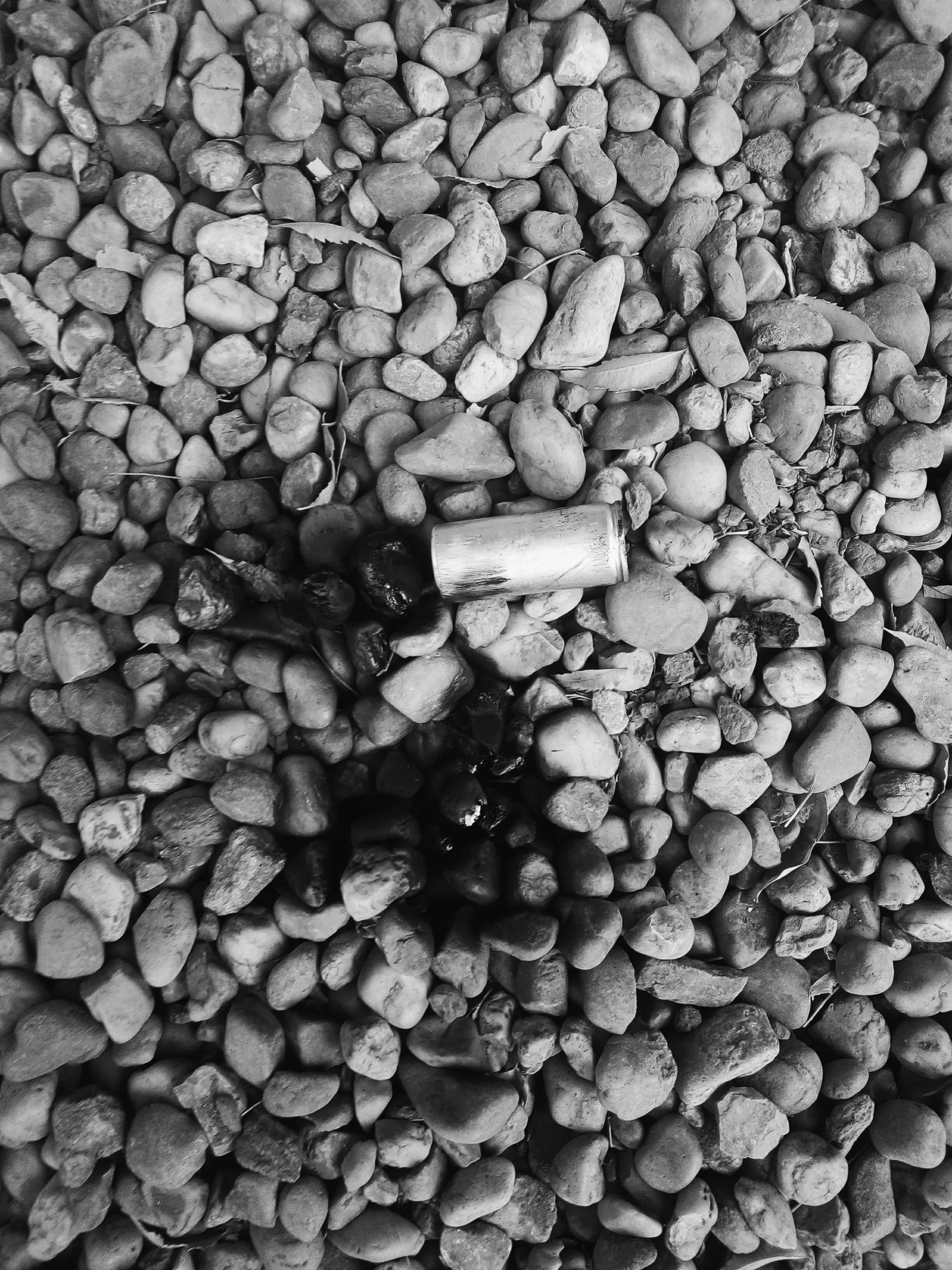
The petty-bourgeois, reformist outlook of the SPA leadership would play a fatal role. Completely accepting the necessity of Sudanese capitalism, it therefore accepted the necessity of the bourgeois state. In Sudan, this meant accepting the power of the military, which was an integral part both of the state and the ruling class.
Therefore, unlike the masses, the leadership of the SPA was overcome with pessimism from the beginning. They firmly believed that the revolution would fail, and in interviews given as late as March 2019, spoke of how little hope they had that the protests would remove Al-Bashir.
Their consensus politics meant that a position was only adopted once it became obvious to all. This was not leadership guiding the movement forward, but trailing it.
This consensus leadership became more fraught as the revolution intensified. On the left, new forces, awakened by the revolution, entered the ranks of the SPA. Meanwhile, the old leadership who had been in prison or exile were now returning as the revolution advanced. But these were the most middle-class layers, and clashed with the shadow leadership who had actually led the revolution from December to April.
The right wing of the SPA even demanded that it stop playing any leading role in the revolution whatsoever. They said ‘we are trade unionists and not politicians’, and it should be the right of political parties to decide which way forward. This position can only be comprehended once you realise that many who put this forward were members of other political parties, who stood to gain if the SPA abdicated its leading political role.
The problem was that there was an element of truth in the right’s criticism. If the SPA was playing a leading political role, then they could not limit themselves to being mere trade unionists. A political party was required, with its own political programme on how to restructure society.
Syndicalism, the idea that the working class does not need a political party, has been discredited time and time again. The smashing of state power is political. The creation of a workers’ state and the programme it must carry out are the most political acts. By failing to fully break with these methods, the SPA hampered the revolution more often than it led it.
Once Al-Bashir fell on 10 April, the SPA were taken aback and had no idea what to do next. Rather than immediately calling for the Resistance Committees to assume power, for the rank-and-file troops in the army to break with and depose the generals, and for mass general strikes to make this a reality, the leaders hesitated and debated amongst themselves.
The generals, meanwhile, lost no time. The SAF and RSF picked up power from the streets and continued the old regime with only two figureheads lost. Rather than calling for them to be overthrown, the SPA said we must negotiate with those who have just stolen power from the masses.
The logic of attempting to strip politics out of industrial and mass struggle, combined with broad-based consensus-building, flowed directly into the errors of ‘Popular Front’ politics. Whilst not necessarily consciously understood, the creation of the Forces for Freedom and Change (FFC) was an echo of the disastrous ‘Popular Front’ of the Spanish Republic in the 1930s.
The idea of the Popular Front is that the workers must combine with the ‘progressive’ bourgeoisie to achieve and defend liberal democratic gains. This tactic was a complete failure in the 1930s, it was a failure in Sudan in the 1960s, and it would be so again in 2019.
The FFC stretched from the SPA, to the Communist Party, to the liberals, to the dissident Islamists. The only uniting factor was that Al-Bashir must fall; once this was achieved, it began to decompose into its component parts.
The FFC secretly negotiated with the Transitional Military Council in May, behind the backs of the masses. The liberals held the position of a joint military and civilian government, whilst allowing questions such as women’s oppression and the economic suffering of the people to be dropped. This flowed from the class position of the bourgeoisie, who were scrambling for law and order, afraid that now the genie of revolution had been let out of the bottle, it would not be going back in.
The military understood the inherent divisions much better than the workers’ leaders. They played different parts of the FFC off against each other throughout the revolution, and in doing so maintained their own rule. The absence of a decisive and clear political programme on the left ultimately ended up with everyone looking to the right.
The masses were looking to the SPA due to no other political alternative being built up in advance. The SPA were looking to the FFC, claiming that, since they were not politicians, they had no right to lead. The petty-bourgeois leaders of the FFC were looking to the liberals and their vision of a democratic, but capitalist, Sudan. The liberals were looking to the conservatives to ensure the revolution did not go too far and challenge private property. And the conservatives were looking to the Transitional Military Council, who were planning on drowning the entire revolution in blood.
The army begins to break
The Transitional Military Council was composed of two parts: the Sudanese Armed Forces (SAF) and the Rapid Support Forces (RSF).
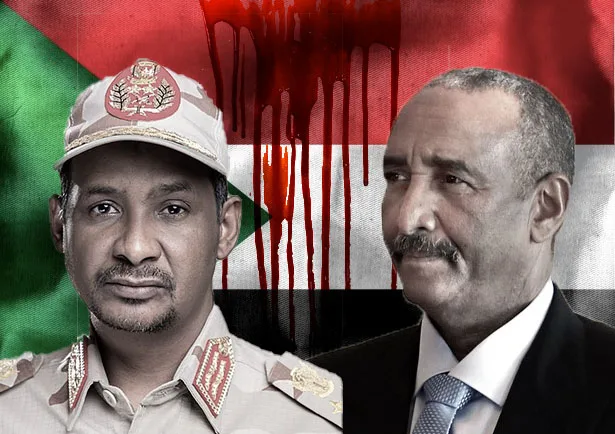
The SAF was the official Sudanese Army under the leadership of General Al-Burhan. Al-Burhan lacked any natural charisma and was an accidental figure to be the de facto head of state after the fall of Al-Bashir. He was a general through and through. When he announced military rule on 11 April, it was not the speech of a politician, but the barking orders of a drill sergeant.
The greatest weakness of the SAF was its composition. The generals were a key component of the ruling class, but the rank-and-file soldiers were workers. The same torrent of social forces that had stirred the masses into action could not help but find an echo in the ranks of the SAF.
The consciousness of the army is not like the police. The army is taught that they are defending the nation, giving their lives for the people back home. So once they are told by the generals to turn their guns on the people, the army can split on class lines, and even break apart entirely. It was precisely this that had occurred in 1985 and had led to the fall of Nimeiri. Now the same process was taking place again.
Neighbourhood Resistance Committees appealed to the soldiers to defect. Defecting soldiers were then given sanctuary in homes to hide from officers seeking retribution. The Resistance Committees would welcome defecting soldiers as heroes, and as word spread through the ranks, more and more followed suit.
All layers of the revolution were putting pressure on the army. When one general arrived home, he discovered to his shock that his daughter had joined the revolution. Over dinner, she pleaded, “Don’t shoot us, Dad!”. [6]
The spontaneous appeals of the masses were shaking the army from head to toe. Soldiers would arrest activists in front of their commanders, take them down an alley, and then, as soon as they were out of sight, set them free, informing their commanders that the revolutionaries managed to escape. When asked to move into position, they would delay and dawdle, and in some cases refuse outright.
The generals knew that one clear and decisive command from the leadership of the revolution and the entire SAF would crumble, as the soldiers would defect en masse. But this call never came. Defections remained a local and spontaneous affair. The SPA and FFC did not conduct a mass and systematic campaign within the rank and file to defect, to break the military along class lines. Instead, they attempted to negotiate with it.
Still, the mood within the SAF meant that it could not be used fully as a weapon of reaction. For this, the ruling class leaned on the other half of the Transitional Military Council, the RSF.
Black reaction
The RSF was fundamentally a mercenary organisation. It based itself on Arab nomads who felt their entire way of life was being squeezed out of existence as climate change expanded the borders of the Sahara. By joining the RSF, they could earn good money by ruthlessly enforcing the brutal exploitation of the newly discovered gold mines that now dotted Darfur.
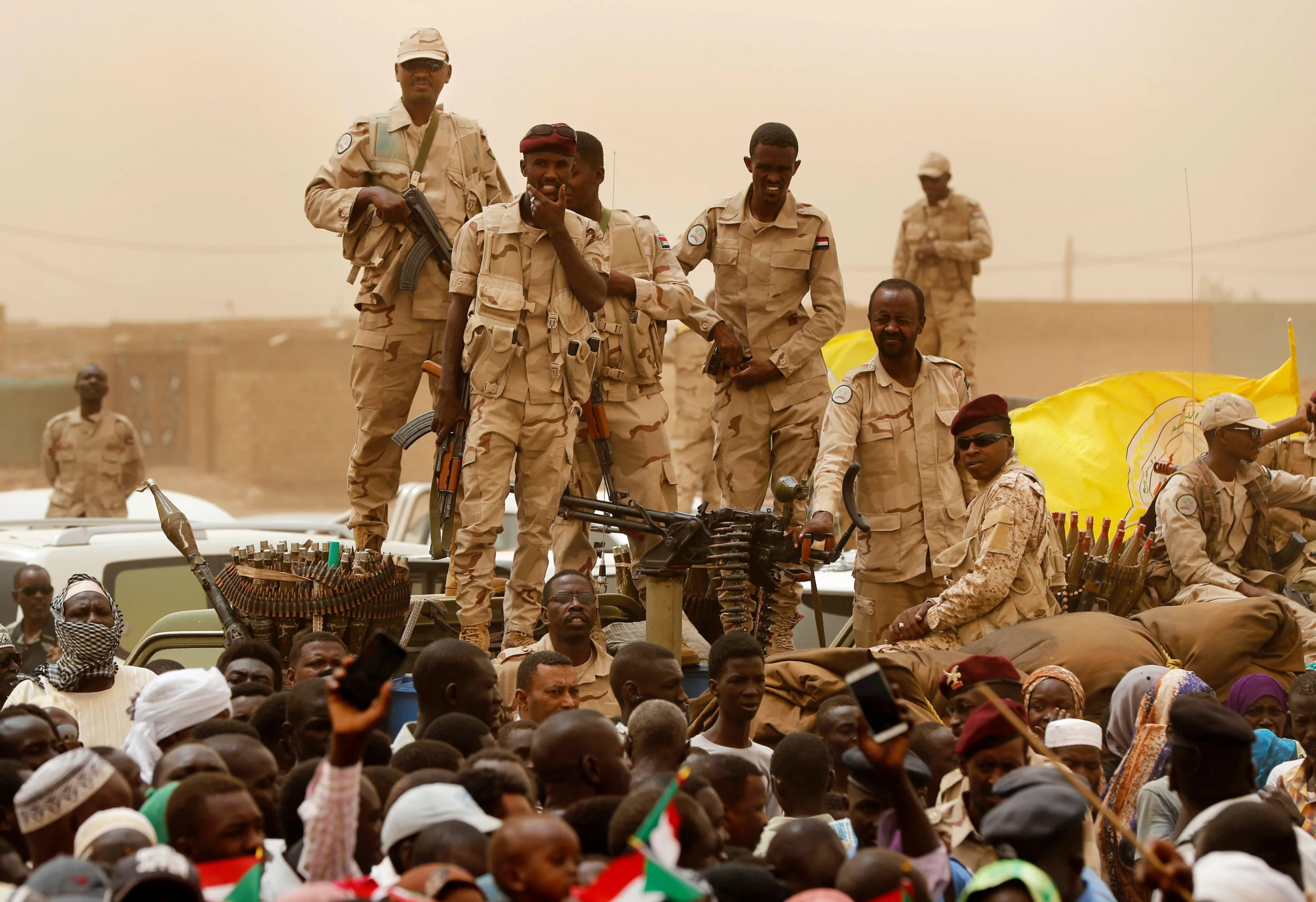
The revolution transformed the RSF in two ways. First, the demands of the revolution – women’s rights, workers’ rights, and the undoing of Sharia law failed to offer any material improvement to vast numbers of peasants and herders facing the economic and environmental catastrophe unfolding throughout the eastern Sahel. A bold socialist programme to alleviate the poverty of the rural masses was required to win them over, but the liberals in Khartoum put forward ‘Democracy’ and ‘Human Rights’ to layers that the state itself could barely reach. Reactionary tribal leaders seized on this vacuum and whipped up their base against the revolution. Whilst the rank-and-file of the SAF fraternised with the revolutionaries, the RSF became the hardened shock-troops of the counter-revolution.
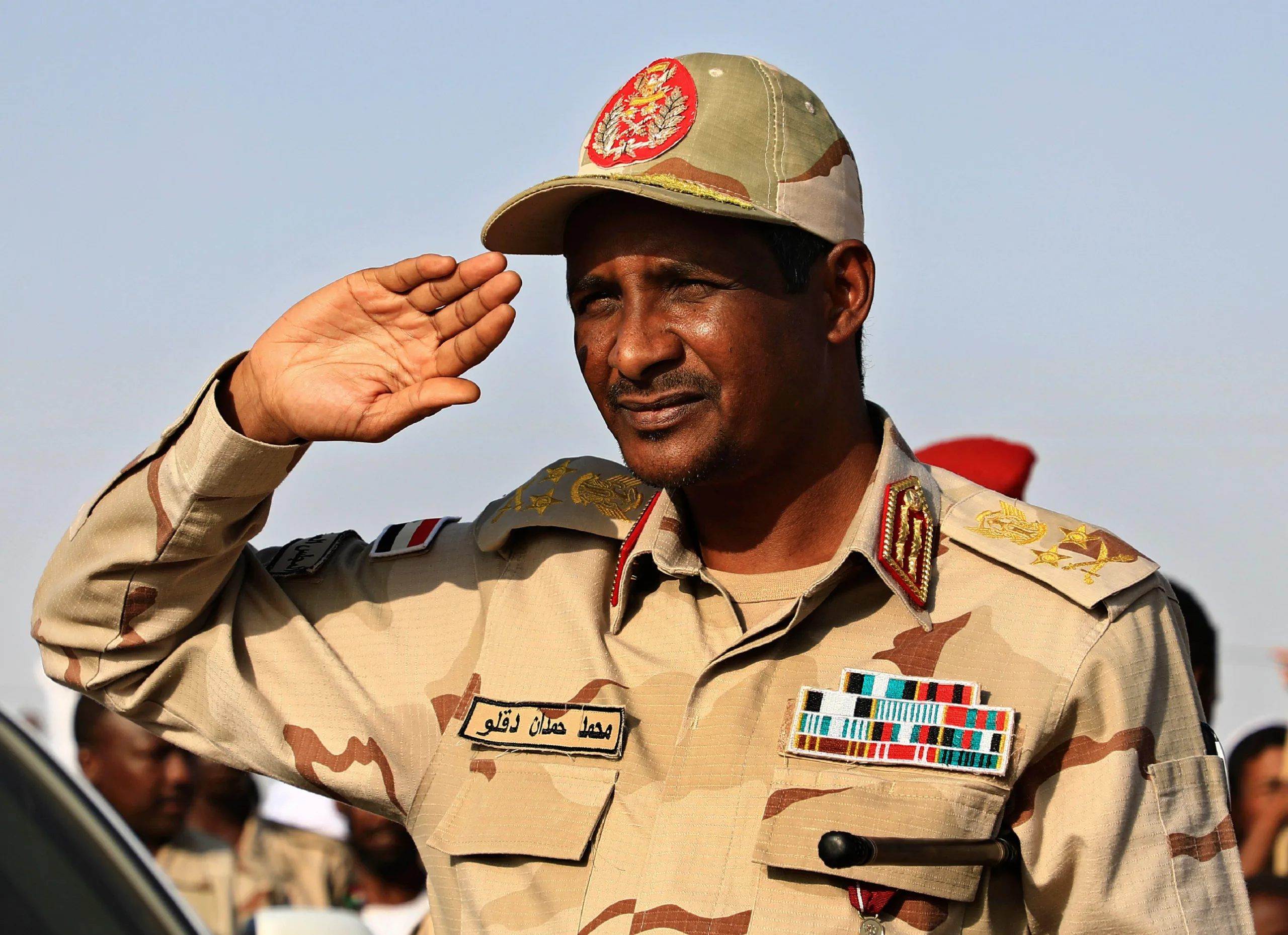
Secondly, their leader, Mohamed Hamdan Dagalo, aka. ‘Hemedti’, sensed a greater opportunity ahead. Beginning as a mere camel herder, he had used the RSF to become one of the most powerful men in the country. Continually underestimated by the rest of the ruling class in Khartoum, Hemedti secured his rule over Darfur. From there, he won the support of the ruling class via the brutality of the RSF, and then soon began making alliances with various foreign powers such as the UAE to boost his position even further.
From 2013, he found an unlikely ally in the form of the EU. The EU was desperate to stop the flow of migrants from East Africa, and Sudan was a key transitory route. Hemedti presented himself as ‘Mr Migration’, the only force that could control the western border, and the EU lapped it up. Hundreds of millions of euros were sent into the pockets of the RSF over the 2010s as part of this Faustian pact. As late as 2022, Italian military instructors were found to be training RSF soldiers to keep the refugees out of Europe.
The leaders in the SAF despised how their power and prestige were now under threat from these tribal nomads. But despite the searing hatred between the two groups, they always maintained a united front in crushing the revolution.
It was the RSF and SAF who allied to remove Al-Bashir. They would, in various forms, rule jointly until April 2023, when they finally turned their guns on each other.
The May 2019 general strike
Here is how things stood in April 2019: the masses were gaining confidence and power; they had overthrown Al-Bashir, and the Neighbourhood Resistance Committees were spreading far and wide. This was despite the petty-bourgeois leadership of the SPA, who had gobsmacked themselves by achieving the revolution. Suffering from vertigo, the SPA had formed a popular front as part of the FFC, whose bourgeois leaders were already trying to do a deal with the military and halt the revolution in its tracks.
The SAF and the RSF had acted swiftly with the fall of Al-Bashir. They set up the Transitional Military Council and sent different proposals to different parts of the FFC, in order to play them off against each other. They hoped to play for time to cement the rule of the counter-revolution.
The Transitional Military Council had even coined a term for their tactic of delaying: ‘tagility’. They hoped to draw everything out so that the revolution would lose momentum. They understood the sit-in could not last indefinitely. As April dragged into May, the number of protesters fell from hundreds of thousands to tens of thousands.
Meanwhile, the ruling class orchestrated a vicious libel campaign against the encampment. They claimed that it contained widespread prostitution, that it was rife with drug and alcohol sellers, and that law and order had broken down. But what was breaking down was bourgeois law and bourgeois order. Under the cover of night, the RSF would harass the encampment, brutalising and killing workers when they got the chance.
On 14 May, the Transitional Military Council announced that negotiations with the FFC had resulted in an agreement. There would be a three-year transitional period of joint military and civilian rule, followed by elections where a third of the seats would be reserved for counter-revolutionary forces in advance. As part of the deal, the military council demanded that the sit-in disband.
The workers were furious. They were being instructed to abandon the revolution completely. Under enormous pressure from the masses, the SPA denounced the deal that the rest of the FFC had capitulated to, and agreed to organise a massive two-day general strike as a show of strength and feeling.
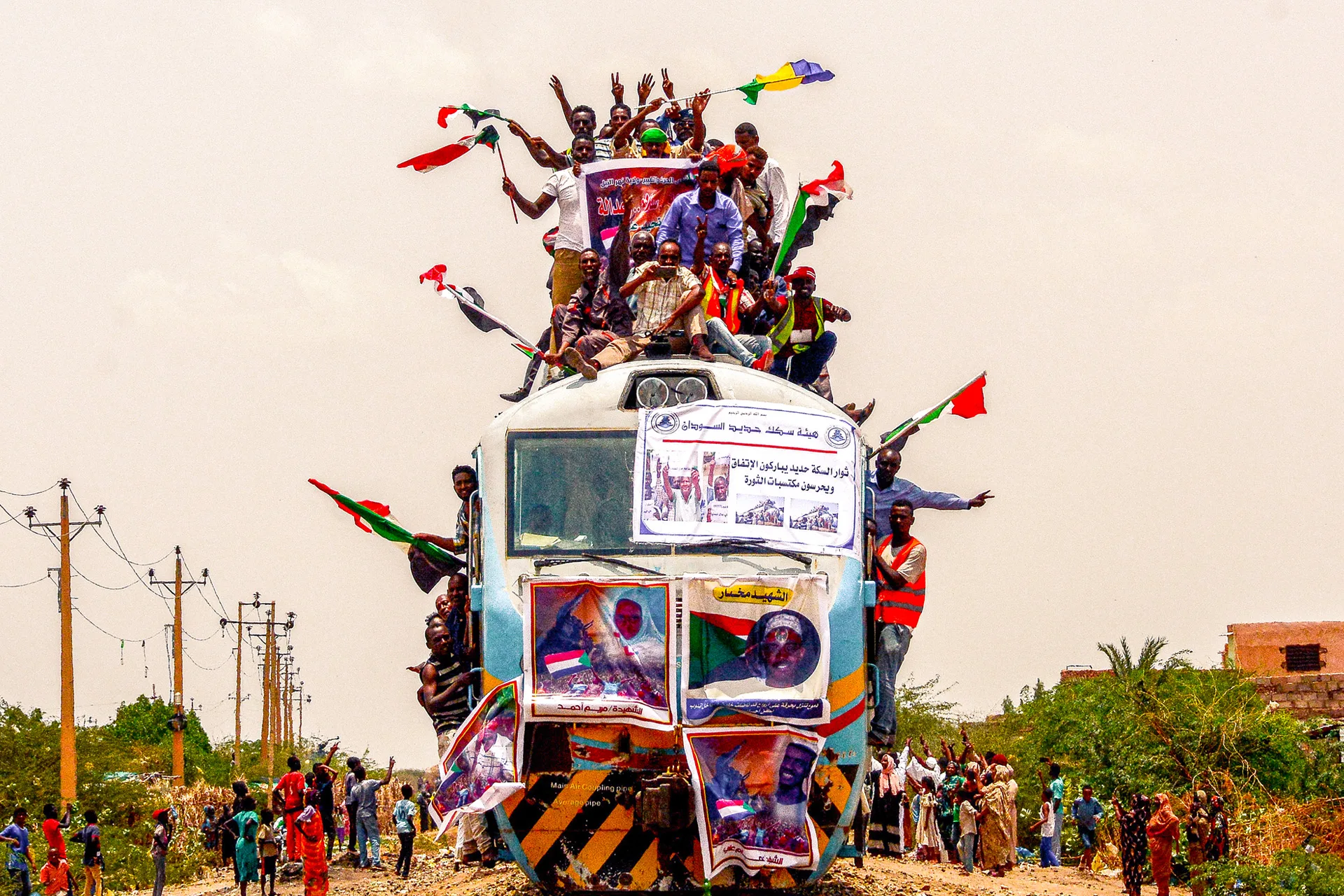
On 28 May, Sudan stood still.
The SPA unleashed a strike that will go down as one of the most powerful displays of strength of the working class in history. In the capital, observance was nearly 100 per cent. Throughout the country it didn’t matter if it was hospitals or oil refineries, banks or government ministries, airports or flour mills; all sectors were affected once the workers moved decisively.
The strike also enjoyed immense support amongst state employees, from the Central Bank, Tax department and Ministry of Labour. This palpably raises the question of power: if the people who run the machinery of the state answer to the strike leaders and not the government, then who is the government?
Strike committee after strike committee published resolutions declaring their willingness to fight to the end.
The strike committee at Port Sudan declared:
“We reaffirm our readiness and responsiveness to all the decisions by the SPA in the context of restoring full civil authority and sovereignty, and declare our readiness for civil disobedience and an open political strike until the handover of authority into civilian hands. And as we have previously said, the instructions are with you and the [deed] is with us.” [7]
Morning pickets transformed into mass afternoon rallies. State intimidation proved impotent. The force of the workers felt unstoppable.
The RSF attempted to reassert control over the situation through terror. They stormed the electric company to try and break striking workers and arrest their leaders. But the workers came forward and said that if they carried out the arrests, then they would stop all electricity to the RSF buildings and premises. The reactionaries were forced to retreat.
The lesson was clear: not a wheel turns, not a light bulb flickers, not a telephone rings without the kind permission of the working class. Once that force is unleashed fully, nothing can stop it.
But that force was not unleashed fully. The strike was not part of a campaign and a strategy for the forceful removal of the military leaders and the entire bourgeois state it stood upon. Instead, it was part of an appeal to convince the military leaders to step down and for a liberal democratic government to take its place. But the liberals in the FFC had already struck a deal. It was precisely this deal that the workers opposed.
The leadership of the SPA did not put forward an independent working-class political programme. Instead, they kept it always within the limits of bourgeois democracy, which in the case of Sudan meant military rule, with at best a civilian figurehead. The military understood this; they did not fear the FFC, nor the leaders of the SPA. What they did fear was the masses, who were the engine of the entire revolution. The May general strike had not toppled them, but the military was keen to not give the workers another chance.
The whip of counter-revolution
The workers had dared to show their strength in May; now the military concluded they needed to be taught a lesson through terror. The sit-in had to go.
It was 5 am on 3 June 2019. Thousands of police and RSF soldiers gathered outside the sit-in. They were armed with AK-47s on the one hand, whips and bludgeons on the other. The signal was given, and the terror was unleashed.
Over the course of two hours, the RSF ran rampant through the sit-in. Men, women and children were shot in cold blood. Others were whipped to death as a sign of humiliation. Women were mercilessly raped. Those on the edge of life had rocks tied to them and were thrown into the Nile. Others were macheted to death where they stood.
By 7 am, over 200 revolutionaries had been slaughtered. The encampment was covered in gasoline and burned to ashes. Smoke billowed high across Khartoum as a clear message to all of what had been carried out.
Now the RSF spread out on motorbikes, inciting terror wherever they went. They flogged protesters to death, looted shops, and burned and rampaged throughout the city.
Despite appearances, terror is not carried out thoughtlessly. It is a political strategy by the ruling class to scare the workers into submission. The ruling class attempts to assert to the workers: we are strong, you are weak, you have no choice but to submit.
As the RSF carried the stick in one hand, the SAF carried the carrot in the other. The SAF announced they had called off negotiations with the FFC. They claimed the FFC was wrong to accept elections in four years, and instead that there would be elections in nine months, which they would begin preparations for. Their hope was that the workers would now accept an apparent concession, fearing what greater terrors lay ahead.
But the workers were not to be cowed. They poured out onto streets following Friday prayers on the 7th, calling for nothing less than the downfall of the military junta, with many raising the slogan of a general strike. In these conditions the SPA rejected the deal and now announced that they would organise the biggest march Sudan had ever seen on 30 June, exactly 30 years after Al-Bashir had taken power.
With social media cut off, SPA leaders toured the country to spread word of the march. With demonstrations being suppressed, they met with and worked through local Neighbourhood Resistance Committees to organise. Vigils and funerals were key places of political organisation.
On 9 June, a mass general strike was called, and once again airports, banks, hospitals and factories stopped work. Mass rallies were called, and people struck, despite the tear gas and live ammunition they faced.
On 30 June, 1 million marched. They chanted:
“Freedom! Civilian Rule! The revolution has just begun!”
“The bullet doesn't kill – what kills is one’s silence!” [8]
The immense movement of the masses, despite all the attempts at repression, had halted the counter-revolution in its tracks. Power and initiative were back on the side of the revolutionaries. But initiative needs strategy and leadership. This was still lacking.
The July sell-out
There was no reason that 30 June 2019 could not have been the day that the military was overthrown. Once again, the opportunity was there for power to pass into the hands of the workers.
The SPA, however, firmly believed that a broad coalition with the liberals was necessary, which in practice meant a coalition with the army. Throughout the entire revolution, the SPA leaders were terrified of the prospect of civil war. They clung to pacifism at all times and embraced and celebrated the fact that the revolutionaries did not arm themselves even when facing the most brutal violence.
This call for pacifism was not a strategy for peace, but a recipe for defeat and death on an even greater scale. As we warned at the time:
“If the revolution is derailed, the RSF would have no scruples in unleashing the bloodiest of civil wars if this served the purpose of keeping in power the privileged elite of Sudan.” [9]
These words proved to be prophetic. The failure to overthrow the military laid the basis for the Third Sudanese Civil War, Sudan’s most bloody disaster yet. Violence is not a policy, but a logical outcome of the classes in struggle. If you refuse violence of any kind and at any time, you disarm the revolution, allowing the masses to be trampled and murdered by the ruling class. At the decisive stage that was being reached in Sudan, this was inexcusable.
Moral platitudes were insufficient. What was needed was to break the capitalist state’s monopoly on violence – through the formation of workers’ defence militias by the resistance committees. Such militias would have laid the foundation for the full transfer of power to the working class.
Ironically, had the leadership harboured fewer illusions in pacifism, the overall bloodshed would almost definitely have been reduced. Instead, their ideological commitment to non-violence laid the groundwork for the July sell-out, and ultimately the current civil war.
This fetishisation of pacifism was not rooted in any longstanding tradition of the Sudanese masses. Rather, it was carefully cultivated by Western liberals in the aftermath of the failed 2013 uprising. NGOs such as Freedom House and the United States Institute of Peace – key instruments of US soft power – sought to align themselves with liberal ‘revolutionaries’. Having lost much of their influence in Sudan following their support for South Sudan’s secession, the US was now looking to position itself favourably with the regime’s likely successors.
For six years, organisations like Freedom House worked to identify and train emerging leaders from among the masses. They organised workshops focused on non-violent tactics and liberal political ideals. Selected participants were flown abroad, courted, and groomed for influence. The aim was clear: to cultivate a new generation of leaders loyal to liberalism and the West. And given the complete lack of leadership from the left, they succeeded. Many prominent figures within the SPA and the FFC were consciously shaped by US imperialism into liberal cadres.
At the start of the revolution, when the SPA debated whether to demand regime change or simply higher wages, it was these foreign-trained agents who ensured the latter. They became the most fervent defenders of pacifism and the most determined opponents of workers’ self-defence.
Meanwhile, the imperialists exerted pressure through other avenues as well. The US, UAE, Britain, and Saudi Arabia were desperate to bring the revolutionary wave to an end, fearing its potential to spread across the region. The FFC argued that only a power-sharing arrangement with the army could prevent civil war. The leaders of the SPA threw up their hands and declared: “We have no choice [but to accept the deal]”[10], since they were unable to see a way forward without the consent of at least a section of the bourgeoisie.
Thus, on 9 July 2019, the FFC agreed to the formation of a transitional ‘technocratic’ government. It would consist of five civilian representatives from the FFC, five military officers, and one supposedly ‘neutral’ member forming a Sovereign Council. That ‘neutral’ figure later turned out to be a retired army general. The Council itself would be headed by a military appointee, with elections scheduled in three years’ time.
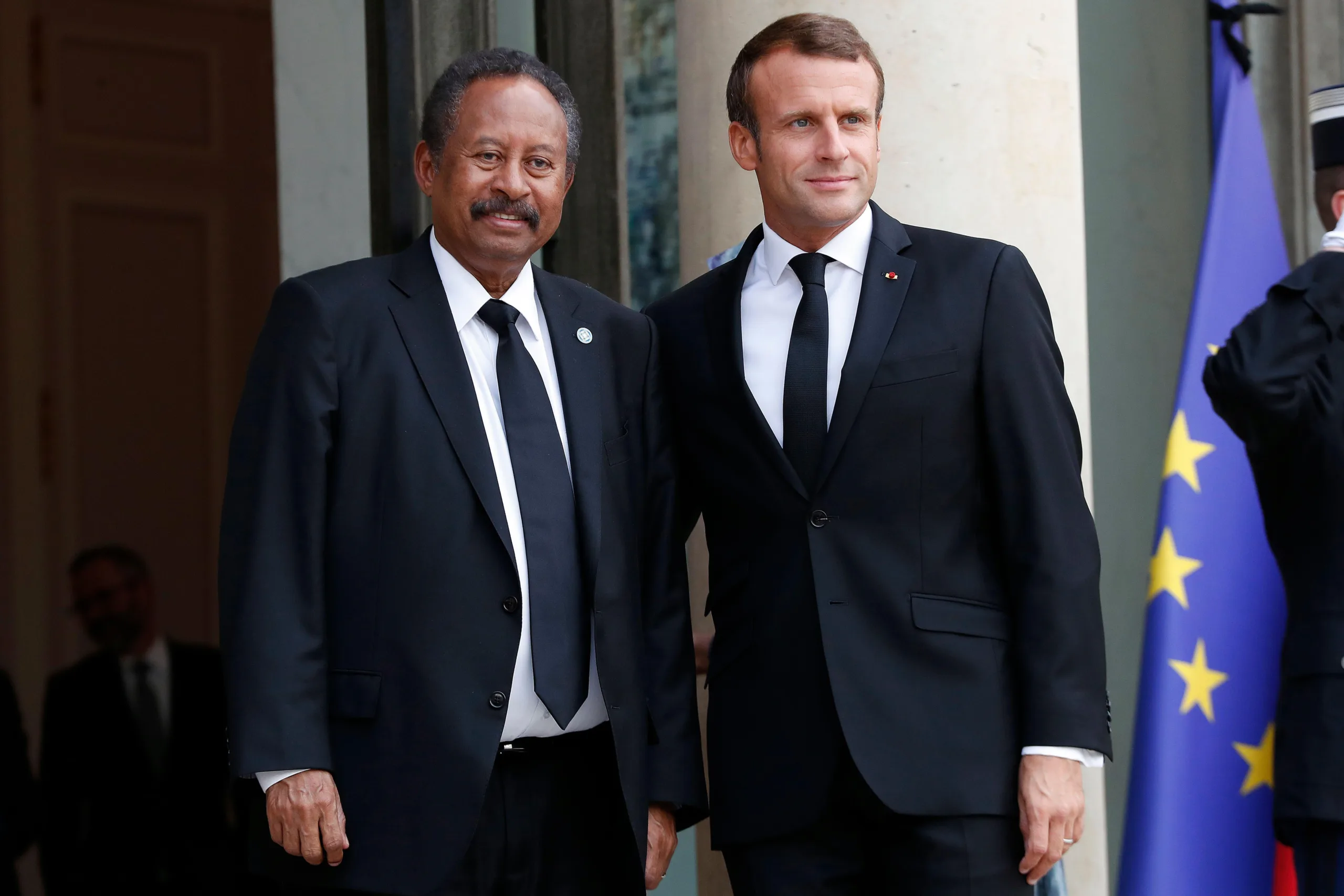
Six months of heroic struggle by the Sudanese working class resulted in nothing more than a superficial reshuffling of those at the top. Omar al-Bashir was replaced by Abdalla Hamdok, a liberal economist, formerly employed by the United Nations, who had played absolutely no role in the revolution up to this point. But the machinery of the capitalist state remained completely intact.
Hamdok would govern for two-and-a-half years. He achieved nothing.
Hamdok: the impotent liberal
Abdalla Hamdok had been chosen on the basis that he appeared to please everyone. In his youth, he had been a member of the Communist Party. But he had long ago swapped his party card for the suit and tie of a UN commissioner. The military understood that Hamdok was no threat whatsoever. He had even been considered so amenable that in 2018 Al-Bashir had contemplated hiring him as an economic advisor.
The masses celebrated this as a major victory, but the military knew that even if Hamdok did attempt more radical change, they held all the cards. To underscore this point, when Hamdok arrived in Khartoum the military refused to give him any place of residence. As Prime Minister, he was forced to work out of a friend's flat for his first few months in office.
On the question of the economy, Hamdok was no different from Al-Bashir. He was keen to cut subsidies to the working class, which he saw as a drain on the economy, whilst unwilling to take a penny from the vast military spending. He left the economy in the private and corrupt hands of the local and international capitalists. They allowed bread lines to snake through Khartoum, as electrical operators had to place the city on long blackouts, whilst tractors stood idle in the breadbasket of the Nile, due to a lack of fuel.
Inflation soon hit 363 per cent, and public debt-to-GDP crossed the 200 per cent mark.
On civil rights, Hamdok kowtowed to the military. He continued to censor the press, used the state apparatus to spy on some of the most prominent activists in the revolution, and refused any investigations into the 3 June massacre.
The Resistance Committees still posed a potential challenge, but they were increasingly demoralised – and Hamdok deftly played them off against one another. The idea that the Resistance Committees should primarily function as organs of mutual aid, rather than as instruments for building a new workers’ state, was gaining traction. Their role, it was argued, was not to lay the foundations of workers' power, but the foundations of a new welfare state.
The transitional government actively encouraged this shift in focus. It legitimised the committees as auxiliary administrative bodies aligned with the state. It urged people to turn to them for essential goods – fuel, food, and medicine – especially during the pandemic, which claimed 16,000 lives in Khartoum alone.
As a result, the Resistance Committees were overwhelmed. Rather than patiently explaining the real role of Hamdok and putting forward a programme that replaced him with workers' control, the most dedicated revolutionaries were pulled into the role of charity workers. What had once been the embryonic organs of a workers’ state became mired in the daily struggle to meet the basic needs of a collapsing society. Their revolutionary potential was slowly suffocated as they attempted to hold up the weight of an unfolding humanitarian catastrophe.
The so-called ‘compromise’ with the SAF and the RSF had been a complete capitulation, as the generals held all power in their hands. Hamdok was an impotent figurehead on top of a huge state machine that he did not control. In the Crisis Economic Committee, Hamdok, the ‘Doctor in economics’, had to remain silent, as the trumped-up camel herder Hemedti called all the shots.
This impotence was not a product of Hamdok’s personality nor the immense strength of the military, but instead flowed directly from his class position. The liberals knew that a determined struggle to remove the military and establish a liberal-democratic state could only succeed by mobilising the workers and the youth. But the force of the masses would not stop with the establishment of formal democracy.
For the masses, democracy would be first and foremost a means for the betterment of their conditions. But the liberals could not satiate the workers precisely because Sudan was in the grips of a capitalist crisis from which it could not escape. Thus, unless prevented, the revolution would not stop at liberal democracy, but under the pressure of the masses, would move on to attacks on private property and the capitalist class itself. Attacks which only the military could fend off.
Thus, the choice for the liberals was the following: establish a democracy but soon risk being underneath the workers; or continue to allow the military to climb upon their shoulders, stick in the heel of their jackboot, and allow them to rule society as they pleased, siphoning off billions in the process.
The weakness of the capitalists, their inability to take society forward even by an inch, combined with the enormous strength of the workers, made the capitalists all the more willing to look to a military ‘strong man’ for salvation.
The coup of 2021
Two years had now passed under Hamdok, with nothing solved at all. According to the sell-out in July 2019, elections were to take place in the spring of 2022. But the military was in no mood to risk the masses asserting themselves through elections. On Monday 25 October 2021, Al-Burhan of the SAF asked Hamdok to join him as prime minister of a reconstituted government, which would scrap elections and firmly place Sudan under a military dictatorship.
To the surprise of Al-Burhan, Hamdock refused. His thinking was that Al-Burhan wouldn’t complete the coup without the backing of the US. Over the weekend, the US ambassador had told Al-Burhan that if he went ahead with the coup, the US would cut off $700 million of aid and remove Sudan from access to the World Bank, along with several other sanctions.
Al-Burhan was undeterred. Backed by Al-Sisi in Egypt, who had done the same thing eight years earlier to crush the Egyptian Revolution, he called the bluff of the US and seized power.
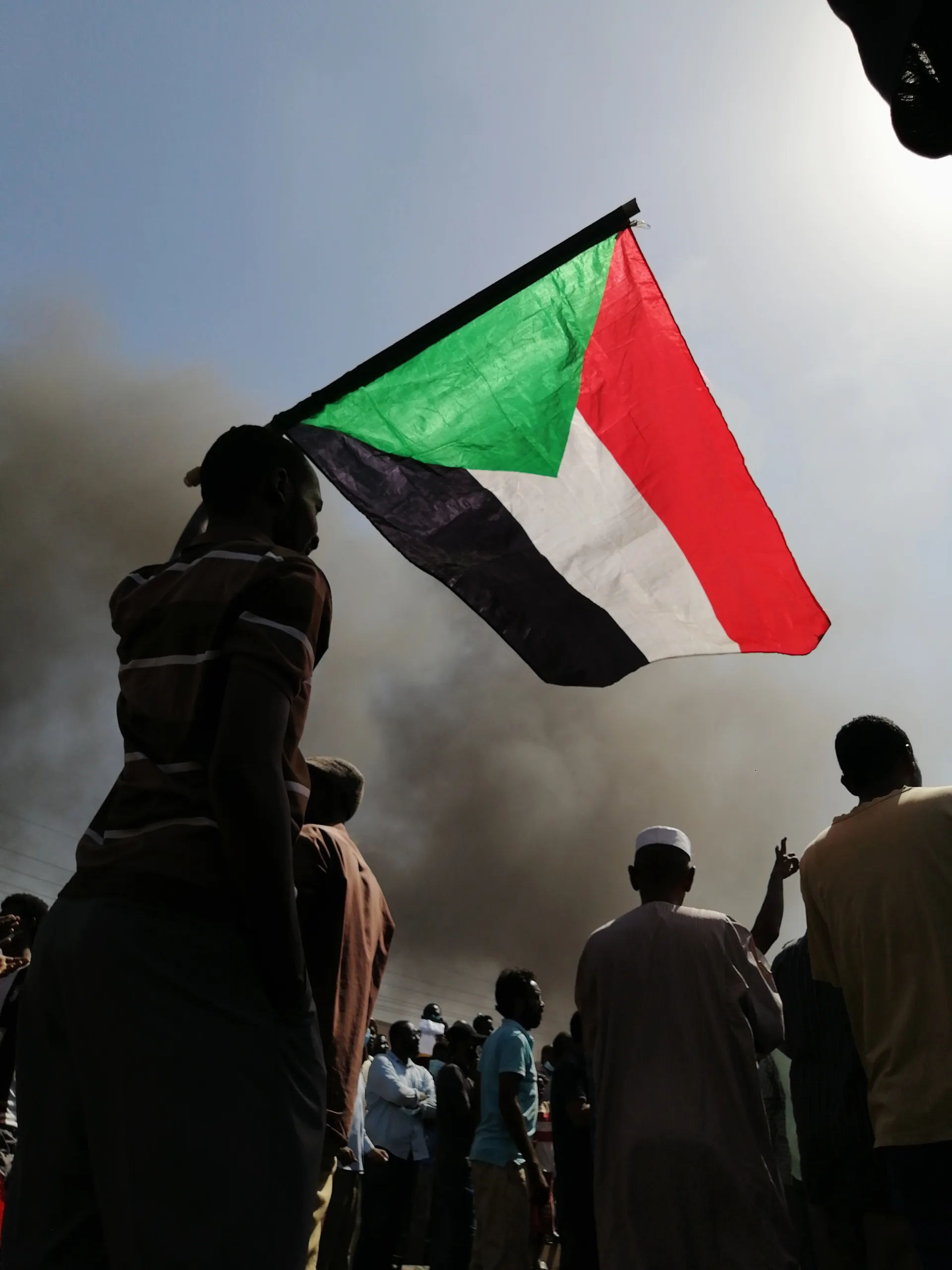
Al-Burhan kidnapped Hamdok, and then went on national television to announce that all flights were suspended; the internet was shut down; and that a state of emergency was in place until July 2023, when new elections would be called.
Al-Burhan had wished to present this as a fait accompli. But the working class had other plans.
With the announcement of the coup, the revolution was reignited. The Neighbourhood Resistance Committees were given a new lease of life. The SPA and Communist Party called for mass general strikes. One million people responded to the call when the trade unions called for mass civil disobedience.
Al-Burhan announced that for their defiance, all trade unions would be dissolved. The RSF was once again mobilised to incite terror within the crowds.
But the masses were determined to fight. They responded with the chants of “Revolutionaries and free people will continue the journey!”, “The revolutionaries are not afraid of bullets!”, “The people are stronger!”, and “Retreat is not an option!”
Within five days of the announcement of the coup, 4 million workers were on strike, determined to stop the generals. The regime responded by arresting thousands, who came out under the fire of live ammunition.
Under the huge pressure of events, the SPA now adopted its most radical position yet. They called for the complete overthrow of the military; a full civilian government to replace it, composed only of revolutionary forces; and for the SAF and RSF to be disbanded and their leaders tried for crimes against the revolution.
But even now, their lack of political clarity showed. The question of how this was to be achieved without a workers’ insurrection, without arms, without a new state to replace the old, was all left unanswered. Instead, they congratulated Hamdok for refusing to support the coup, and gave him left cover as a potential leader. This would prove fatal.
On 21 November, a month after his kidnapping, a shaky and disoriented Hamdok appeared with Hemedti and Al-Burhan, saying they had come to an agreement. He would lead a new technocratic government with elections postponed until June 2023, but the resistance would have to stop.
Immediately, the right of the FFC came out to support the deal. The left refused, but gave no perspective on how society could be changed. They continued to call for the most peaceful methods possible and refused to arm the workers.
The Khartoum Neighbourhood Resistance Committees announced, “It is our duty to resist [the generals] until we are victorious or they rule an empty country after they have killed us all”[11]. But with still no perspective on how to effectively fight back, the masses were being led like lambs to slaughter.
With zero perspective from the leadership, the response to the strike action diminished. People do not face the risk of death out of mere goodwill, they need to have the belief that their actions can change history. Three years of pacifist middle-class leadership had squandered that belief, and there was no revolutionary party to show the way out.
On 3 January 2022, once the masses had gone home, Hamdok officially resigned. The SAF and RSF were given full control. All calls and struggles for a civilian government had ended up in nothing but the cemented rule of the military dictatorship. The illusions in pacifism would lead directly to the bloodiest civil war Sudan has seen, because these tyrants remained in power.
The workers had been led up a blind alley. Without a perspective of how to escape, all their energies resulted in nothing but further demoralisation. The RSF continued their campaign of terror. They attacked workers with tear gas, batons, live ammunition and anti-aircraft guns. Workers mourning the dead at funerals were valid targets, as armoured vehicles would drive people down, going back and forth to run them over.
The scale of the terror was not the decisive element of the October coup, but instead the lack of a resolute leadership with a clear perspective to fight back. This is what would ultimately drive the workers to exhaustion.
The victory of the counter-revolution
January 2022 was the culmination of the counter-revolution. The workers in Sudan had not been physically crushed by the generals, but their leaders had led them repeatedly into a dead end. After three years of immense courage and sacrifice, the result was yet another military coup.
Three years of exertion had left the masses fatigued and demoralised. A whole string of actions was called through the early spring of 2022, but fewer and fewer turned out as hope ebbed from their hearts. No one was able to clearly explain the events that were taking place, or offer a convincing way forward.
The SAF and RSF had succeeded in quelling liberals and revolutionaries alike. They had cemented the rule of the sword. The only question was which faction would wield it. With the working class sidelined, the generals turned on each other, jostling to see who would walk away with the blood-stained spoils of the Sudanese people. The more complete the defeat of the masses, the sharper the infighting among the victors became.
Al-Burhan extended a poisoned olive branch to the RSF, proposing to incorporate them into the SAF under his command. Despite the services the RSF had offered to the counter-revolution, the Khartoumian clique still looked upon them as backwards tribal herders.
But Hemedti had no intention of backing down. He had consolidated his base in Darfur, enriching himself through the vast gold mines of the west. He had proven himself as the bloodhound of the counter-revolution, and was quickly courting international backers, particularly the UAE, whose ambitions stretched over the Horn of Africa. By January 2022, Hemedti had risen from a peripheral camel herder to the most powerful man in Sudan. He was not going to let Al-Burhan threaten his position.
The struggle for Sudan’s ‘top Bonaparte’ had begun. The foundations of the civil war were now firmly in place.
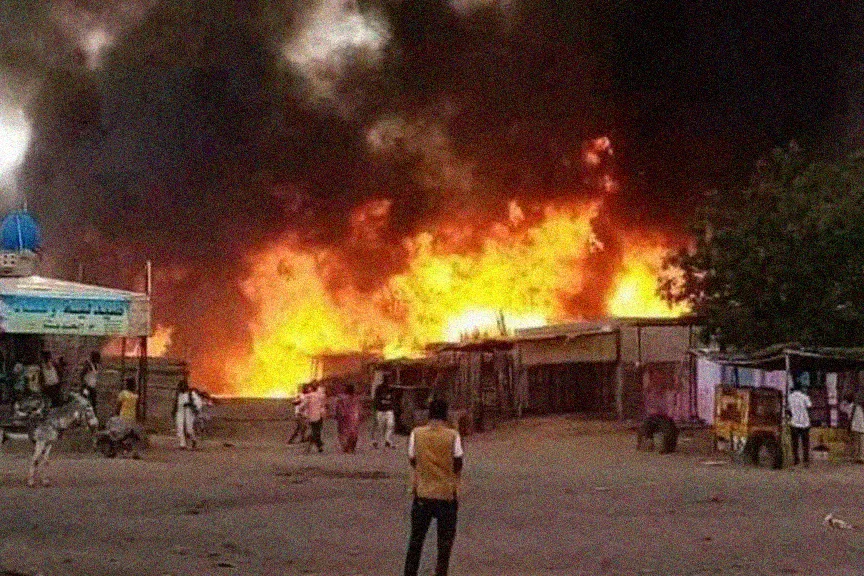
On 16 April 2023, the RSF felt emboldened enough to move against the SAF. With fighter jets and tanks, the first salvo of the Third Sudanese Civil War was fired. Within two weeks, 800,000 refugees were fleeing Sudan as famine stalked the land. Pregnant women starved due to a lack of food. The worst famine globally for 40 years was unleashed, with 24.6 million people facing ‘acute hunger’, and 2 million facing famine or risk of famine[12]. By January 2025, the Sudan Doctors’ Union estimated that over 522,000 children had already died of malnutrition.
For over two years, both sides have been competing to take the barbarity to new levels. Torture, castrations, beheadings and slavery are the order of the day. Babies as young as one have been raped. Sexual assault has been turned into a weapon of war.
In the west, the RSF has solidified their rule. They have reopened their genocidal campaign in Darfur against the Masalit people, fuelled by divides between the Arab nomadic herders and the black African pastoralists. In 2005 they had conducted a systematic policy of mass rape to wipe out the African population. Now the RSF took a more direct route. All black African males were to be executed, regardless of their age. Women escaped into Chad with their baby boys, lifeless on their backs due to the bullet holes through their heads.
In the past, a conflict of this magnitude would have been shaped as much in the corridors of Washington as on the battlefield. It was the United States, after all, that brokered the Comprehensive Peace Agreement of 2005, bringing an end to the Second Sudanese Civil War, and ultimately splitting the country in two. But the relative decline of US imperialism has allowed a number of smaller powers to assert their interests in the region, irrespective of US foreign policy. In Sudan they have come seeking control of the Red Sea trade routes in the east, fertile land along the Nile, and gold in the west – now surging in value as the dominance of the dollar erodes.
A dizzying array of powers has intervened. The Saudis have consistently backed the SAF, while the UAE, an up-and-coming imperialist contender, has become the principal supporter of the RSF). The list of foreign players seems endless: Qatar, Egypt, Turkey, Ethiopia, Eritrea and Chad have all played their part. The reverberations threaten to push South Sudan's four-year peace into another civil war.
Adding to the mad hatters' tea party, Russia initially intervened on the side of the RSF to secure gold and circumvent Western sanctions. To counter Russia’s attempt to bust sanctions, the Ukrainian Army has intervened on the side of the SAF, leading to spectacular scenes of Russian mercenaries fighting Ukrainian special forces in the streets of Khartoum.
Now, however, the Russian imperialists have swapped sides, prioritising access to the Port of Sudan. Thus, the RSF have been dropped and the SAF are Russia’s new allies, which has led to even more spectacular scenes of Russian mercenaries working together with Ukrainian special forces.
A full analysis of the Third Sudanese Civil War lies beyond the scope of this article. What is certain is that the Sudanese working class has suffered a catastrophic defeat. It will take years – perhaps decades – and massive developments not just within Sudan, but internationally, for them to regain their strength.
In the meantime, barbarism has taken hold – and it is spreading, day by day, beyond Sudan’s borders.
Socialism or barbarism
Pacifists and cowards may claim: “Had we never fought for freedom, we would have been spared such horrors.” But capitalism itself is a horror without end. The crisis in Sudan was not the result of the revolution – it was the deep crisis of Sudanese society that gave rise to the revolution.
Had the workers never taken to the streets, would that have halted the economic collapse, when inflation had already soared past 100 per cent in 2018? Would it have prevented the fragmentation of the ruling class, when the dictator had already created two competing armies to secure his grip on power? Would it have kept the regional powers from intervening – the same ones already fuelling destruction in Yemen, Tigray, South Sudan and the DRC?
All of these developments stem from the global, systemic crisis that capitalism has faced since the crash of 2008.
That crisis ushered in a historic era of instability – a period defined by the protracted deadlock between a capitalist class unable to develop the productive forces, and a working class repeatedly betrayed by its own leadership. The world today is defined by organic instability, marked by sharp swings and abrupt upheavals.
Sudan came closer than any recent movement to breaking that deadlock – to establishing a workers’ government. In their courage, determination, and resilience, the Sudanese working class could not have done more. What was missing was genuinely revolutionary leadership. Time and again, the movement surrendered to bourgeois and petty-bourgeois illusions.
This failure was not due to the personal shortcomings of individual leaders. It was the inevitable result of lacking a revolutionary party built in advance – a party steeled against the pressures of bourgeois society, with trained cadres rooted across the country, capable of uniting the working masses around a coherent revolutionary programme. Without such a party, even the most heroic uprising will bend under the weight of the ruling class.
The failure of the Sudanese revolution opened the floodgates to unimaginable horrors. But Sudan is no exception – it is a warning. The slogan ‘Socialism or Barbarism’ is not a distant theoretical proposition; it was the real, concrete choice facing Sudan in 2019. In the absence of revolutionary leadership, the outcome was barbarism. This question will be posed again and again.
The old mole of revolution is burrowing – not only across Africa and the Middle East, but also northward, toward the heartlands of imperialism. The tremors that rocked Khartoum in 2019 will, in time, shake the centres of global capitalism.
The only question is: will the forces of revolution be prepared – or will they allow history to be repeated?
The Sudanese revolution offers a trove of lessons. It would be unforgivable to let its legacy pass in vain. The battle between revolution and counter-revolution will erupt again and again, on ever-larger scales. There can be no doubt as to the final victor – if, and only if, we prepare in advance.
Timeline
- 1899: Sudan formally becomes a British Colony
- 1955-1972: First Sudanese Civil War
- 1956: Sudanese Independence; first parliamentary government
- 1958: First military coup
- 1964: October Revolution ends military rule; second parliamentary government
- 1965: Communist Party banned
- 1969: Military coup by Nimeiri; inroads into private property, Communist Party legalised
- 1971: Failed revolution by Communist Party; Communist Party arrested
- 1983: Nimeiri imposes Sharia law; start of Second Sudanese Civil War
- 1983-2005: Second Sudanese Civil War
- 1985: Revolution ends rule of Nimeiri; third parliamentary government
- 1989: Omar Al-Bashir seizes power in military coup with support of Islamists
- 2003-2005: Al-Bashir carries out genocide in Darfur using the Janjaweed
- 2011: South Sudan gains independence
- 2013: Janjaweed reorganised as the Rapid Support Forces
- 2018 December: Protests break out against Al-Bashir
- 6 April 2019: Sit-in at the Military HQ in Khartoum begins
- 2019 April 11: Al Bashir falls
- 2019 June 3: Massacre at the sit-in carried out by the Transitional Military Council/RSF
- 2019 June 30: Million man march against the SAF and RSF
- 2019 July 3: Powershairing agreement between Transitional Military Council and SPA reached
- 2021 October 25: SAF depose civilian transitional government
- 2021 October 27: Four million workers out on strike
- 2022 January: SAF completes coup
- 2023 April 16: RSF attempts coup against the SAF starting Third Sudanese Civil War
References
[1] Quoted in W Berridge et al., Sudan’s Unfinished Democracy, Oxford University Press, 2022, pg 46
[2] Quoted in S Zunes, ‘Sudan’s 2019 Revolution’, ICNC Special Report Series, Vol. 5, April 2021, pg 7
[3] Quoted in W Berridge et al., Sudan’s Unfinished Democracy, Oxford University Press, 2022, pg 32
[4] ibid. pg 112
[5] D Pilling, ‘Sudan’s protests feel like a trip back to revolutionary Russia’, Financial Times, 24 April 2019
[6] Quoted in W Berridge et al., Sudan’s Unfinished Democracy, Oxford University Press, 2022, pg 33
[7] H Alizadeh, ‘Powerful general strike in Sudan: now kick out the junta!’, marxist.com, 31 May 2019
[8] H Alizadeh, ‘What next after Sudan's Million Man March?’, marxist.com, 1 July 2019
[9] F Weston, ‘Sudan: the whip of the counter-revolution spurs on the revolution’, marxist.com, 10 June 2019
[10] Quoted in W Berridge et al., Sudan’s Unfinished Democracy, Oxford University Press, 2022, pg 67
[11] J Attard, ‘The Sudanese Revolution is in danger’, marxist.com, 19 January 2022
[12] World Food Programme, ‘Famine in Sudan’, wfp.org