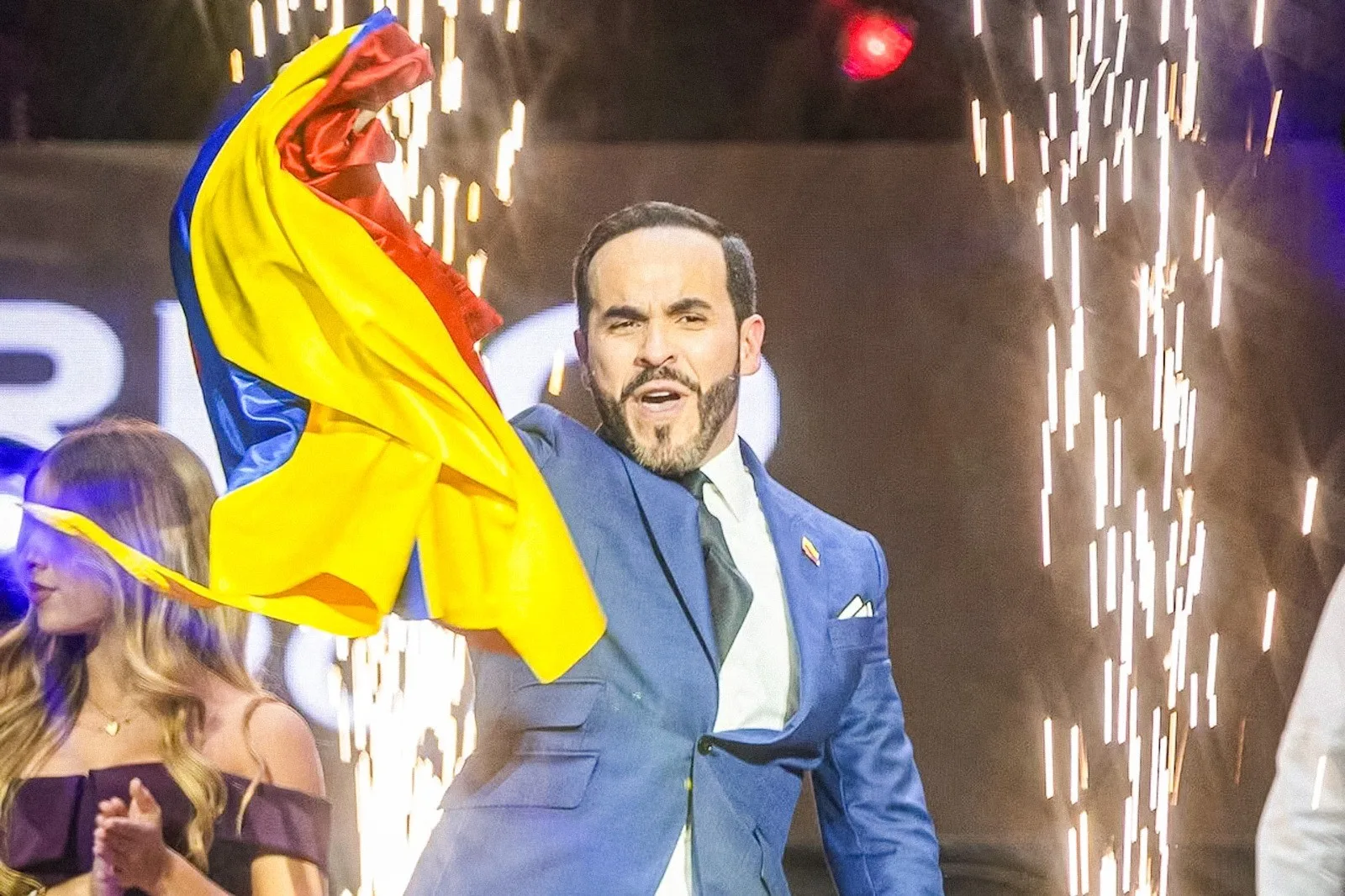
Abelardo de la Espriella, a far-right reactionary with links to the paramilitaries who terrorised Colombia for decades, has come to power on promises to implement the heavy-handed, austerity-driven programme similar to that of Argentina’s Javier Milei and El Salvador’s Nayib Bukele.
Congratulatory messages poured in from Donald Trump, Marco Rubio, and the reactionary presidents of Latin America. Benjamin Netanyahu was also happy to see the departure of Gustavo Petro, who once said Netanyahu stands “alongside those who murdered millions of Jews in Europe”.
Espriella was not on the Colombian ruling class’ radar as a viable candidate three months ago, when his party secured just four parliamentary seats and stood at 25 percent in the polls. Now, he is set to succeed Gustavo Petro – the first left-wing president in Colombia’s history – by a margin of less than one percent over his rival, Iván Cepeda, of Petro’s Pacto Histórico party.
How is it that a reactionary businessman with a long history of links to drug trafficking has managed to become president?
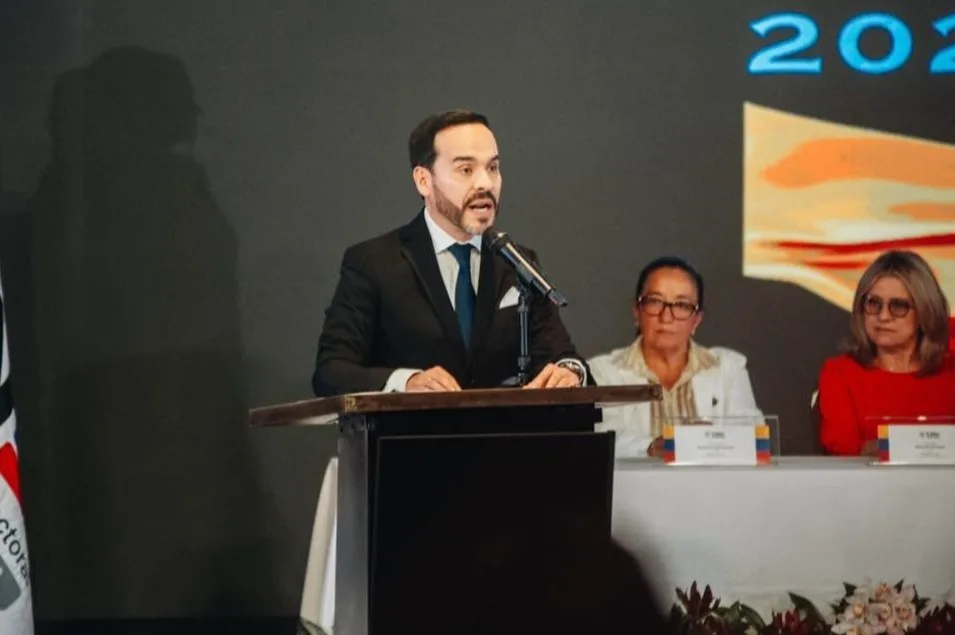
Who voted for Abelardo?
As a lawyer, the list of Abelardo de la Espriella’s defence clients and friends is a veritable catalogue of every sort of scoundrel the Colombian ruling class has produced.
Among them are David Murcia Guzmán (the mastermind behind the largest Ponzi scheme in Colombia’s history), Dieb Maloof (a senator linked to paramilitarism) and Alex Saab (a businessman linked to the Venezuelan government and a beneficiary of the privatisation of Abastos Bicentenario).
When he’s not defending degenerates, he’s busy making botox ads or bragging about killing cats on TV.
Abelardo is a special type of cartoon goon only Colombian capitalism could have produced. And that’s the point. As Marx said in The 18th Brumaire of Louis Bonaparte, “the class struggle in France created circumstances and relationships that made it possible for a grotesque mediocrity to play a hero’s part.”
But is he destined to play a ‘hero’s part’? Is this grotesque mediocrity likely to be the hero the bourgeoisie needs?
Abelardismo has flourished, above all, in an environment of distrust of the political establishment. According to the 2026 Edelman survey, only 36 percent trust the government to have their interests at heart, while 32 percent believe that the next generation will not have a better future.
The traditional right wing has been completely discredited for years. Its favoured candidate was executed on the street last year. Abelardo’s strength lies in being a vacuous shell who tries to be everything to everyone, his policies consisting of hollow overtures to both the capitalist class and the poor.
Espriella also has links with the upper echelons of the Colombian bourgeoisie. From a young age, his family was close to previous Colombian president Álvaro Uribe Vélez. But these ties to the ‘old guard’ did not stop him from presenting himself as an outsider to Colombian politics. He claimed to represent those who "never experienced living off the state's teat", in a fight against those who have always governed the country.
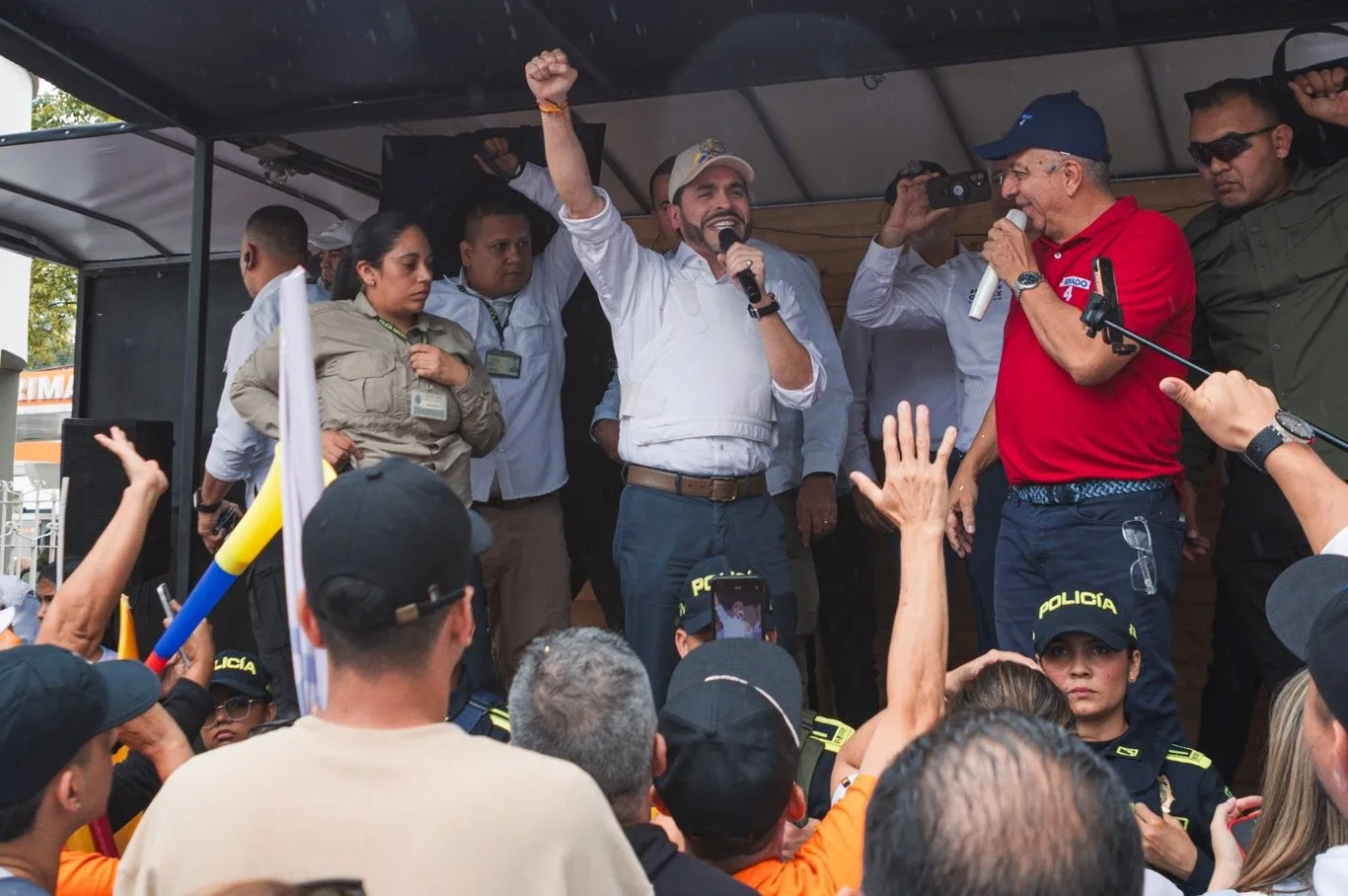
He presented the three former presidents (Uribe, Santos and Petro) as part of a grand conspiracy to keep him from power while enriching themselves through their supposed links with the guerrillas and the paramilitaries. This resonated with a sector of the country’s middle class and half the towns besieged by criminal gangs, who were unsatisfied with the reformist government’s inability to remove armed groups in the towns, and its unfulfilled promises to foster small businesses.
This is reflected in an electoral map where the key urban centres voted for the right while the rural areas of the country voted for the left. This dynamic has been present ever since the 2016 referendum on the peace deal with FARC, a 7,000-strong guerrilla organisation that had waged war on the Colombian state since 1964. However, this result has shown that the reformists have lost support in the areas where Pacto has historically done well.
This is especially true in Bogotá, the capital. In 2022, Petro won every district except for Chapinero and Usaquén (the two richest districts in the country). Cepeda only won the south districts and Abelardo managed to improve on the previous right wing candidate (Rodolfo Hernández) by almost ten points by clawing at votes in working class districts such as Engativá and Kennedy.
The bourgeois media has spent the last four years slandering the reformists as complicit in the security crisis while the oligarchy has mobilised all of their legislators and judges to block each reform the Petro government has put forward. This has created the disappointment that formed the breeding ground for Abelardismo.
A programme of repression, war and austerity
Abelardo de la Espriella’s programme is a three-page document outlining “an aggressive military and police offensive against crime” and “decapitation strikes against 10 key leaders of narco terrorism”.
The main targets are criminal gangs and guerrilla groups such as the ELN and the FARC, and this offensive will be funded by a second Plan Colombia (the Clinton and Bush-era US initiative to fund Colombia’s military). His slogan calls for “gutting the left”, and he has called for Gustavo Petro to be imprisoned.
This programme has sparked fear within the ranks of the labour movement. This is particularly understandable in a country where the first legal attempt to build a left-wing party in the 1980s ended with the murder of almost 9,000 activists. His election has encouraged the dregs of society to keep tabs on left-wing activists on social media and to pressure them through online threats.
It must be said clearly. The win of the right wing is a set-back for the working class, but not because of the weakness of the working class, but rather because of the weakness of the reformists’ programme.
But will Abelardo be able to carry out his programme?
If he attempts to wage war on the drug gangs and guerrillas, he is doomed to fail. More than 60 years of armed struggle has proven the military cannot abolish the guerrillas or paramilitaries because it doesn’t tackle the conditions that give rise to these two phenomena.
Both are products of the enormous land monopoly, where 80 percent of the land is in the hands of 10 percent of the rural population. This arrangement forces farmers and peasants with small land holdings to work on the coca fields, as growing traditional crops is unprofitable. Abelardo’s plan to solve problems that have led to decades of conflict in just 90 days is destined to fail.
He will also be left holding a ticking fiscal time bomb. Colombia’s National Association of Financial Institutions (a reactionary think tank) warns that the projected deficit for 2026 will be 6.5 percent of GDP and require $63 billion in cuts by 2027 to balance the books. This is impossible without a frontal attack against the working class.
He will have to face these problems with a weak government. The central obstacle he will face is the fact that his government was elected by just 31 percent of the population, with the opposition party securing 30 percent of the vote. Abelardo’s party did not even manage to secure more than four senators in the March elections.
This is not a return to the days of Uribe, where trade union leaders were assassinated by state forces while the president obtained 80 percent approval. It is an unstable government with a programme that cannot address the problems it was called upon to solve.
Abelardo already abandoned most of his demagogy against the opposition on the day of his victory, such as his calls for the arrest of Petro and Cepeda. His VP, José Manuel Restrepo, warned of a “fiscal crisis of enormous proportions” and called for counter-reforms… but then said they will not attack workers’ wages.
While Abelardo will have a strong coalition of the establishment parties in Congress, the key problem will be that any attempts to implement a programme that calls for bombing suspected guerrilla camps a la Uribe while implementing the cuts demanded by the capitalists will fuel social unrest and working-class mobilisation.
Iván Duque was elected on this programme and it detonated a national blockade movement in 2019 that set the foundation for the 2021 national strike that almost overthrew his government. Abelardo’s prevarication reflects precisely a fear of triggering a new wave of working-class struggle.
What explains the reformists’ defeat?
Pacto Histórico won the March parliamentary elections by securing the highest vote share in the modern history of parliamentary elections. Petro had an approval rating of 51 percent at the start of this year, with his reforms polling 75 percent.
Iván Cepeda, Petro’s successor, was himself polling at 40 percent among voters, compared with 30 percent for Abelardo and 20 percent for Paloma Valencia (the establishment’s preferred candidate) at the start of the campaign.
Under these circumstances, the real question is not why Abelardo won, but why did the left lose?
The problem is that Pacto Histórico’s track record is mixed. While last year’s protests succeeded in ensuring that labour and pension reforms were passed through Congress, the government’s attempt to negotiate with all armed groups simultaneously failed, and its health reform by decree did not resolve the issue of intermediary companies that play a parasitic role.
Despite touting the possibility of a first-round victory, Pacto Histórico was left reeling when the first-round results saw Abelardo de la Espriella in first place with a two-point lead. They had counted on the right-wing vote being split between two candidates and therefore did little campaigning, expecting that they’d have it in the bag. Instead, the right coalesced behind Abelardo de la Espriella.
Faced with this reality, the leadership of Pacto Histórico failed to connect with the massive anti-establishment sentiment, despite having themselves been victims of the bourgeois state, which sabotaged all their attempts to pass their reforms. Instead, the Pacto chose to present themselves as the candidates of continuity and institutionalism, effectively preparing their defeat.
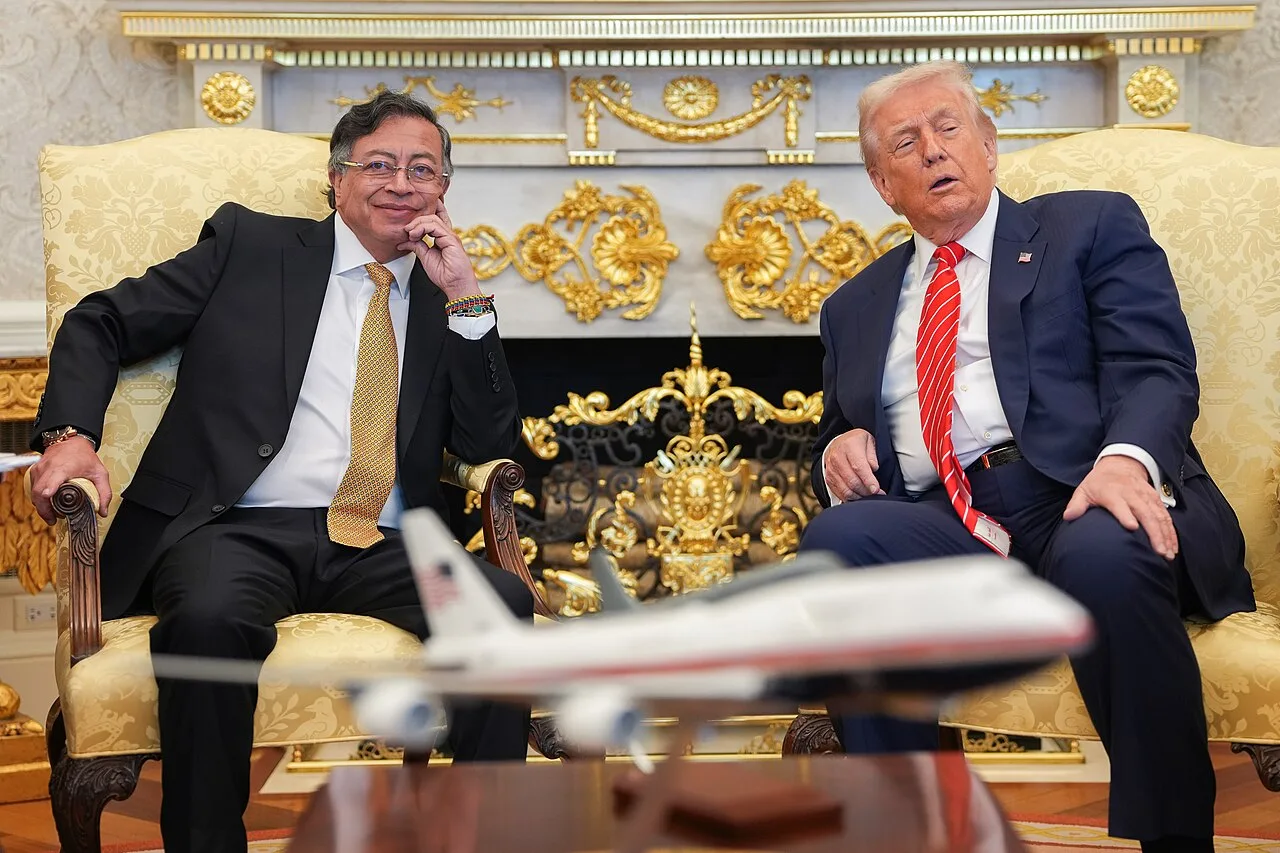
Pacto Histórico, for example, completely failed to weaponise Trump’s support of Abelardo against him. Petro was always most popular when he called Trump a barbarian and a murderer, while denouncing the republicans as “a clan of paedophiles who want to destroy our democracy.” Unfortunately, in March, Petro capitulated to Trump and accepted a signed MAGA hat and book!
During the second round, Iván Cepeda ruled out the possibility of a Constituent Assembly and replaced it with a “grand national agreement” that would see business leaders and workers set aside their differences to achieve the reforms. That is, the workers would come to an agreement with the very same business leaders who had devoted all their resources over the last four years to fighting against the reforms!
The masses, despite all this, almost saved Pacto Histórico. As soon as the results of the first round made Abelardo the favourite, there was a massive rally of young people, which set the tone for the second round. Mass demonstrations, door-to-door campaigning and leafleting saw a formidable increase of three million votes in the second round.
The left would have won in a landslide had they mobilised these 13 million voters before the first round. A member of de la Espriella’s campaign team confessed to journalist Daniel Coronell that they would have been defeated had the election lasted two more days.
The new period
The defining feature of Abelardo de la Espriella’s election is the mobilisation of millions who reject his government. The vast majority of them voted in an attempt to bring about the programme of reforms for which the working class has been marching since the social uprisings of 2021: agrarian reform, healthcare, education, housing and pensions.
But Pacto Histórico has no concrete plan for how to implement these proposals. Its strategy has been to build a popular front capable of reconciling the reforms with the oligarchy that has blocked every attempt at reform so far.
However, due to its huge vote and parliamentary clout, Pacto Histórico will be the focus of attention for the working-class movement. Those 13 million voters are looking to Pacto’s leadership to guide them in the struggle against Abelardo de la Espriella’s government.
The task of revolutionary communists in this period will be to connect with this fighting spirit, explaining that only militant working-class tactics will be able to repel the attacks that Abelardo de la Espriella will launch against the few gains made by the working class in the previous period.
Pacto Histórico’s strategy of focusing on the parliamentary route did not facilitate the passing of reforms. While Petro called on the masses to come out and defend the reforms in the streets, he always held them back to marches at key points of negotiations to pressure the senators of the oligarchy. This eventually exhausted the outer layers of the movement who saw the reformists had no real way to break the institutional blockade.
Both the issue of Abelardo’s reactionary government and the passing of reforms can be addressed in the same way: through a programme of mass mobilisations and strikes outside the parliamentary arena. This programme would bring de la Espriella’s government to its knees and put pressure on the Colombian oligarchy. These are the lessons of the 2021 estallido social.
Most importantly, the Colombian working class is not suddenly right-wing, or pro-imperalism, or anti-worker. The balance of class forces still favours Pacto Histórico and the working class, despite these setbacks. Abelardo lacks a popular mandate and must tread carefully due to the immense weight of the opposition he has incurred even before taking office.