The eyes of the world are on the rise of China. Viral videos show a supposed ‘solarpunk’ utopia of skyscrapers that double up as gigantic screens at night, vast drone displays of dragons hovering over cities, and peaceful, orderly city centres. It is a twenty-first century equivalent of medieval European explorers discovering Chinese cities and realising their home is not the centre of human civilisation.
China’s astonishing economic development strengthens the case, being made by many on the left, that we should welcome the coming ‘multipolar’ world. It is undeniable that China is different from the US. China’s record of military invasion, aerial bombardment and political meddling in other countries is scant in comparison to the United States.
Whatever one thinks of the Chinese state, it is impossible to deny that China’s rise has been peaceful and accompanied by relative stability domestically and in relation to other states, and above all, has seen vast numbers of people lifted out of poverty.
China, unlike the West, has seriously developed the productive forces in recent decades. It has ploughed investment into real production instead of just financial speculation. As a result, the world is awash with cheap solar panels, cars that do not spew out toxic fumes, and many other marvels.
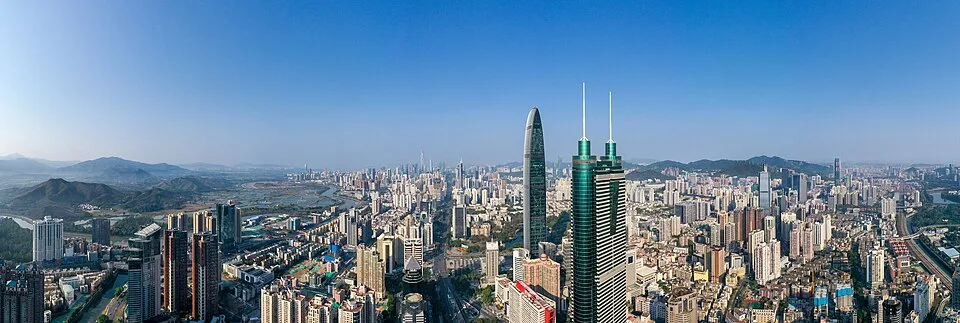
These days, when westerners visit major Chinese cities, they are often stunned by the sheer modernity of it all, how much more high-tech China’s leading cities are than those of apparently more developed western countries.
In the West, there is a constant atmosphere of decline. Instead of solving problems, politicians and capitalists only worsen them. They are astonishingly short-sighted. In China, it is clear that many problems are being solved thanks to the relatively far-sighted planning of cities and production as a whole.
For example, millions of miles of advanced ‘quiet’ tarmac have been laid, which, alongside the deliberate planting of trees as sound barriers and the explosive uptake of quieter electric vehicles, has turned once noisy and stressful cities into quiet, peaceful ones (at least, for those wandering around them and not at work). This, combined with fantastic new bicycle lanes through urban parks and world-class public transport, makes leisure time in Chinese cities far more pleasant than it was only a few years ago.
It is this meaningful growth, alongside the fact that China does not have a record of aggressive interventionism on the world stage in modern times, that leads many to conclude that China is fundamentally different to the US, and that it does not have a similarly imperialist character.
Therefore, they claim, China’s rise to great power status can only make the world a more peaceful and better place. This is based on the above mentioned facts, which are important. But does their conclusion follow?
What is China?
In this context, what is China? China is a capitalist economy. That is, its companies, both state-owned and private, produce for a market and to make a profit. But because China developed capitalism so much later than the major imperialist powers, and had such a powerful, independent state apparatus inherited from the revolution, it was able to first guide the implementation of modern productive techniques from elsewhere, and then take the lead in many areas.
Modern productive technology has been effectively married to the state’s planned development of the latest infrastructure. Consequently, the form of capitalism it has developed is not only very competitive, it also exhibits a far greater degree of state intervention and elements of planning than in the West.
Nevertheless, its success is far from simply being a product of far-sighted bureaucrats. Behind the dazzling facade of super modern cities and magnetically levitating trains, there is a super-exploited working class who have no rights to organise to defend their interests.
Whereas under socialism, new technology and labour-saving devices would be used to shorten the working day and increase leisure time, under capitalism such innovations are used to squeeze more out of the working class. And so it is in China. The average hours of a working week in China increased for nine years in a row until 2025, reaching 48.5 hours, according to official figures.
In comparison, South Korea, a country hardly famed for its relaxed approach to work, has an average of 37.9 hours, and Vietnam 41.5. Britain and the EU share an average of 36.5. So on average, Chinese workers work an extra seven hours a week than their Vietnamese brothers and sisters, and over ten hours more than their European and Korean ones.
Alongside this, youth unemployment stands at around 20 percent. The youth have a widespread belief that there is little point in working hard, since normal people can never get anywhere anyway. Instead, many choose to ‘lie flat’, stay living with their parents, and give up on the idea of having their own home, getting married and having children.
Does China exploit other countries?
Since 2017, China has been the world’s largest bilateral creditor. It presents its lending as ‘win-win’, non-exploitative, and purely serving the needs of humanity for infrastructure. The West, on the contrary, presents China as operating a uniquely underhand ‘debt trap diplomacy’ when it comes to poor countries.
The terms of these loans, however, are not exactly altruistic. In general, China lends to developing countries at market rates, just like private western banks do – far from ‘debt trap diplomacy’. The Chinese obviously want to see their loans paid back in full in order to make a profit. Nevertheless, like the West, Chinese lending is a vector of economic and political domination.
Let us examine a very concrete case of Chinese lending and foreign direct investment, or the export of capital (one of the key features of imperialism, as Lenin defined it).
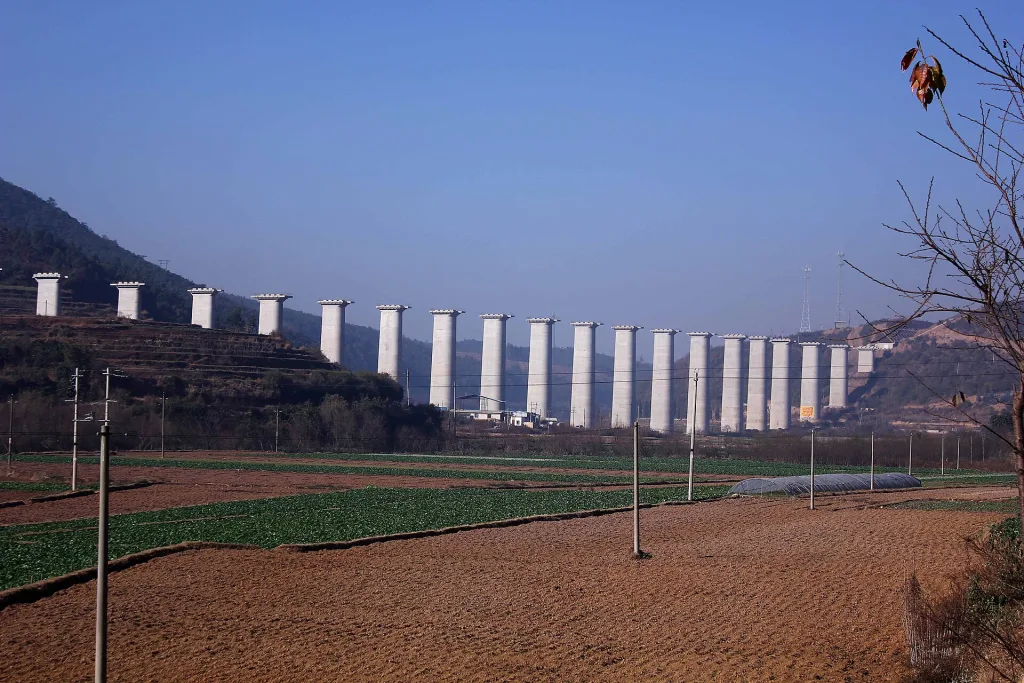
Laos is a small, poor and weak southeast Asian country that shares a border with China. Over recent years, China has lent massively to Laos, largely as part of a package to develop dams, hydropower, and a modern railway connection to China. Often, the loans are taken up because they come attached to access to Chinese investment and therefore Chinese technology. As with everything else, the basis for China’s power here is its industrial and technological prowess.
As a result of all this, China now holds over half of all of Laos’ debt, and Laos’ debt service payments are over a third of all the revenue of the Laotian state. As outlined in a 2025 study by the Lowy Institute:
“In 2004, three-quarters of debt was on highly concessional terms [i.e. at below market rates, from institutions like the World Bank] and only one-quarter non-concessional. By 2019, that ratio had flipped [due to the explosion in lending at market rates by China]… scheduled debt service payments increased over three-fold, from less than $375 million in 2016 to $1.2 billion in 2020 and $1.7 billion by 2023”
It has turned out that a lot of these hydropower investments were unsound, and Laos now has substantial overcapacity in energy generation. As a result, the state is not bringing in enough revenue from energy sales to pay its substantial debts, largely to China.
Those who argue China is fundamentally different and not imperialist, and is only engaged in mutually beneficial infrastructure projects to improve the world, would point to the fact that China has routinely ‘rolled over’ Laos’ debts to prevent it officially being in default. That is true, but Laos’ inability to pay China back has led to its entire energy grid being taken over by a Chinese state firm, China Southern Power Grid.
The point is not so much that China has grabbed Laos’ resources. It is wrong to think that imperialist actions are always motivated by short-term gains such as grabbing a country’s oil or other resources.
In fact, this is a good example of why that is not the case, because China hardly gains much in terms of resources by controlling Laos’ grid. China already produces vast amounts of clean energy for itself, which is a big advantage it has in terms of AI development over the US. Because Laos is such a small country, its energy grid, even after all this investment, represents a very small amount of energy for China. Laos is small and poor, and its energy grid is hard to manage.
What China has gained, however, is tighter political control over a country in the very area of the world that China wants to establish domination – east and southeast Asia. By keeping Laos in unsustainable amounts of debt to itself, it effectively can veto any decisions the country might take against China’s interests, because it can always stop ‘rolling over’ Laos’ debts and place the country in default, freezing it out of capital markets and tipping the economy into severe crisis.
Laos is now well within China’s sphere of influence. China has even created the ‘Golden Triangle Special Economic Zone’ in northern Laos, which is patrolled by Chinese police (Laotian police require permission to enter!), where the language on signs is Chinese, the clocks are in Beijing time, and the yuan is the currency. In other words, there is a Chinese ‘concession’ within Laos, just like the British and French used to have in Shanghai.
There is a clear parallel to the relationship between China and Laos in the relationship between US and Cuba in the early 20th century. Compared to the European powers, the US did not have a record of barbarous interventions around the world. It remained a dynamic economy. But in its own ‘backyard’, already early on it had a dominating presence.
In Cuba, the dollar replaced the peso. Luxury hotels and casinos operated in a legal greyzone. The mafia would come and go as they pleased. The country was a playground for the dregs of the American capitalist class. The Golden Triangle in Laos has likewise become a cesspool of gambling, crime, drugs and human trafficking.
Export of capital
Laos is hardly a one off in terms of large-scale Chinese lending and investment. The Economist recently reported that “[in] the past three years alone Chinese companies have spent more than $200bn building factories abroad”, creating sprawling supply chains abroad, such as in Egypt and Morocco. China now operates or has invested in “at least 132 foreign ports, from Greece to Sri Lanka, along with airports and rail lines, including one from Budapest to Belgrade completed earlier this year.”
It is investing all over the world, and this investment, alongside China’s domination of trade, represents a challenge and a threat to other imperialist powers, most notably the US. Consequently, China now has interests that need defending.
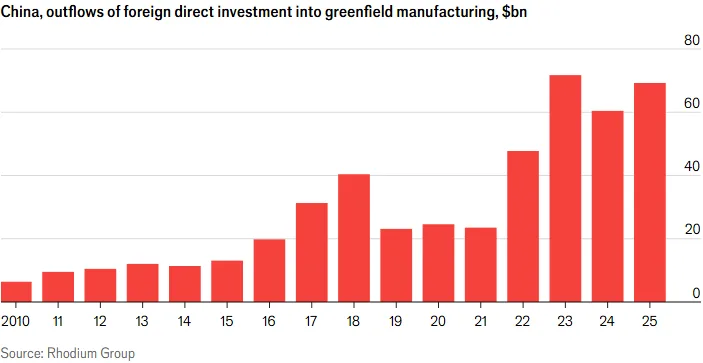
This shift towards the export of capital is clearly something that China’s capitalists and top bureaucrats are aware of, as was indicated by a very interesting article in the South China Morning Post from August this year:
“China’s export boom is reaching its limits. The country’s next phase of growth will come not from shipping more goods abroad, but from exporting its factories, technologies and brands… That’s because such export growth is increasingly unwelcome in many countries. France and Germany, for instance, agreed recently to pursue tougher European Union trade safeguards, as advanced economies become less willing to absorb Chinese overcapacity. […]
“Recent economic data shows why China needs to change course. Its gross domestic product has expanded at the slowest rate in years, growing just 4.3 per cent year on year in the second quarter. Exports surged by 27 per cent in June, but retail sales were up just 1 percent. Real estate investment plunged by 18 per cent in the first half. […]
“The next phase of China’s development will come from the buildout of factories overseas, expansion of Chinese brands into foreign markets and embedding of Chinese technologies and industrial standards into global supply chains. In other words, China’s next export will be the world’s factory itself. […]
“Exporting production, though, allows Chinese companies to keep expanding while earning income from what they own abroad. Increasingly, China’s overseas earnings will come from royalties, licensing fees and dividends rather than manufactured exports. […]
“China’s transition is well under way. Examples abound: Shenzhen-based BYD sold 71 per cent more cars overseas year-on-year in the first half of the year, while sales in China fell almost 40 per cent. US carmaker Ford’s battery plant in Michigan will produce cells using battery technology licensed from China’s Contemporary Amperex Technology Limited, meaning licensing income will flow to CATL’s headquarters in Ningde. Chinese carmaker Chery is producing cars at the former Nissan plant in Barcelona, Spain.”
What this signals is China’s emergence as an imperialist power, which is inevitable given it has a huge capitalist economy. US imperialism is old and well into its declining phase, and therefore characterised by a high degree of financialisation, de-industrialisation, parasitism and complicated military entanglements all over the world.
Chinese imperialism, on the other hand, is new, much more fresh and dynamic, and based upon competitive industrial production at home. With its emergence as the world’s largest bilateral creditor, however, we are seeing the beginning of its shift into a less dynamic and more parasitic capitalist power.
That is reflected in the GDP growth rate. From 10 percent plus growth in the early 2000s, China is now registering under five percent growth. However, it is just beginning on this road, whereas the US has been on this road for more than a century, and the European powers even longer. Thus, 4.8 percent growth might be low for China, but it compares favourably with the US’s 2.2 percent, and permanent stagnation in Europe.
Imperialism is not a product of the wishes of aggressive world leaders. It is not simply a policy of military domination. Rather, it is an objective state of affairs; it is a stage (the highest stage) of capitalist development.
Capitalism has developed to the point of vast monopolies that have outgrown their home market, and finance capital has become a gigantic organiser at the centre of this monopolised market. Because of this, such monopolies inevitably export their capital to take advantage of cheaper labour and resources abroad and to find further outlets for their commodities.
At the same time as imperialist powers tend to look out onto the world scale, this export of capital also tends to be accompanied by stagnation at home. But, coming into conflict with other national gangs of imperialists for spheres of influence, the epoch of imperialism is marked by violent interventions, as the world is divided and redivided.
It is this process that determines the imperialistic behaviour of the powerful capitalist states, rather than these states simply choosing to bomb and oppress weaker countries. Some imperialist nations may have more or less pronounced features. In some, finance is more dominant, in others less so; some export large amounts of capital, others less, etc.
The fact that China is not only a capitalist country (albeit with significant differences in terms of the role of the state), but is also one that plays a key role on the world market and, as we have seen, exports capital on a vast scale, makes it an imperialist power in today’s world.
Why does China not intervene militarily?
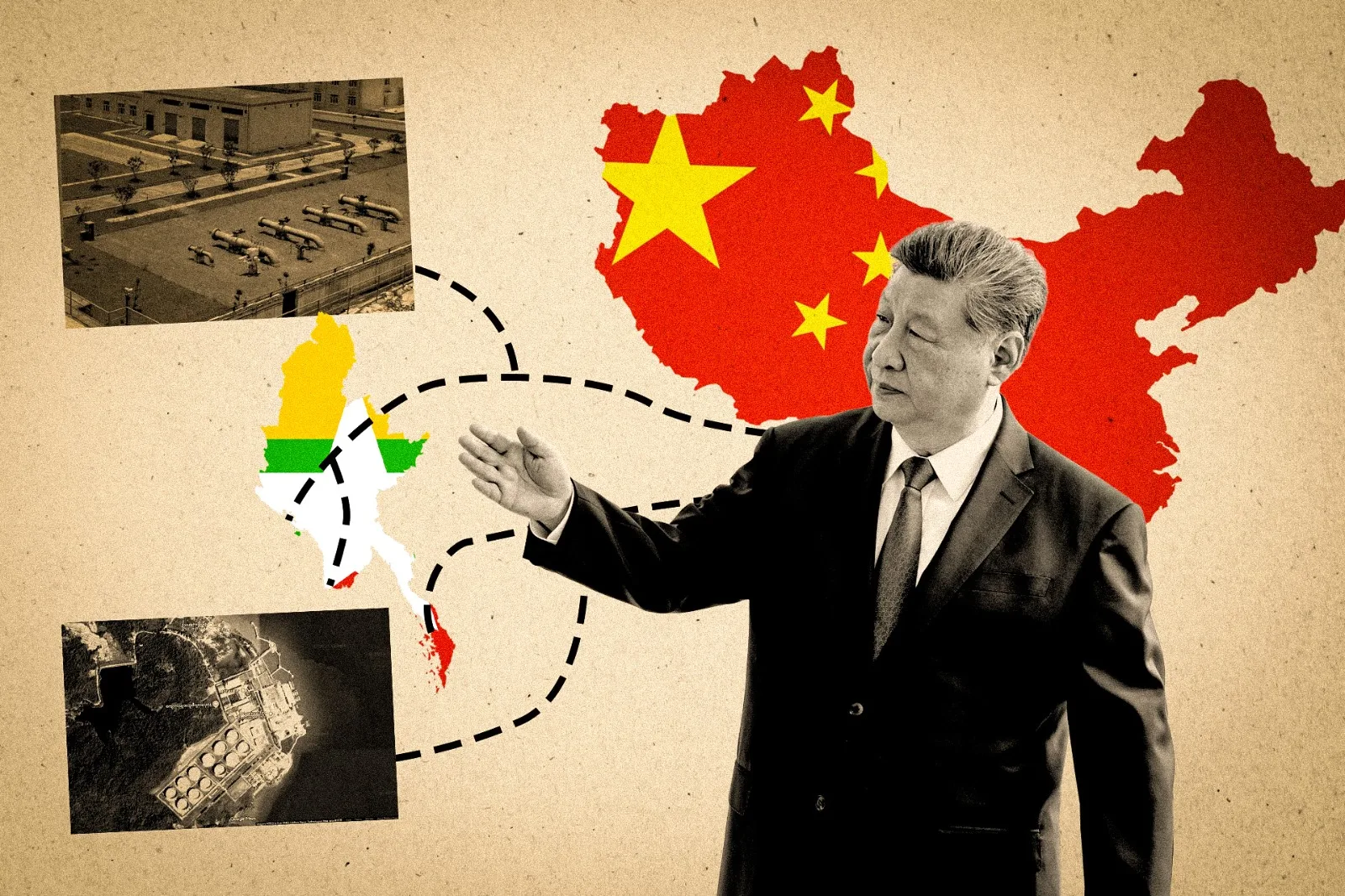
Many people say China is not imperialist because it does not colonise, invade, practice regime change, or generally interfere in others’ internal affairs. It respects other countries and simply trades with them. That is not altogether true. It is beginning in some instances to intervene in defence of its interests, especially in its own ‘backyard’ – see the case of Myanmar.
We must think concretely and not with an abstract checklist that a state must conform to in order to be defined a certain way. When we look at Chinese capitalism concretely, it is clear that for historical and economic reasons, Chinese interests are best served by playing to its strengths, which are in the fields of trade, manufacturing, and domination of certain technologies and resources (such as the refinement of rare earths).
As we can see in Iran, for instance, it does not have to intervene militarily for the US to lose militarily. In fact, the absence of Chinese military intervention only wins China influence and credibility given the way US imperialism is behaving in the Middle East. Never interrupt your enemy when it is making a mistake, as they say. And why sully China’s unblemished record of not colonising and enforcing ‘regime change’ abroad if it does not have to?
When Donald Trump launched his global trade war in 2025, the governments of the world, no matter how outrageous the tariffs, fell over one another in humiliating prostration before Washington. All except one – China – which fought back and forced a retreat from Trump, even though it was precisely China that had always been the main object of his tariff obsession.
How did they do so? Not by sailing aircraft carriers to US shores or putting missiles in range of Washington, but by simply placing export controls on rare earths. So important are these inputs from China, so central to the world’s integrated economy is Chinese technology, that it changed US government policy in full view of the world.
In contrast to this, in their imperialist attempt to once again dominate the entire Americas, the US has resorted to military might and bullying, most dramatically in Venezuela, but also in Panama, where in January 2025 Trump refused to rule out using military force to take the canal.
In these two cases, Trump appears to have scored a victory. In the case of Panama, the government has decided to remove the Chinese, Hong Kong-based company involved in operating two ports at either end of the Canal, through the forced sale of its contract. This victory is thanks to the overwhelming might of the US military, especially in its ‘backyard’.
That military might has an economic basis, as all imperialist activity does, but that economic basis is atrophying faster than the military that depends on it, contributing to America’s ever-growing fiscal deficit.
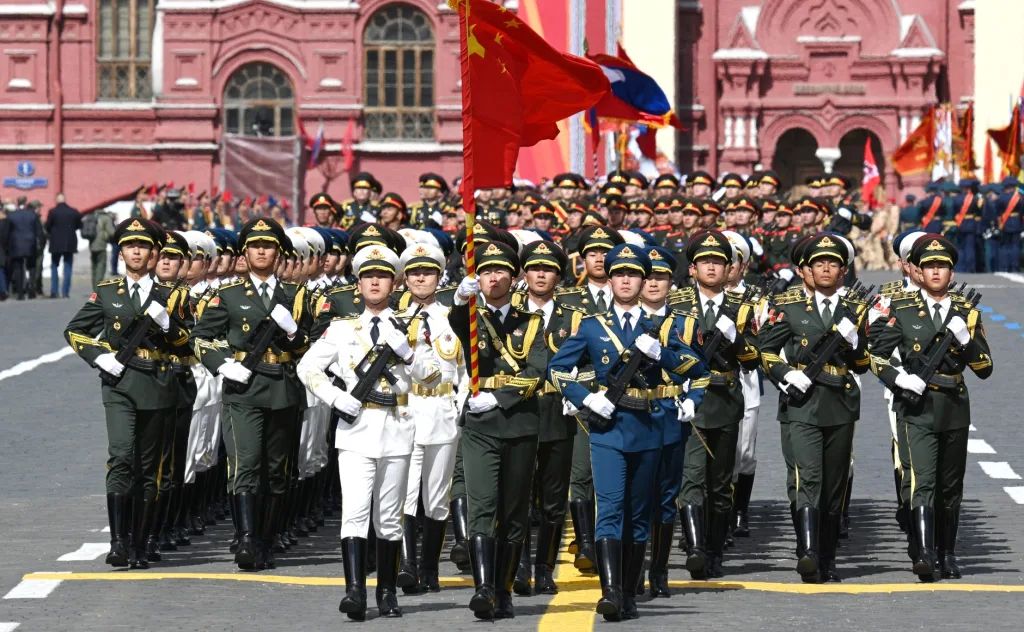
Yet even here, America’s imperialist victory is not as strong as it appears, precisely because the economic base of its imperialism is weakening vis-a-vis China’s.
In response to Panama’s agreement to kick out the Chinese company involved in running the ports, China has started detaining and carrying out inspections of Panamanian-flagged ships. In March 2026, 91 of 123 ships that were detained at Chinese ports were Panama-flagged, and in April the figure was 136. The figures for the two months prior to that were 20 and 23.
In other words, China can fight back at virtually any country in the world by saying ‘if you do that, you can no longer trade with us’, which means, in effect, serious economic damage being inflicted.
Incidentally, for all its military aggression, to bully countries, US imperialism makes far more use of economic weapons such as sanctions, which stem from its domination of global finance, than military weapons. The same applied to British imperialism in its heyday, when it used its financial dominance to set debt traps for weaker countries.
For the time being it makes far more sense for China to rely upon its centrality to global manufacturing, rare-earth and other mineral refining, and trade, to get its way, than to use military means. That this is the case says nothing about how predatory and exploitative its economic role is or is not, only that for historical reasons its strengths, for the time being, lie in trade.
Imperialist world system is more than the sum of its parts
It is a hallmark of the crude thinking that many on the left unfortunately exhibit, to reduce imperialist activity to an attempt to grab oil and other resources. Such people think the best explanation for every war or coup is that a given regime was blocking the imperialist’s control of oil, and nothing else.
In reality, in order to defend their economic interests, imperialist states are obliged to think generally about world relations, which means taking into account prestige (and so undertaking actions which mask one’s weaknesses), ‘soft power’ (i.e. the general cultural and political support for a certain country) and credibility.
When US imperialism was still rising and had not yet supplanted British imperialism, Teddy Roosevelt was famous for saying it must “speak softly and carry a big stick”, which was an attempt to make the US government think and act in a long term, coherent way, to “exercise intelligent forethought”, as Roosevelt said. One of its principles was to appear to act ‘justly’ towards others, in other words to appear to have general principles.
When the time came to wrest countries out of Britain’s domination and into theirs, the US felt it expedient to pose as anti-imperialist. It spread propaganda in such countries that the US was different, and that it had itself been a victim of British imperialism and fought against it in a revolution. In the long run, they thought, this would be far more effective than constantly invading countries whenever they wanted their oil.
China has been growing rapidly for decades now. This has been a process consciously overseen by the ruling bureaucracy, who have long planned for the moment when it becomes a peer of the US.
One of China’s earlier leaders in this process, Jiang Zemin, summed up the general strategy to protect its rise, with the slogan: Hide your strength, bide your time. In other words, China is too weak currently to risk clashing with the US, and must not threaten the latter so as to be allowed to keep growing its economy in peace. It has time on its side and will only get stronger. Therefore, pursue policies that may not win for China what it wants today, but will ensure it does so tomorrow.
Thus, when China is seen as being rather passive, not intervening abroad, it is because it accords with a long-term strategy.
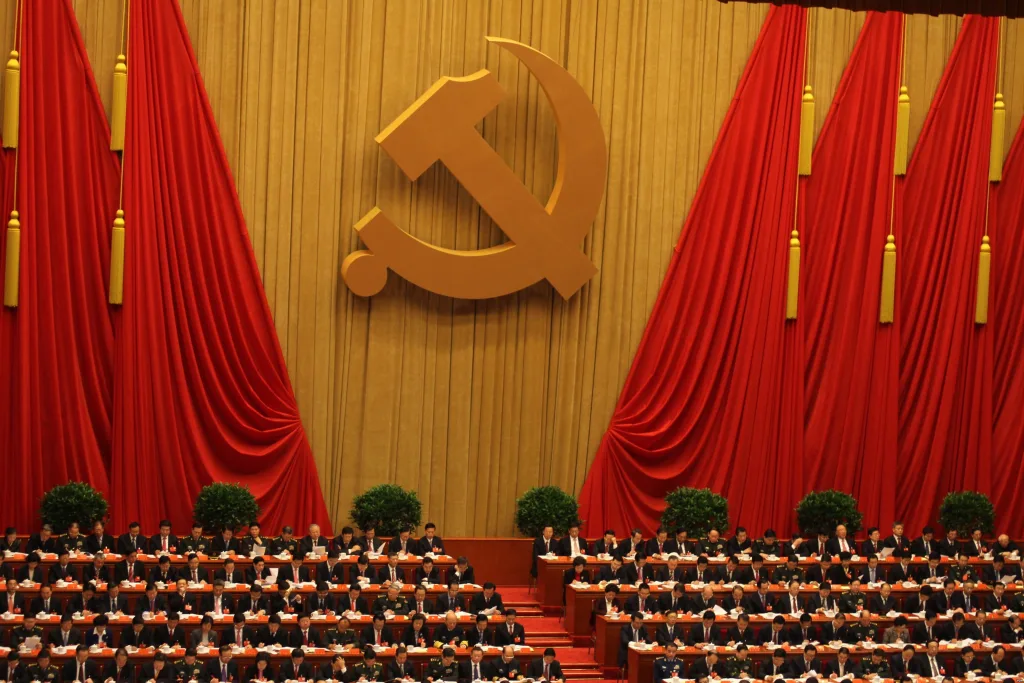
In the future, it may well be militarily proactive, but it cannot do so now and does not want to do so, because it would prematurely destabilise the country. That does mean, however, that there are times when China possibly could intervene more boldly and score some victory, but instead patiently waits so as to preserve itself.
Many have commented that now that the US is failing to defeat Iran and has run down its defences, China ought to intervene decisively on Iran’s side, dealing the coup de grâce to a weakened America.
Perhaps it could do so, but it is risky, and time is on China’s side anyway. They know the US will suffer a humiliating defeat here regardless. Being seen as having not played the dirty imperialist games the US does, and instead as respecting Iran’s sovereignty, can only help China’s international political support in the long run.
In general, China is making a concerted effort to appear as a force for stability in an unstable world full of unreasonable leaders. It hopes that in doing so, more and more countries will peel away from America’s sphere of influence and refuse to comply with its sanctions and threats. This would thereby break America’s ability to isolate China and damage its economy. In the eyes of these countries, China will represent the future, one that is more reliable and prosperous than what the US is offering.
A clear example of this is the recent pledge on AI made by Xi Jinping to the world. In July, China hosted the World Artificial Intelligence Conference to launch the World Artificial Intelligence Cooperation Organization, with the UN General Secretary present and many other world leaders.
Clearly contrasting their approach to AI with the closed and extremely expensive approach of US tech monopolies, Xi pitched an AI future based around ‘open source’ (or rather ‘open weight’) technology. This is much cheaper to develop and allows for anyone to participate in the use and development of the AI models, provided they have sufficient hardware.
Alongside this, Xi pledged that China will offer to train 5,000 people in artificial intelligence from developing nations over the next five years, and to help 30 countries implement its MAZU AI meteorological early-warning system. In his speech, Xi Jinping warned “against the emergence of ‘new historical injustices’ from unequal access to the technology”, a clear attack on America.
This was also emphasised by Chinese state media, which accused the US of trying to erect an ‘AI Iron Curtain’, as quoted by Reuters:
“Yuyuan Tantian, a prominent social media account affiliated with state broadcaster CCTV, said China was seeking to build ‘another order’ by ‘pooling the strength of all humanity and all countries to build an open-source, all-factor AI ecosystem.’”
Clearly, China is attempting to use its open source approach to AI to set global AI technology standards, so that in the future other countries are locked into Chinese technology and leadership. This is the same reason why companies like Google make a lot of their software free, and why Android is open source – it leads to rapid adoption and standard setting, tying other companies and consumers into their system.
It is also using this to make effective propaganda for the rest of the world, announcing that China is different. And it is effective because it is, at least partly, true.
Does China want to be the world’s policeman?
Chinese officials and many supporters of China argue that China is not seeking to replace the US as the world’s hegemon. All it wants, they say, is to be able to grow, to continue lifting its people out of poverty and to take its rightful place as a great power alongside and in cooperation with other great powers.
What China wants is a secondary question, however. The world market is anarchic and uncertain. It necessarily produces short-sightedness, rivalry, and mistrust amongst the capitalist states, all of whom, including the US, are dependent on it. It compels competitive behaviour, the second-guessing of others’ intentions, and preemptive actions designed to prevent and deter rivals, actions which in turn provoke reactions from these rivals. In other words, capitalism in its imperialist phase has a logic of its own.
For the time being, to be sure, the Chinese leadership does not want to take on the mantle of the world’s policeman, even if it could, because this would tie it up in all the crises, economic and political, the world over. Look at how US capitalism has been destabilised and discredited trying to impose its order onto the Middle East over the years. Instead, the Chinese ruling class wants to be able to grow unimpeded, especially because it needs to placate an increasingly alienated, discontented and exhausted working class at home.
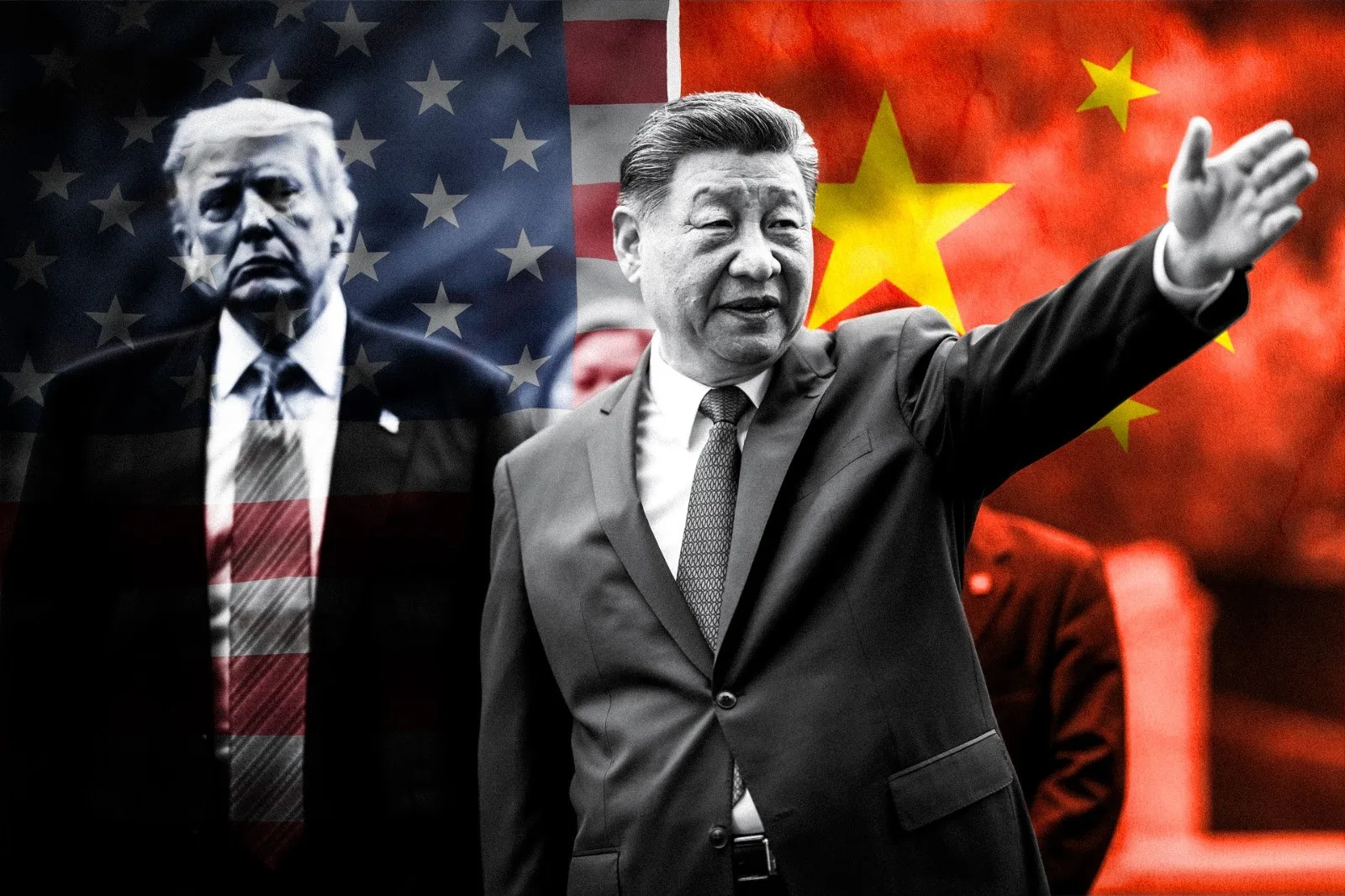
It does not follow from this, however, that it can simply choose to keep growing peacefully. Clearly, China’s rise is deeply threatening to the US (and increasingly to Europe), which is constantly taking measures to hem China in. China can hardly sit back and allow itself to be isolated and limited.
Having invested all over the world in an attempt to keep its profits flowing, it has global interests that need defending. The above mentioned cases of Panama and Venezuela are good ones in this respect: China had significant investments in both countries, but US military power largely succeeded in destroying these investments. Yes, China can fight back with export controls, but it cannot indefinitely limit itself to defending its global interests in this way.
In recent years, China has built up naval and air force bases in the South and East China seas by building islands. This is in response to the fact that the US navy enjoyed dominance of these waters, and could cut China off from most of its trade routes without China being able to do anything. But in building these islands and the bases on them, China inevitably provoked hostility from the other nations of this region.
As part of this process, Australia recently signed the AUKUS pact with British and American imperialism, which is an agreement to develop nuclear submarines to counter China in this part of the world. More recently, Australia, no doubt acting on behalf of US imperialism, has pressured South Pacific nations into opposing China and subordinating themselves to Australia.
In response, China has pushed back, threatening these small countries with ‘consequences’ if Taiwan was invited to their meetings. As a result, at the recent Pacific Islands Forum, five (of 18) nations did not attend. Three ministers of the Solomon Islands’ government resigned and filed a no-confidence motion against their anti-Chinese Prime Minister, which effectively prevented his proposed anti-Chinese treaty from being discussed at the forum.
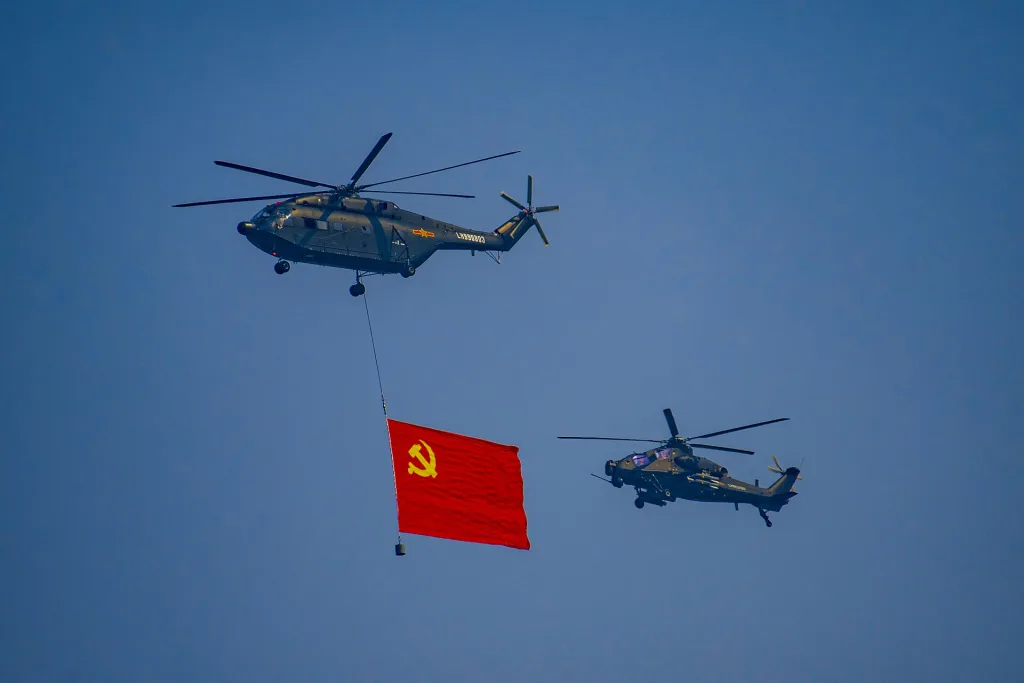
In early 2025, China’s Navy deployed a task group which sailed around Australia and conducted live-fire military exercises in the Tasman Sea.
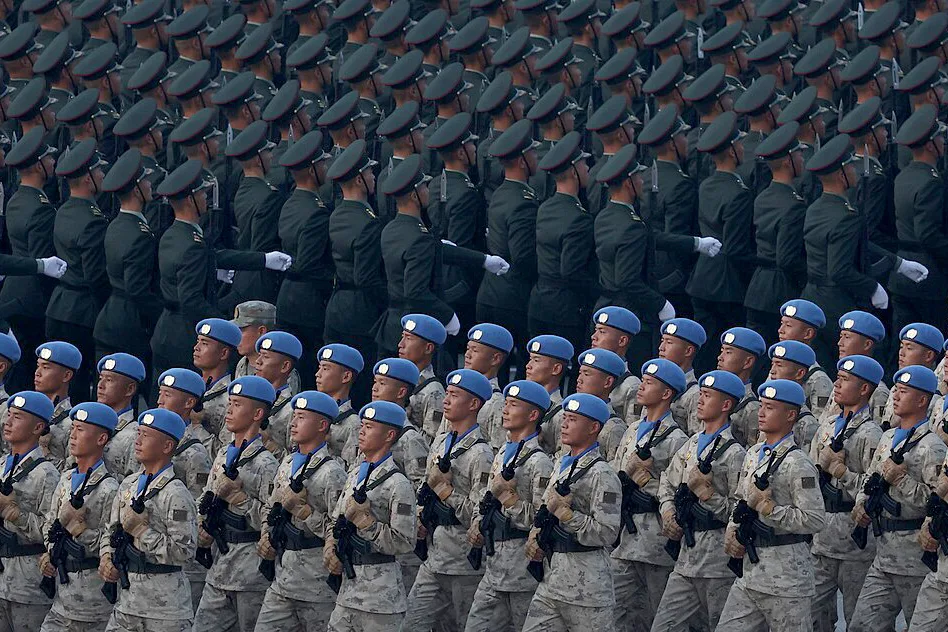
For China to nullify the US’ ability to cut it off in the South China Sea – an entirely reasonable aim for a powerful trading nation – it must possess its own missile, naval and air forces powerful enough to deny the US military access.
This is a formidable task since the US military has long been by far the most advanced in the world, by a long way. This has therefore required extensive investment and technological development of the Chinese military. For every advance in Chinese missile, naval and air force capability, the US and the other powers of Asia feel threatened, and respond with their own militarism.
So advanced and productive has China’s military-industrial complex become, that it is now a major player in arms exports and has started to use the sale of its weapons systems as a means to extend its influence around the world, just as the US does.
Chinese media was full of smug satisfaction when it was reported that J-10 fighter jets it had sold to Pakistan recently outperformed India’s French-bought Rafales, downing one of them when they fought a brief war in 2025.
Over the last three years, China has sold its weapons systems, including its most advanced J-16s, to American allies Egypt and the UAE, and has staged military exercises with both countries. The J-16 can now be refuelled by the YY-20 plane, allowing them to be flown and ‘project power’ much further away.
The main goal of this is to be able to push the US out of China’s ‘backyard’, and guarantee its control of its own trade routes. China needs to score successes over the US, not in direct conflict however, but by showing the world that the US is incapable of stopping China getting what it wants and of protecting many of its allies.
For example, it needs the US to lose in Ukraine and Iran. Just before America started the Iran War, China published high quality satellite images of US military aircraft parked in various places around the Middle East, with the clear message that Chinese satellites can expose and help hit practically any American military asset anywhere in the world. It is well known that Iran has been given access to China’s superior equivalent to America’s GPS, which is a big part of why Iranian missiles have so effectively hit US bases.
When America finally gives up in Iran, and is seen to have been defeated and to have expended its supply of missiles in the process, it will send a devastating message to the world: US imperialism is weak, it cannot get its way, so why side with it?
What to expect from the multipolar world?
China’s supporters on the left point to real differences between US capitalism and Chinese capitalism. US imperialism on the one hand acts as the ‘world police’, it has a bloody history of military interventions, while economically it is tending to financialisation, stagnation and decay.
China, on the contrary, is dynamic, the development of its technology and industry is genuinely progressive, and it has not left a bloody trail of destruction behind it. The reason is that one is a century-old, decaying imperialist power, whereas the other is a new, dynamic country that only recently emerged as an imperialist power. Does that mean that Chinese capitalism is or is not a progressive alternative to American capitalism?
As reactionary as US imperialism is, the world is not violent simply because Americans choose violence. It is capitalism, with its ruthless competition, uncertainty, mistrust, its economic crises, class struggles and oppression, that produces wars.
As America gets weaker, the middle powers of the world conclude that they need to raise their own arms spending, a process which is well underway already. Nuclear proliferation is more and more likely – there is a lot of talk of South Korea, Japan and Germany acquiring nuclear bombs, to say nothing of Iran and Saudi Arabia doing so in response to America’s failure in that part of the world.
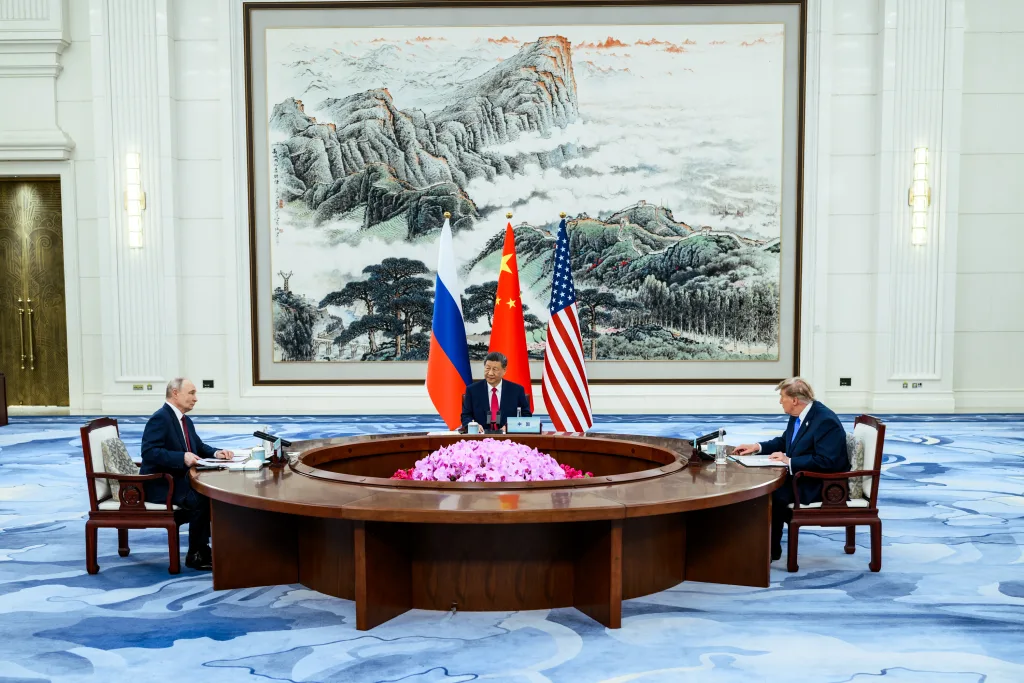
The uncertainty caused by the rise of protectionism will in turn cause countries to scrabble around for access to oil, fertiliser, water and other key resources, in each case raising fears and suspicions from neighbours and rivals.
It is no coincidence that as US power wanes (a process that has been ongoing at least since the Iraq War) the world has seen a rise in armed conflict. In fact, there is today more armed conflict than at any time since 1945.
American imperialism is fighting to maintain its hegemony, with reactionary implications for the whole world. And here is the point, and precisely why Chinese capitalism is no alternative to American capitalism: as progressive as the development of Chinese industry and technology is, the domination of US imperialism means there is no room for China on the basis of capitalism, with its preexisting division of the world, its markets and resources.
On the basis of capitalism, the only way for China to gain room for itself would be at the expense of US imperialism, by means of a vicious struggle and redivision that would exhaust the world’s resources and tear apart the organically interconnected body of the world economy. This would have reactionary consequences for all mankind. Furthermore, the fact that this growth is based on capitalism means it will reach its limit at home, due to the anarchy of the system, the imbalances, bubbles and overproduction that are inevitable.
Only the struggle for world socialist revolution can defeat the reactionary monster that is US imperialism and bring the world economy, including the enormous gains of Chinese industry, into one harmonious, democratic plan.
It is impossible to predict how things will play out, not least because the capitalist crisis will also bring another force into play: the world working class. We can say with absolute certainty, however, that revolutionary movements throughout the world will not be welcomed and aided by the Chinese state, a state that defends capitalist interests.
The future of humanity and the planet under capitalism is bleak. The working class can and must organise to put an end to this system once and for all. It can afford no illusions in the benevolence of the Chinese state. It must look only to the Chinese working class, the largest in the world. It is only the workers of the world who are genuinely peaceful and have an interest in the abolition of poverty. Workers of the world unite!