Amid all the chaos in the world, one development buried under the headlines was the ‘election’ of General Min Aung Hlaing as the 11th president of Myanmar in April. It was he who led the military coup that overthrew the elected civilian government in 2021, and it is he who has brutally governed the country and repressed its masses as military chief ever since.
A military strongman naming himself president seems like a trite, obvious step. But behind this particular situation lies the growing influence of China, and to a lesser extent Russia, over the country, while the West is nowhere to be found.
Chinese capitalism trumpets the fact that it does not have the same history of imperialist meddling as the West – and that is true. It claims, instead, that it is only interested in business, investment and development. But in Myanmar, in China’s ‘near-abroad’, we see how it has supplanted the West, and has been drawn into playing a nakedly imperialist role, politically, economically and militarily.
The West’s failed opening
Myanmar is a vast country endowed with many natural resources and strategic geographical value. In addition to oil, gas, precious metals, and gems, in recent years it has become the third-largest producer of rare earths, after China and the US. It is also one of the world’s largest sources of the scarcer ‘heavy’ rare earths used in magnets and weapons systems.
The West tried for most of Myanmar’s post-independence history to break into the country. From 2011, the semi-civilian Thein Sein government, wary of over-dependence on Beijing, opened the door to western capital. It was also at this time that Aung San Suu Kyi, who had emerged from the 1988 mass revolt against the military dictatorship as its figurehead, with a strong mass base, became the West’s chosen vehicle for deepening that opening.
As a bourgeois liberal, Aung San Suu Kyi fully aspired to collaborate with western capital in establishing a capitalist democracy in Myanmar, embracing the market economy and further privatisation.
But precisely because her outlook was liberal rather than revolutionary, what resulted was not a flourishing bourgeois democracy but a deeply compromised version of one. The old military establishment still held the main levers of government under a power-sharing arrangement with her party, the National League for Democracy (NLD), on terms dictated by the military-drafted 2008 constitution. The outcome was a thoroughly exploitative market economy with little genuine democracy to speak of.
And because the interests of Burmese capital are bound up with the military’s own sprawling business interests, Aung San Suu Kyi repeatedly had to concede to the generals – above all on relations with China. The military had long leaned primarily towards Beijing and was suspicious of US and western imperialism. She made no headway in turning it westward. Instead, she became increasingly pro-China herself, all the more so once the West turned on her over her acquiescence in the military’s massacre of the Rohingya.
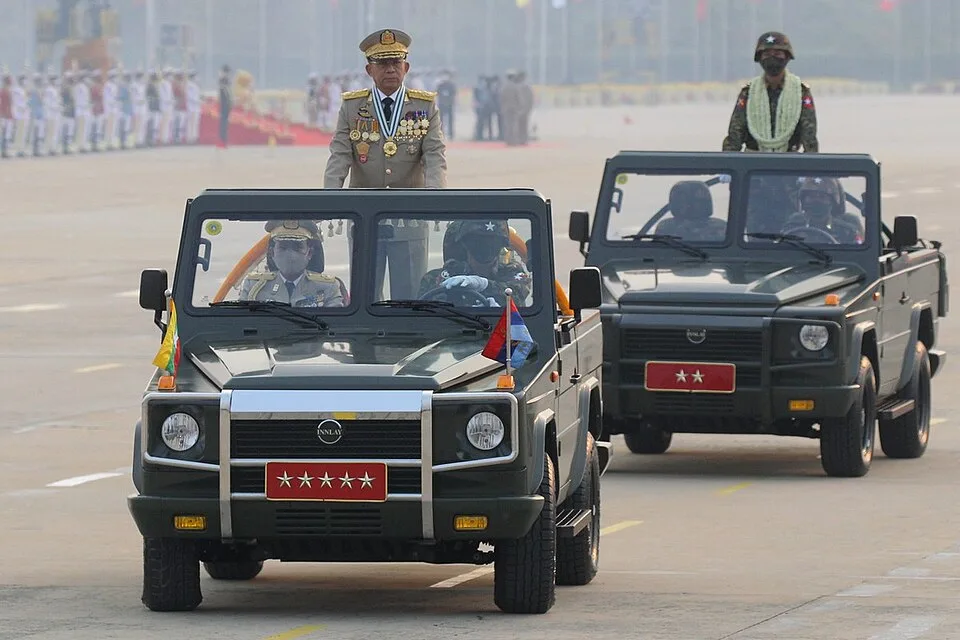
Some sections of the West nevertheless retained illusions in getting a foot in the door through the NLD, which still commanded a mass base. Those illusions ended decisively in 2021, when the military staged a coup after its proxy party was trounced by the NLD in the November 2020 election.
Since Min Aung Hlaing’s junta retook power, western investment has retreated one firm after another. According to official figures, today only Britain and France remain in the top ten sources of foreign direct investment in Myanmar, where they together have over $2 billion worth of investments and 48 enterprises. In contrast, China (including Hong Kong) has over $23.2 billion worth of investment and owns 646 enterprises.
US capital barely has any presence in the country, and the Biden administration gave up on seriously reasserting US influence in Myanmar. All it gave the self-proclaimed National Unity Government (NUG) in exile, made up of liberal NLD elements, was a desk to work at.
The Trump administration completely abandoned these liberals by removing sanctions against several persons and companies linked to the junta and opened talks with the regime. Laughably, the US is offering to broker peace talks between the junta and anti-government forces in exchange for access to rare-earth reserves, a proposition as hypocritical as it is futile, since the junta is now firmly on China’s side.
But being largely free from western meddling has not made Myanmar a thriving country. On the contrary, it is more dependent than ever, only now on the rising imperialist powers of China and, to a lesser extent, Russia.
China: the dominant force
China’s role in Myanmar is by far the dominant and determining one, and requires longer treatment.
Beijing entered Myanmar with considerable advantages over the West. Going back to the Mao period, China armed the Communist Party of Burma, whose fighters were drawn largely from the Wa and Kokang peoples of Shan State. When the party collapsed in 1989, its ethnic militias lived on as instruments of pressure on Myanmar’s central government whenever that suited Beijing.
The Wa army remains an openly Chinese proxy to this day. The areas under these militias’ control are run as unofficial Chinese counties: Chinese is the working language, the renminbi the recognised currency, and China Telecom has erected signal towers for local use.
From the 2000s, as the Chinese Communist Party completed the restoration of capitalism at home, China came to see Myanmar as a source of oil and raw materials to feed the industry it was building for the world market. Chinese investment, especially in infrastructure, has been pivotal to the Burmese economy ever since.
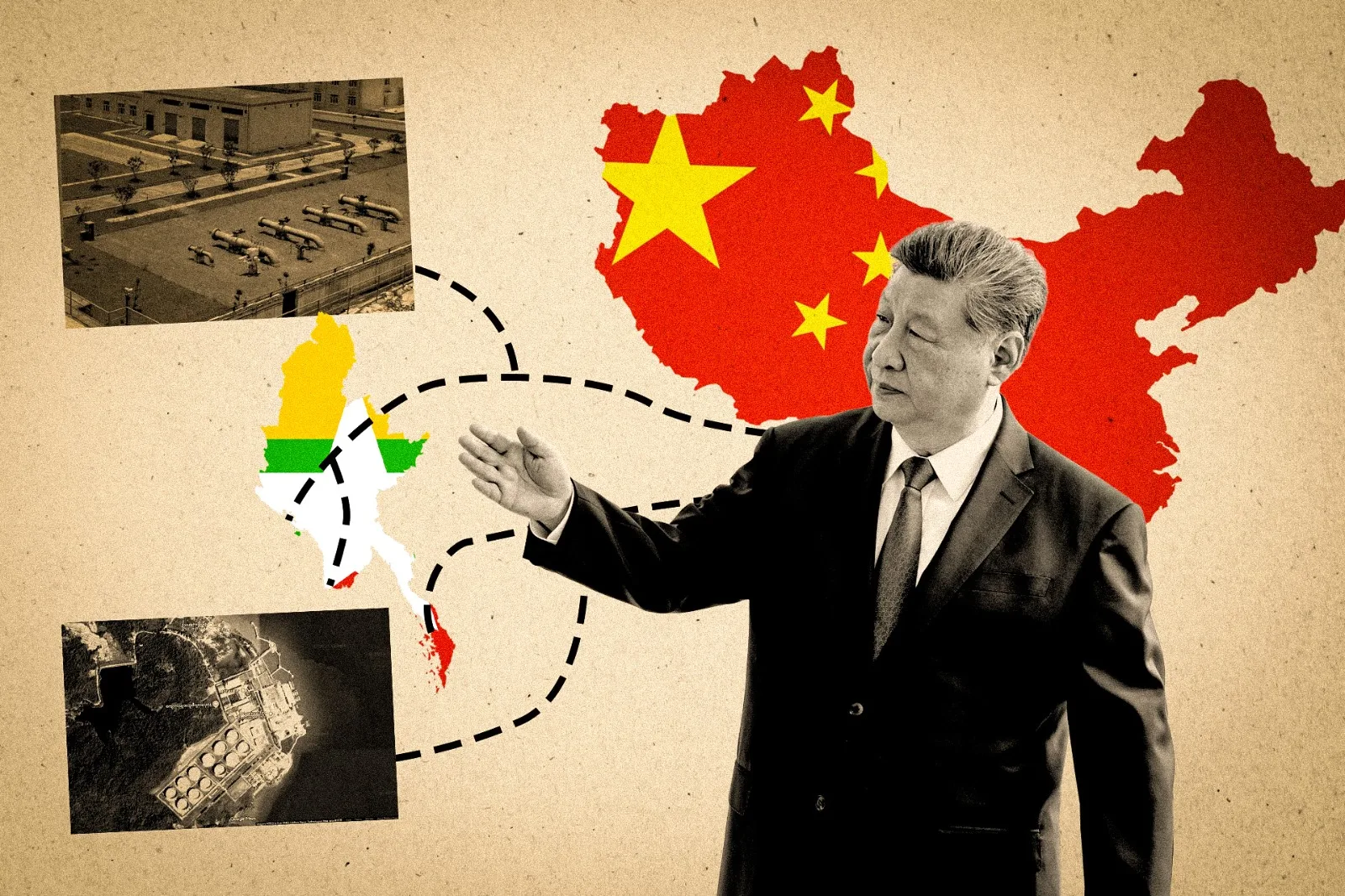
Over time, China’s needs from Myanmar went well beyond extraction. Kyaukphyu in Rakhine State, which began as a small fishing village, is a strategic node in the Belt and Road. Oil and gas pipelines already run from there into Yunnan. Now, the plan is to add a deep-sea port and a railway to Kunming, connecting China directly to the Indian Ocean. China would thus be able to bypass the Malacca Strait – the narrow chokepoint between Malaysia and Indonesia that the US Navy could choose to close in a war.
To secure firmer control, China’s state-owned CITIC has taken a 70 percent stake in the port on a 50-year lease plus a 25-year extension, which is guarded by China and the junta’s joint security firm. Such an arrangement cannot but recall the concessions China itself suffered at the hands of western imperialism before 1949.
Alongside these state-led projects, Myanmar’s economy has become deeply reliant on Chinese capital and imports. Around 63 percent of Myanmar’s electronics imports by value come from China. Chinese-owned textile factories employ over 500,000 Burmese workers, according to Chinese figures in 2024.
But this very importance drew China into Myanmar’s internal entanglements. The Kyaukphyu port sits in Rakhine State, almost all of which is now controlled by the Arakan Army, the local ethnic rebel group. Kyaukphyu town itself is one of the junta’s last footholds there, under threat from the rebels. Beijing has therefore had to negotiate directly with the rebels, and at other times broker ceasefires between them and the central government.
Other developments forced China to intervene more directly in Myanmar, especially in 2023 when cyber-scam and human-trafficking compounds, preying mostly on Chinese citizens, became rampant in the country. That year, the Myanmar junta’s Commerce Minister publicly downplayed China’s request to curb cybercrime, prompting Beijing to find more forceful ways of making the junta take the problem seriously.
On 27 October 2023, the Three Brotherhood Alliance of border militias, with the ethnic-Chinese Myanmar National Democratic Alliance Army (MNDAA) at its head, suddenly launched a sweeping offensive, ‘Operation 1027’, under the banner of “wiping out scam operations”. It became the gravest military threat the junta had faced since the coup. The territories these groups control are deeply tied to the Chinese economy, and the groups could not have acted this way without Beijing’s approval.
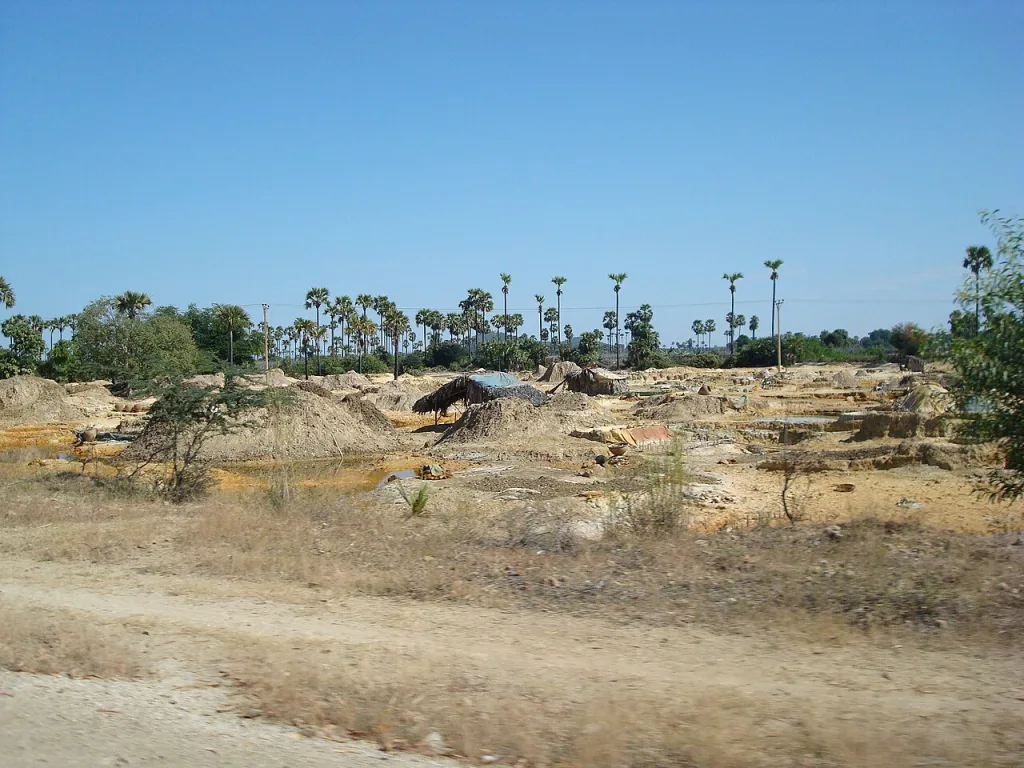
The rebels’ offensive almost brought Myanmar’s junta to its knees. It was at this point, from late 2024, that China, unwilling to see the Burmese state collapse entirely and produce still greater chaos on its border, switched to backing the junta and pressed the rebels into ceasefires. The MNDAA handed back the captured city of Lashio in April 2025.
But Beijing extracted a price: the junta was made to launch a highly-publicised crackdown on the scam compounds – though much of it was for show, with operations relocating rather than closing. This is because many among the junta’s top leaders are linked to, or at least receive bribes from the scammers.
With the increased industrial and geostrategic importance of rare earth minerals in recent years, Myanmar matters to China as both a resource source and a strategic geographic position.
Accordingly, Beijing dropped its earlier ambiguity: Xi Jinping was among the first leaders to congratulate Min Aung Hlaing on his ‘election’, and Foreign Minister Wang Yi flew to Naypyitaw weeks later. ‘President’ Min Aung Hlaing and the Burmese junta are more loyal and deferential to China than ever, while the Burmese economy and its working class will only be more tied to Chinese imperialism.

Russia’s entrance
Though Russia plays a far lesser part than China in Myanmar, it has seen opportunities to profit from the situation.
In the past, Russia and Myanmar’s relations primarily centred on the arms trade. As the junta’s need for weapons to fight first the masses and then the rebels grew after the coup, so did its purchases of Russian arms. A UN Special Rapporteur’s report in May 2023 showed that over $400 million of the junta’s $1 billion arms purchases went to Russia and $260 million to China. It was therefore not accidental that Myanmar immediately endorsed Russia’s invasion of Ukraine while no other Southeast Asian country did so at the time.
But along with weapons, Myanmar is also desperate for energy. The country’s already inadequate power infrastructure has been battered by the pandemic, the coup, the civil war and now the fuel shock from the war in Iran. Power shortages have dogged its economy for years.
Russia has ample expertise in energy generation, and is in need of access to Southeast Asian trade and the Indian Ocean. The junta has thus thrown open the Dawei Special Economic Zone to Russian capital, which plans a deep-sea port, an oil refinery and a coal-fired power plant.
Naturally, Moscow wants to keep majority stakes in them. To secure the site, the junta has even launched a military offensive against local resistance forces. Villages have been torched by regime forces, and civilians and aid workers have been killed.
Russian companies and investments are now appearing in Myanmar. This is likely to grow significantly in the next period. While China’s dominance in Myanmar will remain, Russian imperialism is becoming Myanmar’s second patron.
Regional implications
After the coup, the member states of ASEAN (Association of Southeast Asian Nations) kept the junta at arm’s length, barring its leaders from summits, not out of concern for democracy, but for each of their own national bourgeois interests, too complex to recount here. The net result was Myanmar’s isolation within the bloc for a period.
With Beijing legitimising Min Aung Hlaing, and the sham election offering a fig leaf, that has begun to reverse. By now, Thailand, Laos, Cambodia and Vietnam have hosted him on official visits.
Malaysia has shamefully offered to host Min Aung Hlaing for an official visit if Myanmar agrees to take back refugees, nearly 200,000 of whom are sheltering in Malaysia. As most of them are Rohingya, this would mean sending them back to the rule of the same junta that conducted the genocide against their people.
In any case, it is only a matter of time before Myanmar, with the murderous coup junta at its head, is welcomed back into the club of Southeast Asian capitalism. Meanwhile, India is also hoping that Min Aung Hlaing will complete the Kaladan Multi-Modal Transit Transport Project – an Indian-funded railroad and port project in Myanmar – to strengthen its influence over the country.
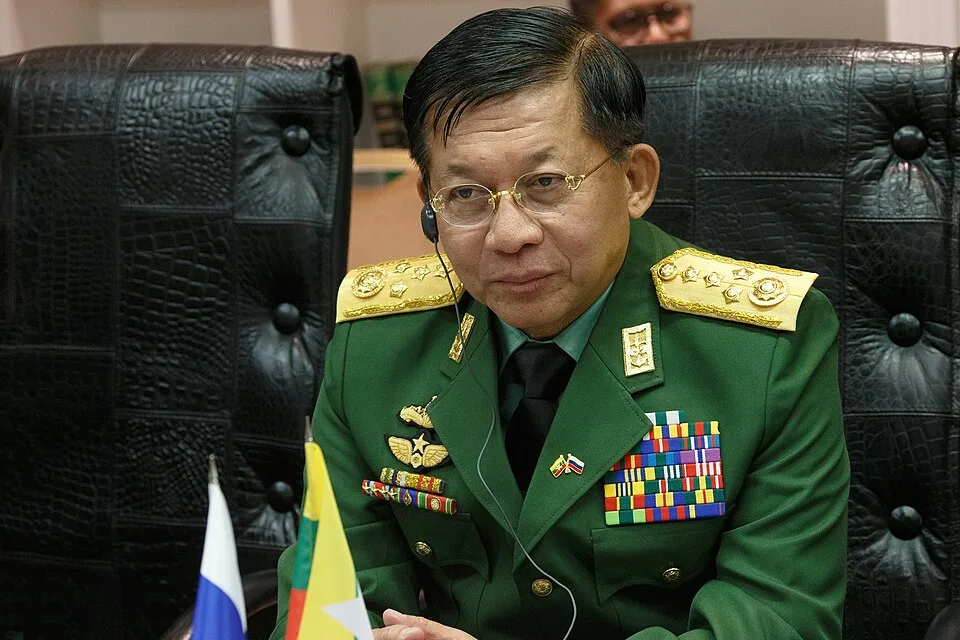
On the surface, this would appear to be a victory for the junta, against whom tens of thousands of Burmese workers and youth fought, even sacrificing their lives in the process after the coup of 2021.
Nevertheless, the coup that brought Min Aung Hlaing to power could have been defeated had it not been for the bankruptcy of the liberal opposition around the NLD/NUG, who led the initial mass resistance to the coup into a dead end. Had the movement, which was imbued with revolutionary energy and potential, been led on a programme that put the working class at the head of the struggle and fought for socialism, then the government of Myanmar today would not be a military dictatorship, but a workers’ democracy.
The fact that the junta, with China’s endorsement, has weathered the worst of the civil war should also show that armed struggle cannot be the primary means of overthrowing the regime. Instead, what is necessary is a revolutionary party that has deep roots in the working class in the cities. This is a crucial question which will be dealt with at length in a separate article.
From the point of view of world relations, Myanmar offers an advanced example of a country deeply penetrated by Chinese and Russian imperialism, with minimal western presence.
The absence of the West, above all US imperialism, is by no means a bad thing. But it has not brought peace or prosperity to Myanmar’s workers, who are still ravaged by war, brutality and exploitation. Anyone who believes that Chinese or Russian capital brings progress and liberation should take a good look at Myanmar.
As always, there is no solution under capitalism: socialist revolution is the only way out. In the next period, Myanmar will remain rife with contradictions and with shortages that cannot easily be solved, and the class struggle, now at a low ebb, will rise once again. Communists there must bear in mind that, as Burmese revolutionary writer Dagon Taya once said, “Our Time Will Certainly Come” – (ဒို့ခေတ်ကို ရောက်ရမည်မှာ မလွဲပါ)