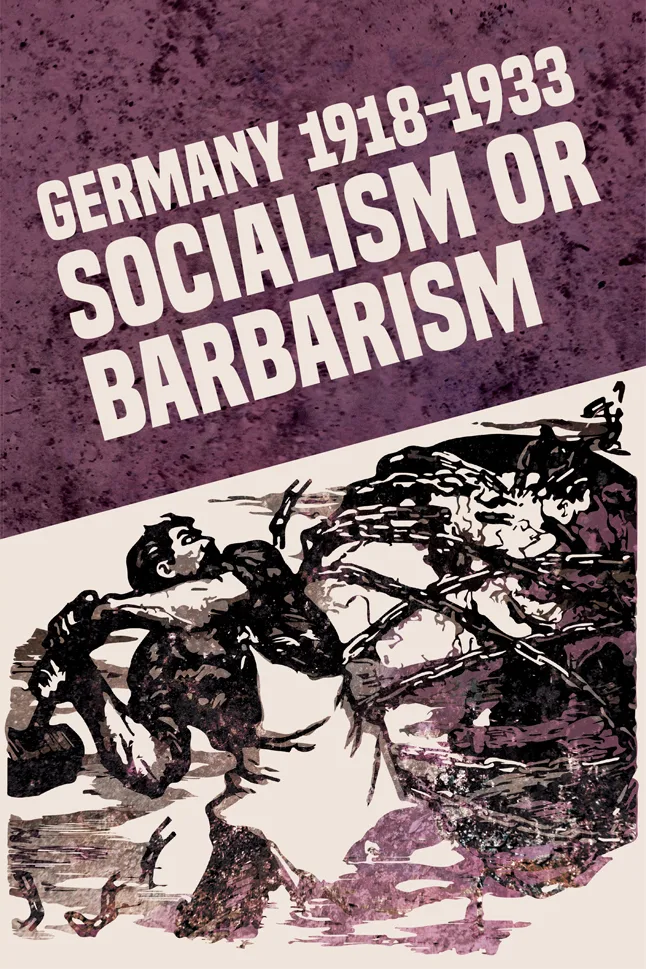
Contingut
Només es pot llegir la introducció aquí. Tot el llibre es troba a l'edició Wellred. Compra el llibre
Introduction
Chapter One: The Rise of German Social Democracy
- Growth of German Capitalism
- Marx and Engels
- Engels Distorted
- Revisionism
- International Response
- Karl Kautsky
- Differences With Lenin
- Lenin and Kautsky
- Break With Kautsky
- Millerandism
- The General Strike
- Anti-War Feelings
- The Great Betrayal
- Epoch of Imperialism
- All Eyes on German SPD
- Stunning Blow
- Zimmerwald
- Lenin at Zimmerwald
- The Spartacists
- Internationale Group
- Growing Opposition
- Junius Pamphlet
- Birth of USPD
- February Revolution
- Strike Wave
- The Russian Revolution
- Brest-Litovsk
- Luxemburg and the Russian Revolution
Chapter Two: In the throes of Revolution
- Prince Von Baden
- Talk of Insurrection
- Mutiny Spreads
- Revolution Spreads
- Workers’ and Soldiers’ Councils
- Hate It Like Sin
- Ebert Becomes Chancellor
- Long Live the Republic!
- Traditional Parties
- ‘Their Government’
- People’s Commissars
- New Breed
- Ebert and the Generals
- What Kind of Democracy?
- The Problem of the National Assembly
- Renegade Kautsky
- National Congress of Councils
- Tactical Mistake
- Socialisation
- Left-Wing Communism
- Counter-Revolution Raises Its Head
- Peoples’ Naval Division
- Witch-Hunt Begins
- Communist Party Founded
- Rebellious Youth
- New Born
Chapter Three: Counter-Revolution Raises its Head
- The Spartacist Uprising
- Dismissal of Eichhorn
- Traitors to the Proletariat
- Deliberations
- ‘Dogs of War’
- How Could You?
- Luxemburg, Liebknecht Murdered
- Friedrichsfelde
- Luxemburg’s ‘Error’
- National Assembly Election
- Freikorps Intervene
- ‘Schiessbefehl’
- Works Councils
- Bavarian Soviet Republic
Chapter Four: The Kapp Putsch March 1920
- Two Counter-Revolutionary Wings
- Learning the Lessons
- The Split
- Political Polarisation
- Building the Comintern
- The Halle Conference
- School of Communism
- New VKPD Leadership
- Theory of the Offensive
- Unmitigated Disaster
- Ecci Supports German ‘Lefts’
- Lenin on Germany
- Lines Drawn
- Third Comintern Congress
- The United Front Tactic
- The Case of Paul Levi
- Battle Lines Drawn
Chapter Five: The Spoils of War
- Squeeze until the Pips Squeak
- Carthaginian Peace
- French Occupation of the Ruhr
- Hyperinflation
- Revolutionary Situation
- Looking the Wrong Way
- Anti-Fascist Day
- Preparing the Insurrection
- October Days
- Hamburg Uprising
- Hitler’s Beer Hall Putsch
- The Aftermath of 1923 Defeat
- Lessons of October
Chapter Six: The Interregnum
- Struggle Sharpens
- Socialism in One Country
- Stabilisation
- Eight-Hour Day Abolished
- Economic Revival
- Soviet-German Relations
- Uprising Still Remains on the Agenda
- Fifth World Congress
- Removal of Fischer-Maslow
- 1925 Presidential Election
- Open Letter
- The 1928 General Election
- Young Plan
- The Third Period
- May Day 1929
- The 1929 Crash
- Brüning Government
Chapter Seven: Fascism’s Rise to Power
- Big Business Turns to Hitler
- The Fascist Henry Ford
- Reichstag Election in September 1930
- Neurosis of the Petty Bourgeoisie
- Stalinism and Fascism
- Violence Spreads
- The ‘Red’ Referendum
- Berlin Transport Strike
- Critical Situation
- Hindenburg Returned
- July 1932 Election
- November 1932 Election
- Repression and Bonapartism
- Hitler Becomes Chancellor
- ‘Legal Means’
- The Reichstag Fire
- March 1933 Election
Chapter Eight: The Nazi Terror
- No Resistance
- May Day Appeal
- Destroying the Unions
- SPD Banned
- The Stalinist Response
- Defiance
- Night of the Long Knives
- Stalin and Hitler
- ‘Left’ Historians
- Austrian Uprising
- Underground Resistance
- Situation Reassessed
- Reform or New Party?
- Germany Prepares for War
- Second World War
- General’s Plot
- Fourth International
- Future Prospects
Appendix One: Hitler’s British Connections
- January Club
- Royal Family
- Appendix Two: The Case of Béla Kun
- Glossary
- Bibliography