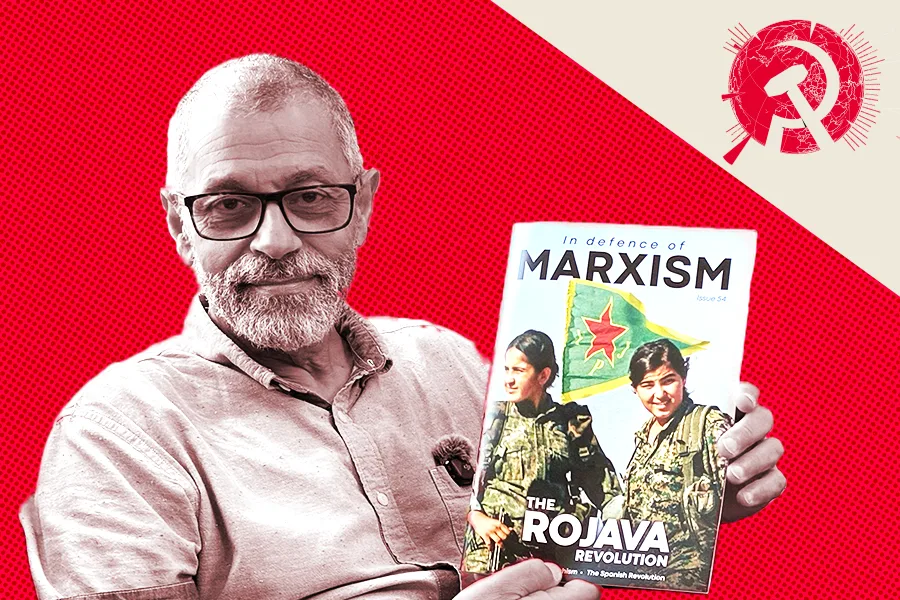
For many years, the Rojava Revolution was hailed as a model for revolutionaries to follow. Today, it has been betrayed. To learn the lessons from the heroic movement and its tragic defeat, we sat down for an interview with Fred Weston, author of ‘Rojava: why was the revolution defeated’ from the brand new issue of the In Defence of Marxism magazine.
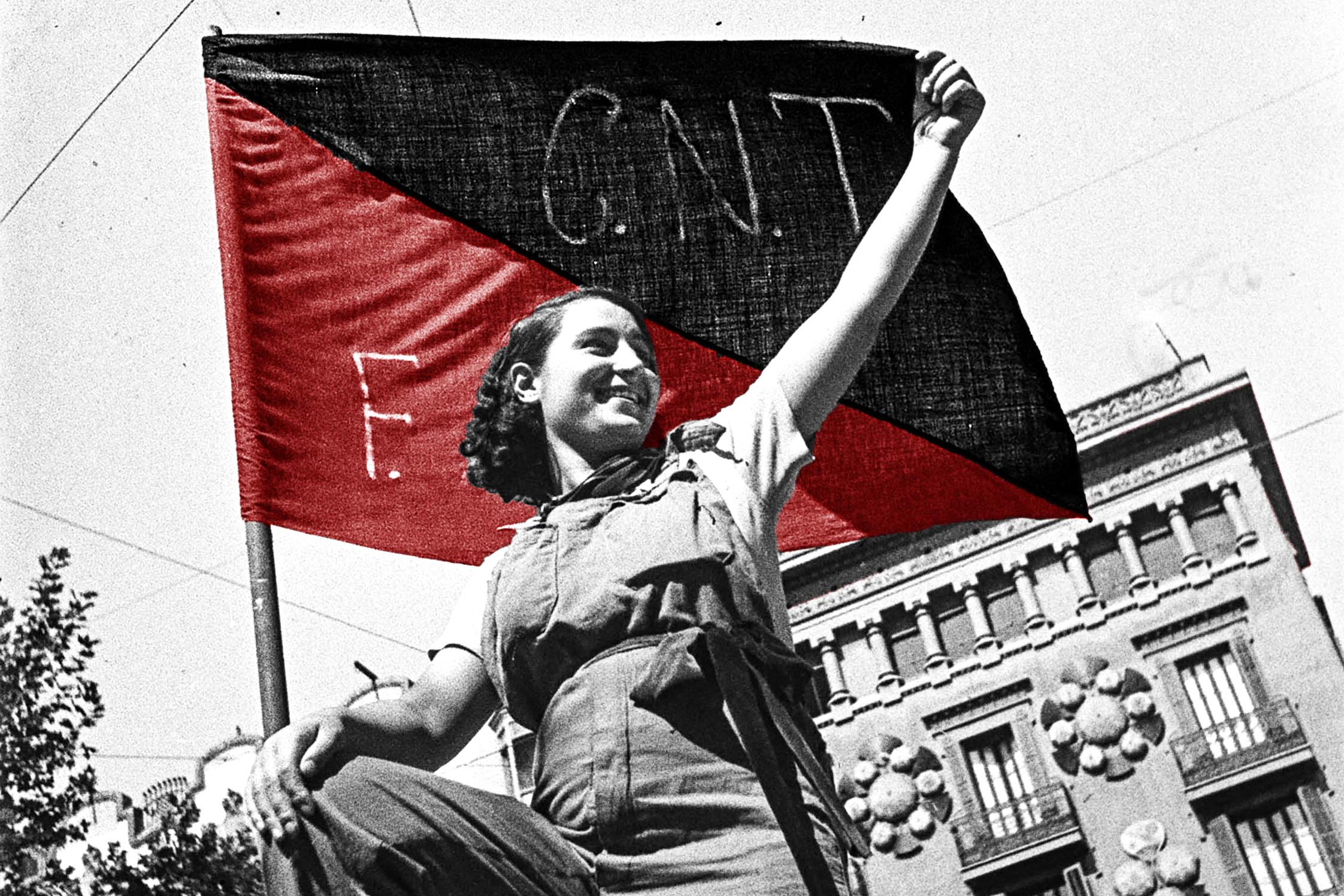
Along with Fred’s analysis of the Rojava Revolution, Issue 54 of In Defence of Marxism also features articles on anarchism in the Spanish Civil War and the poetry produced in the heat of that revolution. To order your copy, click here.
Fred will also be speaking on the experience of the Rojava Revolution at next month’s World School of Communism, the largest online school of communist ideas on the planet. To sign up to a week of discussions on revolutionary theory – from world affairs, to Marxist economics, philosophy, history, and much more – sign up at schoolofcommunism.com.
At the beginning of the article, you give a brief history of the many betrayals suffered by the Kurdish people, particularly by British imperialism. How exactly did the British Empire betray the Kurds?
British imperialism had an interest in the region after they defeated and broke up the Ottoman Empire. The Kurds were involved because they were an ethnic and national group which the British used, like they use all peoples when they need them, and then abandon them when they no longer need them.
They basically promised the Kurds that they could get their self-determination after the First World War. The purpose of that was to use the Kurds against the Ottomans. Once the war was over and the Ottoman Empire had collapsed, with Turkey being formed, the British turned and betrayed them. They made a deal with Turkey in which there was no independent Kurdistan.
In fact, the territory of the Kurds was broken up: part of it became part of Turkey, and the rest went into the new countries that were being created by the imperialists – Syria, Iraq, and so on. British imperialism had received a mandate over Iraq, and their main interest was getting their hands on the oil. And when the Kurds became a disturbance, at one point they even bombed them.
That was how British imperialism behaved. It is typical of imperialism. They will appear as the champions of a people when that is in their interests. As soon as they have achieved their interests, they will abandon them.
Your description of the events of the Rojava Revolution itself is very inspiring, particularly the mobilisation en masse of women, and the formation of councils, which sound an awful lot like Soviets. You can really see the seeds of a revolutionary situation developing. How did this come to be?
You have to put it in context. There is a material, real, concrete explanation for what happened. The 2008 financial crisis that hit the whole world economy had a huge impact around the world, and many countries were affected. The Arab world rose up in 2011. It started with Tunisia and then spread to Egypt, with the downfall of Mubarak. There were movements across the whole of the Arab world, the Middle East and beyond: the Kurds are not Arabs – they are an Indo-European people.
Syria was affected by this; in 2011, there were mass protests, and the Assad regime faced the prospect of being overthrown by this movement. It was in that context that the Kurds of Syria were able to gain, in effect, self-government in the territory which became known as Rojava.
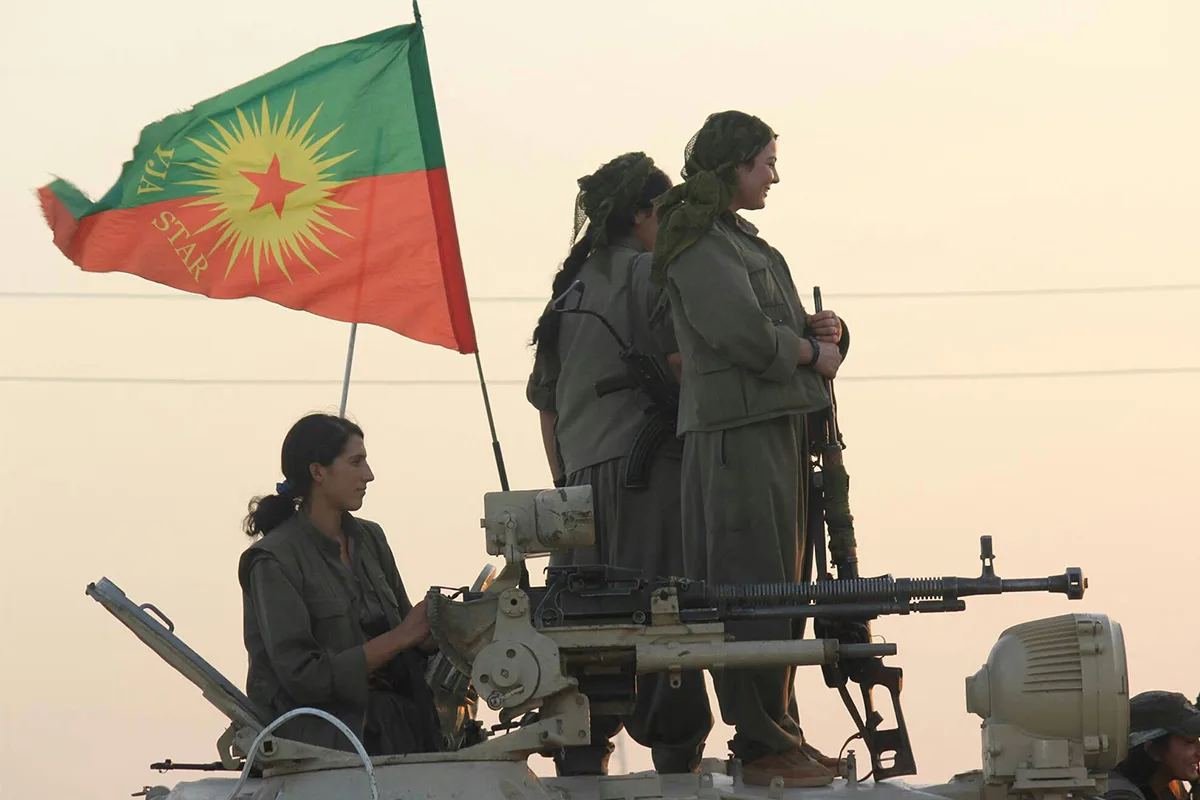
The Assad regime, because of the uprisings, couldn’t stop the Kurds taking over in that region. They de facto accepted it as a kind of lesser evil for them. They tolerated it. So, in Syria, an opportunity appeared for the Kurds to take power. An extension of the Turkish PKK was built in Syria. They came to power, they built militias, and they took control of what became known as Rojava: the Kurdish part of Syria.
It was part of the revolution that spread across the Middle East. And it was probably the most advanced expression of it, because it was actually where the people did have power in their hands. They had self-government. They had control over their own lives in the Kurdish part of Syria.
A key question that comes out in the article is the relationship between military matters and the political line of the revolution. It seems that many decisions were made on the basis of ‘pragmatism’, such as allying with the USA. Did the revolution get this balance right? Were the Kurds wrong to accept support from US imperialism?
It is a delicate question. In any revolution you would not say, ‘don’t take arms’. They obviously need arms. The question is at what price and with what aims in mind. Can we really imagine US imperialism fully militarily backing a region where capitalism is being destroyed and genuine workers’ power is being created? It would be difficult to imagine the US doing such a thing.
What the US did was they realised the Kurds were the best fighters. Why? Because they were fighting to defend their homeland. They were literally fighting for their own territory. And the phenomenon of ISIS had appeared – this brutal, extreme fundamentalist grouping which the US saw as a threat to their interests in the region. The Assad regime saw it as a threat as well.
But they saw in the Kurds the boots on the ground which the Americans couldn’t provide. They provided them with arms – limited arms obviously – and also helped in certain bombing campaigns.
But the question is this: once you prioritise the military side of this revolution, while at the same time you are not completing the social side of it – expropriating the land from the landlords and giving it to the peasants, taking the limited industrial apparatus that existed in this underdeveloped region and putting it under workers’ control, beginning the process of building a planned economy – then you lose something essential.
If you combined the military advance with that social content, then an advancing Kurdish military force would be saying to the non-Kurds of Syria, the Arab Syrians, the peasants: we are not just fighting militarily for Kurdistan, we are fighting for your right to control your land and your economy.
And if they had transformed it into that and spread the social content of the revolution beyond the borders of Rojava, they would have had a huge impact across Syria, but not just in Syria. There was widespread sympathy for the Rojava Kurds amongst the Iraqi Kurds, the Turkish Kurds, and even in Iran.
And why was there sympathy? Because they saw in the Rojava Kurds a genuine people’s revolution from below. Whereas in Iraq, the Kurdish region is de facto governed by bourgeois families who had no interest in supporting the Kurdish revolution in Syria.
The masses and the youth had sympathy for Rojava. If they had turned it into a genuine social revolution and made an appeal beyond the borders of Rojava – take over the land, take over the economy – that would have meant coming into direct conflict with the bourgeois politicians who govern the Kurdish part of Iraq, and in direct conflict with Erdogan on social and economic questions.
They pulled back from that for fear of upsetting the different rulers, and because for them, the military question was the priority. For example, they didn’t just form an alliance with the US, they also formed an alliance with the Arab tribal leaders in Syria. Some of these people are extremely reactionary landlord types with extremely reactionary positions on women.
How do you combine the progressive aspect of the Rojava revolution on the question of women – women played a much bigger role in the revolution, they even had armed women’s groups, and women’s rights were being established – with an alliance with tribal leaders who are the exact opposite? Extremely reactionary, who have no room for the role of women in society. They were very patriarchal.
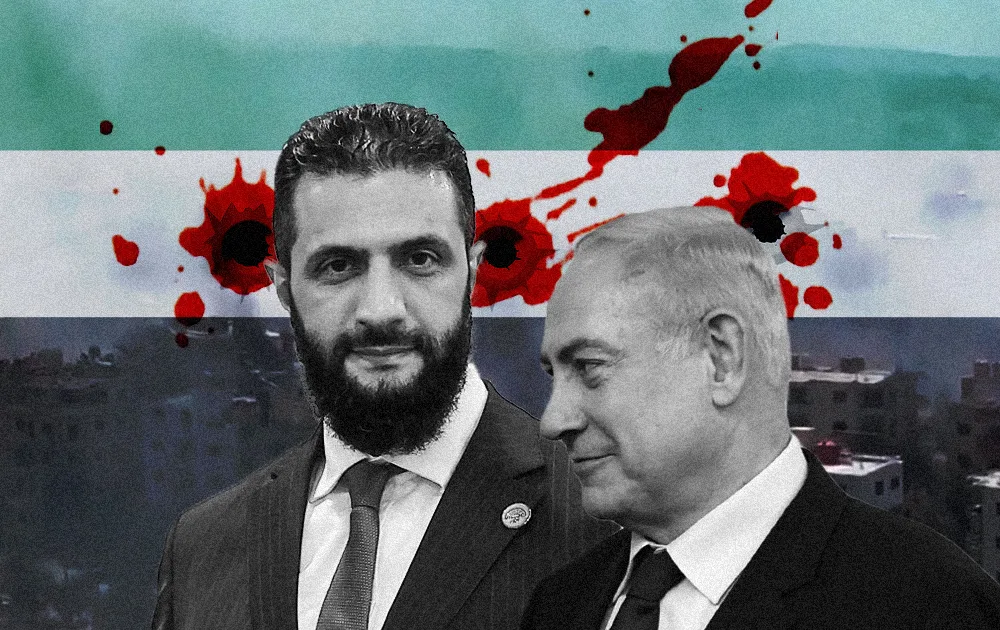
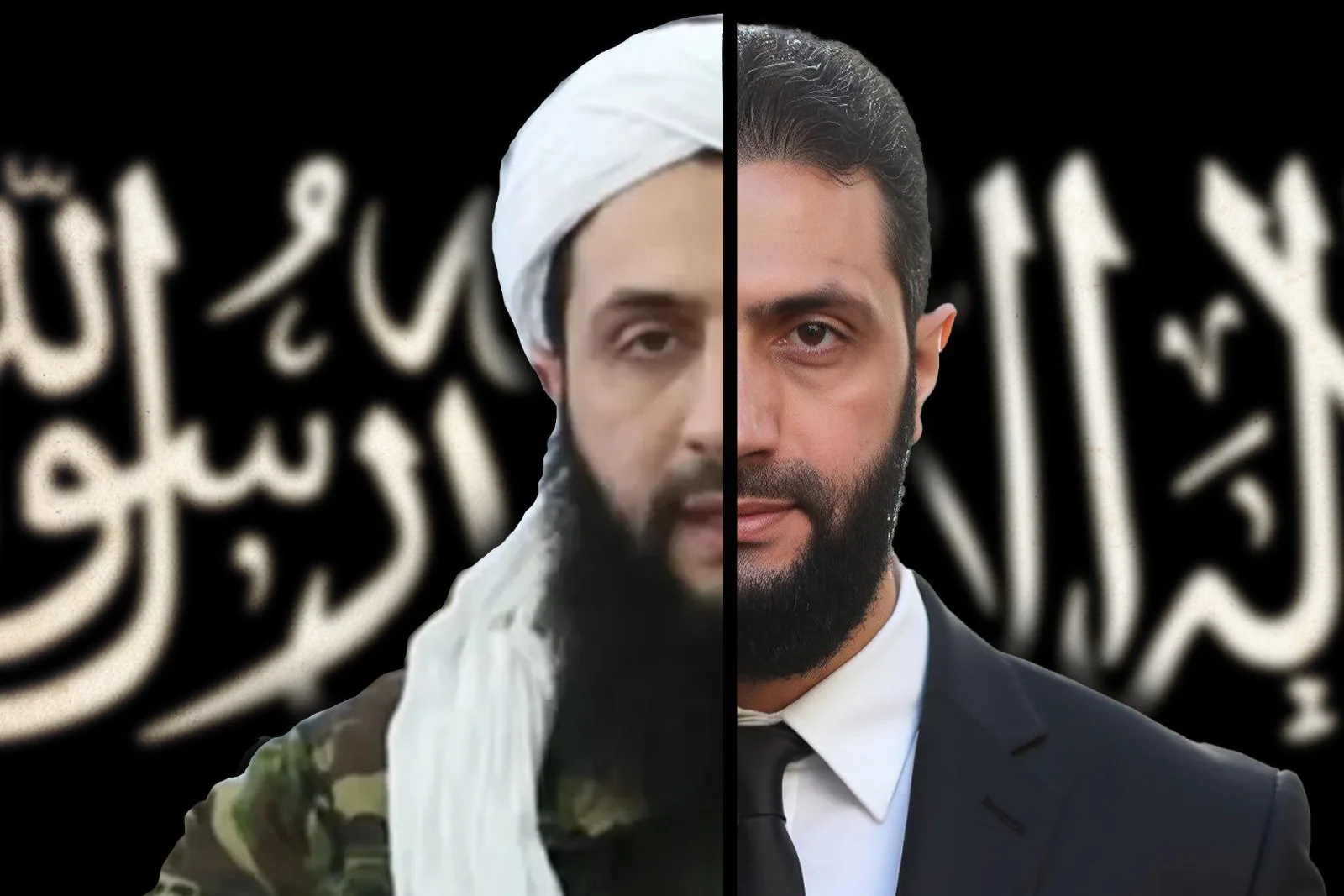
Once you have established a military alliance with these people, you take away the social content, and the revolution is weakened. And what we saw was that when US imperialism had no longer any interest in supporting the Kurds of Syria – in fact, with Trump they had an interest in supporting the new Islamic regime [headed by Ahmed al-Sharaa] backed by Turkey which had taken over in Damascus – the Americans switched sides.
They no longer needed the Kurds, and they were backing the regime in Damascus. What happened is that precisely these tribal leaders with whom they had had a military alliance switched sides, just like that. Their economic interests were now safer in the hands of the new regime in Damascus than with these radical Kurds. And very quickly, when the Damascus regime advanced on Rojava and the areas they controlled militarily, the Kurds of Rojava lost eighty percent of the territory they controlled.
They have been basically defeated and pushed right back. They are being integrated into the new Syrian state militarily and economically. So it has been a defeat. And yet it was at one point looked to as a kind of example of a revolution and how you can carry out a revolution.
I found it interesting that you focused on the question of theoretical mistakes, rather than practical military mistakes, when explaining the failure of the revolution. Why is that?
In writing the article, I read the texts of Öcalan. I was not happy just to read one or two articles by him; I read a whole book – a collection of four texts by Öcalan. And what struck me was that it is, basically, a practically anarchist approach to the state.
Öcalan has been imprisoned for nearly three decades now in Turkey. He went and read the works of an American thinker – not an openly anarchist but a semi-anarchist individual, Bookchin – who developed the idea of ‘democratic confederalism’ and local councils. Fundamentally, the essence is anarchist in rejecting the idea that in a workers’ revolution what you need to do is build a workers’ state, because they see the state as a bad thing per se.
The weakness of that is this: if you don’t build a workers’ state, if you refuse to build an alternative state, then you are in a position of not being able to overthrow the bourgeois state. And what is a workers’ state? It is the armed bodies of men. It is the armed groups of workers in defence of their interests, once they have transformed society. Read State and Revolution by Lenin on this and you’ll get a full understanding of it.
And what has happened in Rojava is that the bourgeois state has come back and reestablished itself. If you read Öcalan, he criticises Marxism on the question of the state. He even says that self-determination cannot be achieved through revolution. He talks about democratising the state, and he refers to all the states in which the Kurds live – Turkey, Syria, Iran, and Iraq – and he talks about democratising them, making them more democratic.
He is talking about the bourgeois state. Well, we saw how the Turkish state behaved. The Turkish bourgeois state had no interest in being democratised by Öcalan and the PKK, and actually fought a war against the PKK. They intervened militarily in Syria. Their aim was to destroy Rojava. They achieved it through the [al-Sharaa] regime which they backed.
So these are bourgeois states. The theoretical weakness of anarchism, expressed indirectly through the ideas that Öcalan developed, is really at the heart of the failure of the Rojava revolution. There is a theoretical error. Now, a lot of people say: you are talking about theory, we need practical politics. Well, here we see how, if you make a fundamental error in theory, you are going to make serious mistakes in practice. And that is what has happened here.
Apart from the fact that they did have armed groups – they de facto had their own state – they rejected the idea of building an alternative state and overthrowing the existing states. Their idea was to democratise them. When I was reading Öcalan, I thought: here is the leader of a guerrilla army, an organisation which has fought a war in which 40,000 have been killed, and he is talking more or less like a reformist when it comes to the state!
Here lies the weakness of the Rojava revolution: the theoretical weakness. And it has led to a defeat. As Marxists, we need to draw the lessons of all this and explain that if you make a fundamental mistake in theory – such as on the question of the state – you will not be able to carry out and complete a revolution.
Could the revolution have succeeded?
Yes, I think it could have. You see, the conditions that were created by the 2011 movement, on the back of the 2008 financial crisis, showed that the revolutionary potential existed right across North Africa and the Middle East. You had the movement in Tunisia, you had the movement in Egypt, Sudan was also affected and you had a revolution there in a similar period.
You had movements in Syria, Lebanon, and other Arab countries. One country after another was involved. In 2013 you had that huge movement in Turkey. You had big movements in Iran. The potential for a revolution that spread across all these countries was there.
Now, what role could the Kurds of Rojava have played? If they had completed their revolution, that would have fundamentally meant: expropriate the landlords and the capitalists. Declare yourself a workers’ state. Appeal to the masses across Syria: we are not fighting just for Kurdish autonomy, we are also fighting for the emancipation of the workers and the peasants.
You appeal to the workers and peasants in Syria and they would have responded to that idea. Yes, we want the land and these people are fighting for it. They would have joined. That would have actually solved the military question. It would have overturned the power of Assad before these Islamists came in.
And it could have spread, for instance, to the Kurds of Iraq, which would have been the beginnings of an Iraqi revolution. It could have spread to the Kurds of Turkey, which would have been the beginnings of a Turkish revolution. And it would have been an example to follow across the region.
They also had enormous sympathy beyond the region, across Europe and beyond. The Rojava Revolution was very popular. It was followed by many, many young people. Some even went there and fought to help defend them. It could have been the spark of at least a region-wide revolution. It is a tragedy that this did not happen.
But the reason it did not happen is because the leadership consciously believed this was not possible. They believed that the struggle for socialism and socialist revolution was not possible. And the road for them was democratic councils at the local level, self-administering and gradually democratising these states – a kind of gradual withering away of the bourgeois state. That does not correspond to the real world.