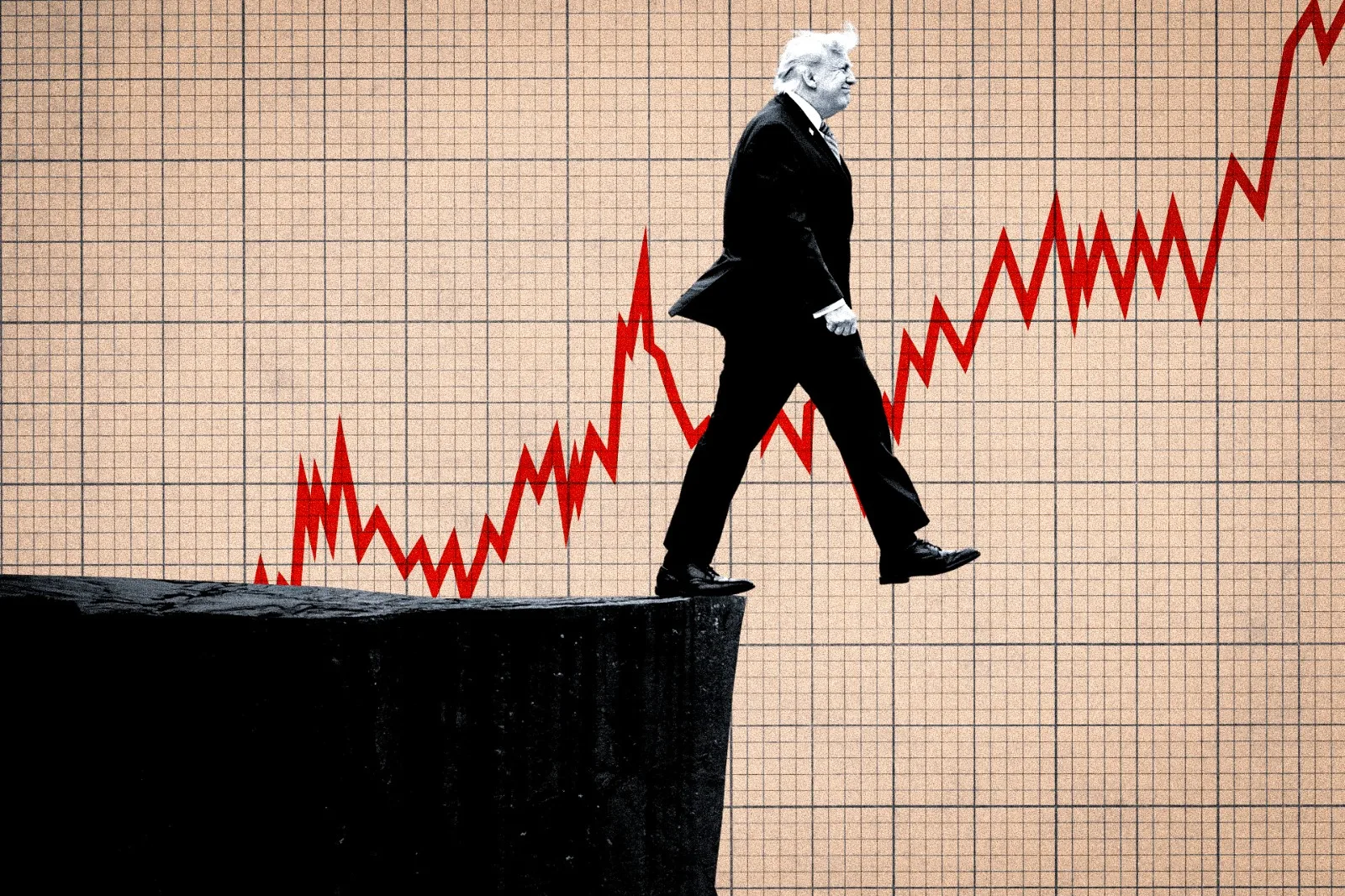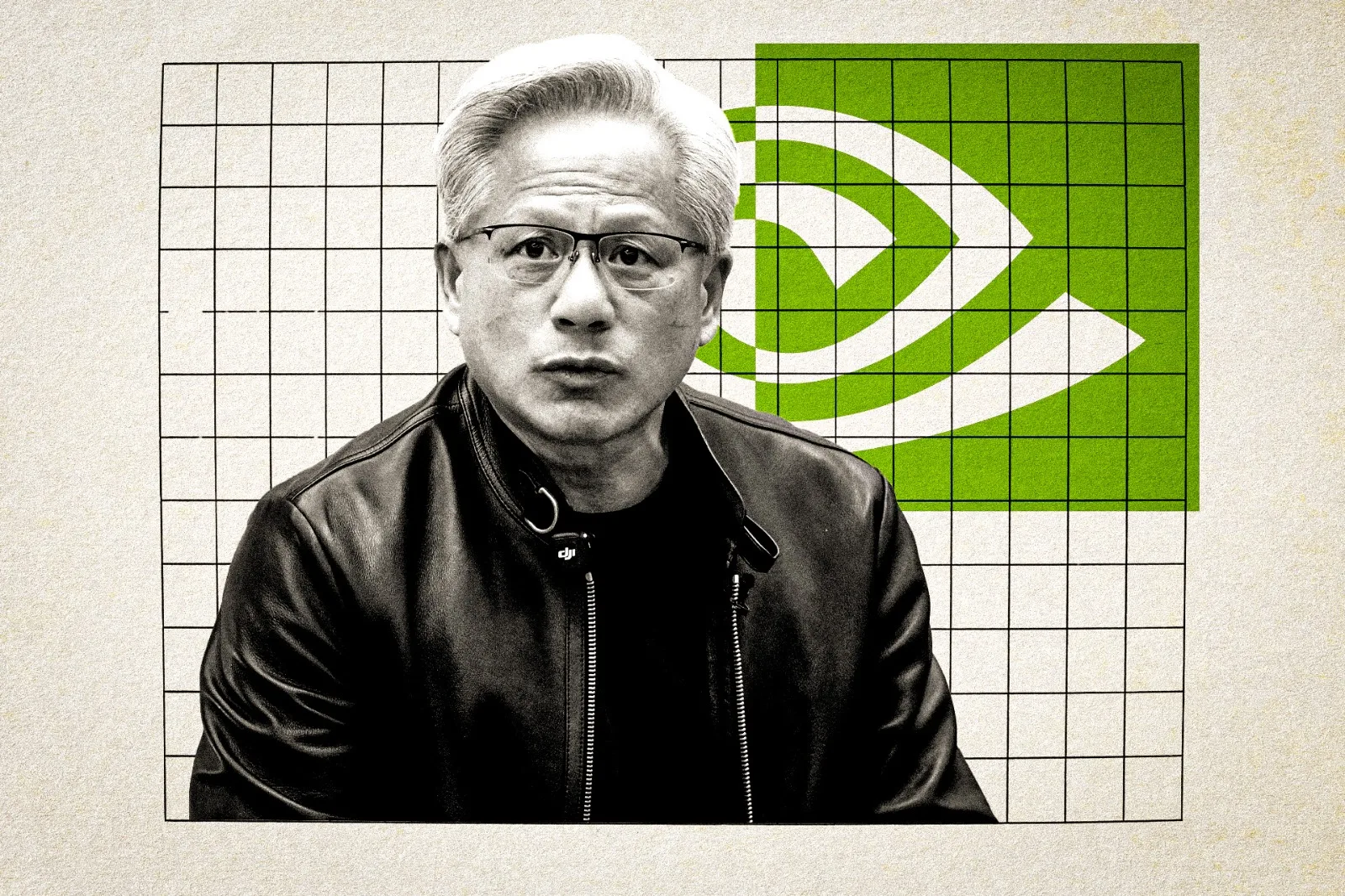
For a week now, the news has been dominated by the resignation of Jensen Huang. The news caused a riot in the stock markets over fears that the AI bubble is going to burst. The whole affair reeks with the sordid stench of corporate interest, lobbying and geopolitics.
Extramarital affairs in the lives of the rich and powerful are hardly news, but this particular one has already cost $1 trillion. It’s frequently said that one can’t put a price on human life, but judging by the fall in the Nvidia stock, the markets clearly value Mr. Huang at $1 trillion. One has to wonder what makes this particular individual so valuable.
In a sense, of course, just like Elon Musk and Jeff Bezos, Huang is one of these people who is hard to separate from the company they work for. Huang was one of three co-founders of Nvidia and has been its CEO for its entire 33 years of existence. So, naturally his departure would ruffle a few feathers, but it has affected other companies as well. Memory maker Micron’s shares fell significantly along with chip manufacturer TSMC, in spite of reporting a 60 percent increase in revenue. Even Nvidia competitor AMD has fallen since the announcement.
What we’re dealing with here is something beyond the normal changing of the guard at a company.
The plot against Huang
Over the last few days, it has become clear that Huang was brought down by elements in the White House. Marco Rubio, the Secretary of State, was one of the people pushing for it. It was he who wrote a briefing against the Nvidia CEO highlighting the affair with former Megaspeed CEO Alice Huang (no relation) as a national security risk.
It is quite clear that Alice Huang is connected in various ways to China. Through her, China got access to chips they weren’t really supposed to have access to. Whether she is actually a spy, well, we’re expected to take Rubio’s word for it. Another opponent of Huang is Scott Bessent, US Secretary of the Treasury. He came out against the former Nvidia CEO and also against Nvidia’s various commercial deals with China.
On the other hand we have Howard Lutnick, US Trade Secretary, and Trump himself, who are clearly closer to Jensen Huang. Trump has even suggested that he’d be happy if Huang got his job back.
What lies behind this? What has turned this affair into a trillion-dollar drama? The first thing that is obvious is that Nvidia has turned a blind eye to Chinese companies circumventing US trade sanctions. Chips sold to Alice Huang’s former company Megaspeed for use in Singapore have wound up in a data centre in Shanghai. This became obvious after Megaspeed used some of the chips (including their serial numbers) as collateral for a loan in China.
It also emerged that Lutnick and Trump hadn’t updated the list of blacklisted shell companies for a year. That is, Nvidia was banned from selling chips to last year’s shell companies but the new ones set up since then were essentially fair game.
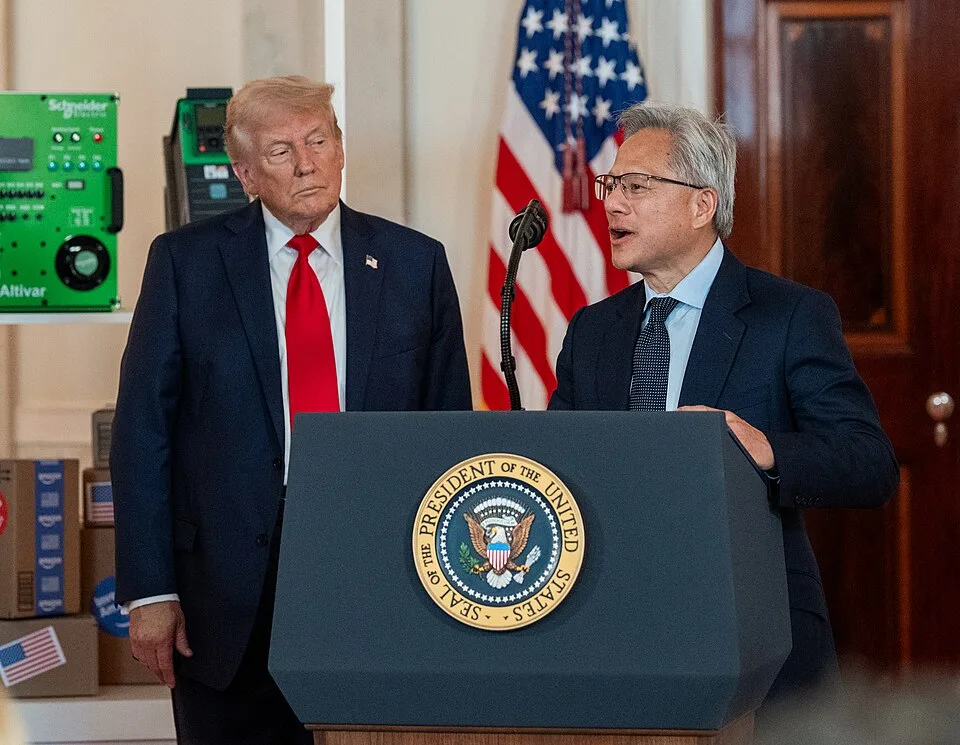
Huang also made no secret that he was an opponent of the export ban. Of course, Nvidia wanted to sell their chips to their customers. They didn’t want an arbitrary restriction to their market. He also argued that it would be better for the US if China remained dependent on US technology, rather than developing its own.
For sure, this was a convenient argument from the CEO of a company that stood to lose 20 percent of its market, and potentially gain a new China-based competitor on the world market. Together with a promise of a 25 percent cut of the sales revenue, Huang managed to convince Trump to allow restricted exports of the H200 chips, which aren’t top of the line, but are still powerful.
The accusation against Megaspeed and Nvidia is that aside from a bunch of lower class chips, they also exported Blackwell chips to China, which is most certainly prohibited. The chips that have been identified in Shanghai are the H800, H200 and H100 models, which hypothetically could have been legally exported to China, although that seems unlikely given that the H800 and H100 were banned in 2023 and Megaspeed didn’t have a permit for the H200.
Whatever the legalities of the previous chip exports, the White House has now decisively clamped down on any exports to China, including a number of middle countries like Singapore. Nvidia has also pledged to stop exporting chips to China. Congress, however, is clamouring for even more restrictions.
Democrats against China
One of the likely triggers for the action against Nvidia was the victory of the Democrats in the midterms. The Democrats are keen to expose Trump as a national security risk and are pushing a harder line against China more generally. They found an ally in Rubio, who is a more reliable representative of the mainstream of US imperialism than Trump.
The Democrats are happily joining the chorus against Nvidia. Senator Maria Cantwell is calling for a stop to all chip exports. Elizabeth Warren and others have warned Rubio, Lutnick and others to preserve documents relating to chip sales to China. The Democrats are also calling in Huang and Lutnick for hearings in the Senate. Democrat Senate Leader Chuck Schumer has also piped up, naturally accusing Trump of being a threat to national security.
Trade Secretary Lutnick is a particular target, as he’s seen as being too permissive towards the Chinese. They’re targeting his sons’ company, claiming they benefitted from Lutnick not updating the blacklist of companies.
Furthermore, they have proposed a number of pieces of legislation against chip exports to China, including an ‘AI OVERWATCH act’ to increase oversight on exports, a ‘MATCH’ act to prevent China building their own chips, a chip security act to prevent ‘misuse’ of US-designed chips and some further export control enforcement.
All this comes amidst a growing struggle between the US and China. US diplomats are running around the world trying to get their allies to sign up to their Pax Silica initiative, which commits countries to attempt to keep China out of the supply chain for AI chips and raw materials, as well as critical infrastructure.
Given that both Anthropic and OpenAI are threatened by competition from Chinese models, it is not surprising that they have come out publicly in favour of restricting access to Nvidia chips, including the new legislation proposed by the Democrats.
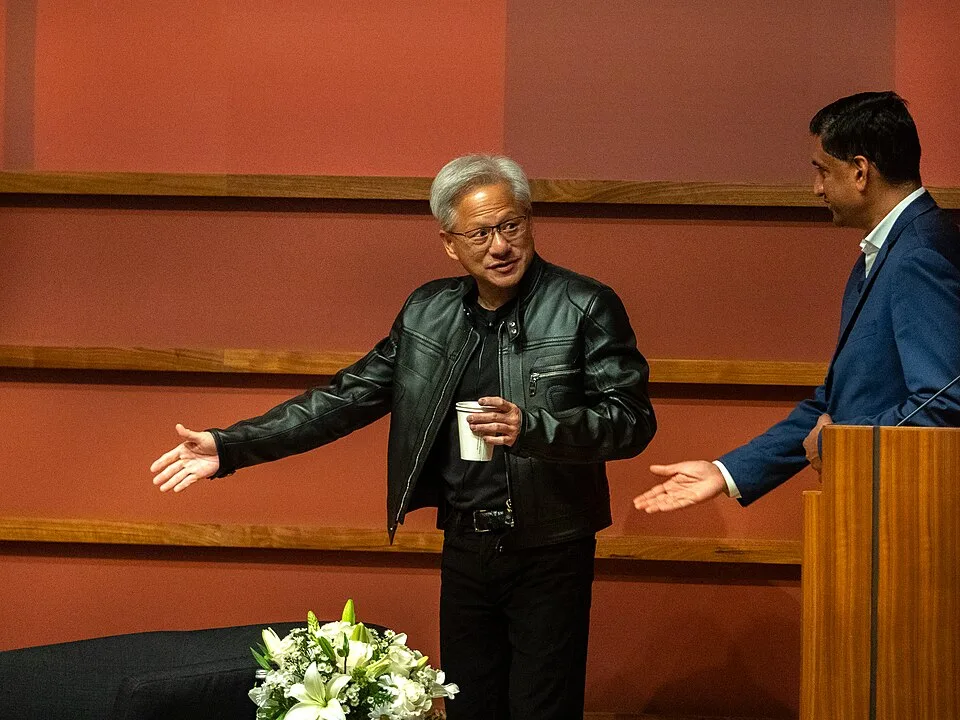
Jensen Huang was an obstacle to this programme. He was leaning on Trump to get permission for exports, and now this obstacle has been removed. The new management at Nvidia has done their bit by promising not to sell any more H200 chips to China.
Of course, no one asks what gives the US the right to deprive China of access to advanced technology. No one asks why it is apparently so imperative that China doesn’t get access to this technology, while it is fine for the US to have access to it.
From the point of view of the US bourgeoisie, I guess there is a case: keep the Chinese in their place, so that they won’t compete with our companies (like Anthropic) and so they can’t use these new technologies for military purposes.
Why anyone else should care is less clear. They make a lot of noise about Russian, Iranian and Chinese hybrid warfare, much of which is simply made up. But they don’t seem to be upset when the US uses AI to target Iranian schoolchildren or Israel does the same to Palestinians. Similarly, we know for a fact that Anthropic and OpenAI agents have been hacking all kinds of institutions. We don’t know any Chinese companies that have done anything like that.
The struggle against ‘open-weight’ models
Bessent, without presenting any evidence whatsoever, announced last week that Chinese open-weight AI models had been used to hack the software controlling French fridges, causing them to overheat and spoil food at numerous supermarkets. He announced that these models are dangerous “because they have no guardrails”. Never mind the fact that Hugging Face had to resort to Chinese models to defend themselves against OpenAI’s bots back in July.
This is another part of the campaign. Anthropic, OpenAI and others are trying to monopolise the market for AI, specifically large language models (LLMs). They have a head start, but they are struggling to stay ahead of the game. The cost of training these models is growing, but the Chinese, and others, are catching up. And their models often cost significantly less to run.
The advantage of open-weight models is also that you can run them on your own hardware, or your own data centre, as well as control their parameters. This is attractive to companies that are worried about their growing bills for AI ‘compute’, as well as those that don’t really trust OpenAI and Anthropic to keep their customer data safe.
Some large law firms have started using unspecified open-weight models on their own servers precisely for that reason. The massive online bank Revolut is bragging about their own success in using Chinese models.
But all this is a massive problem for Anthropic and OpenAI, which need to increase their revenue tenfold over the coming years in order to pay for the hundreds of billions of dollars of commitments they made to the so-called hyperscalers (Google, Amazon, Microsoft, Oracle and Meta – the companies that have built the enormous AI data centres on which the models run).
A problem for Anthropic and OpenAI is naturally also a problem for the hyperscalers, who are counting on being able to claw back their trillions of dollars of investment by billing the two model providers.
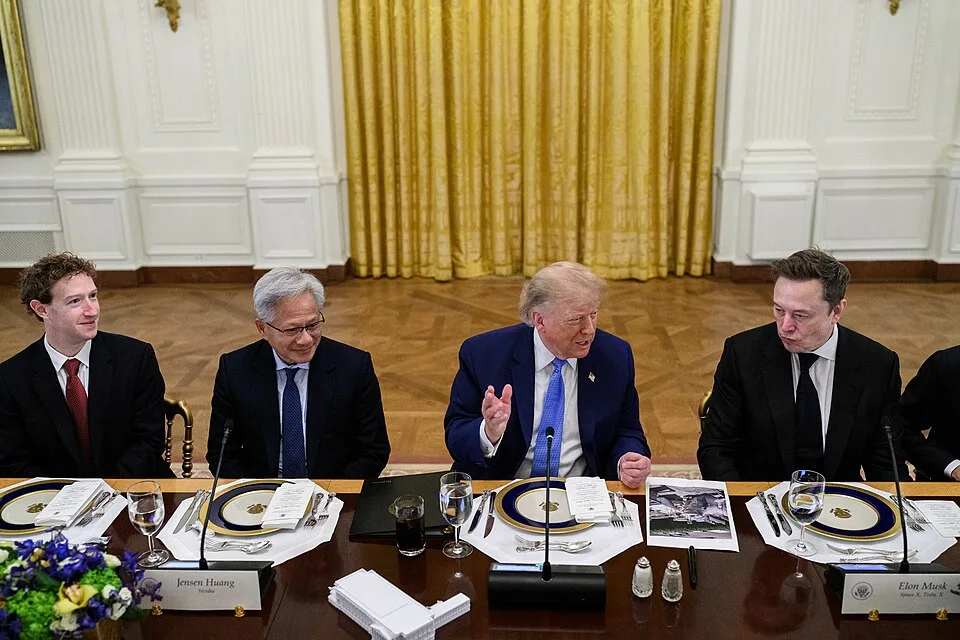
This entire business model – which has tied up a huge chunk of the US economy, both in terms of physical and financial resources – is under threat by the Chinese models. And of course, there’s the military question. Who has the best models to run their military hardware on, their intelligence gathering, and for that matter, who has the best resources for hacking and disrupting the rival’s economy?
So, to resolve this problem, the US ruling class is now coming out against Chinese models. They started with government procurement. US government departments are now only allowed to run Chinese models with a special dispensation.
One of the flash points occurred in the summer when Jensen Huang spearheaded a letter arguing against restrictions on open-weight models. Anthropic refused to back it, and OpenAI, in spite of signing the letter, subsequently backed Democrat legislation, which imposed the restrictions Anthropic argued for in the summer.
US congressmen believe that the key to strangling the Chinese open-weight models is to restrict their access to Nvidia’s most advanced chips. Supposedly those chips are still needed for the training of the models, even if one can run the models on other, Chinese-made chips. To make this possible, Jensen Huang had to go.
Why they want him back
Now, half the AI industry is jumping up and down demanding the return of Jensen Huang. Most of the time, Elon Musk seems only to be interested in himself. Yet, he’s spearheaded an appeal to bring back Huang. Musk and his co-conspirators are thinking they can do a Sam Altman, who was also fired and rehired (but unlike workers suffering that fate, not on worse terms and conditions).
Why should they care? Well, amongst the various sob stories about how Jensen Huang was great, how he is a genius, etc., one can detect a genuine fear. The fear is that the house of cards that is AI financing and investment might collapse.
This is not the time to go into the details of the hundreds of billions in loans, guarantees and commitments that the different companies involved in the industry have given each other. Nor the sector’s relation to shadow banking.
The key point in this context is that Huang was a central player. He got Nvidia to supply $116 billion of guarantees for loans to their customers. He gave these guarantees to a whole range of smaller companies and startups, not just to the big names.
This made him popular, but beyond that, there’s also the worry that without his authority – and the financial backing of what was, until last week, the world’s most valuable company – the whole thing will come crashing down.
It’s a bit like the emperor’s new clothes. Once they start looking into the matter, they might realise that all these debts might not be, well, covered. It is perhaps not an accident that Elon Musk, who is very familiar with building companies on little else but hype, is Huang’s most vocal supporter.
The European Central Bank (ECB), with uncharacteristic timing, just released a report warning of the risks of the AI market:
“Even if AI as a technology successfully transforms the global economy, the credit-driven AI boom may result in overcapacity, capital misallocation and credit losses for investors.”
Readers can draw their own conclusions as to whether Europe’s non-existent AI industry makes the ECB more, or less, likely to tell the truth. But whatever their motivations, they no doubt have a point.
The business model that has been set up by OpenAI and Anthropic is dependent on them being able to charge at least twice what you’d pay to run an open-weight model. With the cheaper models being only a few percentage points behind the top models in terms of their capabilities, it’s a big ask. And it’s not just Chinese models either. Microsoft, Google and Nvidia itself all have models that can compete with Anthropic and OpenAI, at least on bang-for-buck.
Where does that leave the investors that are betting on Anthropic and OpenAI? Or the data centre operators that are investing trillions of dollars in data centres based on commitments by the two companies? Up a certain creek without a paddle.
For now, of course, investors can comfort themselves that Nvidia just made $65 billion profit in three months, meaning they’re on course for $210 billion for the calendar year 2026. For comparison, the UN says it would cost $93 billion per year to end world hunger. Nvidia did not decide to spend their profits on solving world hunger, though, nor to spend it on upping the wages of the migrant workers who are paid $650 per month working 12-16 hour days to produce Nvidia GPUs in Taiwan. Instead they decided to bribe shareholders with $150 billion in share buybacks.
Capitalism at its finest
There are those that claim that capitalism perfects resource allocation, that through the invisible hand it can efficiently allocate resources where they are most needed. But here we find the exact opposite.
After decades of the capitalists having precious little productivity to invest in, preferring instead to spend their money buying art, real estate and bitcoins, or simply hoarding hundreds of billions in cash (like Google and Apple did), they suddenly thought they had discovered the goose that lays the golden egg. After decades where less and less investment in the real productive forces was taking place, suddenly they found what seemed like something that could generate profit.
Trillions of dollars poured into an industry which its founders claim is an “existential risk to humanity” (Amodei, Anthropic) or “lights out for us all” (Altman, OpenAI), and will mean a “white-collar bloodbath” with 20 percent unemployment (Amodei).
At breakneck pace, without consideration for the environment, infrastructure or humanity as a whole, they began throwing out hundreds of billions to build new data centres. Instead of co-operating on using the technology for the benefit of humanity, they are waging a massive struggle to try to keep China from having access to this technology.
Now, the whole edifice risks crashing down, sinking the whole of the world economy into depression. Half the industry is now pinning their hopes on Jensen Huang, the other on protectionism. They’re both deluding themselves.
Large language models and AI in general have great potential to improve all of our lives, through removing mundane, dull, administrative tasks, through helping us develop science and technology, through creating better robots that can perform tasks that we don’t want humans to do. But in the hands of the capitalists, we are not getting that. Instead, we’re getting inflation, unemployment and environmental destruction. Jensen Huang, and what he, his supporters, and his opponents represent is an indictment of the whole capitalist system.