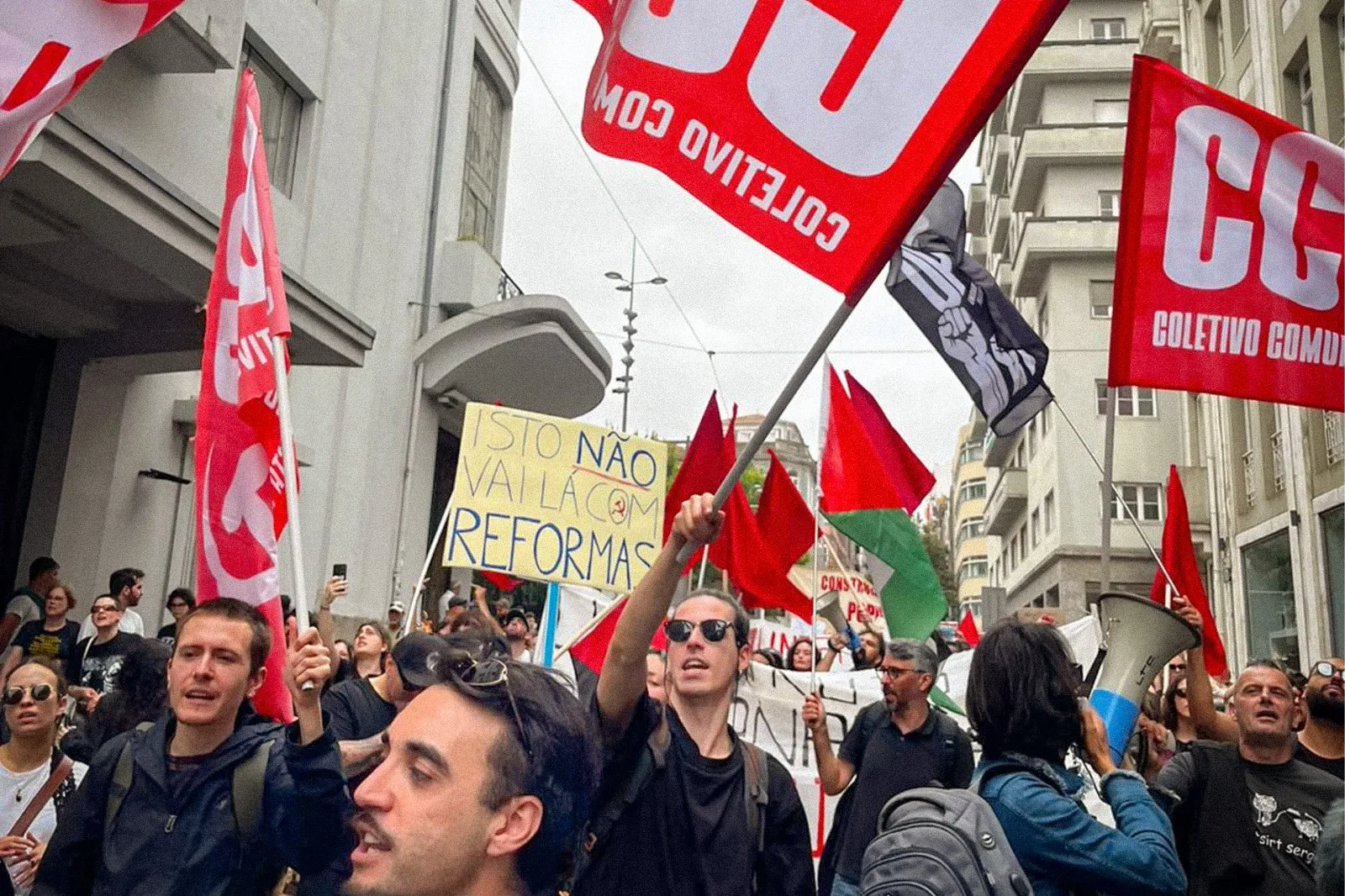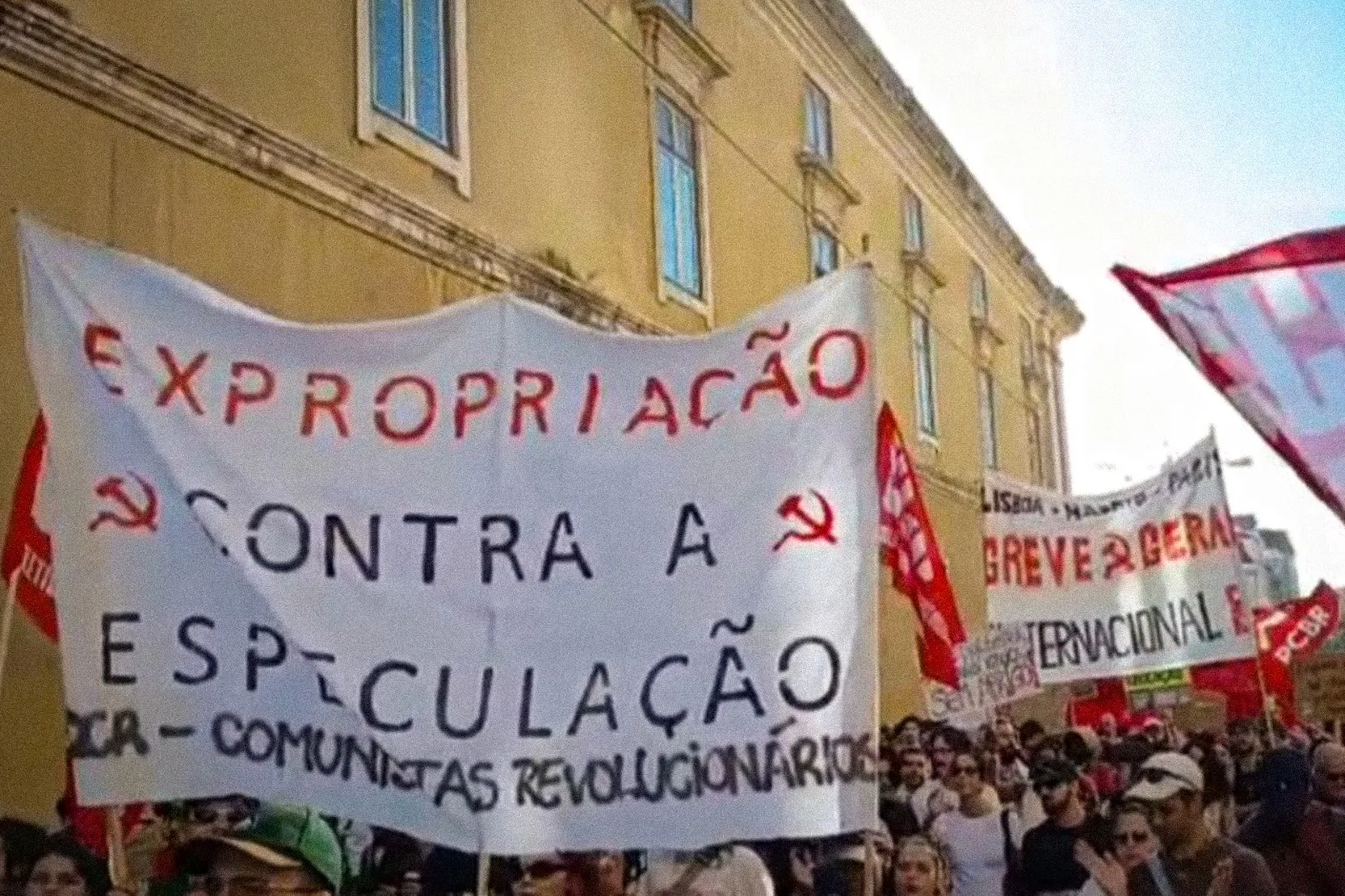
After a slow start, Portugal is catching up fast with Europe’s Red Autumn. Scattered housing protests resulted in encampments in Lisbon and Porto, initially on a smaller scale than in the neighbouring Spanish State. However, the movement went through a qualitative leap in the past week. State repression is turning a single-issue protest for housing into a social explosion.
In an effort to restart Portugal’s economy after 2008, the ruling class deregulated its real estate market and opened its cities for rampant speculation and mass tourism. This has resulted in a massive housing crisis. The price of housing in Lisbon relative to wages is by far the highest of any capital in the European Union. Rent for a one-bedroom apartment costs 116 percent of the average wage. By way of comparison, in Madrid it is 74 percent.
These are unsustainable conditions. The more astute capitalists are aware of this. Isaltino Morais, mayor of Oeiras and a perceptive commentator, recently warned that the housing crisis “would provoke a revolution in 20 years’ time”. The way things are going, this estimate is looking very conservative.
Petrol on the flames
While a mass movement was breaking out in Spain over the question of evictions, Prime Minister Luís Montenegro presented a new housing law that expedites repossessions. This reactionary bill passed its first reading in parliament in late September.
The ‘official’ protest movement for housing (under the political influence of the Portuguese Communist Party, PCP) responded in a routine fashion, calling an orderly demonstration for the distant date of 14 November. However, a grassroots movement made up of a hodgepodge of community activist groups called smaller protests for 10 October.
In Porto, demonstrators spontaneously imitated the Spanish encampments by pitching tents on the city’s main square. It is no coincidence the movement was born here rather than Lisbon, as the influence of the big, bureaucratic left organisations is weaker outside the capital.
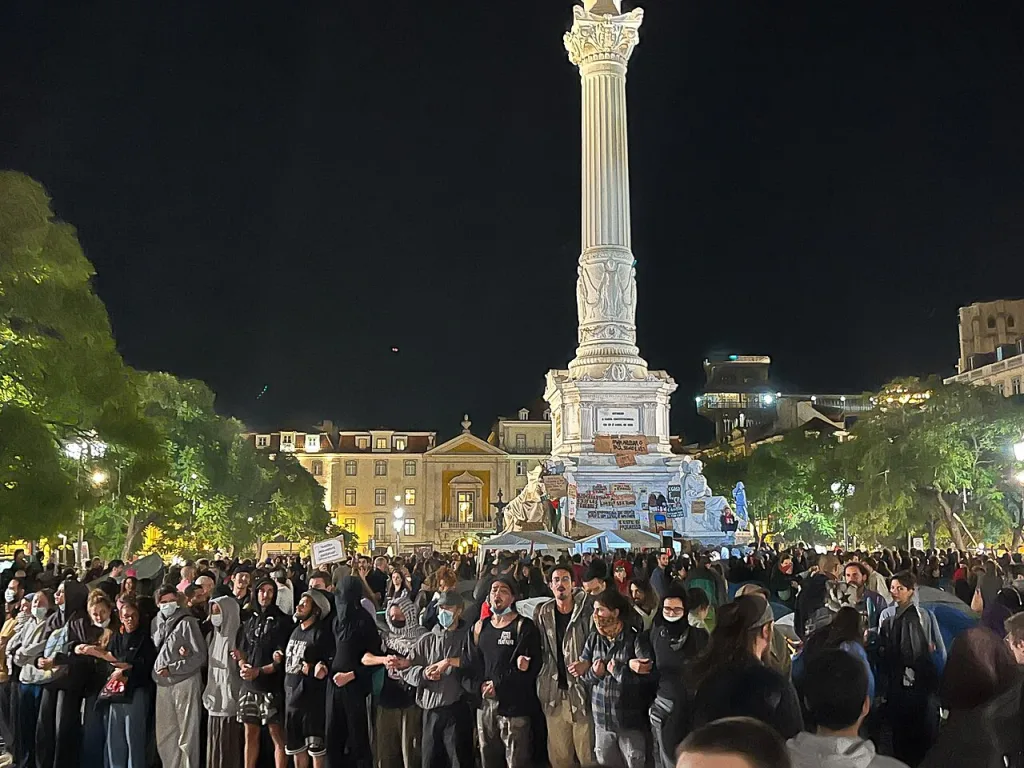
The encampment initially gathered a few dozen activists. Police expelled them after four days, with 37 injured. The right-wing mayor vowed to be “implacable” against these peaceful protesters. But despite the violence and threats, a bigger demonstration returned to the square in Porto and tents were pitched once again. On 17 October, Lisbon followed suit.
The government supported the repression in Porto and claimed the encampments were illegal. Montenegro, who owns 55 properties, called the protesters “selfish”, and affirmed the movement was a foreign contagion. The head of the government’s Housing Institute asked the youth to make “more sacrifices” and if necessary to emigrate (never mind that one in three Portuguese youths have already done so). All of this only provoked the masses further.
On 20 October, the government followed through with its threats and evicted the encampments in Lisbon and Porto, arresting 55 in Lisbon alone. Once again, the youth at the forefront of this struggle refused to be cowed. Thousands entered the streets, bent on fighting the government. This prepared the ground for a new encampment two days later on 22 October.
Popular assemblies started developing around these encampments. These are often dominated by accidental groups of activists full of democratic illusions in the ‘April Constitution’, and who have resisted the camps becoming overly ‘politicised’. But these assemblies nonetheless gained a mass character during the biggest days of protest and are in the process of having their naïveté beaten out of them.
In the early hours of Sunday 25 October, once again, the tents were evicted. This time, the state forces were particularly savage. Tasers, dogs and truncheons were deployed against the protestors, and hundreds of police charged after them through the centres of Lisbon and Porto.
Montenegro was afraid that a lenient, hands-off approach to the encampments would have allowed them to grow uncontrollably, as happened in Spain. But as a result of coming down hard, this is precisely what is on the cards. 25,000 protested in Lisbon after 25 October and the squares filled again with even bigger and angrier crowds.
With the state’s heavy-handed methods, a limited, single-issue movement is rapidly turning into a general struggle against the regime.
Explosive conditions
The problem for the capitalists is that they cannot solve the housing crisis. Tourism and real estate account for more than 20 percent of the Portuguese economy. Investors, both Portuguese and foreign, have become immensely rich through speculation. They buy old buildings (sometimes evicting long-term tenants), refurbish them cheaply, and sell them to rich buyers or turn them into tourist accommodation.
As a result, the rich are getting richer, while ordinary people struggle to survive. This racket is nevertheless a lynchpin of Portuguese capitalism.
Meanwhile, public debt surpasses 90 percent of GDP, giving no elbowroom to the government. “Practically everything that could be done [to solve the housing crisis] has been done”, said the Finance Minister, “all the resources that could be brought to bear on this problem are already in place”. And, on a capitalist basis, he is not wrong.
Outside of housing, inflammable material had been piling up in Portugal for many years. This is Western Europe’s poorest country. The ruling class partially overcame the 2008 crisis by implementing austerity and attacks under the troika’s baton. Today, after years of cuts and underfunding, the welfare state is dilapidated and working conditions are atrocious. The minimum wage stands at €920 before tax, €300 lower than in Spain, where the cost of living is cheaper. And of course, inflation is further gnawing into living conditions.
The more prescient bourgeois feel the groundswell of popular anger they have awakened. The Public Prosecution Service has stated it might drop the charges against the detainees in the encampments, implicitly disavowing the government’s actions. Many leading figures from the ruling party have criticised the government’s “tremendous error” in cracking down on the encampments. Even the right-libertarian party Liberal Initiative has warned the repression will only goad the movement in a dangerous direction.
Years of falling living standards and attacks after 2008 have discredited all the mainstream parties. The current minority government, led by the centre-right Social Democratic Party (PSD), is very fragile. Montenegro’s cabinet rests on rickety ad hoc agreements with the Socialist Party and the right-wing demagogues of Chega.
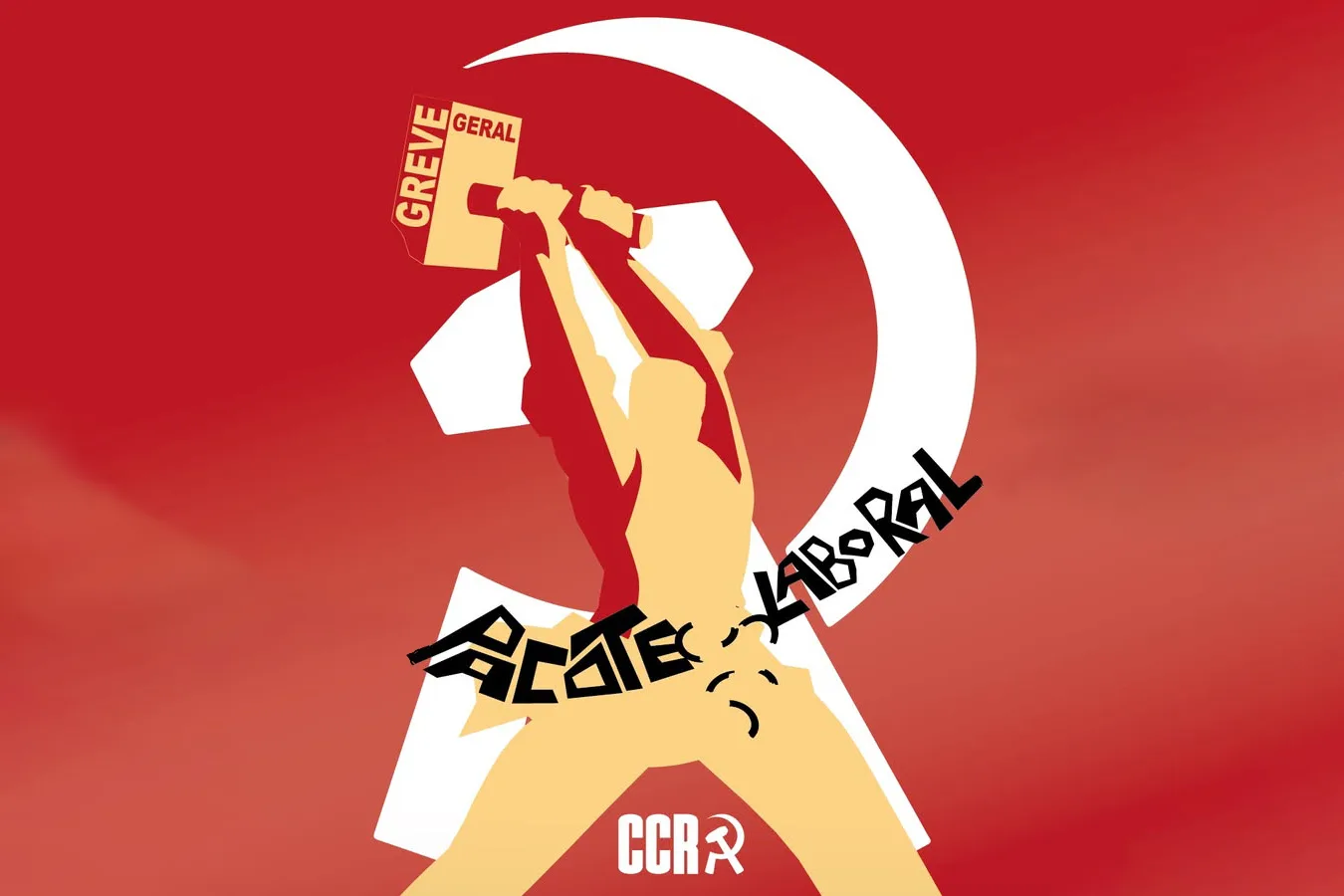
Chega’s leader, André Ventura, has pulled together an eclectic coalition of reactionary petty-bourgeois and frustrated working-class voters. The pressure from this base has forced him to oppose the housing bill, despite initially pledging to support it. He did the same thing with the government’s labour reform bill, which aimed to lengthen working hours and weaken workplace protections. Two general strikes were launched against this bill in December 2025 and June 2026, and it was eventually defeated.
The Socialist Party (PS) is committed to political stability. After being kicked out of power following eight years of rule (2015-2023), the PS feel they alienated sectors of the capitalist class, despite the fact that their government was very friendly towards business owners! Under a new and firmly pro-bourgeois leadership, the PS are trying to recover their ‘credibility’ in the eyes of the ruling class through ‘responsible opposition’, i.e., by propping up the government.
Portugal’s Socialist President António José Seguro is under a lot of pressure to disown Montenegro. But so far, he is dragging his feet and backing the government. Nevertheless, the Socialists have also refused to support the housing bill, such is the furious mood in society.
For an All-Iberian general strike!
Conditions for the current social explosion had long been ripening in Portugal. If this took longer to materialise than elsewhere, it is because of the lack of adequate leadership.
The PCP and Blocco Esquerda (BE) are in decline after years of collaboration with the socialist governments of the 2010s. In the eyes of many, they share responsibility for the management of the capitalist crisis. Not only that: the rise of Chega over the past five years has terrified them. Wailing about the ‘menace of fascism’, they have become the firmest defenders of the regime of bourgeois democracy, which they falsely present as the culmination of the Portuguese Revolution of 1974-1975. This has only discredited them further and helped Ventura to absorb the anti-establishment mood.
Still, these parties have some weight in society and have been able to hold big social movements within ‘safe’ boundaries – for now. But the masses are starting to burst the boundaries imposed by the old left parties.
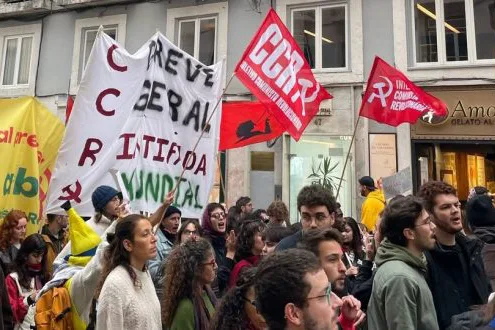
The demand for an Iberian general strike on 11 November, coinciding with the one in Spain, was initially put forward only by revolutionary communists. Only weeks ago, it was dismissed as utopian. Today it is a mainstream slogan that has even been adopted by the official leadership of the encampments.
This is putting the left parties and the bureaucrats at the heads of the big trade unions on the spot. From Spain, the Renters’ Union has rightly issued an official appeal to the Portuguese trade unions to call a strike.
The leaders of the main union confederation, the communist-aligned CGTP, have no desire for this. But they are under tremendous pressure from the streets and from their own rank-and-file. If the movement continues to develop, they might be dragged into calling a general strike to get out ahead of the movement, or risk seeing it spiral out of control. This would raise the struggle to a qualitatively higher plane, bringing the organised working class into the fray. Again, we have seen this process unfold already in Spain and France.
The current movement is only starting. It can go very far. Consciousness is developing in leaps and bounds. Under these circumstances, the fall of the government cannot be excluded, especially if a general strike is called. A critical vote on this year’s budget is coming up in late November, further deepening the government’s predicament: it will have to rely on either Chega or the Socialists, and neither is guaranteed to throw it a lifeline in a climate of popular revolt.
The downfall of the repressive and corrupt Montenegro government would be a major victory of the Portuguese workers and youth. However, under current circumstances, power would remain within the triangle of the PSD conservatives, the PS, and the right demagogues of Chega: all pro-capitalist parties that cannot offer a way out to the crisis of their system.
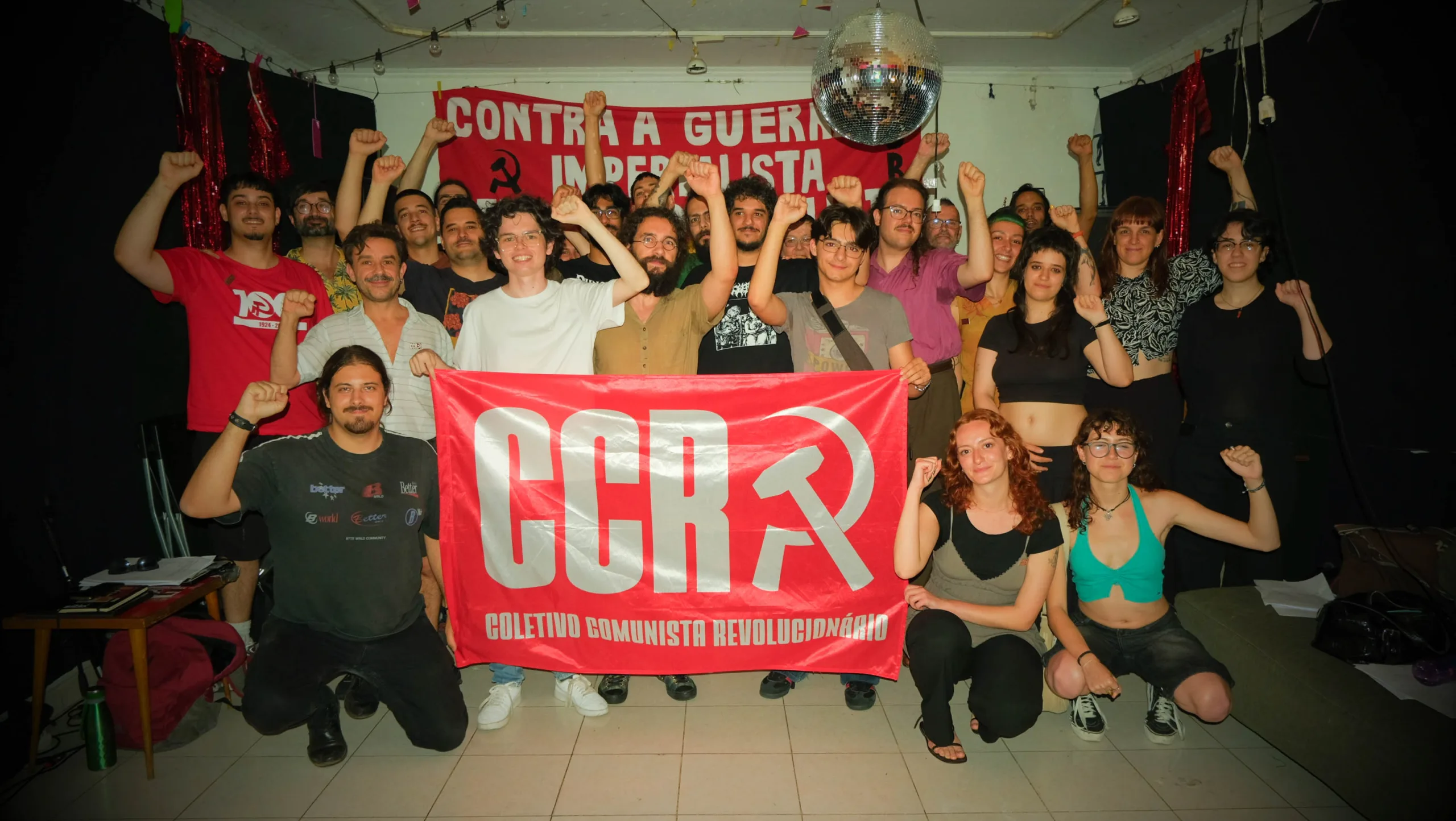
A political alternative to the rotten bourgeois regime is necessary. Conditions for revolution are ripening across Europe and Portugal is no exception. The main ingredient that is missing is a revolutionary party with an adequate programme and methods and with roots among class-conscious workers and youth.
The main asset the bourgeois government has, in Portugal and elsewhere, is the lack of revolutionary leadership of the working class. It is this shortcoming, and not repression, which will condemn the movement to defeat in the medium term. It is our urgent task to build this party.