In his last work, Stalin, Trotsky pointed out that the real differences had nothing to do with centralism versus democracy, or even, as of ‘hards’ versus ‘softs’, but went far deeper:
True firmness and resoluteness predetermine a person to the acceptance of Bolshevism. Yet these characterisations in themselves are not decisive, there were any number of persons of firm character among the Mensheviks and Social Revolutionaries. On the other hand, weak people were not so rare among the Bolsheviks. Psychology and character are not all there is to the nature of Bolshevism which, above all, is a philosophy of history and a political conception. (L. Trotsky, Stalin, p. 50.)
In his autobiography, Trotsky recalls how a section of the old leaders leaned towards the liberals:
The press was becoming more daring, the terrorist acts more frequent: the liberals began to wake up and launched a campaign of political banquets. The fundamental questions of revolution came swiftly to the front. Abstractions were beginning in my eyes to acquire actual social flesh. The Mensheviks, Zasulich especially, were placing greater hopes in the liberals. (L. Trotsky, My Life, p. 166, my emphasis.)
Trotsky’s characterisation of the liberals was clear from an article which appeared in Iskra in mid-March 1904, where he described them as “half-hearted, vague, lacking in decision and inclined to treachery”. It was precisely this article which provoked Plekhanov to present the editors of Iskra with an ultimatum demanding Trotsky’s removal from the Editorial Board. Thereafter, Trotsky’s name disappeared from Iskra and his active collaboration with the Mensheviks to all intents and purposes came to an end. The ‘crime’ of Trotsky in these years was that of ‘conciliationism’, or, to use an unkind expression, ‘unity-mongering’. This conciliationism, however, was an attempt to re-unite the Party, a view shared by many within the Bolshevik camp and the Party in general. It had nothing to do with a conciliatory attitude to the enemies of the working class – the liberals and the so-called progressive bourgeoisie. It is an idea which Lenin spent his entire active life fighting against.
On this question, there was never any difference between Lenin and Trotsky, who wrote that:
I was with Lenin unreservedly in this discussion, which became more crucial the deeper it went. In 1904, during the liberal banquet campaign, which quickly reached an impasse, I put forward the question, ‘What next?’ and answered it in this way: the way out can be opened only by means of a general strike, followed by an uprising of the proletariat which will march at the head of the masses against liberalism. This aggravated my disagreements with the Mensheviks.
It was the Mensheviks’ support for the liberals and in particular their backing of the Zemstvo banqueting campaign that caused Trotsky to break with the Mensheviks in September 1904. Answering the lies of the Stalinists that he had been a Menshevik since 1903, Trotsky explains:
This connection with the minority in the Second Congress was brief. Before many months had passed, two tendencies had become conspicuous within the minority. I advocated taking steps to bring about a union with the majority as soon as possible, because I thought of the split as an outstanding episode but nothing more. For others, the split at the Second Congress was the beginning of the evolution towards opportunism. I spent the whole year of 1904 arguing with the leading groups of Mensheviks on questions of policy and organisation. The arguments were concentrated on two issues: the attitude towards liberalism and that towards the Bolsheviks. I was for uncompromising resistance to the attempts of the liberals to lean on the masses, and at the same time, because of it, I demanded with increasing determination the union of the two Social Democratic factions. (Quoted in I. Deutscher, The Prophet Armed, p. 86, p. 166, my emphasis, and p. 165.)
Despite the fact that the political differences between Bolshevism and Menshevism were now coming to the fore, many leading Bolsheviks did not understand Lenin’s position and tended to play the differences down. The predominant trend among the Bolshevik tendency inside Russia was precisely conciliationism. The great majority of the party activists did not grasp the reasons for the split, and rejected it. Even Lenin’s closest collaborators were, in effect, working against him. In February 1904, after a long period of vacillation, the CC inside Russia rejected Lenin’s call for a congress by five votes against one. This amounted to a public rebuff for Lenin. Yet those who voted against – Krzhizhanovsky, Krassin, Galperin, Gusarov, and Noskov (Zemlyachka voted for) – had worked closely with Lenin since the founding of Iskra, or even earlier. They had played a prominent role in organising the revolutionary Marxist tendency in Russia. How could they behave in this way?
These were, in many ways, true Bolshevik types – tireless, dedicated party workers, good organisers, disciplined and self-sacrificing. But they were what might be called ‘practicos’, whose work consisted in a hundred and one detailed organisational tasks. Without such people, no revolutionary party can succeed. But there was also a negative aspect to the mentality of the Bolshevik ‘committeemen’, as they were known: a certain organisational limitedness, a narrowness of outlook and restricted theoretical horizons. Such types as these inevitably tended to look with a certain disdain upon the finer points of history and regard such controversies as those that took place at the Second Congress as mere émigré squabbles, of no practical importance. If the majority of them had initially sided with Lenin and Plekhanov, this was not out of any deep ideological commitment, but because the organisational stand of the majority struck them as being more in accord with the ‘Party spirit’, which was the moving force of their lives.
But after Plekhanov’s defection, things began to appear more complicated. The former majority now looked very much like a minority, at least on the leading bodies. Lenin’s complete isolation seemed to underline his weakness. And, to the practicos, Plekhanov’s arguments carried more weight. What was all this fuss really about? Lenin attempted in his book One Step Forward, Two Steps Back to point out the issues of principle involved. But many of the committeemen were unimpressed. In January 1904, Lenin had finally organised a Bureau of Majority Committees to agitate for a Congress. Two CC members, Lengnik and Essen, were sent to Russia for this purpose, but were arrested. Meanwhile, the majority of Bolshevik conciliators on the CC actually ousted Lenin’s only supporter, Zemlyachka. The Bolshevik leadership was falling apart. Demoralised, Gusarov dropped out of activity, and Krzhizhanovsky resigned from the CC. The remaining CC members, Krassin, Noskov, and Galperin – all Bolshevik conciliators – proceeded to pull off an unprincipled coup.
In the summer, when Lenin was convalescing in the Swiss Alps, the triumvirate held a secret meeting of the CC and passed what became known as the “July declaration,” calling for reconciliation between the Bolsheviks and Mensheviks and, in effect, surrendering on the minority’s terms. They accepted the “unquestionable legality” of the new Editorial Board of Iskra and the “equally unquestionable superiority of the central organ in everything which concerns the defence and clarification of the basic principles of the international Social Democracy’s programme and tactics”.
These actions represented an explicit repudiation of Lenin, whom they relieved of the right to represent the CC abroad. They even insisted on the right to censor Lenin’s writings (“the printing of his writings… will be carried out on each occasion with the agreements of the members of the CC”) (Istoriya KPSS, p. 509 in both quotes.) and prohibited agitation in favour of a Third Congress. Furthermore, Noskov was charged with reorganising the party’s technical work abroad, which meant eliminating such supporters of Lenin as Bonch-Bruyevich, who had been involved in publishing Bolshevik material abroad, and Lyadov, who was in charge of finances. In addition, three more Bolshevik-conciliators, and then three Mensheviks, were co-opted onto the CC. When Lenin finally found out what was going on, he wrote an angry letter to the CC challenging the legality of its actions. A further letter was sent to the members of the Bolshevik committees, exposing the activities of the CC. He even sent a letter to Iskra asking it not to publish the illegal declaration. But the editors, ignoring Lenin’s request, published it in issue 72 under the title Declaration of the Central Committee. There was nothing left to Lenin but to break off all relations with the conciliators.
The situation was now grim indeed. Everything which had been achieved by the Second Congress was in ruins. One after the other, the leading bodies had been captured by the minority. The Martovites appeared to have triumphed all along the line. Lenin seemed to be utterly isolated. In reality, however, the Mensheviks’ victory had been achieved by manoeuvring at the top. At grass roots level, things were different. An increasing number of committees were coming out in favour of a new Congress as the only way of resolving the crisis. The party committees in Petersburg, Moscow, Yekaterinoslav, Riga, the Northern Union, Voronezh, Nizhegorod, and, perhaps more surprisingly Baku, Batum, and the Caucasian Union, declared their support. Even abroad, Social Democratic groups in Paris, Genoa, and Berlin came out against the Mensheviks. According to a letter written by Lyubimov to Noskov in the autumn of 1904:
On the question of the declaration [of the CC], there has been such a row you can hardly make head or tail of it. Only one thing is clear: all the committees – except Kharkov, Crimea, Gornozavdsk, and Don – are committees of the majority… The CC has received a full vote of confidence from a very insignificant number of committees. (Ibid., p. 509.)
Encouraged by the response inside Russia, Lenin convened a conference of 22 Bolsheviks in Switzerland in August 1904, which adopted his appeal To the Party, which became a rallying call for the convening of a Third Party Congress. With his customary honesty, Lenin described the serious crisis through which the Party was passing, adding that:
Nonetheless, we regard the Party’s sickness as a matter of growing pains. We consider that the underlying cause of the crisis is the transition from the circle form to party forms of the life of Social Democracy; the essence of its internal struggle is a conflict between the circle spirit and the party spirit. And, consequently, only by shaking off this sickness can our Party become a real party.
Only now did Lenin point out the class forces which lay behind the split:
Lastly, the opposition cadres have in general been drawn chiefly from those elements in our Party which consist primarily of intellectuals. The intelligentsia is always more individualistic than the proletariat, owing to its very conditions of life and work, which do not directly educate it through organised collective labour. The intellectual elements therefore find it harder to adapt themselves to the discipline of Party life and those of them who are not equal to it naturally raise the standard of revolt against the necessary organisational limitations, and elevate their instinctive anarchism to a principle of struggle, misnaming it a desire for ‘autonomy’, a demand for ‘tolerance’, etc.
The section of the Party abroad, where the circles are comparatively long-lived, where theoreticians of various shades are gathered, and where the intelligentsia decidedly predominates, was bound to be most inclined to the views of the ‘minority’, which then as a result proved to be the actual majority. Russia, on the other hand, where the voice of the organised proletariat is louder, where the Party intelligentsia too, being in closer and more direct contact with them, is trained in a more proletarian spirit, and where the exigencies of the immediate struggle make the need for organised unity more strongly felt, came out in vigorous opposition to the circle spirit and the disruptive anarchistic tendencies. (LCW, To the Party, vol. 7, pp. 455-56.)
By the autumn, the prospects for the Bolsheviks were looking brighter. A new leading team was gradually being put together with new arrivals from Russia – people like Bogdanov, Lunacharsky, Olminsky. After his month in the Alps, Lenin’s health was much improved. “It was as if he had bathed in a mountain stream and washed off all the cobwebs of sordid intrigue,” wrote Krupskaya. (Reminiscences of Lenin, p. 106.) Encouraging reports were being received from Russia, where To the Party had been clandestinely distributed to the Party committees. According to Krupskaya, by mid-September, 12 out of 20 committees with full voting rights had come out in favour of a Congress, and the number was still growing. From this point on, the Bolsheviks were a serious organised force within Russia. By the end of the year a Bolshevik Organising Centre was established in the interior, with the backing of 13 Party committees. Still, the situation remained extremely fragile.
Unlike their opponents, the Bolsheviks were desperately short of funds. The question of a newspaper was initially out of the question. As a temporary substitute, Lenin and Bonch-Bruyevich launched a ‘Publishing House for Social Democratic Party Literature’ which from early September began to publish individual titles by Lenin and his collaborators. This was, at least, a start. But the Mensheviks held all the cards when it came to publications. Not only did they control the prestigious Iskra, but they also had a good supply of money from wealthy sympathisers. They did not hesitate to use this unscrupulously as a weapon in the factional struggle. Krupskaya recalls with a note of bitterness how the Mensheviks put pressure on sympathisers to stop giving assistance to the majority:
Ilyich and I had some strong things to say about those ‘sympathisers’ who belonged to no organisation and imagined that their accommodation and paltry donations could influence the course of events in our proletarian Party! (Ibid., p. 98.)
The question of funds from abroad was undoubtedly a factor in the capitulation of the Bolshevik-conciliators on the CC to the émigré centre.
Despite their lack of resources, the Bolsheviks decided to launch a new paper called Vperyod (Forward). At a meeting in Geneva on 3 December, an editorial board was elected, composed of Lenin, V.V. Vorovsky, M.S. Olminsky, and AV Lunacharsky, with Krupskaya as secretary. As usual, the lack of funds was made up for by personal sacrifice. Everyone scratched around for spare cash. Vorovsky handed over some author’s fees he had just received. Olminsky parted with a gold watch. Somehow or other, 1,000 francs were scraped together – barely enough for one and a half issues. But nobody was deterred by this. The first issue of the first truly Bolshevik newspaper duly rolled off the press on 22 December, 1904. Just over a fortnight later, the Russian émigrés were amazed to hear the raucous shouts of the newspaper boys on the streets of Geneva: “Revolution in Russia! Revolution in Russia!”
Endnotes
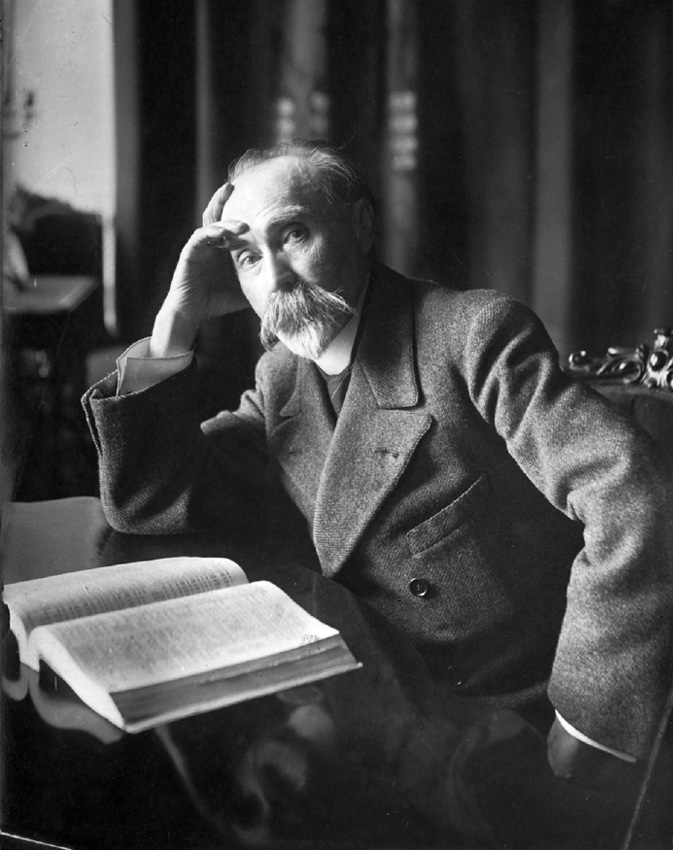
1. George Plekhanov.
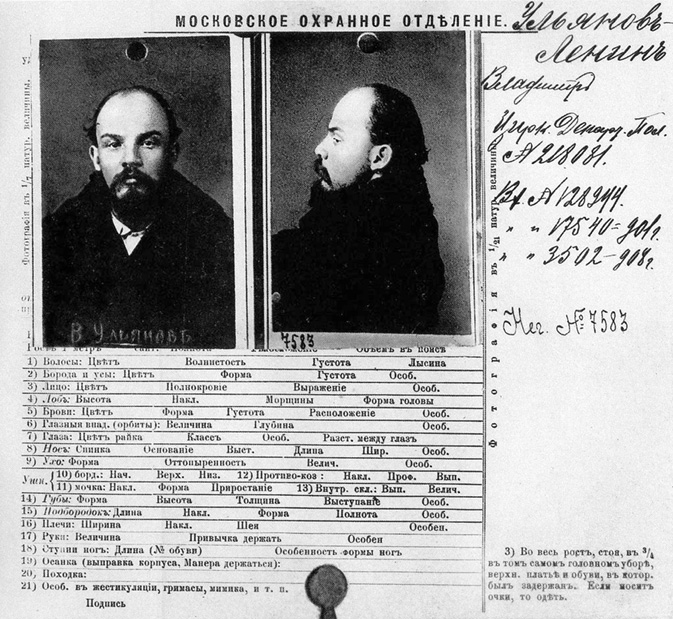
2. Record card made by tsarist police, 1895.
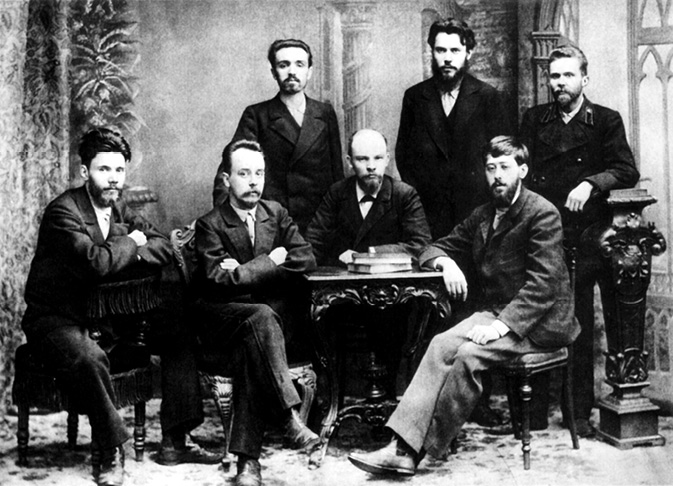
3. Leading members of the St. Petersburg Union of Struggle for the Liberation of the Working Class, mid-February 1897. Future leaders of the Bolshevik and Menshevik parties, V.I. Lenin (centre) and Julius Martov (right) seated side-by-side.
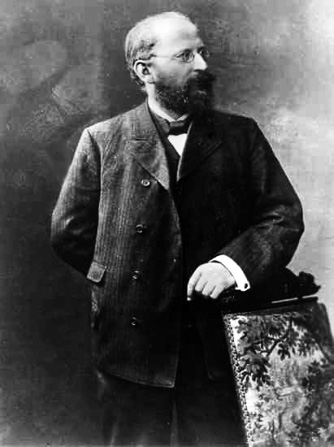
4. Eduard Bernstein.
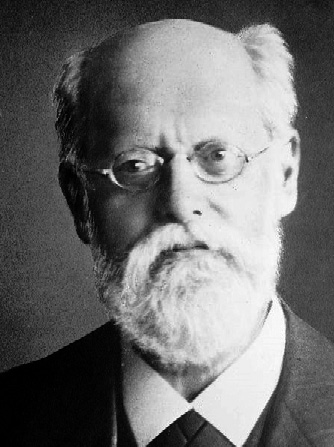
5. Karl Kautsky.
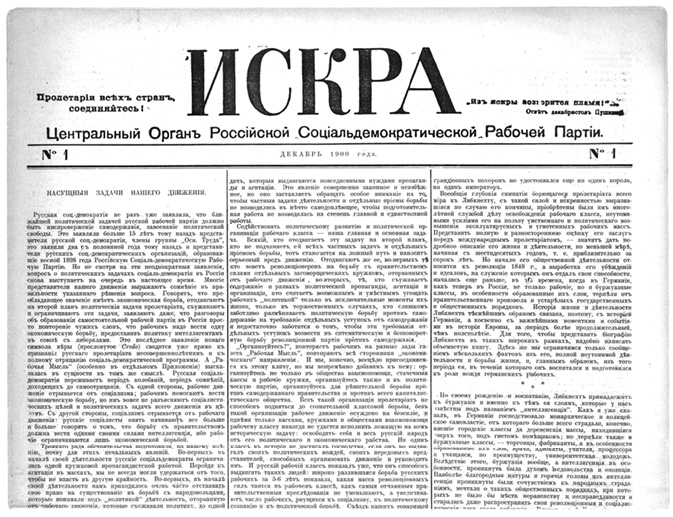
6. The first issue of Iskra (The Spark), published in 1900. Lenin’s editorial re-affirms “the immediate political tasks of a Russian working-class party to be the overthrow of the autocracy, the achievement of political liberty.”
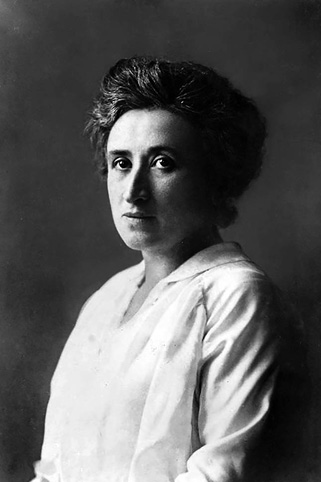
7. Rosa Luxemburg.