The symptoms of a growing revolutionary crisis were unmistakable. There was anecdotal evidence: a crowd in Germany booed the right-wing Socialist leader Scheidemann; a rent strike in Glasgow; demonstrations against the high cost of living in several countries. Above all, the increasing social ferment in all the belligerent powers was expressed in a notable increase in strikes, as demonstrated in table 5.2.
| Country | Year | Strikes | Strikers |
|---|---|---|---|
| Germany | 1915 | 137 | 14,000 |
| 1916 | 240 | 129,000 | |
| France | 1915 | 98 | 9,000 |
| 1916 | 314 | 41,000 | |
| Russia | 1915 | 928 | 539,000 |
| 1916 | 1,410 | 1,086,000 | |
| (Source, Istoriya KPSS, vol. 2, p. 624.) | |||
Lenin watched carefully for any sign of a shift in the mood of the European proletariat. This question was absolutely fundamental to his perspectives for the revolution in Russia. “The task confronting the proletariat in Russia,” he wrote in October 1915, “is the consummation of the bourgeois-democratic revolution in Russia in order to kindle the socialist revolution in Europe. The latter task now stands very close to the former…” (LCW, Several Theses, vol. 21, p. 402.)
The growing social crisis found a belated echo within the mass organisations of the old International, where the ferment of discontent expressed itself in increased support for the left wing. In order to head off the Lefts, the old leaders of the Second International tried a new manoeuvre. The International Socialist Bureau had been totally inactive since the war began. Now, suddenly, Camille Huysmans, the Bureau’s secretary, announced at a congress of the Dutch party in January 1916 that the “International was not dead”. In February 1916 at Berne there was the meeting of the ‘Broad Commission’: representatives from Austria, Germany, Italy, Russia, Romania, Switzerland, and other countries met together to fight back from the left and expose Huysmans’ manoeuvre as a “conspiracy against socialism”. Here it was agreed to call another international conference of the left. In early May at Kienthal a second conference was held, with the participation of 43 delegates from Russia, Poland, Germany, Italy, France, Switzerland, Austria, Serbia, and Portugal. Willi Münzenberg attended as representative of the International Youth Section. For the Bolsheviks there were Lenin, Zinoviev, and Inessa Armand. For the Poles, Radek, (another Polish group was represented by V. Dombrovski and Mieczislav Bronski); three Swiss socialists: Ernst Nobs, Fritz Platten and Agnes Tobman; the Serb Trisha Kantslevovich; the representative of a left group in Bremen, Paul Fröhlich, plus Münzenberg, Thalheimer, and others. The left was stronger here than at Zimmerwald. But even so, their resolution on peace was not accepted. The mood of the majority was still centrist. The end result was a compromise but still an advance over Zimmerwald.
But the tensions were growing between the right and left of the Zimmerwald movement – a heterogeneous creature at best. Lenin was prepared for a temporary coexistence with the centrists, starting from a weak initial base. But it could not last. A de facto international split, which only Lenin really understood, already existed. Under conditions of war and revolution all halfway currents are doomed to disappear. Lenin simply helped them on their way, insisting on clarification. Ambiguity is intolerable in critical moments of history when there is a pressing need to choose. The objective situation was pushing the masses to the left, to the road of revolution. The centrist Zimmerwald current was dragging its feet. There were only two ways to go: either go the whole way, breaking decisively with reformism and passing over to an open revolutionary position, or to go back to the swamp of reformism. Lenin, by word and deed, made this abundantly clear. For that the centrists hated him, as at every moment in history a muddle-head always hates a man with clear ideas.
Robert Grimm was the first to move to the right. By the summer of 1916, he had gone over. Lenin was merciless in his criticism of the centrists who were revolutionary in phrases, but bourgeois-reformist in deeds. This was exactly what Lenin detested. Turati, Merrheim, Bourderon, and the other centrists sooner or later went the same way. In the end nothing was left of Zimmerwald, except the memory – and the Left! The Zimmerwald Left itself could not have an independent significance except as a stepping stone to the new International. But this had to be built on the basis of great events which were only a few months away. By going through the experience of Zimmerwald, Lenin had gained invaluable experience and a wide range of contacts: the German Lefts (the Spartakists and the Bremen Arbeiterpolitik group), Ferdinand Loriot’s group in France, John MacLean in Britain, Eugene Debs in the USA, Pannekoek and Gorter in Holland, Serrati and Gramsci in Italy, Fritz Platten (Switzerland), Hanyecki and Radek (Poland). There were also problems within the Zimmerwald Left. The political positions of all the above were by no means unanimous. Prominent people in Lenin’s own circle – Radek, Bukharin, Pyatakov, and others – did not have a clear Bolshevik-Leninist position. Even the left was somewhat heterogeneous. This, too, was a necessary stage on the journey towards October. But such a perspective seemed very far off at the time.
Trapped in his Swiss exile, Lenin paced his room like a caged tiger. Would the nightmare of reaction never end? The isolation and frustration of émigré life acted like a slow poison that corroded even the strongest from within. Lenin was not immune from this. At times he was tormented by the thought that he might not live to see the revolution. In a letter to Inessa Armand written on Christmas Day 1916, Lenin gave voice to his innermost misgivings: “The revolutionary movement grows extremely slowly and with difficulty.” And adds in a tone of resignation: “This must be put up with.” In one of the most ironic comments of history, in a speech to the Swiss young socialists delivered in January 1917, Lenin said: “We of the older generation may not live to see the decisive battles of this coming revolution.” (Quoted in NK Krupskaya, Reminiscences of Lenin, p. 335.) One month later, the Tsar was overthrown. In less than a year, the Bolsheviks had come to power.
Endnotes
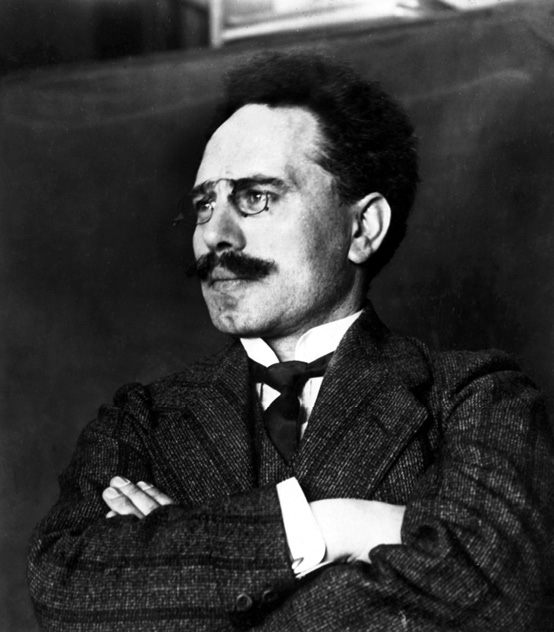
25. Karl Liebknecht, circa 1911.
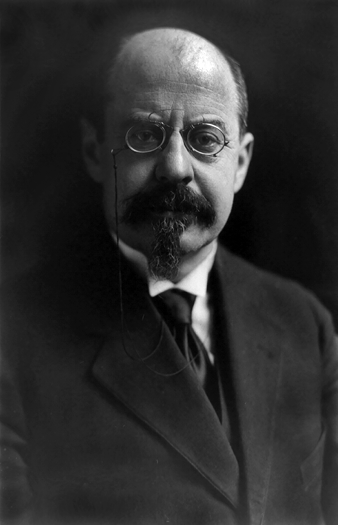
26. Emile Vandervelde, 1919.
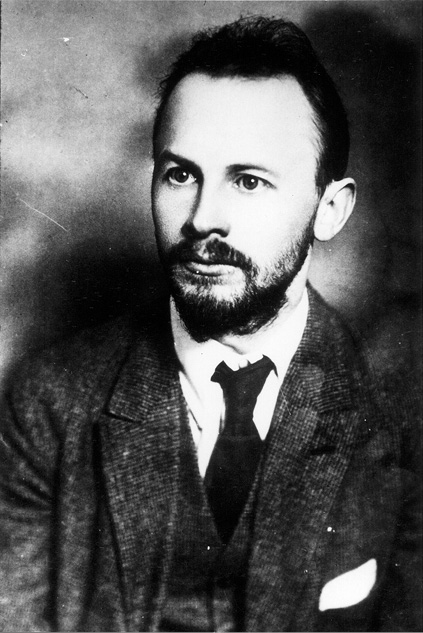
27. Nikolai Bukharin.
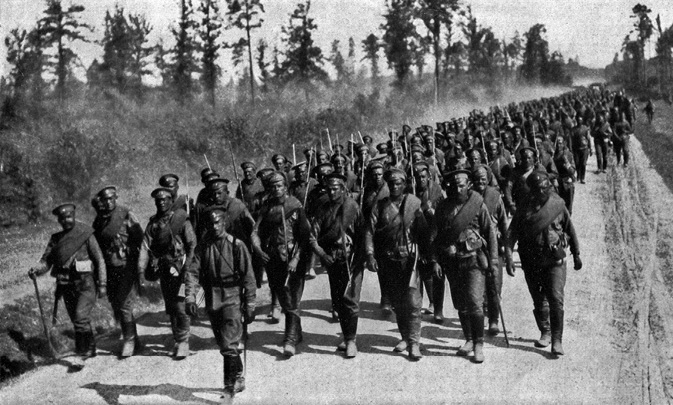
28. Russian troops marching to the front.
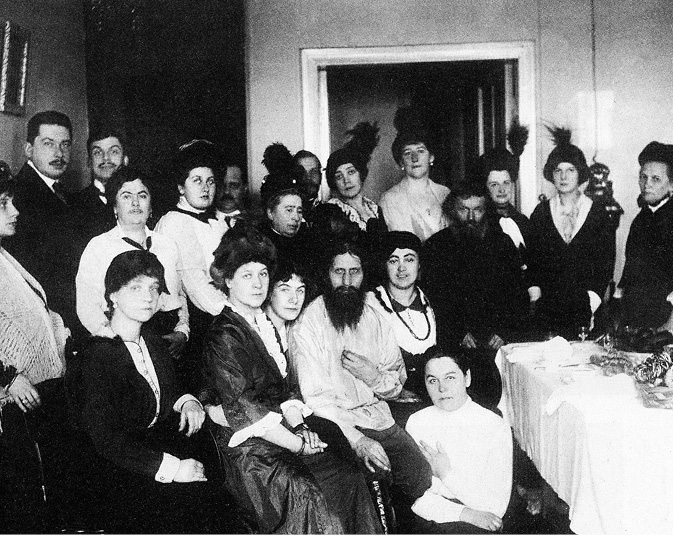
29. Rasputin surrounded by admirers in 1914.