It is said that the darkest hour comes just before the dawn. On the eve of a new revolutionary upsurge, Lenin’s position appeared hopeless. Out of three leading centres of the RSDLP, two (the Foreign Bureau of the CC and CC inside Russia) were dominated by the conciliators (and also the Liquidators in the latter case). The Bolshevik members of the Russian CC (interior) were conciliators (first Dubrovinsky and Goldenberg, then, after their arrest, Nogin and Leiteisen), always running after agreements with the Liquidators (Isuv, Bronstein, Yermolaev). Lenin was indignant at the compromising tactics of his supporters, and insistently demanded rapprochement with Pro-Party Mensheviks and implacable struggle against the ‘unprincipled bloc’ of the January Plenum. Lenin’s opponents shook their heads and muttered about ‘sectarianism’.
Things were not much better in Russia. Just before the new upswing, the Bolshevik organisations were in an extremely enfeebled state. In the spring of 1911, Lenin described the position of the Party as follows:
At present the real position of the Party is such that almost everywhere in the localities there are informal, extremely small, and tiny Party workers’ groups and nuclei that meet irregularly. Everywhere they are combating liquidator-legalists in the unions, clubs, etc. They are not connected with each other. Very rarely do they see any literature. They enjoy prestige among workers. In these groups Bolsheviks and Plekhanov’s supporters unite, and to some extent those Vperyod ‘supporters’ who have read Vperyod literature or have heard Vperyod speakers, but have not yet been dragged into the isolated Vperyod faction set up abroad. (LCW, Material for the Meeting of CC Members of RSDLP, vol. 17, p. 202.)
In his study of the St. Petersburg labour movement at this time, Robert McKean writes:
As all revolutionary coteries deliberately refrained from keeping proper lists of members and financial accounts for obvious reasons of conspiracy, it is quite impossible to paint an accurate picture of the size of the underground, its social composition or the state of its finances at the beginning of 1912. The total number of adherents was undoubtedly extremely minute and constantly changing due to frequent waves of arrests. The estimates claimed in the party press must be treated with the greatest caution, although even these testify to the paucity of supporters. Lenin’s factional organ claimed some 300 in the summer of 1911, as did the ‘Central Group of Social Democratic Workers’ at the end of the year. At the Bolsheviks’ Prague Conference in January 1912 the St. Petersburg delegate P.A. Zalutsky furnished the probably more accurate estimate of 109 supporters of Lenin. The evidence adduced here suggests that within the Bolshevik faction the ‘Central Group’s’ claim was the more accurate of the two. At the most, there must have been a mere 500 or so Social Democratic party members. In all districts and factories there can have existed only little groups of 10, 20 or 30 or so card-carrying members. These doleful figures must be set against the total labour force in St. Petersburg of 783,000, of whom 240,000 were factory workers, at the time of the December 1910 city census. (R.B. McKean, St. Petersburg Between the Revolutions, pp. 82-83.)
The fortunes of the RSDLP, and first and foremost its revolutionary wing, seemed to have hit rock bottom. Yet beneath the surface invisible forces were working to transform the whole situation. The key to the change must be sought in the economic base upon which the superstructure of politics, and all social life in general, rests. The economic depression that struck immediately after the December defeat had knocked the wind out of an already exhausted working class. Trotsky, in a brilliant prediction, warned that the Russian workers would not move back into action until the economy began to pick up again. This prognosis was confirmed by events. By early 1910, the economic situation began to improve, and the labour movement also began to revive, although slowly at first. There was an increase in strikes, some of them at least partially successful, to improve wages and conditions. This placed on the agenda the urgent need to rebuild the party. But how? And with what methods and policies? There was no consensus. On the contrary, the controversies were fiercer than ever, especially in exile, where they were characterised by a particularly venomous character.
Once the workers began to move in a revolutionary direction, the entire position began to change. That is what Lenin was counting on, and events proved him to be correct. The upsurge in the workers’ movement breathed new life into the underground party circles. Looking for a vehicle to express their aspirations, the workers quite naturally gravitated towards that banner and name that was familiar to them from the earlier period – the RSDLP. The new layers had no knowledge of the inner-party splits and squabbles. Most of them had never read the party programme or statutes. But when they moved to change society, they rallied to their traditional mass organisation. Here too, Lenin’s tactics had been vindicated. If the Bolsheviks had succumbed to the ultra-left impatience of Bogdanov and split from the party, they would have been isolated. True, they would have grown. But for every worker that joined them, 100 would have joined the RSDLP. The party was transformed by an influx of fresh workers and youth. Overnight, groups sprang up in new areas. By 1912, the Tiflis (Tbilisi) RSDLP organisation had 100 members. The party in the Urals could count groups of 40-50 members. The main beneficiaries of this growth were the underground revolutionary groups of Bolsheviks and Pro-Party Mensheviks. These new layers brought with them a breath of fresh air and almost automatically gravitated to the left wing – that is, the Leninists, who were more active, militant and better organised than all the rest. Active participation in the party increased as the masses moved into struggle again. New members were recruited, and once they joined, were rapidly won over by the Bolshevik cadres. The prestige and support for the Bolsheviks, as the left wing of the Russian Social Democratic Labour Party, grew by leaps and bounds as the demands of the new revolutionary situation made themselves felt.
Endnotes
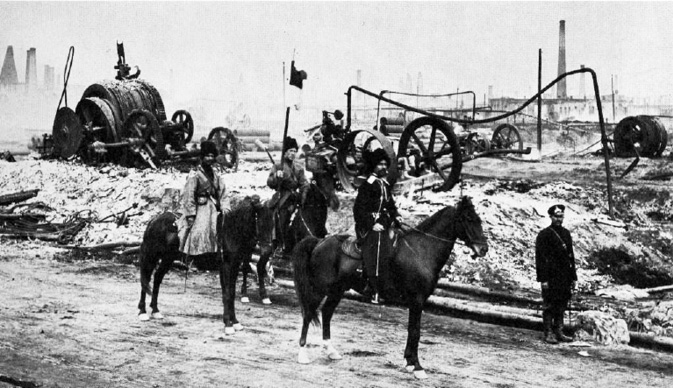
14. A group of Cossacks in Baku in 1905.
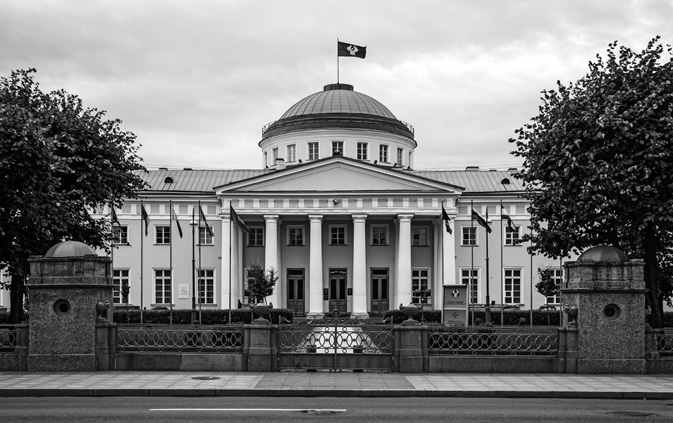
15. The Tauride Palace in 2016.
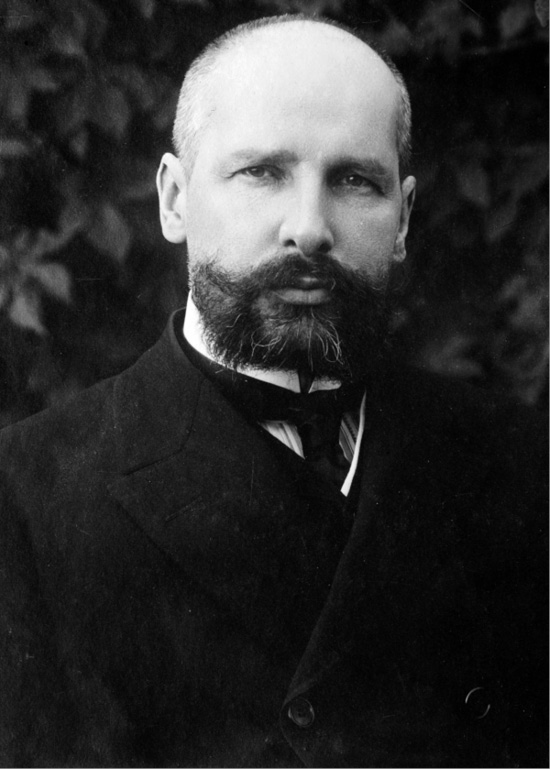
16. Pyotr Stolypin.
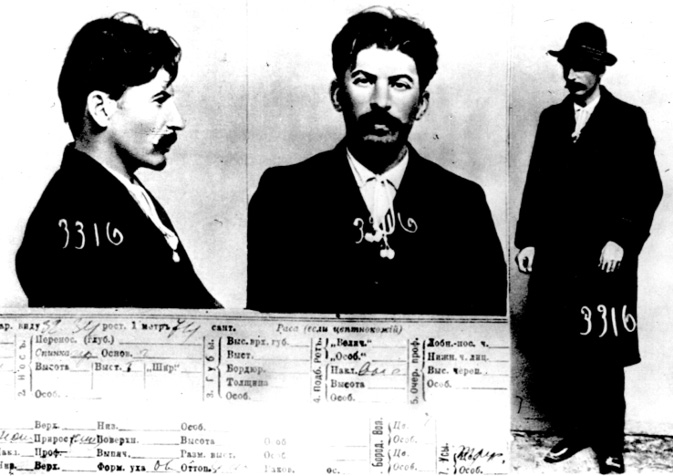
17. Mugshot of Stalin, 1911.
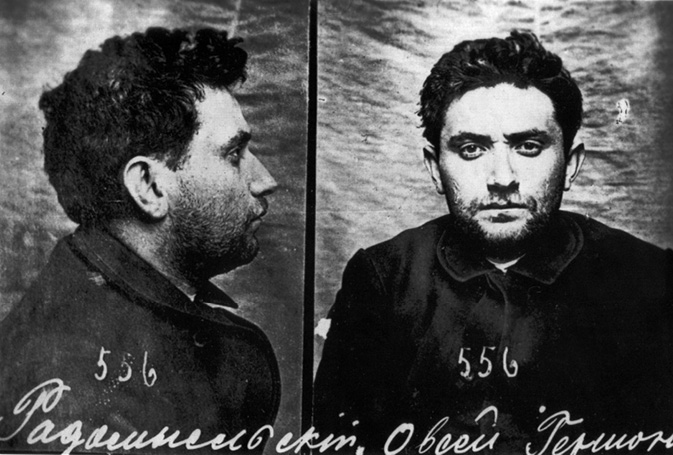
18. Grigory Zinoviev, 1908.
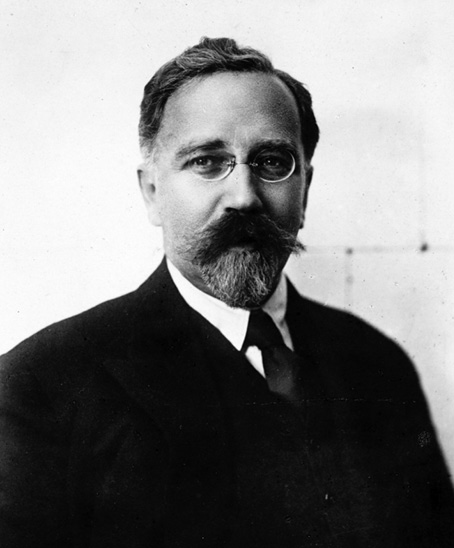
19. Lev Kamenev.