Bavaria had been the first state in Germany to overthrow its monarch. On 7 November, 1918 Kurt Eisner, a member of the USPD and recently released from jail, became the first head of the Bavarian Republic in Munich. It was an extremely unstable regime, which was reflected in Eisner and the USPD being humiliated in the Bavarian Landtag elections which gave them only three seats. For just over one month he maintained his position by maneuvering between his own party, the SPD and the workers’ and soldiers’ councils. On 21 February, he was murdered by a right wing officer, Count Arco Valley.
The assassination provoked enormous turmoil throughout Bavaria. In Nuremburg and Munich general strikes took place, and armed workers roamed the streets. After a brief interlude, the SPD climbed into the vacuum and created a government under Johannes Hoffmann. Within a very short time this government was forced to flee Munich and seek assistance from Noske’s Freikorps.
Munich was plunged into a state of semi-anarchy. With economic conditions deteriorating rapidly the number of unemployed rose to 45,000. As soon as the news reached Munich of the establishment of a soviet republic in Hungary, Ernst Toller, a playwright and leader of the USPD, proposed the establishment of a government of workers’ and soldiers’ councils. But this eccentric government, which the KPD refused to enter, represented a comic opera rather than a serious power. The first act of the Foreign Minister, for instance, was to declare war on Switzerland because it refused to loan 60 steam-trains to Bavaria! The regime collapsed within six days.
By this time, Hoffmann had gathered 8000 troops ready to march on Munich. In Munich itself, an attempted coup by the Republican Security Force led to a mass movement of workers, ending in the defeat of the coup. The threat of counter-revolution propelled the masses to the left. In the words of Marx, “revolution sometimes needs the whip of counter-revolution to push it forward.”
Mass meetings throughout the city passed resolutions demanding that power be handed over to the communists. At first the KPD leaders were extremely cautious and opposed the calls for a soviet republic. But the pressure from the workers became irresistible. As with the Paris Commune of 1871, exceptional conditions gave power into the hands of the working class. As in any struggle, sometimes there are no choices, sometimes there are no perfect conditions, sometimes there is no alternative but to make a stand. The Communist leader Eugen Leviné, despite his reservations about strategy and tactics, agreed to take charge of the situation. A new soviet republic was declared on 7 April based on newly elected workers’ councils in the factories, whose immediate task was to organize resistance against the imminent threat of Hoffmann’s troops.
Leviné understood that the only way the soviet republic would survive would be through the spread of the revolution to other major cities of Bavaria and beyond. The workers gritted their teeth and took inspiration from the newly formed soviet republic in Hungary, the existence of powerful workers’ councils in Austria, a strike wave in the Ruhr, and a state of emergency in Stuttgart. The fear of the bourgeoisie was expressed by one Colonel House, writing in his diary for 22 March, 1919:
Bolshevism is gaining ground everywhere. Hungary has just succumbed. We are sitting upon an open powder magazine and someday a spark may ignite it.
A few weeks earlier the new communist Third International, the World Party of Socialist Revolution, had been established in Moscow, raising hopes of a rapid revolutionary development throughout Europe. In the words of Trotsky:
…it is unquestionable that in the year of the First Congress (1919) many of us reckoned – some more, others less – that the spontaneous onset of the workers and in part of the peasant masses would overthrow the bourgeoisie in the near future…such moods and expectations were by and large justified by the objective situation at the time.
In any case, in Munich, there was no alternative but to fight. Better to go down fighting, and leave a communist tradition, than to capitulate without a struggle.
The Hoffmann troops quickly encircled the city robbing it of food and fuel. As suffering mounted and discontent spread the counter-revolutionary troops were reinforced by 30,000 of Noske’s Freikorps. On 1 May Munich was “liberated”. The final Communist declaration stated: “Don’t make the hangmen’s task easy. Sell your lives dearly.” Over 1000 workers were killed during the street battles. The Communist leader Eugen Leviné, before his execution, made a defiant speech against the counter-revolution which ended: “I have known for a long time that we Communists are but dead men on leave. It is up to you, gentlemen, to decide whether my ticket of leave will once more be extended or whether I must join Karl Liebknecht and Rosa Luxemburg. You may kill me – my ideas will live on.” Scores were shot by impromptu Freikorps court-martials, others were simply beaten with rifle butts or kicked to death. Few leaders escaped the “White Terror”.
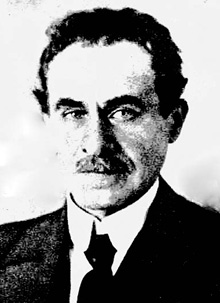
Leo Jogiches
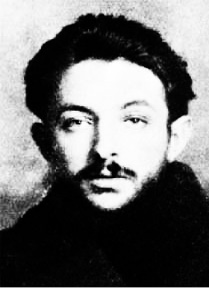
Eugen Leviné