The consequences of the Kapp putsch brought about a great shift in the political landscape. After its failure, Noske resigned. In June 1920 the USPD became the second largest party in the Reichstag with 81 deputies; in the Landstags of Saxony, Thuringia and Brunswick it became the largest party. Its membership had grown spectacularly to 800,000. It published 55 daily newspapers. In the Reichstag elections, the USPD had got 4,895,000 votes, more than double its January 1919 figure, while the SPD, due to the masses’ shift to the left, lost half the votes it won in January 1919, falling to 5,614,000. The SPD still, however, remained the biggest party in the Reichstag. On the other side of the spectrum, the vote for the extreme right also doubled at the expense of the liberals, indicating a growing polarization of the situation in Germany.
In Bavaria, General von Nohl, ungrateful for past services, forced out the SPD Premier Johannes Hoffmann and established a more right-wing government. In the Ruhr, however, the armed workers who had succeeded in driving out the Freikorps and the Reichswehr forces now refused to lay down their arms as requested by the central government.
The new coalition government, under SPD member Hermann Müller, decided to dispatch government troops – who had previously refused to fight Kapp – to restore order in the Ruhr, which they did eagerly and with much brutality. Hundreds were killed and hundreds more executed to restore “normality”.
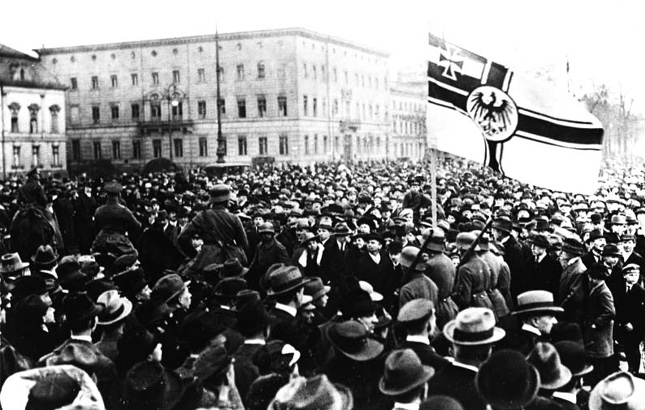
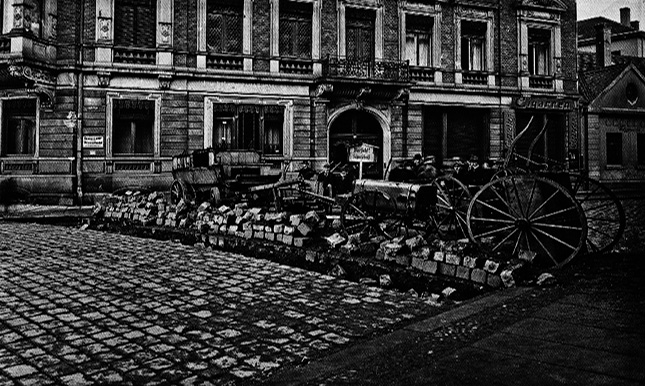
The Kapp Putsch: (top) the Ehrhardt Naval Brigade marches into Berlin; (bottom) an abandoned barricade after fighting in Leipzig.