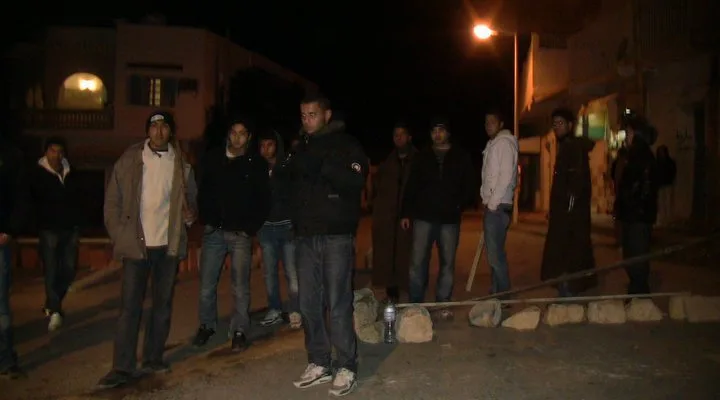
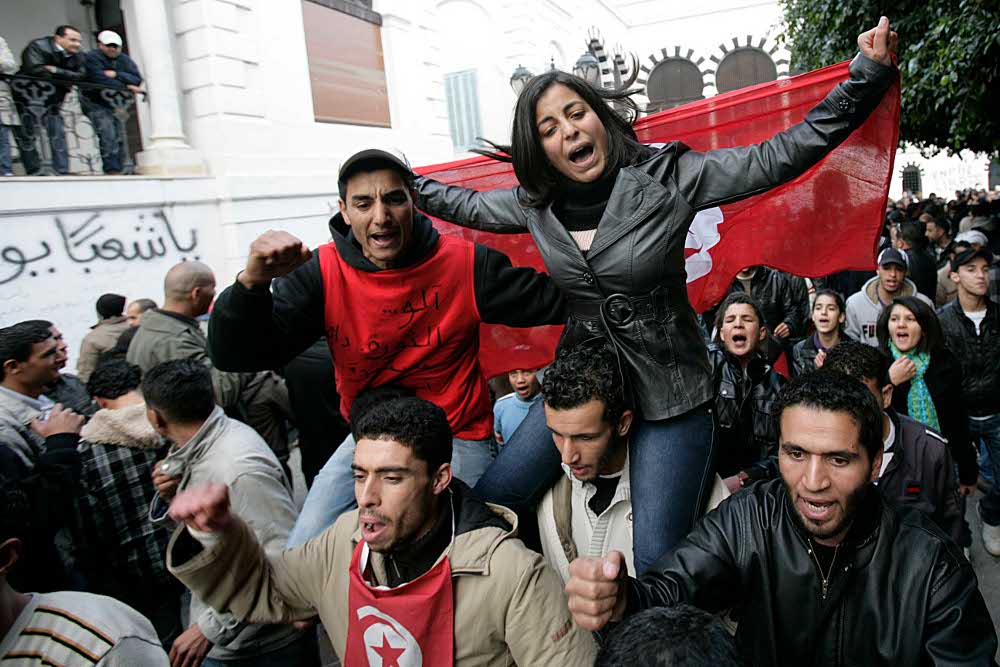
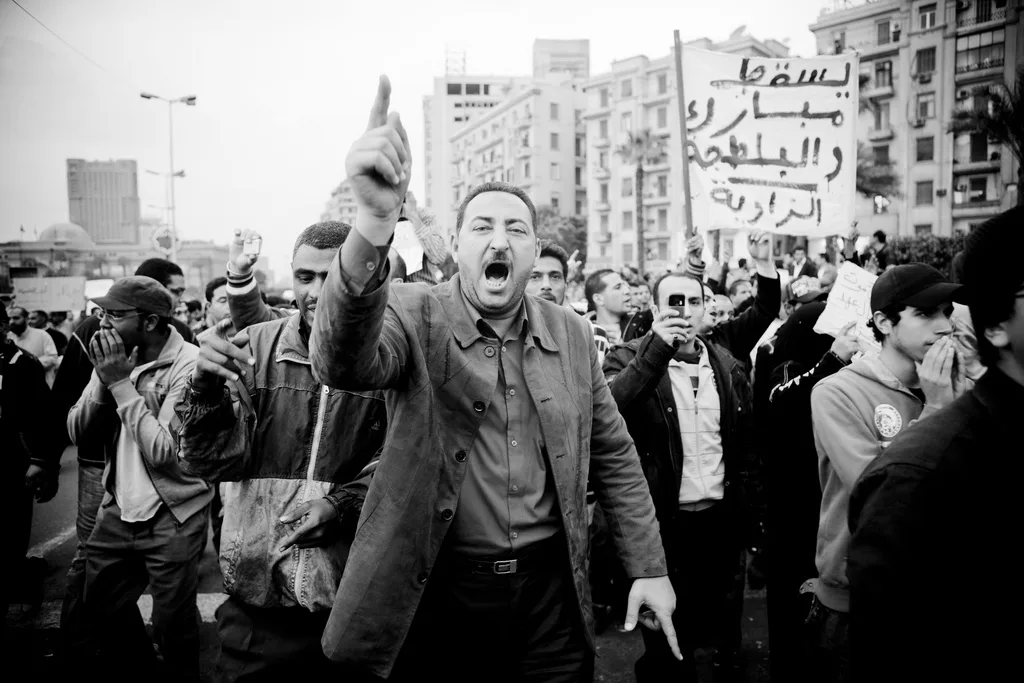
On Wednesday, November 23, the revolutionary city of Kasserine witnessed a social explosion with thousands of people demonstrating and clashing with police and army forces which used tear gas and live ammunition. Clashes continued today, November 24 and the state has declared a night curfew.
The immediate spark for the protests was the fact that an elected member of the new Constituent Assembly, when reading a list of the revolution's martyrs only mentioned 7 of the 23 people who were killed and listed them together with Sidi Bouzid's martyrs. A spontaneous protest of about 4,000 people gathered outside the local offices of the UGTT trade union. The demonstration became violent when army forces tried to repress it. Protestors then attacked the local prison, a bank and a number of other official buildings. They were met with brutal repression by police and army forces which used tear gas and fired warning shots in the air. A video shot by protestors and uploaded on Facebook shows an army armoured vehicle being driven at high speed against the crowd. According to sources in the local hospital, 76 people needed medical attention because of asphyxiation from tear gas.
Throughout the night there were clashes between protestors and the Army and police forces and burning barricades were erected. Clashes were also reported in Thala and Feriana in the same region of Kasserine.
What this explosion reveals is the deep accumulated anger that exists. There is a strong feeling that the revolution which overthrew Ben Ali in January has not really resolved any of the fundamental problems facing the Tunisian workers and youth. To add insult to injury the families of the martyrs and those who were wounded during the struggle have been all but abandoned by the new authorities. There have been protests and sit-ins by the relatives of the martyrs demanding the promised compensation payments. The member of the Constituent Assembly forgetting to mention the names of the martyrs from Kasserine was the last straw.
Sadooq Mahmoudi, a leading member of the local UGTT union stressed the point: "Kasserine played a very high price to the revolution and it is unacceptable for those who have been elected by the people to forget about our dead." Kasserine sustained the highest number of victims during the revolution with 23 killed and 602 wounded.

The trial of those responsible for the killings of the protestors is still going through a very long and meandering legal process and relatives are angry that no-one has yet been convicted, nearly ten months after the overthrow of Ben Ali. Furthermore, the main reason why tens of thousands joined the demonstrations against the old regime in Kasserine, to get jobs, still remains. The situation of hopelessness and despair is such that in September, 5 young men from Kasserine, all of them unemployed university graduates attempted collective suicide as a way of protesting against the situation. They had all applied for jobs as teachers and had all been rejected. There had been 17,000 applicants for the openings and only 35 had been accepted. The five men gathered outside the Regional office of the Education Ministry, tied blue cords around their necks and threatened to hang themselves if they did not receive some help in the job search. Others in a similar situation started a hunger strike inside the offices of the UGGT. After 24h the 5 had not been received by anyone and fulfilled their threat of hanging themselves. They were saved by onlookers and taken to the local hospital.
Anger still runs very deep in Tunisia. As well as the demonstrations in Kasserine, yesterday there were also demonstrations, sit-ins and clashes with the police in the mining region of Gafsa. There, the unemployed youth have been fighting for a fair distribution of jobs in the local phosphate mines. When the results of the new recruitment drive at the company were announced hundreds of youth came out in the streets in protest in Mdhilla and Moularès. They set up burning barricades, burnt down buses and cars and assaulted offices of the phosphates company as well as the police headquarters. The authorities declared a curfew between 7pm and 6am in all of the localities in the governorate of Gafsa.
Meanwhile, the wave of strikes which has been a constant feature since the overthrow of Ben Ali, continues. In Gabés, all economic life was paralysed because of demonstrations, strikes and sit-ins which started on November 17, demanding pay rises and jobs. The movement started at the Tunisian Chemical Group plants in the region but has now paralysed the whole of the industrial complex. The strike and protest has been solid despite the attempt by army and police forces to break it. Also in Gabés, the unemployed graduates have organised protests and occupations.
This is the real situation in Tunisia while the Constituent Assembly inaugurates its sessions.
See also: Tunisian Constituent Assembly elections: Ennahda victory prepares further uprisings