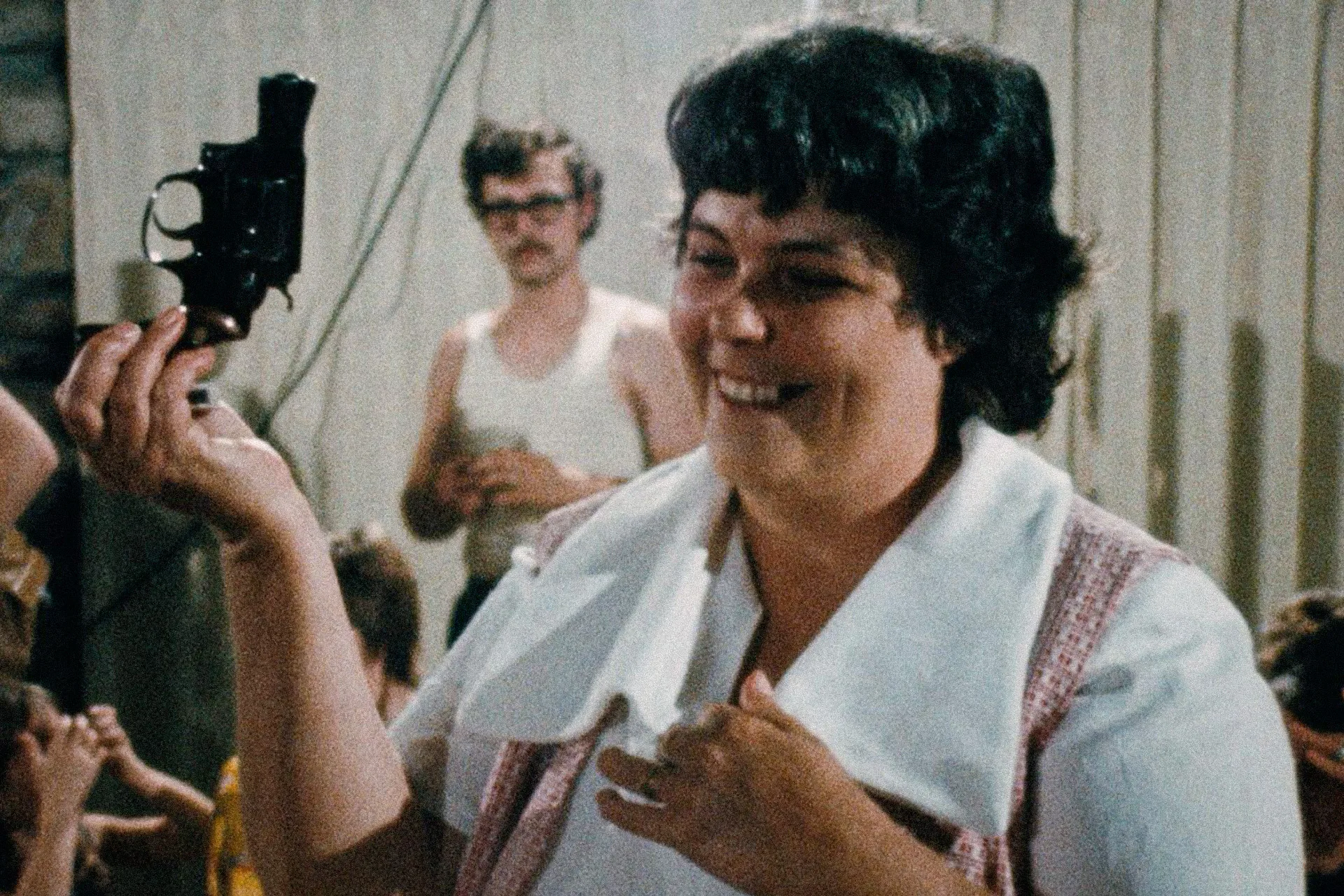
In a pivotal scene from Harlan County, USA (1976), a meeting of striking miners discusses how to handle armed scabs sent by the Eastover Mining Company to break their picket lines. The meeting is addressed by Lois Scott: a housewife and activist from the local women’s club. Her face is a picture of righteous fury as she slams the table: “It’s time we get together and get just as violent as they are,” she thunders. “By God, you fight fire with fire!” These are not idle words. Later, Scott proudly produces a loaded revolver from her bra.
Barbara Kopple’s Oscar-winning documentary was released half a century ago and charts the 1973-74 Brookside strike, in which a mining community in the Appalachian Mountains waged a 13-month campaign to win a union-negotiated contract from the ruthless coal bosses. In the course of this documentary, the US labour struggle leaps from the screen in all its violent, uncompromising reality.
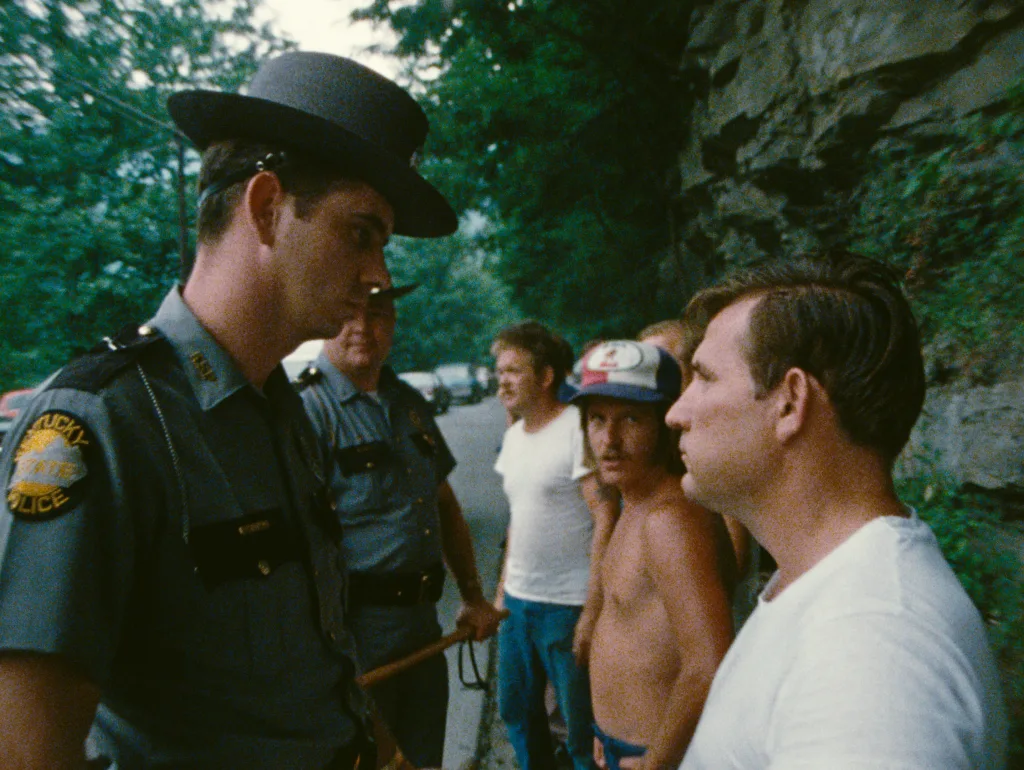
Bloody Harlan
While the ‘Brookside Strike’ (at the Brookside Mine in Harlan County, Kentucky) was going on, capitalism was heading into a global crisis. The cost of living was going up and wages were stagnating. The Harlan miners demanded that Eastover, a subsidiary of the Duke Power Company, accept a contract that would improve the miners’ wages and conditions, both of which were abysmal.
They toiled in cramped, filthy conditions for upwards of 10 hours. Accidents and deaths were common. The film references the Farmington Mine disaster of 1968, where an explosion killed 78 men. We are shown families living in company-made prefabricated houses without running water or heating. This was a period where coal company profits across the USA had soared by 170 percent.
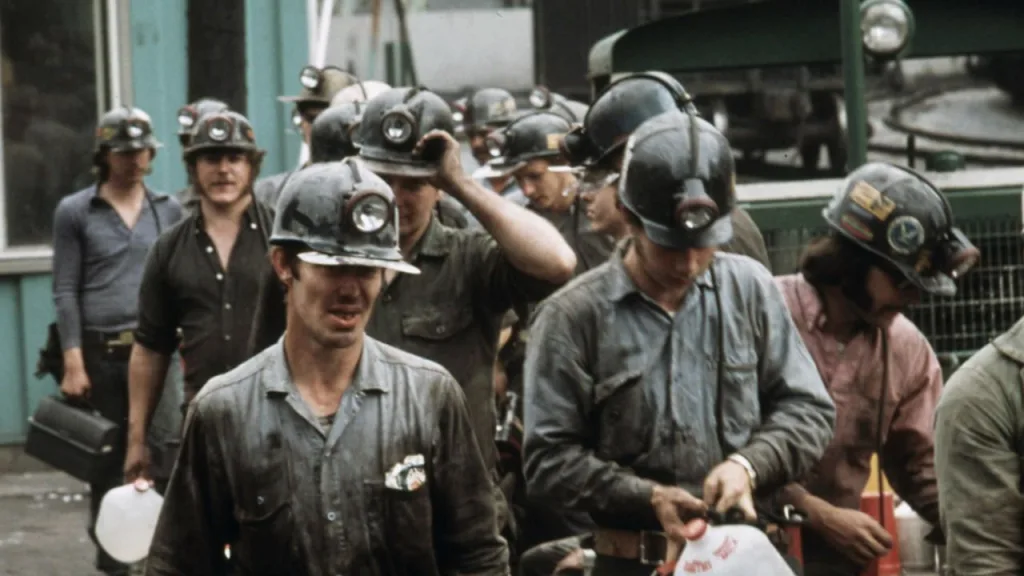
We hear from the Brookside miners of how mercilessly they are squeezed. One relates an incident where his superintendent sent him back into the pit even after his head was split open by 300 pounds of steel following a partial tunnel collapse. Miner and troubadour Nimrod Workman sums up the callous attitude of the bosses, who regard their workers as more disposable than beasts of burden: “We can always hire another man, I gotta buy that mule!”
The documentary harrowingly depicts the effects of ‘black lung’: an irreversible respiratory condition caused by breathing in coal dust. At one point, an attorney for the Bituminous Coal Operators Association is shown at a hearing, denying that “inhalation and retention of coal dust in the lungs necessarily results in any impairment to pulmonary function.” This is followed by a doctor holding up a piece of lung, retrieved from an autopsy of a deceased miner. It resembles a blackened handful of dirty straw and crumbles in the doctor’s hand.
Harlan County was already infamous for bitter industrial conflict. During the ‘Harlan County War’, which lasted from 1931 to 1939, miners organised by the United Mine Workers of America (UMWA) battled scabs and company ‘gun thugs’ for improved wages and union recognition. There were casualties on both sides, earning the moniker ‘Bloody Harlan.’ With these events still in their memories, none of the Brookside miners are in any doubt about the stakes, nor how far the coal bosses are prepared to go to defeat them. At one point, an elderly woman gives an impassioned speech, recalling the 1930s:
“I saw children crying for a little something to eat… I can’t stand it. I’ll be out on those picket lines. And if I get shot, they can’t shoot the union out of me.”
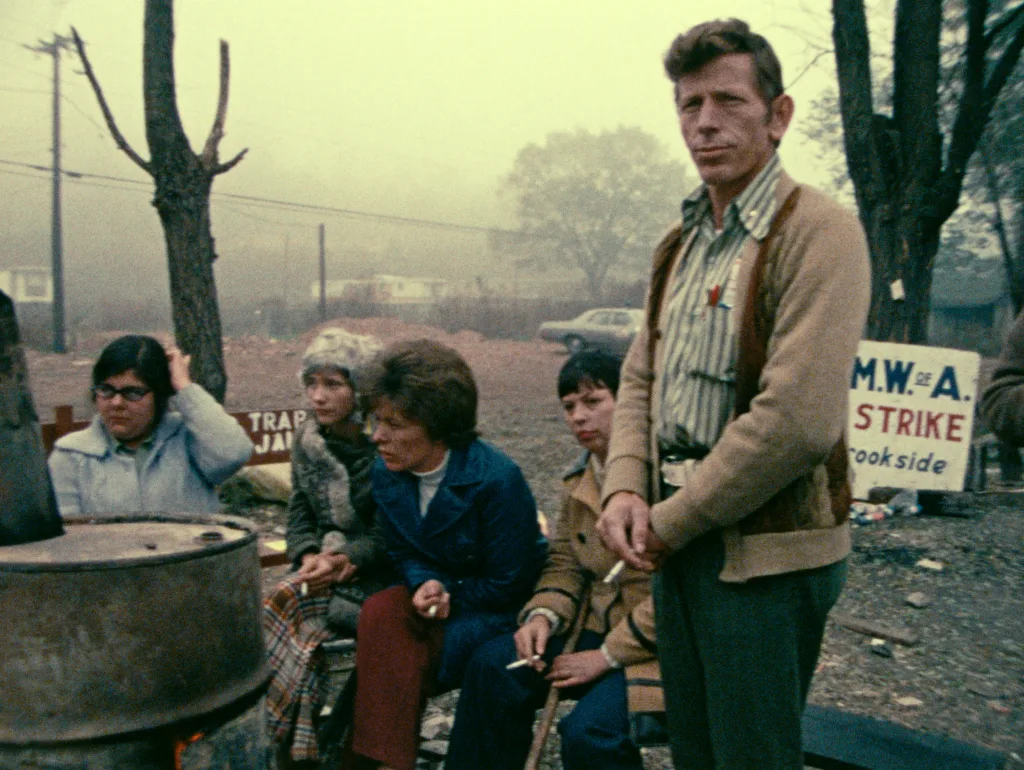
Art and politics united on the picket lines
The twists, turns, ebbs and flows of the strike make for gripping viewing, but the production history of Harlan County, USA is equally remarkable. Kopple had initially planned to document the ‘Miners for Democracy’ campaign to oust the corrupt, bureaucratic national president of the UMWA, Tony Boyle, who was notorious for his cozy relationship with the coal bosses. Boyle eventually hired assassins to murder his challenger for the union presidency, ‘Big’ Jock Yablonski, along with his wife and daughter. This thread is woven into the movie, but forms a subplot to the main narrative of the Brookside Strike.
It’s a miracle the film was made at all. It was initially funded with a $9,000 loan, but Kopple was forced to commute back and forth from Harlan to New York to pick up freelance work, drum up financial support and beg banks for further loans. By the time the movie wrapped, she was $60,000 in debt. Initially, the miners were suspicious of the “hippie film crew from New York”, but Kopple soon won them over by courageously throwing herself into the fray. In the end, the film became a factor in the very battle it depicts. The pickets came to appreciate Kopple’s presence for helping to temper the violence. As one miner commented years later:
“I think the cameras probably saved a bunch of shooting. I don’t think we would’ve won without the film crew.”
Harlan County, USA is a concrete demonstration of the potential for art to ally itself with working people in struggle, to the benefit of both. Kopple makes no claims to ‘objectivity’ and positions her crew firmly on the side of the miners – at considerable personal risk.
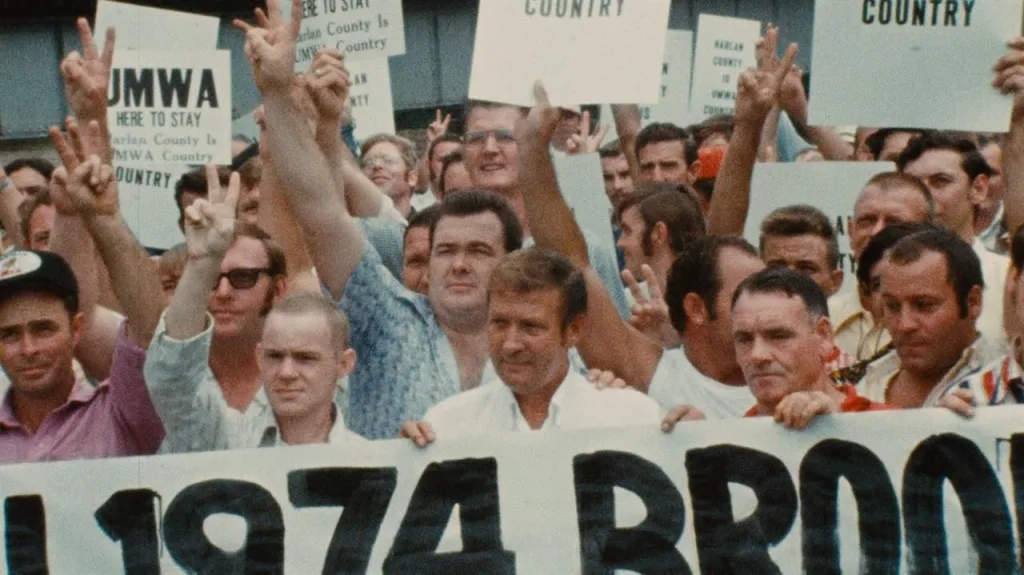
The overarching antagonist of the movie is Bazel Collins: the menacing leader of a mob of gun-thugs and scabs, consisting largely of violent prisoners on parole. At one point, Kopple confronts Collins in his truck. She asks him who he works for and demands to see his identification, which he claims to have lost and asks to see her press card in turn. “I seem to have misplaced it as well,” she replies coolly. Kopple claimed Collins was twirling a pistol the entire time, just out of frame.
Later, Kopple films an attack on a picket line in the dead of night. Amidst the sound of gunfire, she can be heard screaming as one of the strike-breakers shoves the camera. We, the viewer, are right in the thick of the fight. Collins is shown driving past the camera, pointing his gun out his driver’s side window, straight down the lens. Kopple later found out that he was plotting to have her murdered. In 2022, the Harlan capitalists recognised their attack dog for his ‘service’ by naming the ‘Bazel Collins Bridge’ after him.
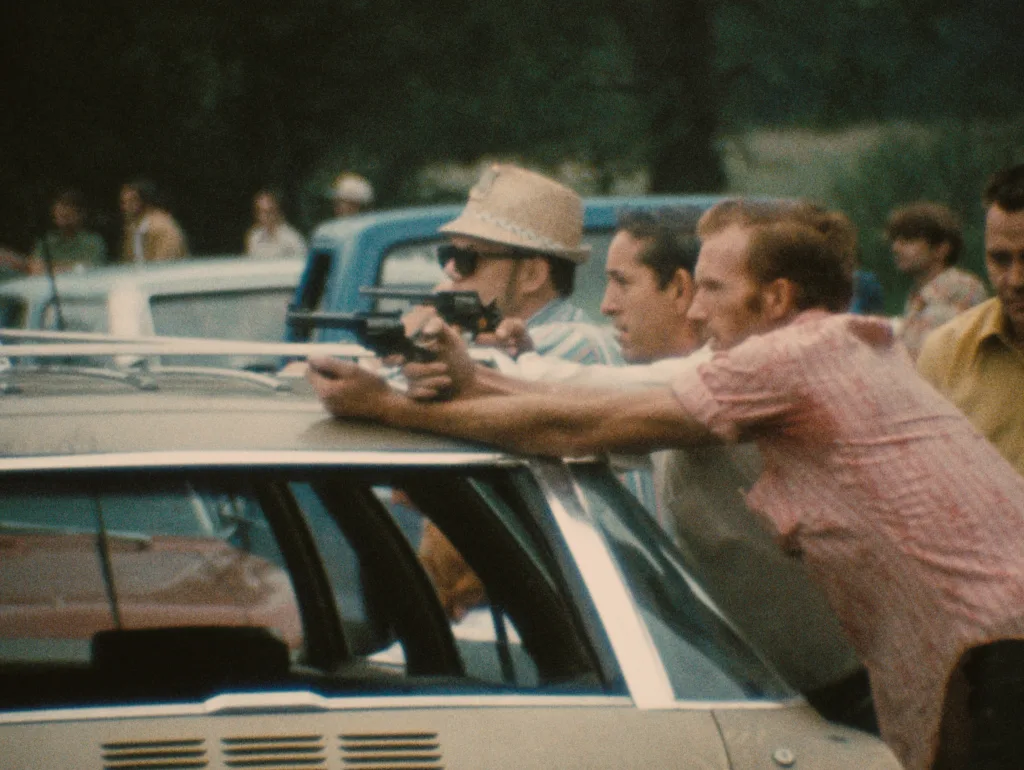
A turning point comes when a young miner, Lawrence Jones, is murdered by a gun-thug. One of his comrades points out the pink smear of his brains at the site of the shooting. The next morning, the workers form a palisade of trucks at the entrance to the Brookside mine, meeting the scabs with guns drawn. It was the last time Collins’ men came up the bridge to the pit. Soon after, Eastover caved and entered into negotiations. The message is clear: the organised violence of the bosses must be answered in kind by the working class.
The role of women
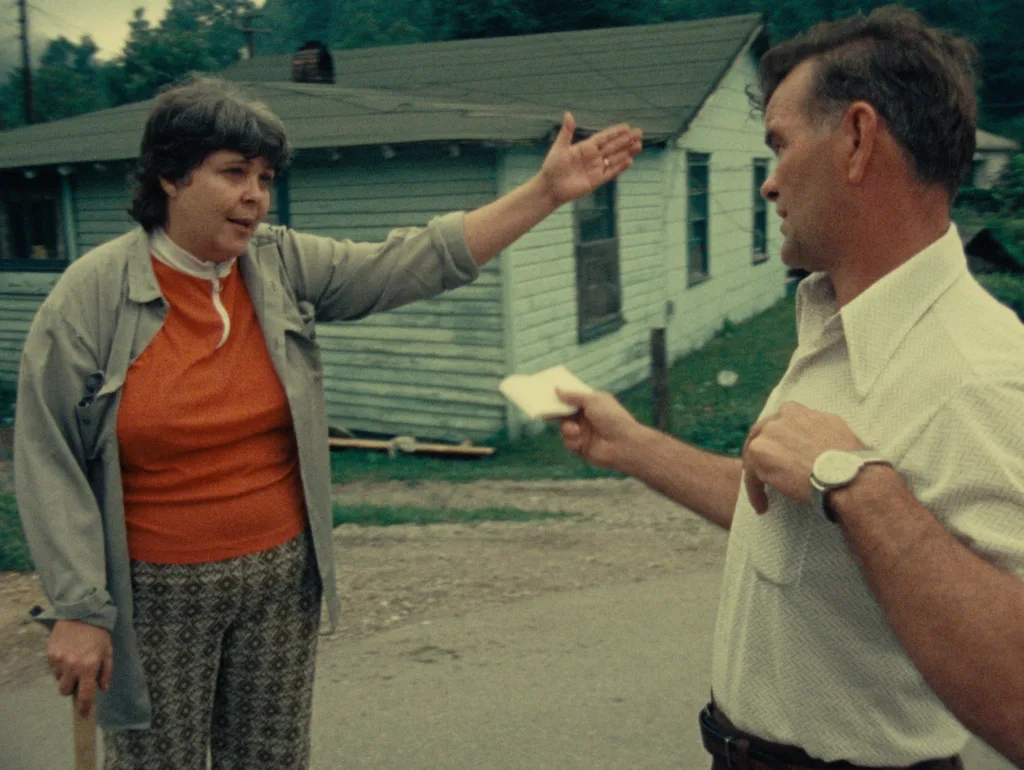
Harlan County, USA also spotlights the important role of women in the strike. This began as a practical matter. The men of Brookside all had legal injunctions against blocking the mine, allowing the police to arrest them on spot – not so for their wives, sisters and daughters. But the women’s club quickly comes to the fore as a radical political force. Lois Scott is essentially the film’s protagonist, delivering fiery speeches and shaming the menfolk for any lapse in commitment. “Those scabs won’t mean nothing if we can get everyone up there [to the picket lines],” she says at a strike meeting. “But you won’t get that laying in bed!”
Kopple employed innovative methods to capture some amazing material. Using a concealed microphone, she records another member of the women’s club, Bessie Parker, speaking at a court hearing for miners arrested at the picket lines, calling out the double-standards of the state:
“The laws in this country aren’t made for working people… A man who’s not here is Carl Horn [President of Duke Power] … What we did was right and we all know that.”
Later, the local sheriff tries to clear a barricade of cars set up by the women strikers in the middle of town, to bar Collins and his entourage from getting near the mine. “Where were you when they were shooting machine guns at us?” Scott demands, again emphasising the selective enforcement of the law in favour of the bosses. In the end, the women manage to browbeat the policeman into delivering a warrant of arrest to Collins, forcing him to retreat.
Fundamentally, the film is a testament to the power of solidarity. One of the finest interviews in the movie is with an older miner who participated in his first strike at 10-years-old, when he was a ‘breaker boy’, picking slate out of the chutes at the surface:
“We won an increase from six-and-a-quarter cents an hour to eight cents. Wouldn’t mean much today, it’s peanuts. But it meant a lot to us at that time. This was my first lesson, if you stick together, with your organisation and in solidarity, you can defeat them. I also learned the politicians were working with the coal companies; and the union officials were working with the coal companies; I also found out the Catholic hierarchy was working with the coal companies.”
The strike unites the workers of Brookside across all lines against their common foe. There’s a scene where a black miner cracks a joke about he and his fellow workers emerging from the pit after a shift covered in coaldust: “we’re all black when we come out!” And when Collins yells a racial slur at one of the black pickets, Scott rushes to her comrade’s defence, throwing the word back at Collins and screaming: “That ‘n—’ is more of a man than you’ll ever be!” Little wonder the Ku Klux Klan was opposed to the film, hanging a goat with ‘KKK’ carved in its belly next to the venue where the film was to be screened in Harlan.
A snapshot of living struggle
The movie is no dry political treatise. The miners’ warmth and wit are just as striking as their heroism. The soundtrack is excellent and full of Appalachian folk music and struggle songs, including multiple versions of ‘Which Side Are You On?’, written by Florence Reece during the Harlan County War in the ‘30s. The refrain encapsulates the film’s philosophy: you cannot be neutral in the class struggle; you have to pick a side.
Harlan County, USA makes it clear that no single strike is the end of the story. Despite winning a partial victory at Brookside, forcing Eastover to allow union officials to negotiate a new contract, two subsequent national miners’ strikes broke out in 1974 and 1975, in which 120,000 workers downed tools. The outcome was another partial victory, with a UMWA contract ratified that contained some concessions, but fell below the expectations of the more radical rank-and-file members.
“Once the strike is won, the workers gotta move onto the next struggle and if they don’t, the concession that was won, you’ll lose it,” says a young miner at the end of the movie. The setbacks faced by the US labour movement in the 1980s reveal the truth of these words. They should be taken to heart today.
As a snapshot of the living processes of proletarian struggle, Harlan County, USA is a triumph and essential viewing for any class fighter.