Those who remained true to the ideas of internationalism on a world scale were reduced to a tiny handful. When they gathered in Zimmerwald in 1915, they joked that the world’s internationalists could be brought together in two stage-coaches. Lenin, Trotsky, Liebknecht, Luxemburg, John MacLean and James Connolly together with others were reduced in various countries to tiny groups. Nevertheless, they struggled to maintain the principles of Marxism and the ideas of internationalism. They differentiated themselves from the social chauvinists, or social patriots, as the old labour leaders who supported “their own” ruling class in the war were called. The internationalists defended the fundamental ideas; of the class nature of imperialist war, of the class nature of the state, the right of nations to self-determination and the need for the socialist revolution. The Zimmerwald Left, holding a consistent revolutionary position, became the embryo of the future Third International.
Within the German SPD a small minority around Karl Liebknecht and Rosa Luxemburg fought against the pro-war policies of the leadership. In December 1914 Liebknecht became the sole SPD deputy in the Reichstag to openly vote against the Kaiser’s war credits. But in a short space of time, dissent spread rapidly through the party organization, with provincial groups passing resolutions against the war policy. In April 1915 the first and only issue of the journal Die Internationale edited by Rosa Luxemburg and Franz Mehring appeared, but was suppressed by government censorship. The Luxemburg-Mehring-Liebknecht section of the party thus became known as the “Internationale Group”, the nucleus around which the future German Communist Party was to crystallize. On New Year’s Day 1916 its first congress was held in Liebknecht’s house which took the decision to launch a clandestine journal called Spartacus, named after the Roman revolutionary slave. From then on the group’s members became known as the Spartacists.
Under the impact of the war, a far larger opposition grouping began to emerge within the SPD, which reflected itself in growing opposition amongst the Reichstag (parliament) Deputies. In March 1915, 25 SPD deputies voted against the War Credits, in August 1915 it rose to 36, and by December, 43 of the 108 SPD deputies said they would no longer respect group discipline.
Disillusionment with the war began to affect the masses. On May Day 1916, after agitation conducted by the Spartacists in the factories of Berlin, a mass demonstration took place on the Potsdamer Platz of 10,000 workers demanding: “Down with the War! Down with the government!” Karl Liebknecht was arrested for antiwar agitation and in June was sentenced to 2 years 6 months hard labour. On the day of his trial over 50,000 munitions workers downed tools, as demonstrations took place in Stuttgart and further strikes in Bremen and Braunschweig. As a result of these troubles the authorities clamped down, arresting hundreds of Spartacist workers who were given severe prison sentences. In July 1916 Rosa Luxemburg was re-arrested. But the repression was too late, the ice had broken, and in November 30,000 workers demonstrated in Frankfurt against the war.
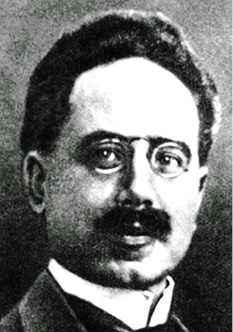
Karl Liebknecht
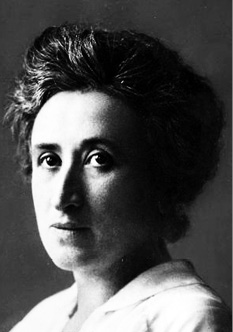
Rosa Luxemburg