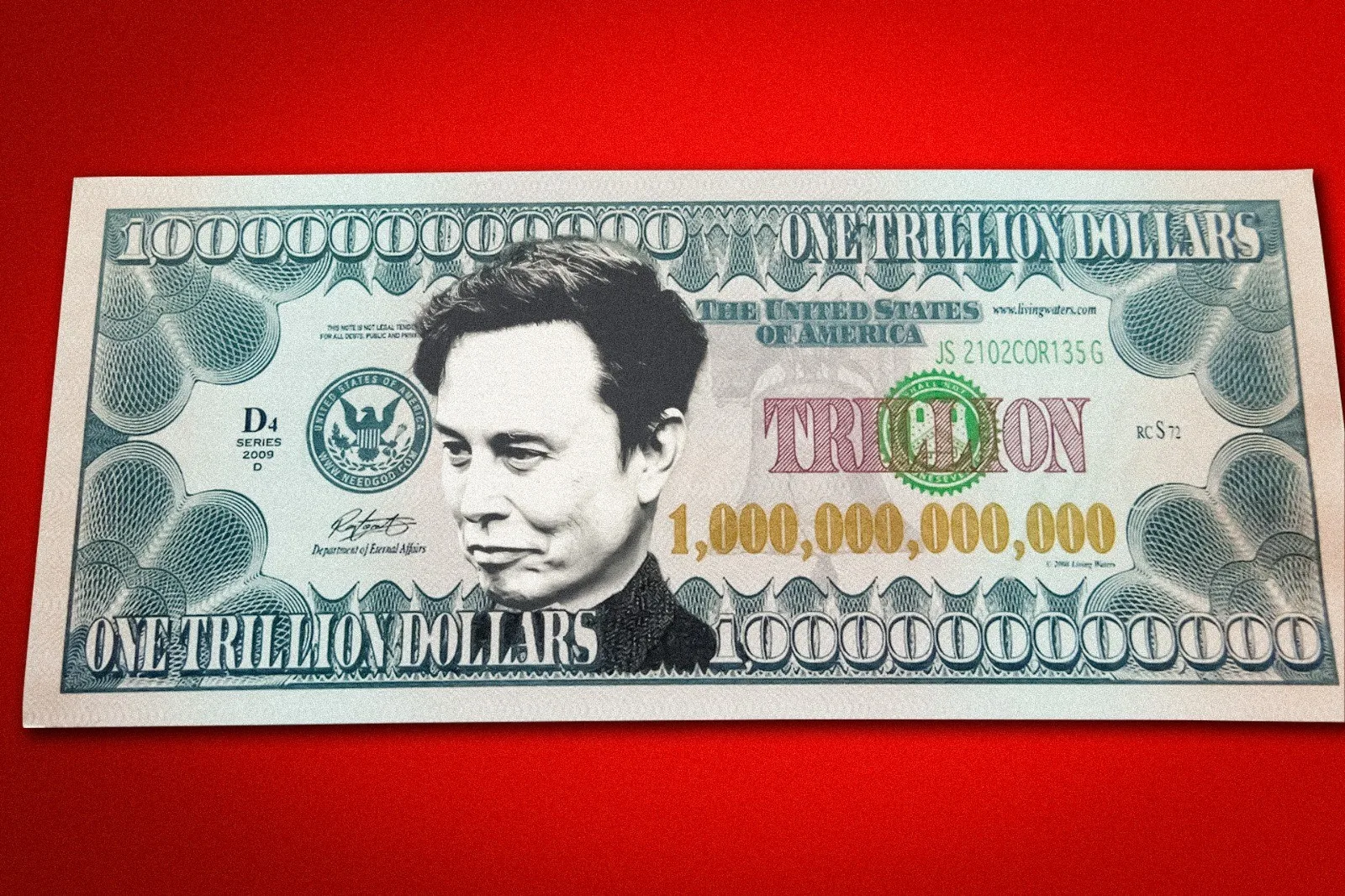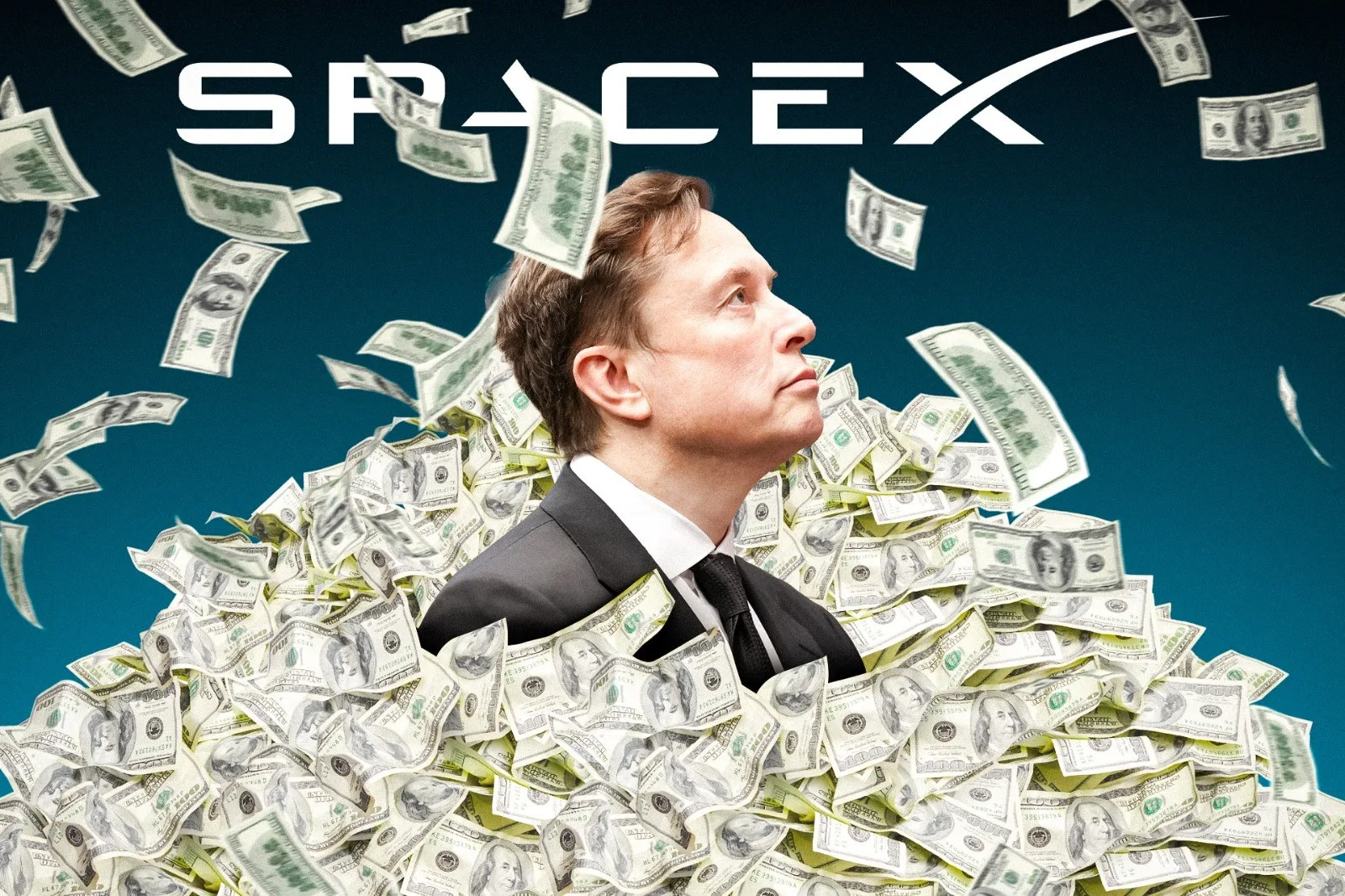
The public listing of SpaceX was sold as a historic opportunity for ordinary people to invest in the technology of the future, which would make Elon Musk (briefly) the world’s first trillionaire. But a closer look at the SpaceX offering reveals shady accounting, a valuation almost completely detached from reality, and gaping holes in financial regulation.
[This article was written last week, but events have confirmed its analysis. The share price of SpaceX first rose to $225 and then collapsed back to $154, losing Musk his trillionaire status. This triggered a wider scare on the stock markets, including a 10 percent fall in the Korean stock market. The latest round of refinancing of SpaceX debt also forced the company to pay higher interest on its $25 billion loan, as investors are nervous about the company’s prospects.]
Anthropic (the company behind Claude) and OpenAI (the makers of ChatGPT) are set to follow SpaceX with their own trillion-dollar listings later this year. Together, these IPOs are acting as a massive transfer of risk. Should the AI boom fail to pay off, it will be the savings and pensions of the working class that will bail out the system.
What is an IPO?
When a private company wants to raise money to expand, one method it can use is to sell shares to the public through an Initial Public Offering, or IPO. In theory, the public hands over cash, receives a stake in the company, and that stake grows in value as the company grows.
In practice, IPOs are just as often used for the opposite purpose: letting the company’s founders and early backers sell their own shares to the public and pocket the proceeds. In the case of the SpaceX offering, 20 percent of the new shares (something like three times the usual allocation) have been set aside for so-called ‘retail investors’: ordinary members of the public, buying through apps like Robinhood. This is no accident. Musk used the same trick with Tesla, betting that small investors are more likely to chase hype than scrutinise a balance sheet.
With SpaceX, this same strategy is being taken to astronomical heights. To drum up enough excitement to raise $80 billion in share sales, SpaceX has claimed that the company is worth $1.8 trillion. This makes it the largest IPO in history by a wide margin, and large enough to rank among the ten biggest companies on the US stock market – worth more than Boeing, Disney, and McDonald’s combined.
Valuations detached from reality
Is SpaceX actually worth that much? Its rocket division launched 80 percent of everything sent into orbit last year… and still lost $657 million. Starlink, its satellite internet arm, was the one part of the business making real money – $4.4 billion in profit. But that profit has been swallowed by a third division: Musk’s chaotic foray into AI.
After buying Twitter, gutting it, and merging it with his AI venture xAI, Musk folded the whole mess into SpaceX last February. xAI has never turned a profit, and the merged company managed to lose another $4.3 billion in the first quarter of this year alone.
So how does SpaceX justify a $1.8 trillion price tag? By claiming that its future market will be worth $28 trillion, of which only $2 trillion will come from rockets and satellites. The other $26 trillion comes from a massive speculative bet: that AI will grow to swallow more than a fifth of the entire world economy, with SpaceX running a good chunk of it through orbital data centres. Setting aside the physical and economic obstacles to this fantasy, the ‘rocket company’ being sold to the public is, by its own arithmetic, 93 percent a bet on an AI market that doesn’t really exist yet.
Such a valuation is therefore clearly fictitious and can only be justified by the intense atmosphere of hype that surrounds the AI bubble, and the small army of stock market speculators betting on Musk’s magical touch. It is an example of how, under modern capitalism, the line between an investment and a ponzi scheme has become more than a little blurry.
Grand Theft IPO
The story is that this IPO is meant to invest in SpaceX’s future. But SpaceX’s own filings show that more than three-quarters of the $80 billion raised is already earmarked elsewhere: paying down a $20 billion loan taken out to clean up xAI’s books, handing a slice to Valor Equity Partners (a major early investor), and covering other acquisitions. Less than a quarter of the money is left to actually build anything. The main point of the IPO seems to be to let the original investors cash out some of their investments.
This is further underscored by the terms on offer for the small investors. ‘Dark pool’ exemptions let insiders quietly sell off their shares without alerting the public, avoiding the price crash that a sudden, visible sell-off would cause. Meanwhile, small investors must sign away their right to join a class-action lawsuit, which is their only real recourse if the company’s claims turn out to be false.
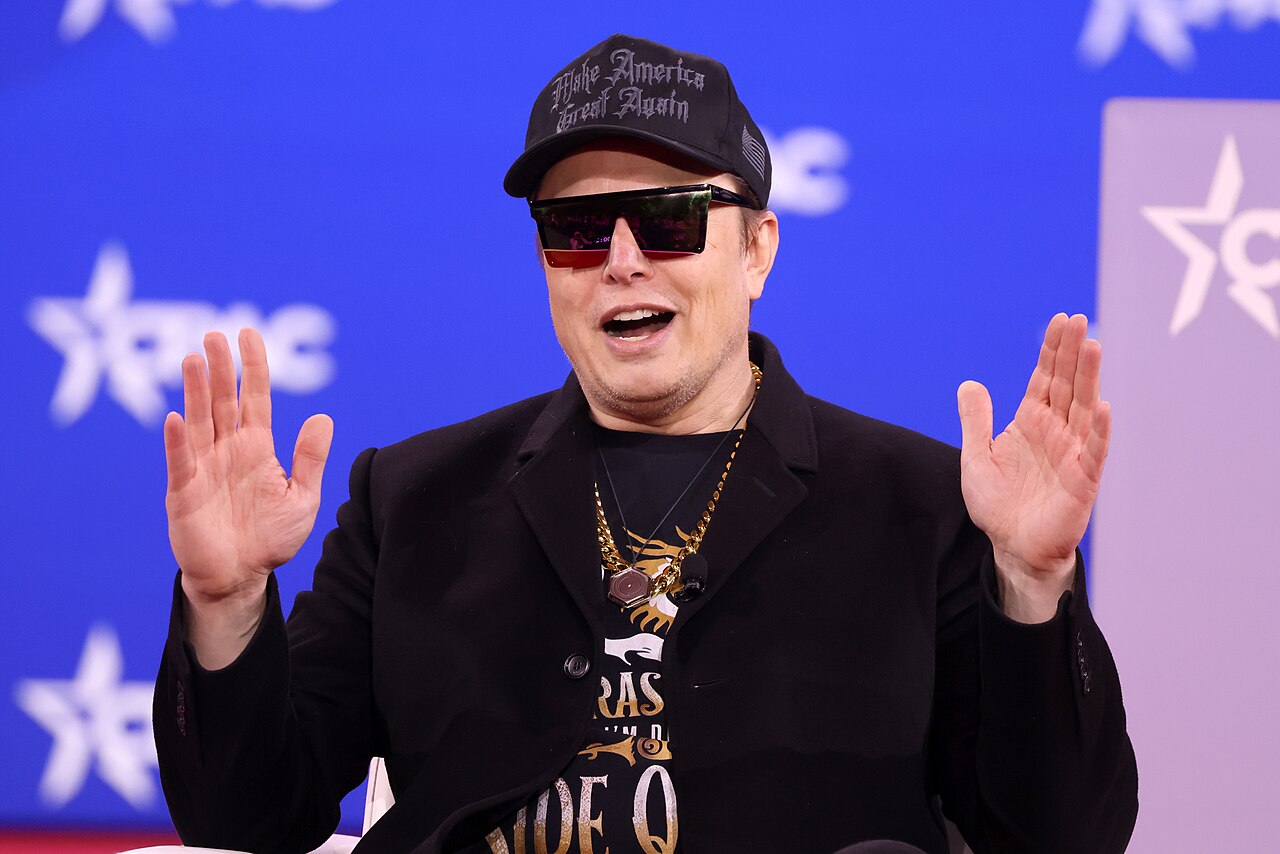 The Trump administration has gutted the regulators who would normally police this kind of thing / Image: Gage Skidmore, Flickr
But the manipulation goes further, roping in people who never chose to invest at all. Most retirement savings today sit in ‘index funds’, funds that don’t pick stocks individually but simply buy a slice of every company in a stock market index. Roughly 44 percent of the world’s investment assets work this way. Once a company joins a major index, every fund tracking that index is forced to buy its shares automatically, no matter the price and whether the valuation is reasonable or fictitious.
Normally, a newly listed company has to wait six to twelve months before joining an index to prove it is stable and profitable. But under intense lobbying pressure from these companies and the general hype around AI, some index regulators changed the rules so that SpaceX, Anthropic and OpenAI can be fast-tracked into indices like the NASDAQ-100 within days. The result is that these indexes will drive an estimated $16 billion in forced purchases within just the first two weeks of the SpaceX listing alone.
Watchdogs have noticed. Pension fund bodies representing millions of workers have asked regulators to investigate the offering and strip out its most predatory terms. But they are shouting into a void. The Trump administration has gutted the regulators who would normally police this kind of thing. Their staff have been “pushed out, forcibly retired, DOGED, and stripped of [their] mission.” As one veteran investor put it, “we are in the golden age of fraud.”

How exposed are ordinary people?
The reality is that the boundary between stock market speculation and everyday savings has largely dissolved. Since the 1980s, employers, unions and governments have shifted the risk of retirement away from guaranteed pensions and onto individual workers, who are now forced to gamble their savings on the stock market through pension schemes that are largely invested in index funds.
Around 60 percent of US households and nearly 80 percent of UK employees now have their savings tied up in financial markets in one way or another. So when a company built on fantastical valuations, run by a billionaire (or was it trillionaire?) ego-maniac, forces pension funds to buy in at absurd prices, the worker whose retirement depends on that fund has no say and no recourse. And because SpaceX’s terms have already been accepted by regulators, they will likely become the template for the Anthropic and OpenAI listings still to come.
In other words, our pension savings are being commandeered by Musk and the rest of the financial and tech oligarchy to build out their speculative bet on AI. None of this is unique to Musk or even the AI boom. It is only one of the most egregious examples of how capitalism has socialised all of the risk that was supposed to be the capitalist’s entire reason for existing.
Will the AI boom pay out?
But are they at least making a good bet? The AI buildout has produced a true bonanza of investment. After decades of finding no profitable investments in the US, suddenly the capitalists think they have found a golden goose. But with no central plan, and a horde of competitors all terrified of being left behind, capital has poured into this new sector far beyond what the real economy can use. And as of yet no one knows how to make it profitable.
 The AI buildout has produced a true bonanza of investment / Image: own work
The major AI companies, known as ‘hyperscalers’, have already spent $1.1 trillion building data centres, and are forecast to spend another $5-7 trillion by 2030 through debt financing. The buildout is so intense that it is in fact exacerbating underinvestment in other sectors of the economy, as the US ruling class puts all of their eggs in one basket. Every firm is racing to be one of the few left standing when the dust settles, so they can establish themselves as a monopoly and start charging monopoly prices.
But while generative AI is certainly a transformative technology, it remains doubtful whether the current business model for funding it is sustainable. As one Morgan Stanley analyst put it, “making the numbers add up depends on both revenue opportunities and durability of GPUs, both of which are highly uncertain at this early stage of the AI investment cycle.” Morgan Stanley estimates that within four years, Oracle will need to spend 30 percent of its revenue just replacing ageing hardware. Google and Meta aren’t far behind. No other industry maintains this level of continuous capital expenditure.
At the moment, the entire funding model is based on companies like xAI, Anthropic and OpenAI getting into huge amounts of debt to pay the data centre owners (Amazon, Meta, Oracle, Microsoft, etc.) for capacity. They would somehow have to pay that debt back and become profitable, which they can only do by massively hiking prices for their customers. But this puts a serious question mark over whether it will be worthwhile for their customers to spend hundreds of millions to buy AI tokens, which many of their biggest customers are beginning to doubt.
A price war is already breaking out between Google, Anthropic and OpenAI to steal their competitors’ customers, while much cheaper open-source Chinese models keep nipping at their heels. A massive, speculative buildout does not guarantee any of these companies will emerge as the winner, or that a winner emerges at all.
All of this is happening against a backdrop of a slowing world economy. The trillions being poured into AI have to be paid back out of real future profits, which ultimately depend on growth elsewhere in a global economy already strained by trade wars, debt and stagnant wages. If that growth doesn’t materialise, the AI bet won’t just fail to pay off; it will itself become a massive drain on the world economy.
When the music stops
When the boom turns to bust, it won’t be Musk, the banks, or the venture capitalists that pay the price. They will have sold off their stock, slowly enough to avoid crashing the price, but long before the reckoning arrives. It will be small investors lured in by the hype, and the millions of workers whose pensions were forced into these shares by index rules they never agreed to, who risk being left destitute.
If a collapse of the AI sector were to occur, the case has already been made for 2008-style public bailouts. OpenAI, Anthropic, and SpaceX have become ‘too big to fail’ from the perspective of US imperialism’s struggle against a rising China.
The whole phenomenon is a vivid illustration of how capitalism actually develops new technology: not through planned investment matched to real human need, but through anarchic competition, reckless overinvestment, and a scramble for monopoly, with the cost, the waste, and the fallout ultimately landing on the working class.
Already, there is a massive backlash against AI underway. Only 16 percent of Americans think AI will have a positive impact on society, and this is increasingly being connected to anger against Wall Street, and the tech companies using AI to surveil, degrade and exploit us. The hatred against AI is blending into a rich tapestry of hatred aimed at the capitalist system and its defenders. If the speculative bubbles in the world economy were to come undone in the political conditions of today, the reaction would not be muted like it was after the 2008 financial crisis. It would touch every sector of the working and middle classes, who have been radicalised by almost two decades of crisis.