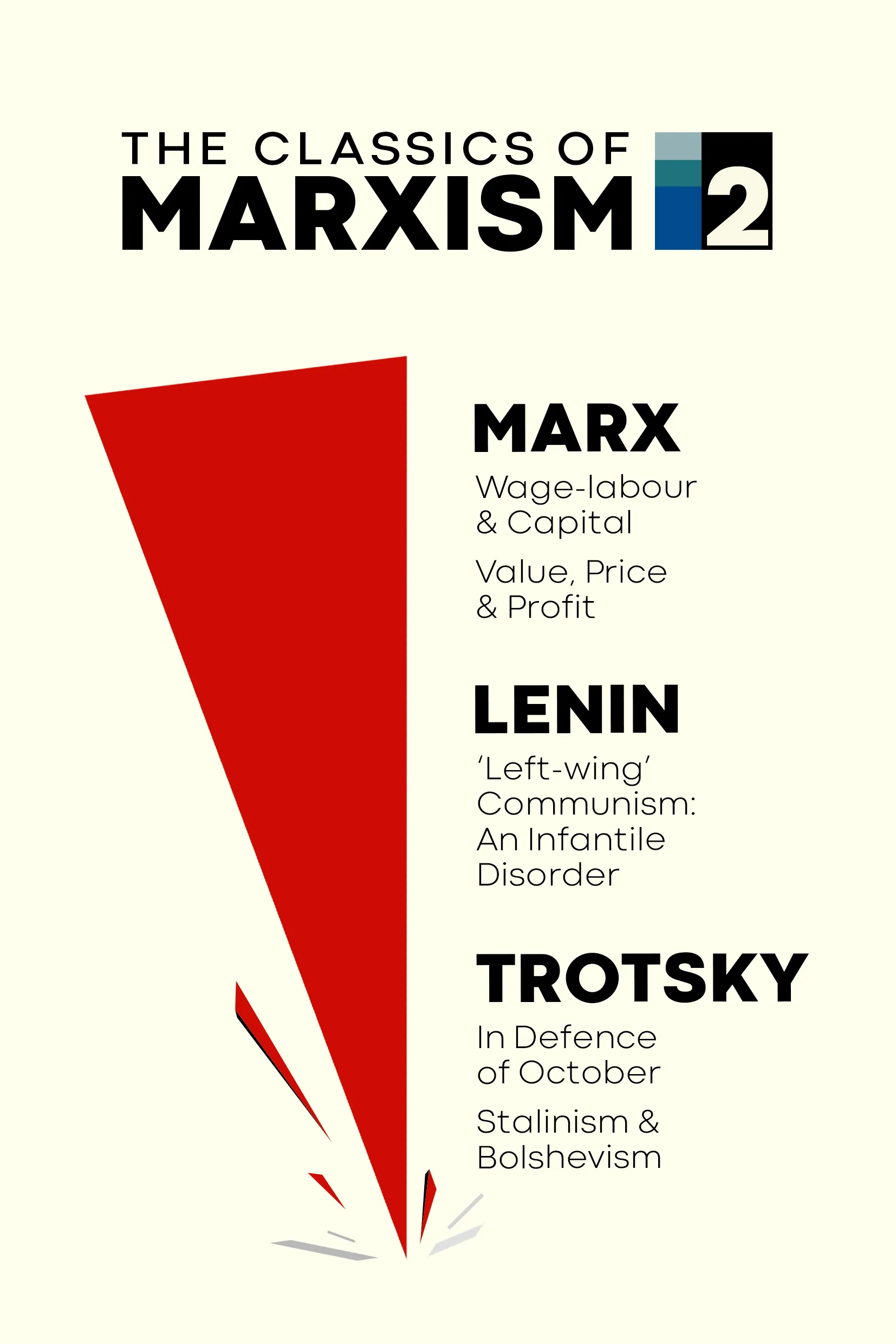
The Classics of Marxism: Volume Two

Following the great success of the first volume of the Classics of Marxism, a second volume is now published with five more important works.

Wage Labour and Capital
Karl Marx’s Wage Labour and Capital contains many important insights into the workings of the capitalist system and the way in which labour is exploited. With an excellent introduction by Frederick Engels.

Value, Price and Profit
Value, Price and Profit was first delivered as a speech delivered by Marx in June 1865, while he was working on the first volume of Capital that was published two years later.

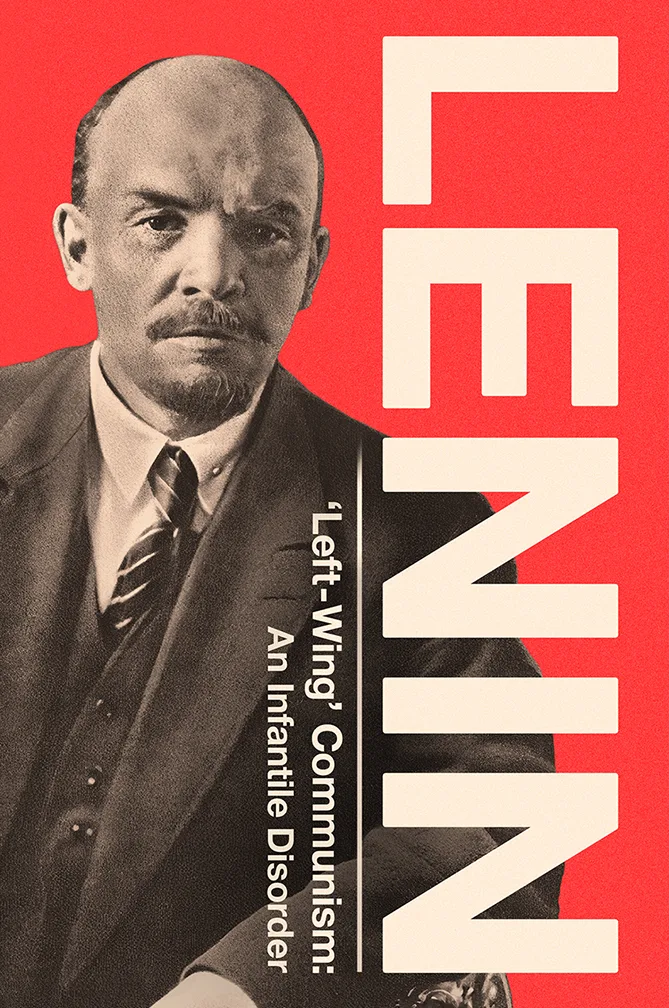
“Left-Wing” Communism: An Infantile Disorder
In “Left-Wing” Communism we have Lenin’s exposition of the necessity to combine theoretical firmness with tactical and organizational flexibility in order to win the masses.

In Defence of October
Leon Trotsky’s work In Defence of October is the title of a speech delivered to a meeting of Social Democratic students in Copenhagen advancing the cause of the Russian Revolution.

Stalinism and Bolshevism
By contrast, in Stalinism and Bolshevism Trotsky examines the revolution’s bureaucratic degeneration which finally resulted in the Stalinist antithesis of the democratic workers’ state.

Twenty five years on from the fall of the Soviet Union, it can be seen as the prelude to a far greater drama: an unprecedented crisis on a world scale which shows that the capitalist system has exhausted itself is ready to follow Stalinism into the dustbin of history.
Počni sa čitanjemKupi knjigu

Introduction

  1. Lenin’s “Left-Wing” Communism
  2. In Defence of October

Wage Labour and Capital

  1. Introduction to Karl Marx’s Wage Labour and Capital
  2. Preliminary
  3. What Are Wages?How Are They Determined?
  4. By What Is the Price of a Commodity Determined?
  5. By What Are Wages Determined?
  6. The Nature and Growth of Capital
  7. Relation of Wage-Labour to Capital
  8. The General Law That Determines the Rise and Fall of Wages and Profits
  9. The Interests of Capital and Wage-Labour Are Diametrically Opposed: Effect of Growth of Productive Capital on Wages
  10. In What Manner Does the Growth of Productive Capital Affect Wages?
  11. Effect of Capitalist Competition on the Capitalist Class, the Middle Class and the Working Class

Value, Price and Profit

  1. Preface
  2. Preliminary
  3. Production and Wages
  4. Production, Wages, Profits
  5. Wages and Currency
  6. Supply and Demand
  7. Wages and Prices
  8. Value and Labour
  9. Labour Power
  10. Production of Surplus Value
  11. Value of Labour
  12. Profit Is Made by Selling a Commodity at Its Value
  13. The Different Parts into Which Surplus Value Is Decomposed
  14. General Relation of Profits, Wages, and Prices
  15. Main Cases of Attempts at Raising Wages or Resisting Their Fall
  16. The Struggle between Capital and Labour and Its Results

“Left-Wing” Communism: an Infantile Disorder

  1. In What Sense We Can Speak of the International Significance of the Russian Revolution
  2. An Essential Condition of the Bolsheviks’ Success
  3. The Principal Stages in the History of Bolshevism
  4. The Struggle against Enemies within the Working-Class Movement Helped Bolshevism Develop, Gain Strength, and Become Steeled
  5. “Left-Wing” Communism in Germany: The Leaders, the Party, the Class, the Masses
  6. Should Revolutionaries Work in Reactionary Trade Unions?
  7. Should We Participate in Bourgeois Parliaments?
  8. No Compromises?
  9. “Left-Wing” Communism in Great Britain
  10. Several Conclusions
  11. Appendix
  12. Letter from Wijnkoop

In Defence Of October

  1. The materialist conception of history
  2. The meaning of revolution
  3. The coup d’état
  4. The causes of October
  5. The law of uneven development
  6. The law of combined development
  7. The peasantry
  8. The national question
  9. The permanent revolution
  10. Pre-requisites for October
  11. The Bolshevik Party
  12. Can October be justified?
  13. The balance sheet of October
  14. The Revolution and its place in history
  15. The future of man

Stalinism and Bolshevism

  1. The reaction against Marxism and Bolshevism
  2. “Back to Marxism”?
  3. Is Bolshevism responsible for Stalinism?
  4. Bolshevism’s basic prognosis
  5. Stalinism and “State Socialism”
  6. The political “sins” of Bolshevism as the source of Stalinism
  7. Questions of theory
  8. Questions of morals
  9. The traditions of Bolshevism and the Fourth International

Rezultati