In August 1928, after the Comintern had burnt its fingers pursuing opportunist policies in Britain and China, the Sixth World Congress ushered in a new ultraleft turn in international policy. A key resolution was passed stating that the period of capitalist stability had ended and a new “third” period had opened. To the schema of the Comintern leaders, the so-called “first period” was the revolutionary years of the immediate postwar, the “second” was one of relative stability, and now the “third” was one of wars and revolutions. The reality, however, was very different, as capitalism was still experiencing an economic upswing and continued political stability. In fact, it was not until April 1929 that the boom in Germany reached its peak – the Stalinists had no inkling of the future stock market crash of October 1929. This erroneous “Third Period” policy was to prepare the way for an absolute catastrophe internationally and particularly in Germany.
The Stalinists stated that the main danger now emanated from the left! Parties were ordered to break with the official trade unions and reestablish “Red” unions wherever possible. Collaboration with social democracy became the worst possible crime, and the social democrats internationally were denounced as “social fascists” and therefore the main enemy! In the words of Stalin: “Fascism and social democracy are not opposites, but twins.”
In Germany the KPD issued a pamphlet entitled What is Social Fascism?, which stated that workers had to concentrate on “the struggle against fascism in its present most dangerous form, i.e. its social democratic form.” Thälmann, the Party’s leading theoretician, stated that with the election of the Social Democratic Müller administration, fascism had triumphed!
The seasonal unemployment in the severe winter of 1928-9 added to the growing number of sackings resulting from the increasing rationalization of industry. In February 1929 the unemployed totals rapidly began to climb upwards. For different reasons, up to half a million were excluded from state benefit. Increasing bitterness swept throughout Germany, which the KPD attempted to capitalize on by organizing hunger marches and demonstrations. Due to their insane ultraleftism the KPD were isolated from the broad labour movement and soon under these conditions became a party of the unemployed.
Social tensions were growing rapidly. On the spurious pretext of preventing outbreaks of violence, the SPD police president of Berlin, Karl Zorgiebel, issued a banning order on the 1929 traditional May Day demonstrations. The KPD called on the workers to defy this instruction and defend their rights as they had done previously under Bismarck and the Kaiser. There was a big response, as thousands streamed out of the working-class districts and flooded the squares, paralyzing all traffic. The police waded in brutally, firing on unarmed demonstrators. By 3 May, 25 workers had been killed, 36 severely wounded and hundreds more injured. This repressive action caused many Social Democratic supporters to desert to the Communists. Zorgiebel became a symbol of hatred for the workers as Noske had been in the early years of the revolution.
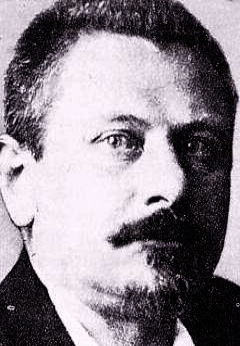
Heinrich Brandler
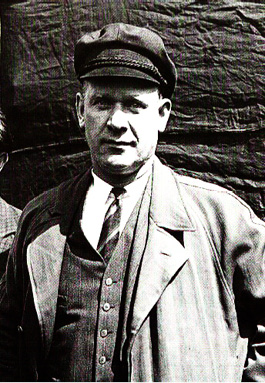
Ernst Thälmann