We are led to believe democracy is a stable political system based on peaceful transitions of power and popular representation. This couldn’t be further from the truth in Peru, which has been through nine presidents in ten years.
The latest winner, Keiko Fujimori, daughter of the infamous dictator, is inheriting a ticking time bomb riddled with crises and contradictions.
Peru has, in recent years, experienced constitutional crises, mass movements, strikes, corruption scandals, inflation, and violence. Trust in the establishment is at rock bottom. Six of the past ten presidents have been arrested or have faced arrest warrants related to corruption or constitutional violations.
The latest election – the first since the US-backed 2022 coup against the Pedro Castillo government – gave a razor thin result, with a first round count so chaotic and heavily delayed that the chief of the National Office of Electoral Processes resigned. The election, which should have happened in 2022, was purposefully delayed by Dina Boluarte, who illegally took power and intended to stay until 2026. That was, until an insurrectionary movement toppled her government.
No candidate reached a majority in the first round, forcing a runoff between Keiko Fujimori (Fuerza Popular) and Roberto Sánchez (Juntos por el Perú). They represent the two strands of the Peruvian political system: the right-wing Fujimorismo and the fragmented institutional left.
Coming in third was Renovación Popular, a conservative-religious right-wing party with a strong presence in the capital, Lima, but none in the rest of the country.
The margin between candidates in the second round was so small (49,600 votes for Fujimori, or 0.27 percent), that the 307,000 votes coming from abroad played a decisive role. This overwhelmingly benefited the right, since poor Juntos por el Perú supporters are in short supply in Miami or Buenos Aires.
Peru’s infrastructure is so limited it’s easier for a middle-class reactionary to vote in the Tokyo consulate than for an indigenous rural farmer living in the Selva Alta. If only votes cast in Peru were taken into account, left-winger Sánchez would have won.
This disparity led Sánchez to reject the result, and to call on the National Jury of Elections (JNE) to “declare as null the June 7 elections held at consular offices for Peruvians abroad.”
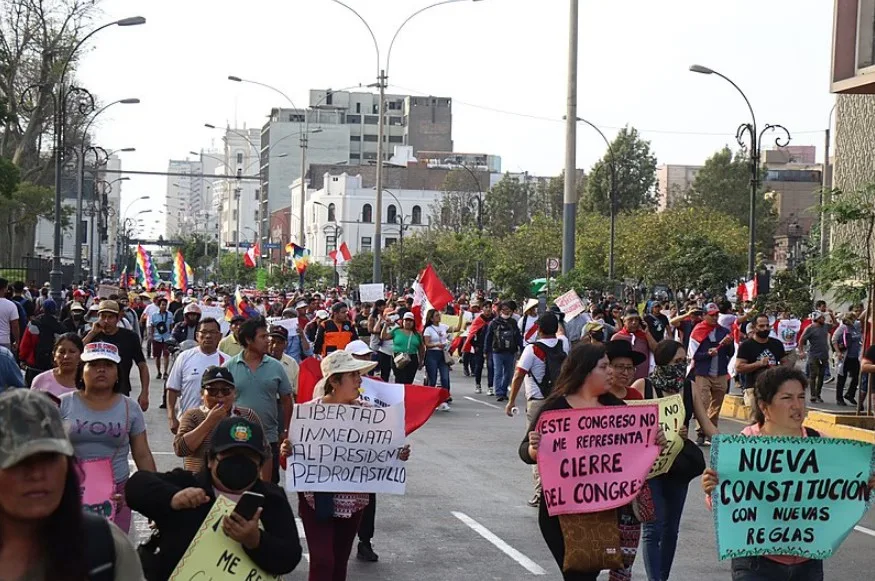
Despite massive marches throughout the country in support for Juntos por el Perú, and a defiant Sánchez refusing to concede, JNE President Roberto Burneo officially proclaimed Fujimori the winner for the 2026-2031 presidential term on 3 July 2026, nearly a month after the vote, after the result at thousands of polling stations were challenged.
For now, everything indicates Fujimori will be sworn in on 28 July. But, as is common in Peru, we don’t know what the next five months hold, let alone five years.
Peru, like many countries in the continent, is highly unequal, with a rotten national bourgeois centralised in Lima and closely linked and subordinated to foreign multinational interests. The top one percent owns half of the wealth, while the bottom 50 percent receive 5.7 percent of all the income. Eighty percent of rural homes don’t have access to sewers, and childhood anemia is the norm in rural areas.
The return of authoritarianism with a ‘democratic’ face
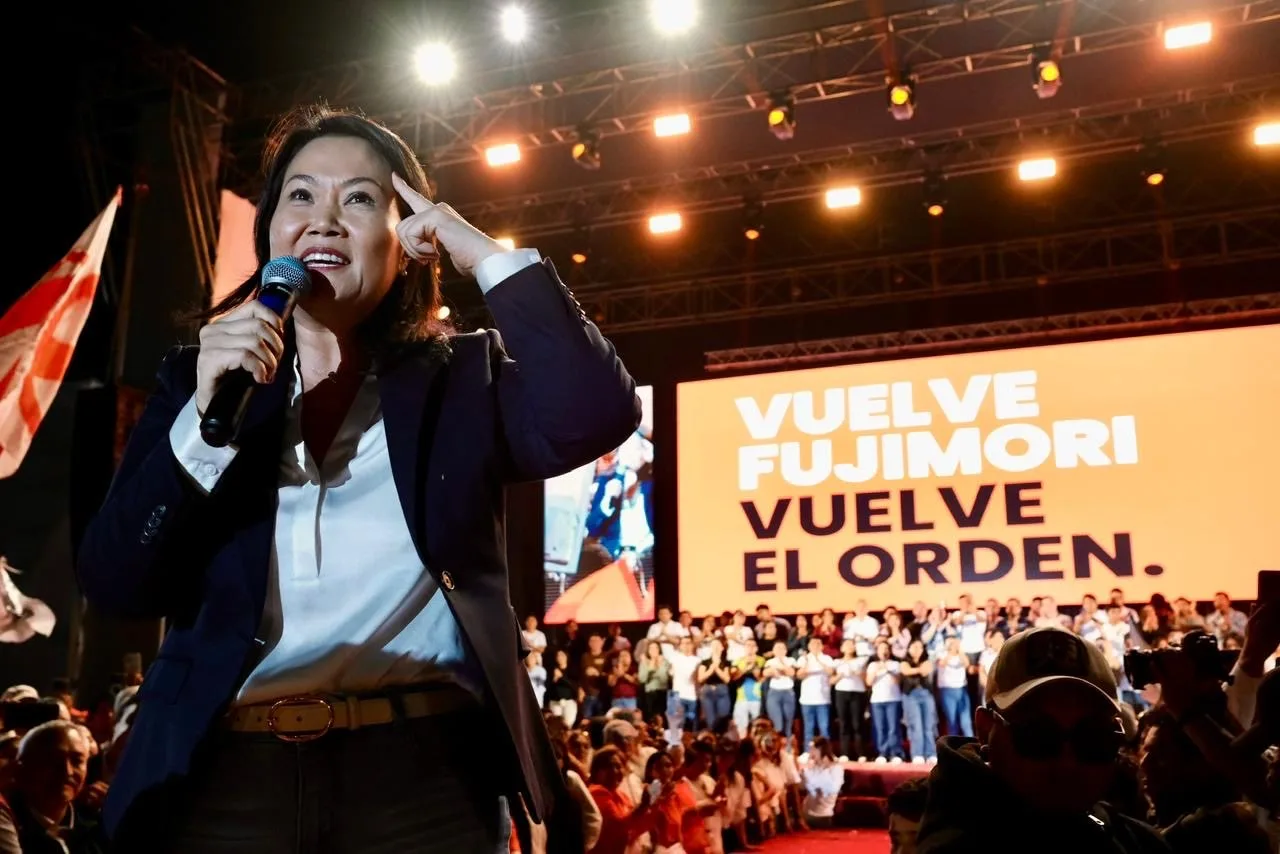
Keiko Fujimori is well-known as the daughter of dictator Alberto Fujimori who was in power between 1990 and 2000, when he was overthrown by a mass movement. She has attempted to present herself as the ‘democratic’ and renewed version of that project. She has been a presidential candidate four times (2011, 2016, 2021, 2026) and has advanced to the runoff in three of those elections, without ever winning the presidency.
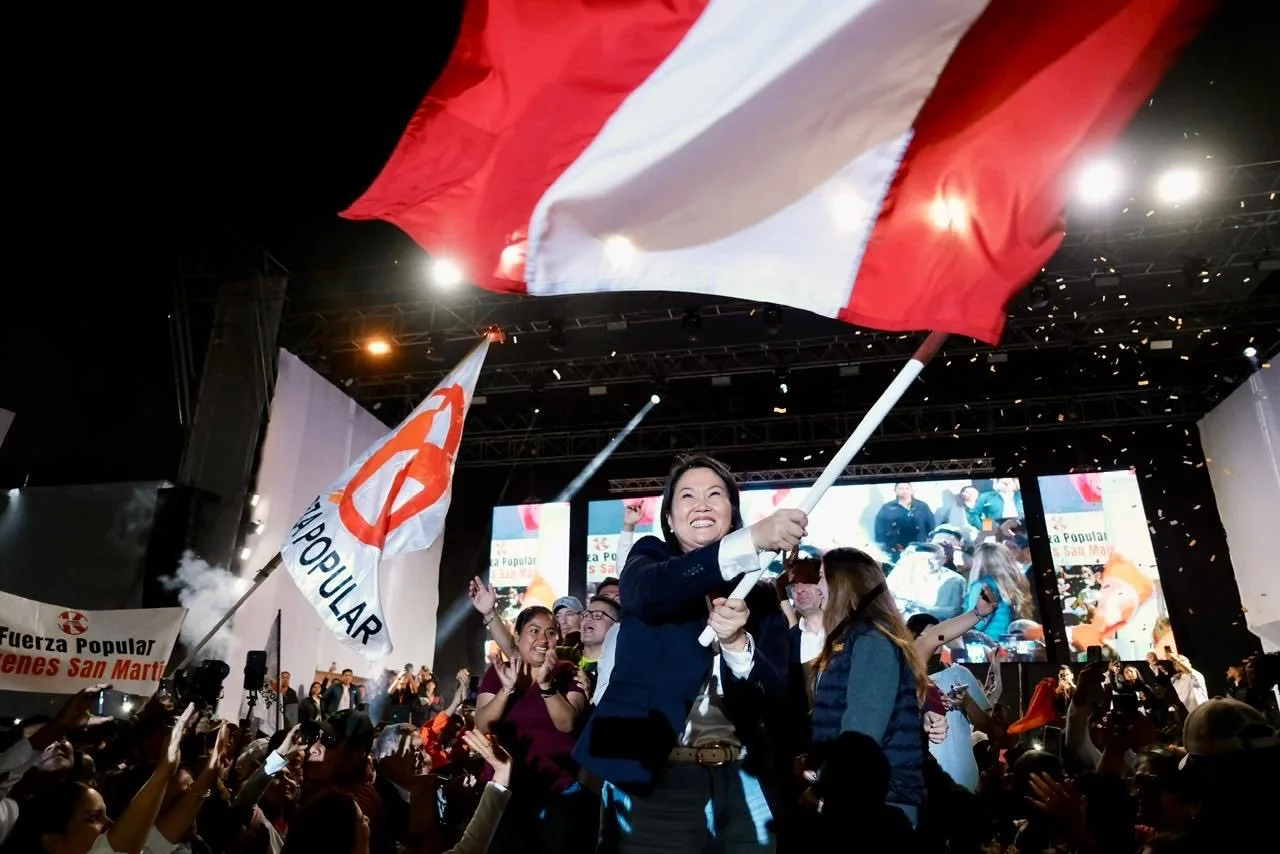
Her party is the country’s leading right-wing force, with strong roots in urban working-class sectors that associate Fujimorismo with ‘order’, defeating gang violence, and economic stability.
Among her main proposals are cutting public spending, slashing regulation and taxes on mining companies, and launching a militarised campaign against gang violence, thereby championing the legacy of her father’s administration.
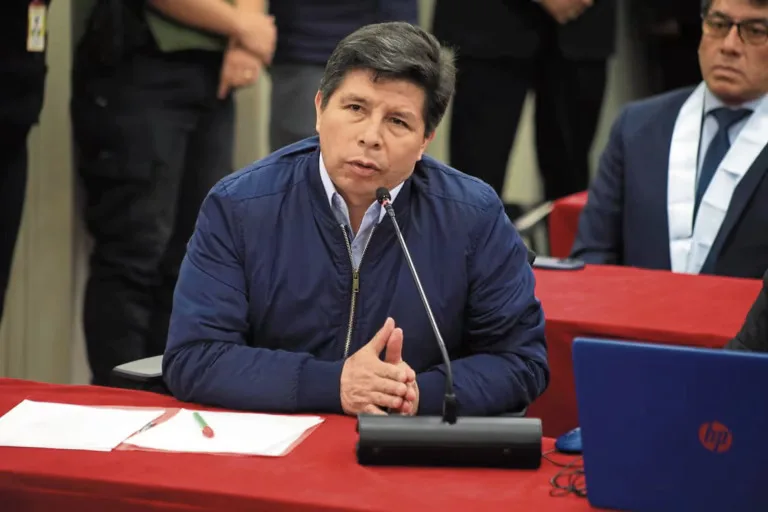
Roberto Sánchez is a left-wing politician, currently a member of Congress and a psychologist by profession. His candidacy has been backed by Juntos por el Perú, a left-wing coalition that presents itself as the legitimate heir to the government of Pedro Castillo, the rural schoolteacher trade unionist who won the presidency on a platform of radical transformation, but was removed from office by Congress in a coup in December 2022 after attempting to dissolve Parliament.
He advanced to the runoff thanks to support from the left in certain working-class and regional sectors (especially in the southern Andes). His running mate was Brígida Curo Bustincio, a leader from the Puno region, which borders Bolivia – an area with a strong tradition of peasant and indigenous struggles.
Sánchez’s platform was unclear for much of the campaign. He tried to position himself as a successor to Castillismo (promising a constituent assembly, agrarian reform, nationalisation of resources, etc.), but with a more moderate tone aimed at allaying the fears of the middle class and big business. The main focus of his plan was ‘constitutional reform’ and the ‘recovery of sovereignty’, with a ‘mixed economy’ featuring a strong state presence.
This lack of clarity generated mistrust and reflected a deeper problem: the Peruvian institutional left (popularly known as the ‘caviar left’) failed to develop a programme for a working class and peasantry squeezed by the crisis. Sánchez’s attempt was always firmly planted within the framework of bourgeois democracy – accepting the rules of the electoral game, seeking alliances with centrist parties, and avoiding an openly anti-capitalist programme.
The experience of Pedro Castillo’s government is instructive: he came to power with a radical platform, but once in office he was quickly caught up in the dynamics of a bourgeois democracy designed to prevent such radicalism.
Under pressure, he moderated his programme, accepted the removal of the more radical elements of his own cabinet and cosied up to the interests of the mining multinationals, all of which eroded his base of support amongst the workers and poor peasants. Congress, dominated by the right (including Fujimorists), subjected him to constant harassment that culminated in his removal from office and imprisonment.
The institutional left has not learned its lesson. It competed once again on the very same playing field where it was previously defeated, without changing its strategy or its platform.
Sánchez embodies the contradiction of a left that wants to change the system but operates within its rules, promising profound transformations while taking care not to alarm the powers that be. This ambiguous stance ultimately reflects the difficulty of building a real alternative to bourgeois democracy from within the system itself.

Another way out?
Peruvian Marxist José Carlos Mariátegui envisioned a solution:
“The Latin American Revolution will be nothing more and nothing less than a stage, a phase of the world revolution. It will simply and clearly be the socialist revolution.”
The problem is that, in today’s Peru, this goal seems further away than ever. The institutional left represented by Sánchez has given up on framing their programme in radical terms. Fujimorismo is the most brutal embodiment of counter-revolution. But this right-wing government does not have the social base to enable another dictatorship.
In the first round of the presidential election, Fujimori got 14 percent of the votes cast, and her party has one third of the seats in Congress. The working class, the poor peasantry, and the youth still hold tremendous power and have shown their ability to mobilise against reaction. The list of problems the government is now up against is vast.
Peru, for one, is the most contentious battleground in the Donroe Doctrine. Fujimori, a supporter of Trump, will almost certainly join the Shield of the Americas, designed to fight Chinese incursions into the continent.
The newly built Port of Chancay, meant to cut transit times to China by 10 days, is already under severe pressure from the US. The Trump administration has pressured the Peruvian state to spend $1.5 billion to modernise the Callao Naval Base (only 80 kilometres from the port) for their use and benefit. No Latin American country can hope to survive without trade with China, and the Donroe Doctrine aims to disrupt these economic ties.
While Peru is not facing the same financial crisis as Argentina or Colombia, it’s far from a stable bourgeois economy. The state-owned oil firm, Petroperú, is facing a severe financial crisis and requires billions of dollars in bailouts to maintain operations. The cocaine trade has boomed in recent years, and Peru is a key producer, fueling gang violence, murders, and extortions. The military has repeatedly been mobilised in Lima and Callao, but the situation has not improved.
High gold and copper prices, while they have given the state a massive financial boost, have also fueled billions worth of illegal mining. These high prices will also not last, however, and since mining fuels roughly 20 percent of Peru's total tax revenues and 60 percent of all national exports, a drop in prices will have an immediate impact.
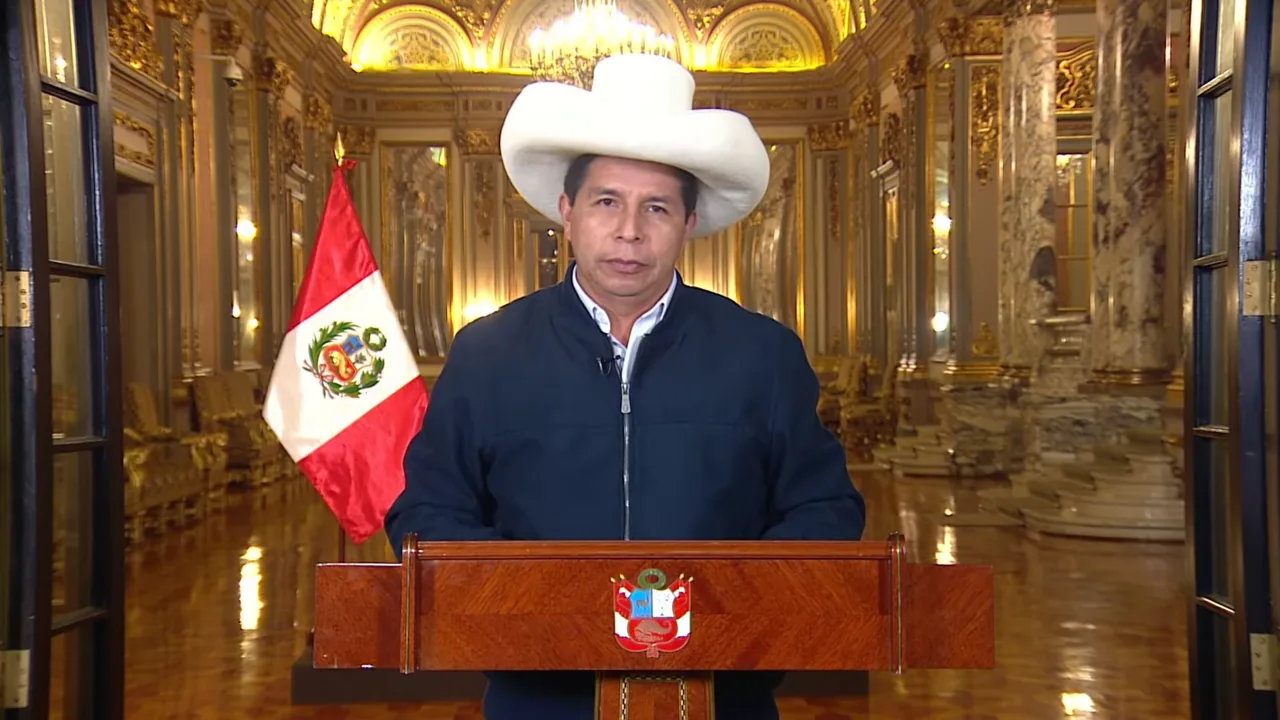
In short, a coup in 2022 has given the daughter of a dictator the thankless task of restoring legitimacy to bourgeois democracy in a fragile economy dominated by US and Chinese imperialism, during a time of capitalism's greatest crisis.
The Trumpification of Latin America
It would be very easy to look at the right-wing electoral victories in Peru, Colombia, Bolivia, Ecuador, etc. and draw defeatist conclusions. This is another step in what The Economist calls “The dramatic Trumpification of Latin America.”
But these are not strong, stable bourgeois democracies. The system is as discredited as ever. These wins tell us more about the utter lack of a coherent anti-capitalist programme, than that people love to be oppressed or dominated by US imperialism.
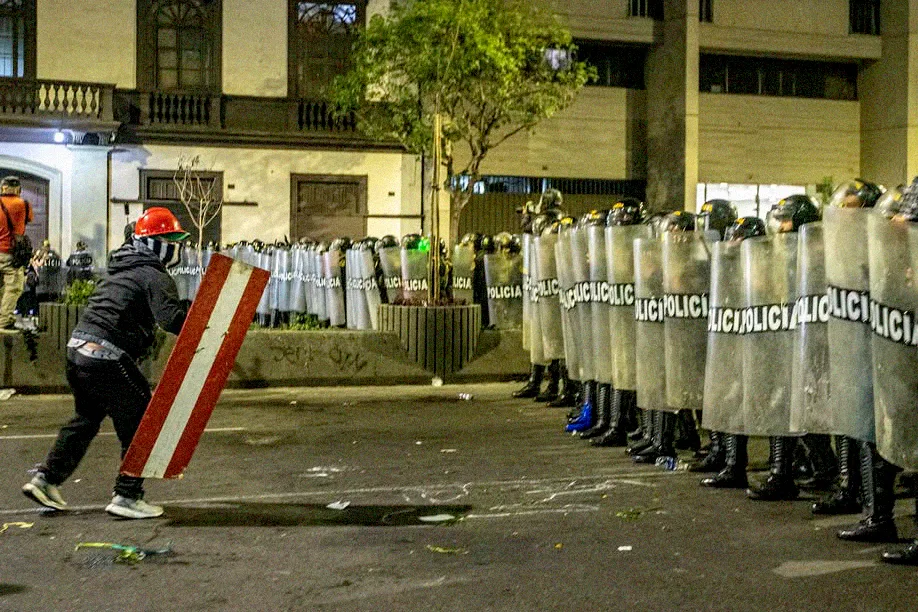
Just this year we’ve seen mass revolts in Bolivia and Argentina. In Peru, the state could only regain control after the 2022 coup by murdering more than 60, and arresting, beating, and torturing hundreds. No one has forgotten this. “Freedom for Castillo!” and “For justice and dignity, Fujimori never again!” are common chants in the streets of Peru.
The victory of the right is only a temporary stalemate until the next clash begins again. The advance of the US into the continent will only provoke this further. But none of this is automatic. The right can continue to limp along year to year, carrying out its programme of austerity, repression, and increasing US military presence, all by using the threat of drug violence as a veil.
The fundamental problem of Peru today is shown by the slogan which first got Pedro Castillo elected: “No más pobres en un país rico”, or “No more poor people in a rich country.”
Peru has vast mineral and agricultural wealth, and some of the world’s greatest biodiversity. Castillo initially spoke of nationalising gold, silver, copper, and lithium, and developing a state-run natural gas network. But he quickly caved under immense pressure and opted to renegotiate royalties instead. This left power in the hands of the very same bloodthirsty oligarchs who would go on to overthrow him and kill workers on the streets who fought against the coup.
Juntos por el Perú and the rest of the left must absorb the lesson that conciliation is a path off a cliff. You can’t dialogue with the murderers in government. Castillo learnt this the hard way. Lastly, Fujimori is building her house upon the sand. She may regret having run for a fourth time.