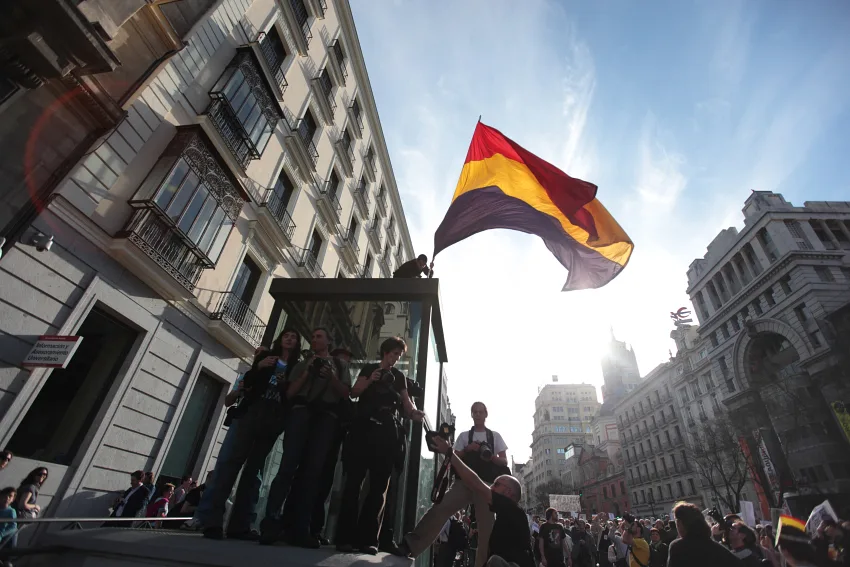
The abdication of King Juan Carlos is an attempt to rein in the crisis of the post-1978 regime, which has been widely discredited in the eyes of the people in the midst of the greatest economic and social crisis that the Spanish state has undergone in decades.
– Mobilize the people to demand a constituent assembly to derogate the 1978 Constitution!
– For a new Constitution that establishes a republic and grants full democratic rights to the peoples that make up the Spanish state!
– The economy must be put in the hands of the working class and the exploited sectors!
The regime of 1978 gave rise to a limited bourgeois democracy in a deal struck by the successors of the Franco regime (Suárez, Fraga) and the reformist leaders of the workers’ parties (Carrillo and González). The farce of the “democratic Transition” was the mechanism whereby the revolutionary struggle of the youth and the workers against the Franco dictatorship was aborted, giving impunity to the dictatorship’s crimes, enshrining Franco’s flag, and imposing the unity of Spain, a unity safeguarded by force by the army.
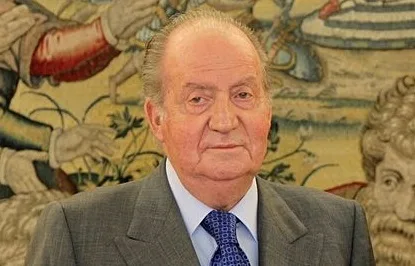
The (now former) King Juan Carlos Borbón has not been able to conceal his sinister role in our recent history: hand-picked by the dictator Franco, he always had a special relationship with the ruling sectors of the capitalist class, which spared no expense when it came to granting economic favours to the royal family. There is still much to find out about the ambiguous and obscure role Juan Carlos played in the putchist plot of February 23 1981. The true role of Juan Carlos’ monarchy (which is now expected to be taken over by his son Felipe), has not been that of a great father to the citizens, as claims the spurious propaganda that unfortunately was endorsed by many left-wing organizations, but that of undemocratically holding all sorts of important constitutional powers: right of veto over fundamental laws, head of the Armed Forces, capacity to declare the state of emergency and exception… In short, becoming a possible tool to lump together the forces of the reaction against the people by making use of those powers.
Today, those who for decades had control over the economy and the most important state institutions: the Monarchy, the governments, parliament, the judiciary and the repressive apparatus, have completely failed to offer a future to millions of workers and citizens, and to present a solution to the economic and social crisis that has struck Spanish capitalism. On the contrary, what they have to offer is an unemployment rate of around 6 million people, growing poverty, low wages, precarious employment, emigration, the axing of social services, impunity and accumulation of wealth for the powerful, an increase in police and state repression against the struggling workers and youth. It is time for the people to raise its voice and take their fate into their own hands. The abdication of the King opens a possibility in the eyes of millions to reconsider the question of the Republic. The extraordinary process of mobilization that we’ve witnessed in the past 3 years gives us a clear lesson: the overwhelming power of mass movements.
For some time now, the most intelligent sectors of the bourgeoisie have become aware of the discredit which the (until today) head of state had been suffering, submerged along with the rest of his family in corruption and personal scandals, which add to the instability which riddles the Spanish state since more or less the outbreak of the Indignados movement in 2011. It’s no coincidence that all the official polls show a growing rejection of the Monarchy among the population and the strengthening of a republican sentiment, particularly among the youth.
Now, the politicians of the regime will intend to take us again into the politics of “consensus” of the 1970s, which secured the regime of exploitation dominated by the 100 families of potentates that lined their pockets during the Franco era, after having crushed the struggle of our forefathers. But the new generation demands the end of the Monarchy and the regime that Franco passed on to us: the fake democracy that allows us to elect every four years the government of the moment so that it can keep following the dictates of the economic oligarchy that rules the country.
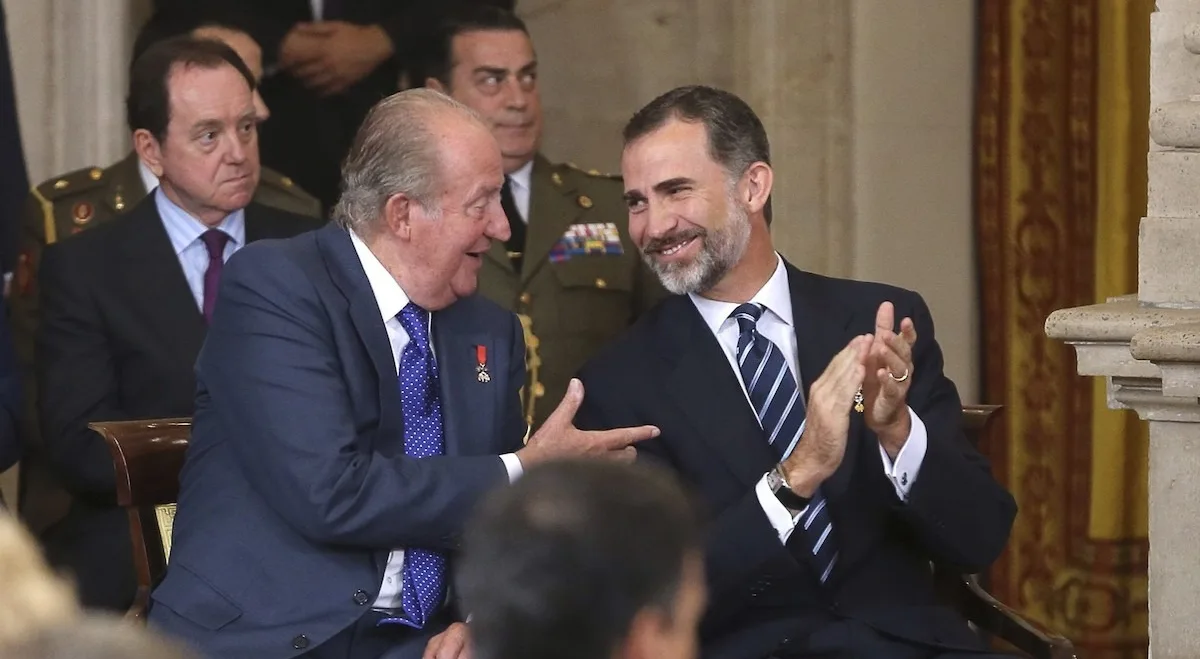
With the enthronement of Felipe of Bourbon, the old regime is trying to varnish an institution that is antidemocratic in essence. We don’t want a SUCCESSION, but an ABOLITION of the fascist and feudal remnants in the Spanish state, one of which is the monarchy.
The words uttered by the president, Mariano Rajoy, to communicate the abdication of the King: “I want to inform that the process will take place in a context of institutional stability”, go against the grain of events.
Aware of the moral and political downfall of the crown and of Juan Carlos, the abdication of the King in favour of his son had been debated and decided upon by the upper echelons of power months ago. Only a spark was needed to make the succession inevitable.
The catalyst for the succession were the elections of May 25, which have revealed the extreme weakening of the two parties around which the regime hinges, the PP and the PSOE, and the strengthening of the leftist tendencies in society, with a marked anti-capitalist and anti-monarchist character, and which have raised the alarms of the old regime. They intend to use the new and amicable face of Felipe of Bourbon to patch up a battered system that is falling to pieces.
In this situation, the tasks that we are faced with are:
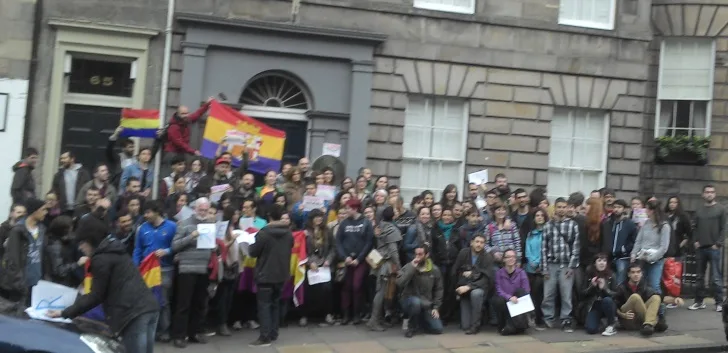
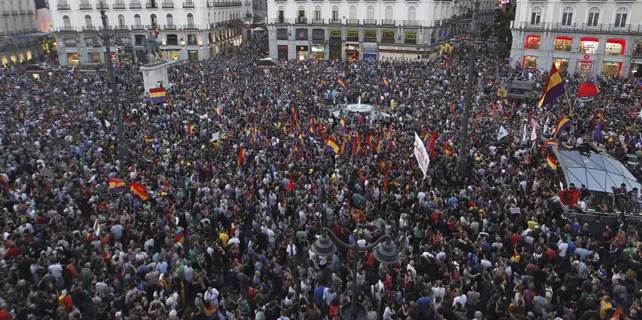
- In the first place, we have to launch immediately a mass mobilization on the streets to demand the start of a constitutional process to do away with the antidemocratic Constitution of 1978 and to put forward a referendum in which the population freely decides whether it wants a Monarchy or a Republic. Multiple demonstrations in different cities have already been called in the social media. We encourage the workers, the youth, and social and popular activists to participate massively in these mobilizations. After the results of the European elections the responsibility falls on the leaders of PODEMOS (“We Can”) and IU to set in motion a movement in the coming days and to call for mass rallies for the republic in the weekend.
- The elections of May 25, and the subsequent situation they generated, has expressed a clear mandate: the confluence of the organizations of the left, the trade unions, the social movements, the “Dignity” platforms that launched the March 22 demonstration etc. that have put across their rejection to the old regime and their wish to build a broad united political front. The leaders of the United Left, PODEMOS, and the other social and popular movements must take a step forward to carry through this demand.
- A democratic and federal republic would represent a great step forward, albeit incomplete. True sovereignty for the people involves the control and use by society of the commanding heights of the economy (the banking sector, the big corporations and the multinationals, and the big land estates), under the management of the workers that run those enterprises, so that they serve the needs of the vast majority which is suffering from the effects of the crisis and the injustices of the system. Therefore, we must link the struggle for the republic with the expropriation of the commanding heights of the economy, to take them away from those 100 families which own the country. That is to say, we must fight for a Federal Socialist Republic.
Popular mobilization for a republican constituent assembly. Everyone out on the streets in this afternoon’s mobilizations.
For a political front of the left, the social movements, and the working-class organizations.
For a Federal Socialist Republic.