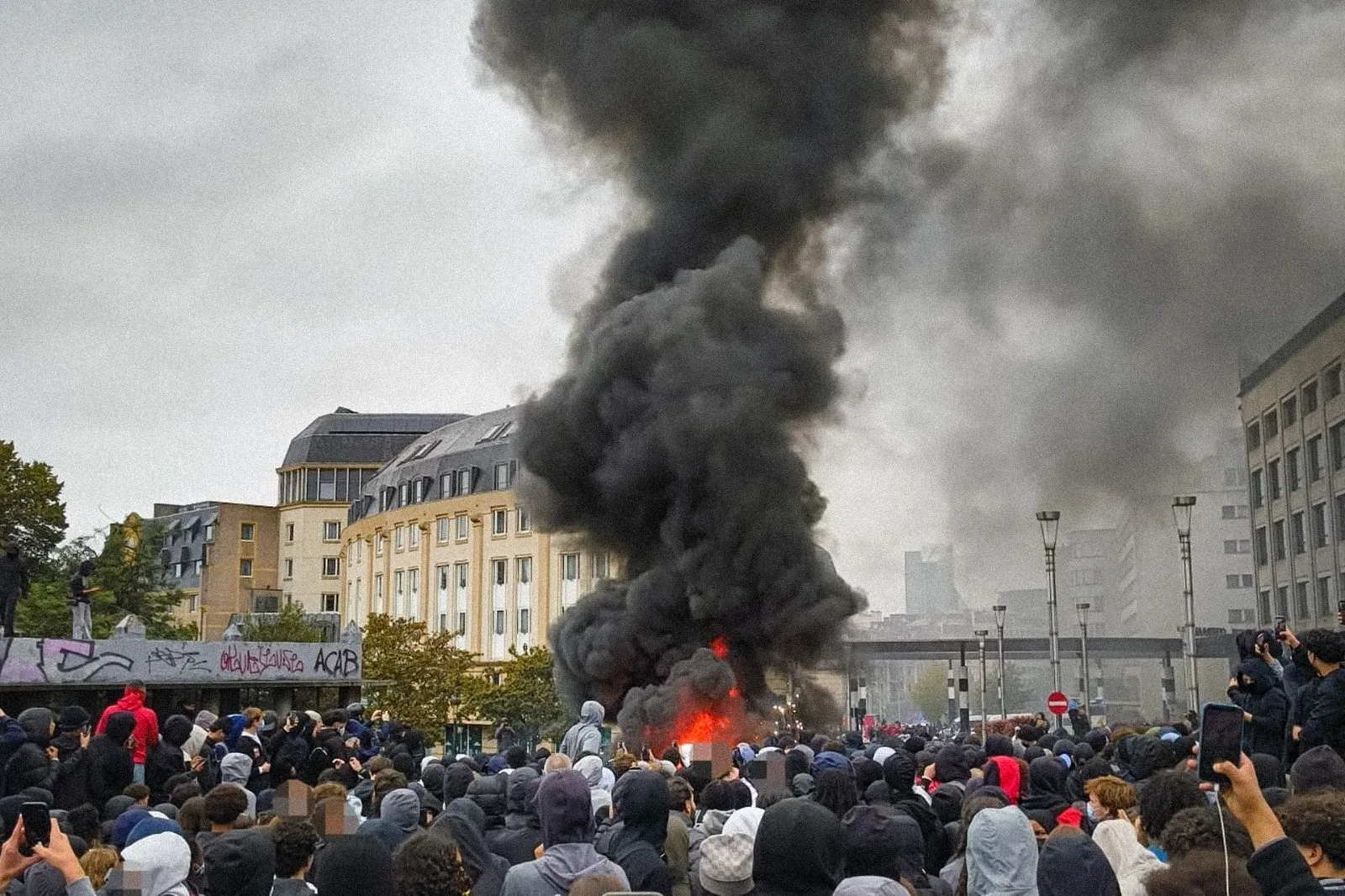
As in neighbouring France, parts of Belgium have been gripped by high school student protests since the start of October. They are taking to the streets to protest appalling teaching conditions, cuts to education, and their lack of a stable future.
In June, the government of French-speaking Belgium approved a punitive austerity decree on education. To name just a few measures, this decree entailed: a two‑hour weekly increase in working hours for teachers with no compensation; a witch hunt of workers on sick leave; no more subsidies for lunch at school; casualisation of the workforce; a school budget no longer aligned with inflation; and a €360 hike in university tuition, bringing it up to €1,200 a year, alongside a €1,000 increase in tuition for other forms of higher education.
There will obviously be a large number of long-term consequences of this law. But in the short term, hundreds of jobs were suddenly lost, as increasing the overall working hours for each teacher means fewer available jobs, also making it harder for new hires to find work. This led to thousands of teachers losing many work hours, having to compensate by trying to find teaching positions in several schools at a time.
Before and well after the passing of the law, from May to early July (the end of the school year), the French-speaking part of Belgium was struck by a wave of spontaneous school strikes. Strikes have been commonplace for Belgium for the past two years, but this time – completely taking the trade unions by surprise – high school teachers, followed by tutors, students, and even head teachers launched a massive strike throughout Wallonia and Brussels.
Teachers, who are generally less likely to strike, took everybody by surprise: schools were basically closed for two months and most exams were cancelled. But the government did not move an inch. As the Summer break came, the movement died down, and everybody went back to school in late August.
The awakening of the youth
At the start of October, high school students took to the streets. Not out of boredom, or to skip classes, as the bourgeois media loves to claim. The reason is that they actually saw with their own eyes the repercussions of the austerity measures: a shortage of teachers while others are overworked, cancelled classes, overcrowded classrooms, and a lack of access to higher education with tuition prices sometimes increasing sixfold.
These have been commonplace problems for a while now, but the austerity measures exacerbated these issues tenfold.
Inspired by their French counterparts, who are fighting for similar reasons, the youth from Wallonia and Brussels took matters into their own hands. They have been protesting ever since, spontaneously organising, blocking school entrances, chanting slogans while marching in their cities, particularly in the city of Liège – the heart of the movement.
In the midst of these events, the Walloon government announced that they were cancelling the 18-24 bus pass, which meant that the price of the regional public transport subscription increased from €12 a year to €400 – alongside a general increase in rates for all age ranges and ticket types. To the youth, this had the effect of a bomb going off.
Revolt and counterrevolt
For over a week, from dawn to dusk, Liège has been the scene of a relentless struggle between teenagers and the police. To the legitimate anger of the youth – which is directed not just towards the education system, but against the whole system – the police have responded with tear gas, water cannons, savage beatings, chases, encirclements and dozens of arrests – often not letting the parents know.
Even in periods of relative calm, young teenagers are being arrested day in day out, for as little as carrying saline solution or medical face masks in their backpacks, taken away in police trucks while bound with painfully-tight cable ties. Some of them report having been forcefully stripped out of their clothes and underwear to get frisked. We are talking about children and teenagers!
Most of this is obviously hidden by the media, which instead focuses on bins set on fire and broken bus stops and windows, in an attempt to present the protestors as violent criminals, rather than angry youth. But what is a broken window compared to hundreds of thousands of broken futures?
At the same time, the yearly October local fair opened in Liège. With the full support of the police, petty-bourgeois reactionary carnival workers launched an attack against the protesters in order to ‘protect’ their fair. Several accounts from bystanders, alongside many pictures and videos, show stallholders threatening and hitting teenagers with baseball bats and iron bars, spraying them with fire extinguishers, and shooting some in the head with small lead-loaded rifles! Several have been wounded. High school pupils also report having received many racist insults from the carnival workers.
In the face of this barbaric state violence, Liège has seen a real wave of solidarity from a section of its ardent citizens. From a defunct retirement home providing food, shelter and first aid to the fighting youth, to people spontaneously distributing masks and saline solution to protect children from tear gas attacks, and collectives providing legal advice to teenagers about police brutality.
Drastic repressive measures
To put the cherry on top: at 6am on 8 October, the Socialist Party mayor of Liège banned any gathering of over three people in the entire city, lasting until 16 October – further strengthening the repressive measures of law enforcement.
Given the sheer absurdity of these measures, students from all stages of education and many other citizens took part in a great demonstration on the same day, blockading the city’s main university campus. Overcome by the wave of the masses, the mayor and the police had no choice but to strategically authorise and oversee the protest.
The brave, ardent youth then marched to the main railway station while chanting slogans, calling out the repression. Although police trucks have been parked at almost every corner, the Kafkaesque measures of the mayor have barely been observed by the population.
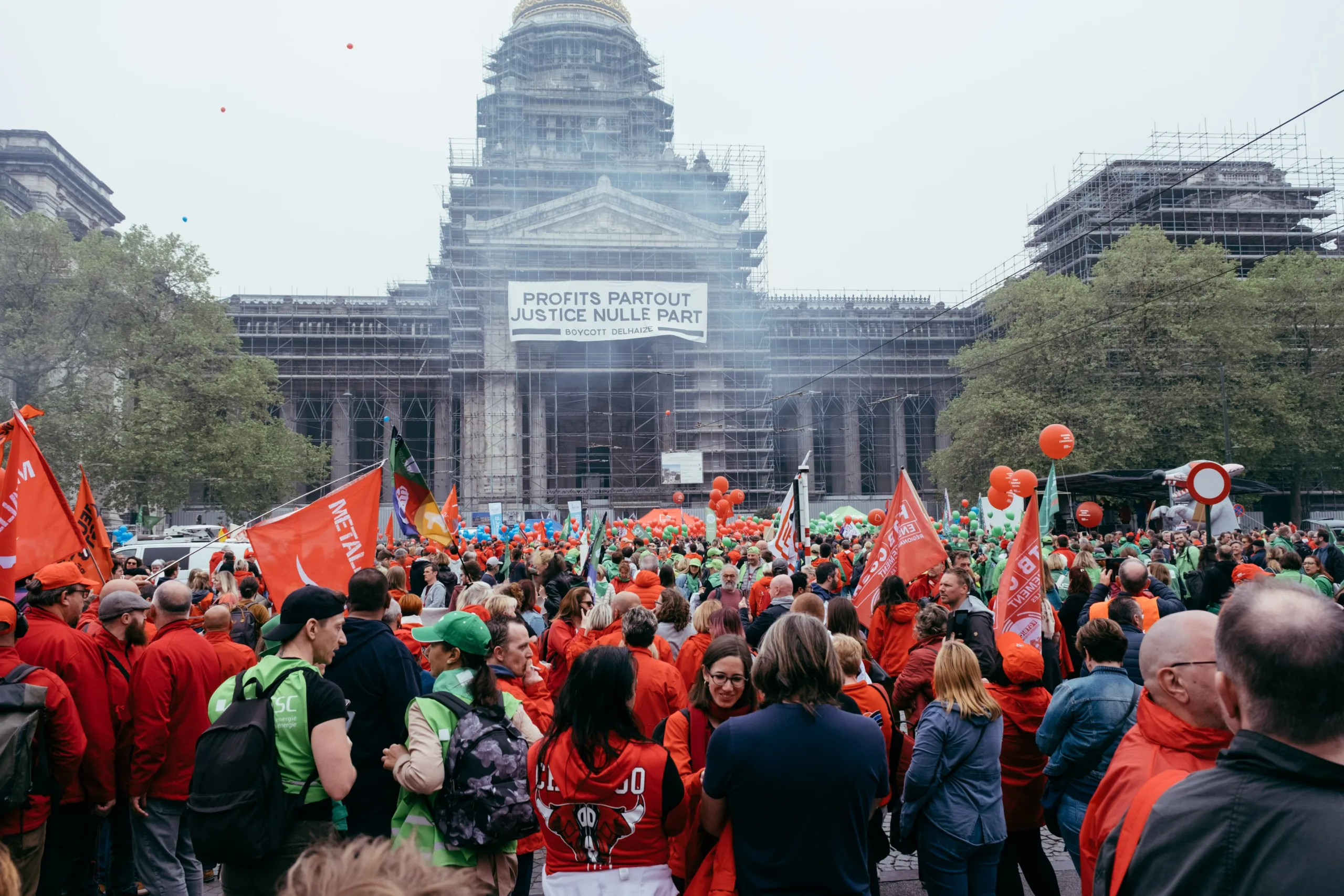
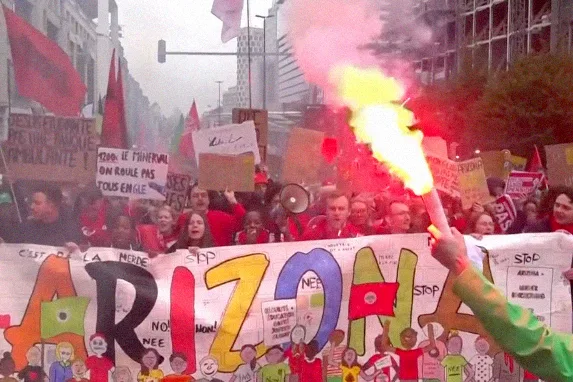
The next day, the socialist trade union federation FGTB/ABVV organised a national anti-austerity march in Brussels, which was joined by thousands of young people. This transformed the demonstration into one of the most youthful union actions in Belgium’s living memory. School students were at the forefront in calling out the police for their brutal repression. The police responded with more repression, leading to a whole morning of clashes and violent attacks against both school students and trade unionists alike.
Organisation is key
Ever since then, the movement has quieted down somewhat. Some high school students have bravely kept blockading their school entrances, and the same goes for university students who have partly joined the movement, but it has not continued with the same intensity shown at the start of October.
Despite the show of force on 9 October, in which public sector workers – including teachers – and students marched together, the students have been largely left to fend for themselves. Whilst rank-and-file collectives such as École en Lutte and Mars Attacks have been working hard to organise teachers to support the school students, the main teaching unions have been dragging their feet. The teachers, who earlier this year led a major strike, have therefore not been effectively mobilised.
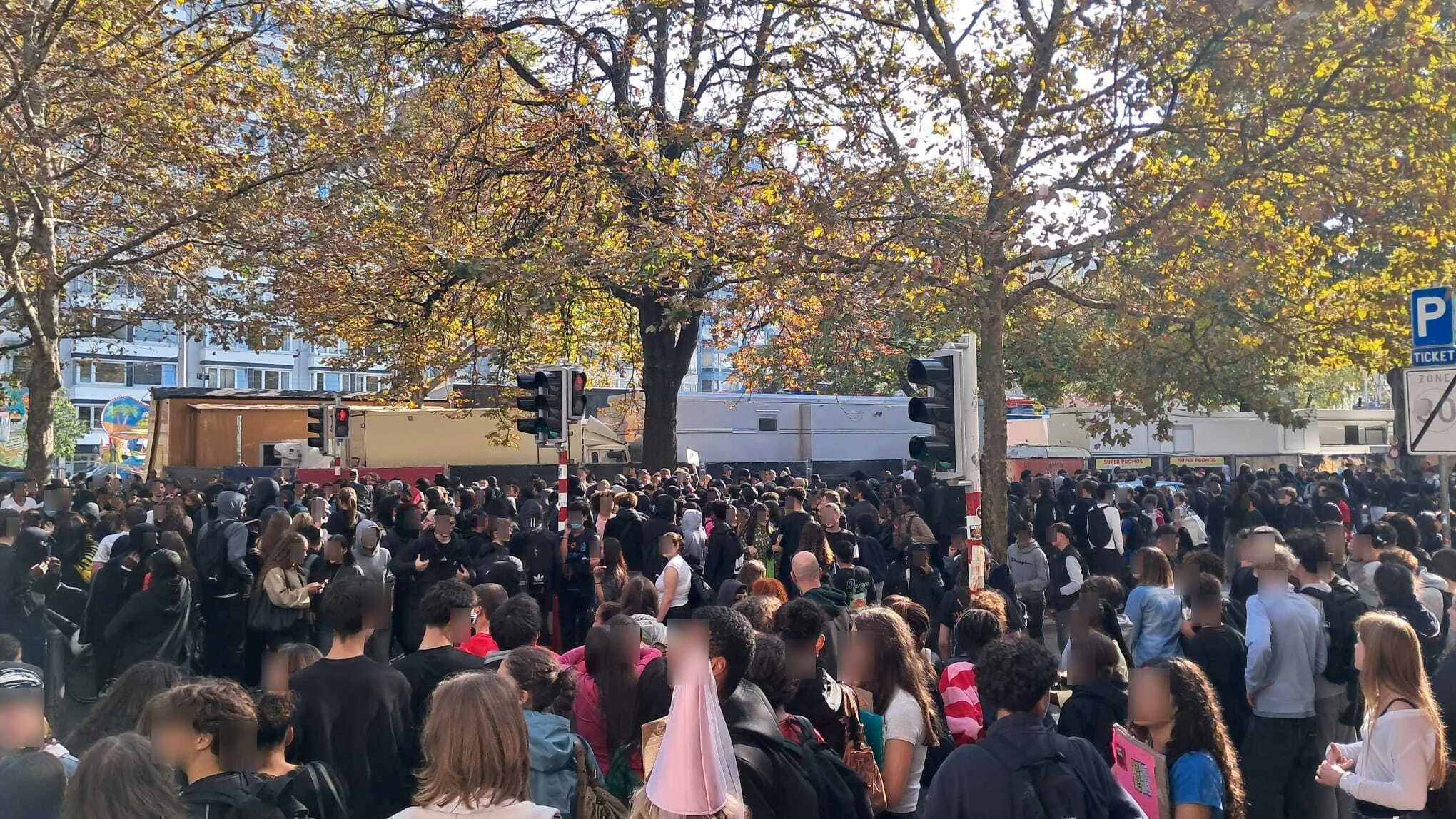
Heeding the call of the movement in France, the date on everybody’s mind is 17 October, in which there are plans for a major mobilisation of students. But the major unions have completely ignored these calls, and are instead calling for a national mobilisation over a month away, on 17 November. Such a delay will serve only to dissipate the energy of the masses, and leave the students isolated.
In order to win, high school and higher education students should organise in local committees, delegating revocable representatives to citywide committees, then to a regional and a national committee, demanding change! They have already been spontaneously organising in assemblies, but they are standing alone. The movement needs to spread to other public sectors, then to all sectors and to all workers.
The struggle is not over yet. The worsening conditions in Belgium are affecting everyone. The economy is stagnating and unemployment is through the roof. The federal government is preparing a new package of brutal austerity measures, which will be announced in the coming days.
Movements like these will therefore become increasingly common. And, as events in France, Spain, Albania, and elsewhere have demonstrated, these conditions exist across Europe and beyond, and can spread like wildfire. The masses will rise sooner or later and bring the rotten capitalist system to its demise.