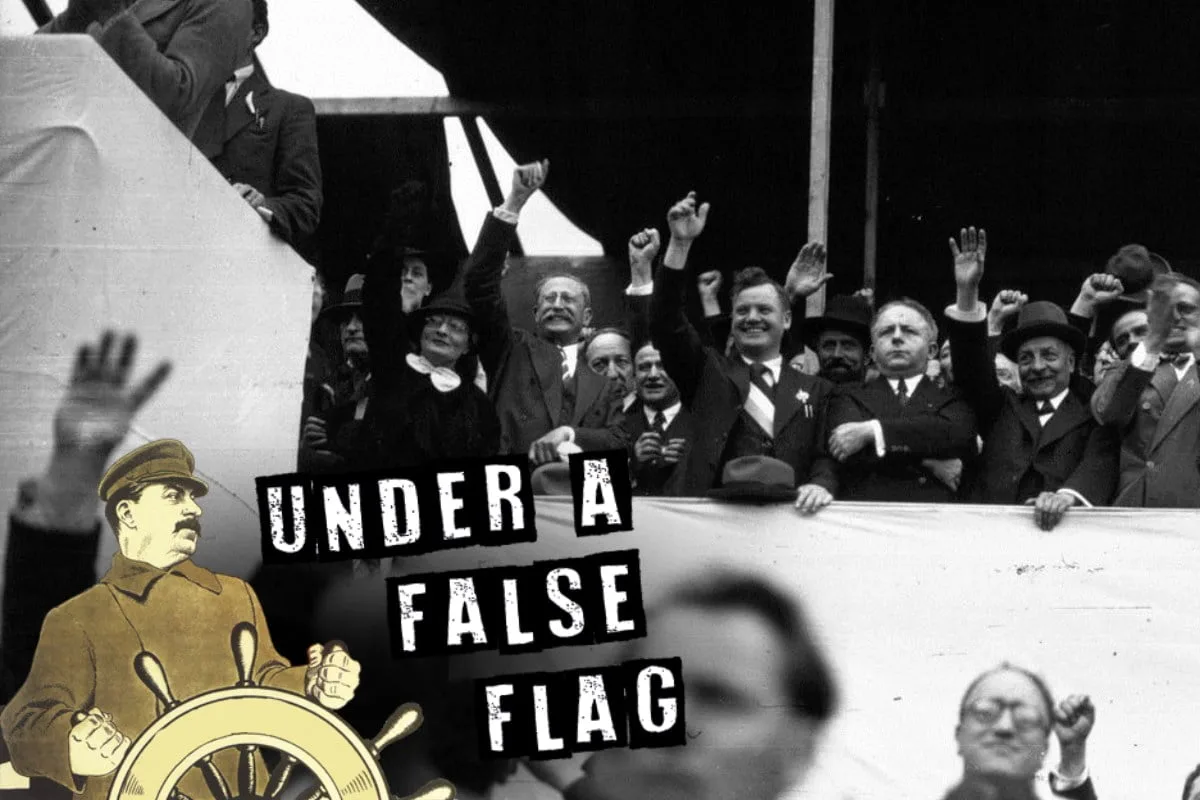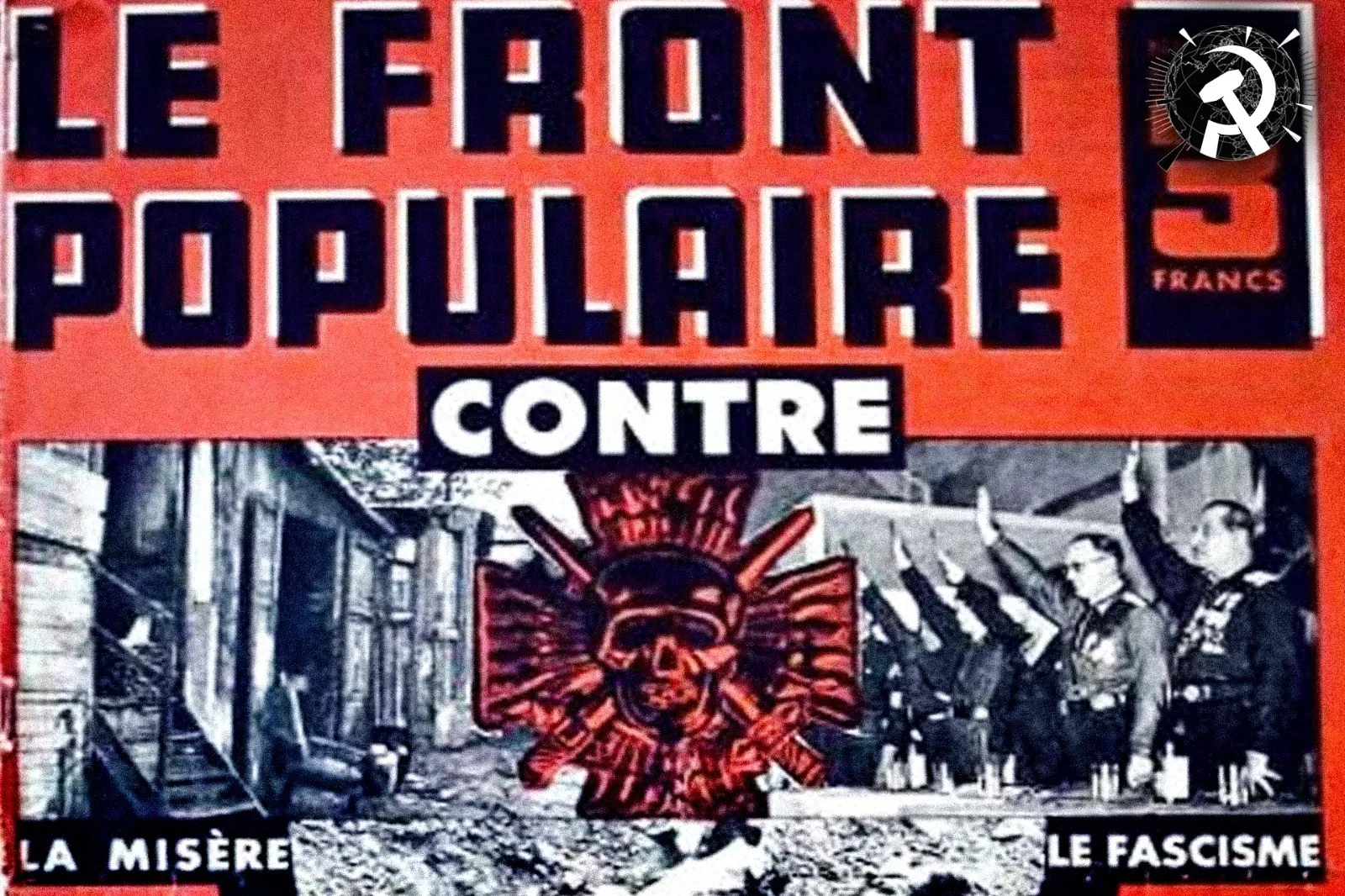
In May/June 1936, following the election of the Popular Front government, France was engulfed in what was at the time the largest general strike in its history. This inspiring movement won major victories for the working class, such as the 40-hour working week. But just a few years later, many of these were rolled back, and the French working class was atomised under Nazi occupation.
What lessons can communists learn from these events? How did this movement, which could have developed into a full-blown revolution, ultimately face defeat?
This article, written by Jérôme Métellus, a leading comrade of the Organisation Communiste Révolutionnaire, tackles these questions. If you would like to learn more about this tumultuous period, then join us at the World School of Communism – a unique event hosted by the Revolutionary Communist International.
There, leading communists from around the world will lead discussions on more than 20 topics, from philosophy to economics to history, including the lessons of France 1936.
[Originally published in French at marxiste.org]
90 years ago, on 3 May 1936, the Popular Front – a coalition comprising the French Communist Party (PCF), the French Section of the Workers’ International (SFIO, now the Socialist Party), and the Radical Party – won the legislative elections. Eight days later, on 11 May, aviation workers at the Breguet factories in Le Havre launched a wave of strikes, and occupied factories, which continued for several weeks and brought the country to a standstill.
As soon as it took office, the new government – led by Léon Blum (SFIO) – passed legislation introducing, among other things, the 40-hour working week and two weeks’ paid holiday. In the collective memory of the labour movement, the Popular Front is associated with this magnificent mobilisation of workers and with these social reforms.
These reforms, by limiting working hours and therefore freeing the workers somewhat from the factory or the office, raised them slightly above the status of being mere slaves to big business. It is therefore fitting that today we continue to celebrate the boldness and energy of these workers: they wrote one of the finest chapters in the history of our class.
However, the chapters that followed were dark. Two and a half years after coming to power, the Popular Front gave way to a right-wing coalition. Most of the social gains of spring 1936 were reversed. A year later, the working class was suffocating under Pétain’s regime and the Nazi occupation.
Why were the hopes of the Popular Front so abruptly dashed? Why did the revolutionary momentum of spring 1936 not lead to a new society, free from poverty and exploitation? What was missing? It is important to answer these questions, for the history of the Popular Front and its collapse provides valuable lessons for all those who, today, are fighting for a fairer world.
The fascist threat
Having barely emerged from the First World War, capitalism soon plunged once more into an organic crisis which, from the early 1930s onwards, carried the threat of a new global military conflagration.
The economic slump was undermining the material foundations of reformism and parliamentary democracy. Class contradictions were reaching new heights. It was a time of revolutions and counter-revolutions, as demonstrated both by the offensive of the Spanish labour movement, and by the crushing of German workers under the Nazi boot. In France, too, the impasse of capitalism presented the labour movement with the following immediate choice: seizure of power by the working class, or a reactionary dictatorship.
How did the leaders of the major organisations of the French labour movement approach this situation? Those in the SFIO turned a blind eye to the gravity of the crisis and its implications. They acknowledged in words the need to overthrow capitalism, but their entire policy was based on the prospect of a gradual and peaceful transformation of the social system, facilitated by a left-wing parliamentary majority.
In Germany, this same policy of the ‘socialist’ leaders had clearly failed. But Léon Blum, the leader of the SFIO, strove to convince the masses that ‘France is not Germany’, and that a revolutionary offensive would not be necessary in France in order to put an end to exploitation, poverty, and unemployment.
For their part, the leaders of the PCF, until 1934, pursued the policy of the so-called ‘third period’, which consisted of characterising the SFIO as a ‘social-fascist’ party. The PCF refused any form of joint action with the SFIO in the face of genuine fascist organisations, whose influence was constantly growing amongst the mass of the petty bourgeoisie.
In Germany, this very same policy of dividing the labour movement had been applied by the most powerful communist party of the Third International outside Russia, until Adolf Hitler seized power and crushed the workers’ organisations – including the ‘social-fascist’ Social Democratic Party.
This catastrophe revealed the extent of the degeneration of the Third International, the fundamental cause of which was the degeneration of the Russian Revolution itself. Isolated in a backward country, the Soviet democracy established by the October Revolution of 1917 had eventually given way to Stalinism: the dictatorship of a parasitic and privileged caste.
The Popular Front
Fundamentally, the Popular Front was an alliance of three parties: the PCF, the SFIO and the Radical Party. The PCF’s alliance with the SFIO therefore implied the abandonment of the theory of ‘social fascism’. How can we explain this 180-degree turn by the PCF leadership?

Despite their serious political errors, the leaders of the Third International – and its French section – could not ignore the lessons of the German catastrophe. After all, they had no interest in seeing fascism seize power in France. But here, the main factor was not the fears of Maurice Thorez (leader of the PCF) or Georgi Dimitrov (head of the Third International): it was the powerful pressure from the mass of workers, who instinctively yearned for the unity of the workers’ organisations.
On 6 February 1934, a fascist demonstration attempted to march on the National Assembly. Clashes with the police left 17 people dead and brought about the fall of the government. In response to this attempted coup d'état, the trade unions and left-wing parties called for a general strike on 12 February. The strike was a success. And on that day, when the processions of the PCF and the SFIO converged at the Place de la Nation, their ranks mingled in a spirit of enthusiasm. By confronting the PCF leaders with the fait accompli of unity on the streets, the workers dealt a serious blow to the theory of ‘social fascism’.
However, this unity between the PCF and SFIO was not the same as what came to be in the Popular Front, which extended as far as the Radical Party. Here, one of the main factors was the Franco-Soviet pact signed in Paris on 2 May 1935. This pact had significant consequences for the PCF’s policy, as the party was required to show deference to French imperialism. The official communiqué from the Soviet Ministry of Foreign Affairs stated: “Stalin fully understands and approves of France’s national defence policy aimed at maintaining its armed forces at a level that ensures security”.
This position was in complete contradiction with the principles of revolutionary internationalism. In Lenin’s day, it would have been inconceivable that the signing of an agreement with an imperialist government – such as the one imposed by Germany on Bolshevik Russia in 1918 at Brest-Litovsk – would entail communists supporting the policies of the imperialist power in question.
Yet, in 1935, the leadership of the Third International announced to the workers of France that the time for overthrowing the French capitalist class was over; now it was time to collaborate with that same capitalist class. The alliance of the left-wing parties with the Radical Party – which formed the noose around the Popular Front’s neck – was the instrument of this policy of class collaboration.
The Radical Party
The leaders of the SFIO and the PCF justified their entry into a front with the Radical Party by the need to ‘ally themselves with the middle classes’ (small farmers, small shopkeepers, etc.), who constituted the Radicals’ traditional electorate. But in reality, the Radical Party was not the party of the middle classes: it represented the interests of the capitalist class, which used this party to politically subjugate the middle classes.
As Trotsky wrote:
“The Radical party expresses the interests of the big bourgeoisie, and not of the petty. By its very essence it represents the political machinery of the exploitation of the petty bourgeoisie by imperialism. The alliance with the Radical party is, consequently, an alliance not with the petty bourgeoisie, but with their exploiters. To realize a genuine alliance between the workers and the peasants is not possible except by teaching the petty bourgeoisie how to emancipate themselves from the Radical party, how to cast off once and for all its yoke from their necks. Meanwhile the Popular Front acts in a directly opposite manner; entering into this “front,” Socialists and Communists take upon themselves the responsibility for the Radical party and thus help it in this way to exploit and to betray the masses.”
This alliance between workers’ parties and a bourgeois party could only result in a programme aligned with the interests of capitalism. The Radicals systematically opposed any measure likely to upset the ‘200 bourgeois families’ who pulled the strings of the national economy.
The Radical Daladier wrote: “The Popular Front’s programme contains no clause that might disrupt the legitimate interests of any citizen, cause concern for savers, or undermine any healthy force within the French workforce”. For example, this programme did not provide for any nationalisations other than that of the military industry – which, incidentally, was in the interests of the bourgeoisie itself, given the prospect of another world war.
The left’s alliance with the Radical Party was at odds with the entire dynamic of the situation. The crisis of capitalism and the intensification of class contradictions was accompanied by a growing polarisation of society – towards the left and towards the right. The working class was shifting rapidly to the left. As for the middle classes, they were abandoning the Radical Party in favour of either the left, the right, or the far right.
This was clearly demonstrated by the first round of the general election in April 1936. Whilst the SFIO maintained its 1932 result (despite the split of the right-wing ‘neo-socialist’ faction), the PCF’s vote rose from 780,000 to nearly 1.5 million, whilst the Radicals lost more than 500,000 votes. Thus, despite the support that the PCF and SFIO leaders gave to the Radicals, the workers and a significant part of the middle classes rejected the Radicals and doubled the votes in favour of the party that claimed to be the heir of the October Revolution.
The second round gave the Popular Front parties an absolute majority. The PCF’s seats rose from 10 to 72, the SFIO’s from 97 to 147, and the Radicals’ fell from 159 to 116. As the largest parliamentary group within the Popular Front, the SFIO appointed its leader, Léon Blum, as head of government. But instead of forcing the immediate resignation of the incumbent government, Léon Blum decided to respect the ‘constitutional deadline’ of one month. This was a way of telling the workers: ‘we will respect the laws of the bourgeois Republic’.
The masses responded with a revolutionary mobilisation on an unprecedented scale.
The revolutionary offensive
There had been no shortage of warning signs of the wave of strikes in May-June 1936. For example, in August 1935, workers at the Brest and Toulon naval shipyards rose up, red flags at the forefront, against cuts to their wages. Similar events took place in Limoges in September of the same year.
On 11 May 1936, a strike broke out at the Breguet factory in Le Havre: 600 workers occupied the building. On 13 May, it was the workers at Latécoère in Toulouse who occupied their factories. On 14 May, it was the turn of the Bloch factories in Courbevoie. In the days that followed, strikes involving occupations multiplied in the metalworking sector of the Paris region.
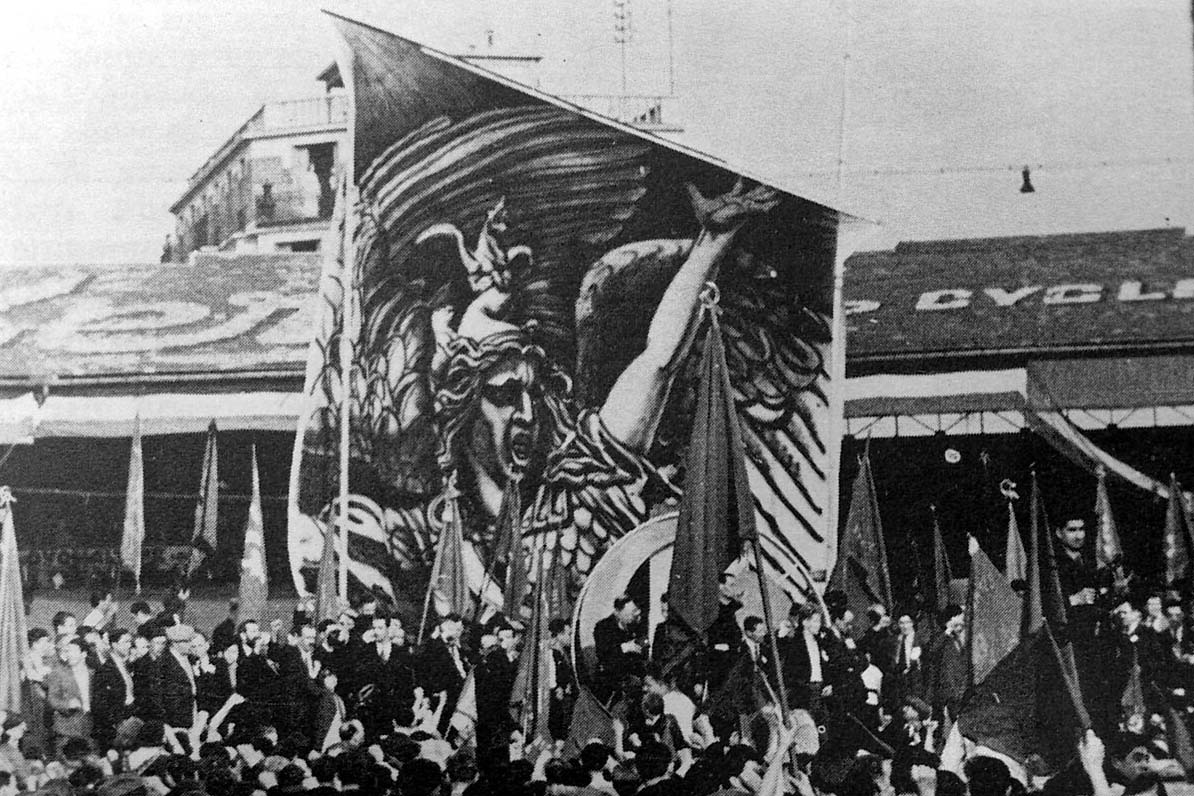
On 24 May, the traditional commemoration of the Communards of 1871 at Père-Lachaise Cemetery drew a crowd of 600,000 people. The Radicals were conspicuously absent. From 2 June onwards, the strike movement spread beyond the metalworking industry and swept across the whole country. In the space of 15 days, over 2.5 million workers were gripped by revolutionary fervour.
On 5 June, Leon Trotsky wrote:
“The entire past experience of the working class, the history of its exploitation, miseries, struggles and defeats, comes to life under the impact of events and rises up in the consciousness of every proletarian, even the most backward, and drives him into the common ranks. The entire class has been set in motion. This colossal mass cannot be stopped by words. The struggle must be consummated either in the greatest of victories or the most ghastly of defeats.”
Insofar as it encompasses not only the vanguard of the working class but also its generally passive and unorganised layers, a strike of this kind constitutes the classic spark of a revolution.
The significance of the occupations did not escape the capitalists: this was a direct assault on sacrosanct private property – which, in the eyes of millions of wage earners, had precisely ceased to be sacrosanct. The workers were signalling that they wanted to be the masters where they had hitherto been nothing but slaves. The question was posed to everyone: ‘who should control the economy: the capitalists or the workers?’
In such a context, a revolutionary party could have pushed for the creation of workers’ councils linked together from the local to the national level. This would have allowed the working class to seize power, destroy the bourgeois state, establish a workers’ state, and initiate the collectivisation of the major means of production.
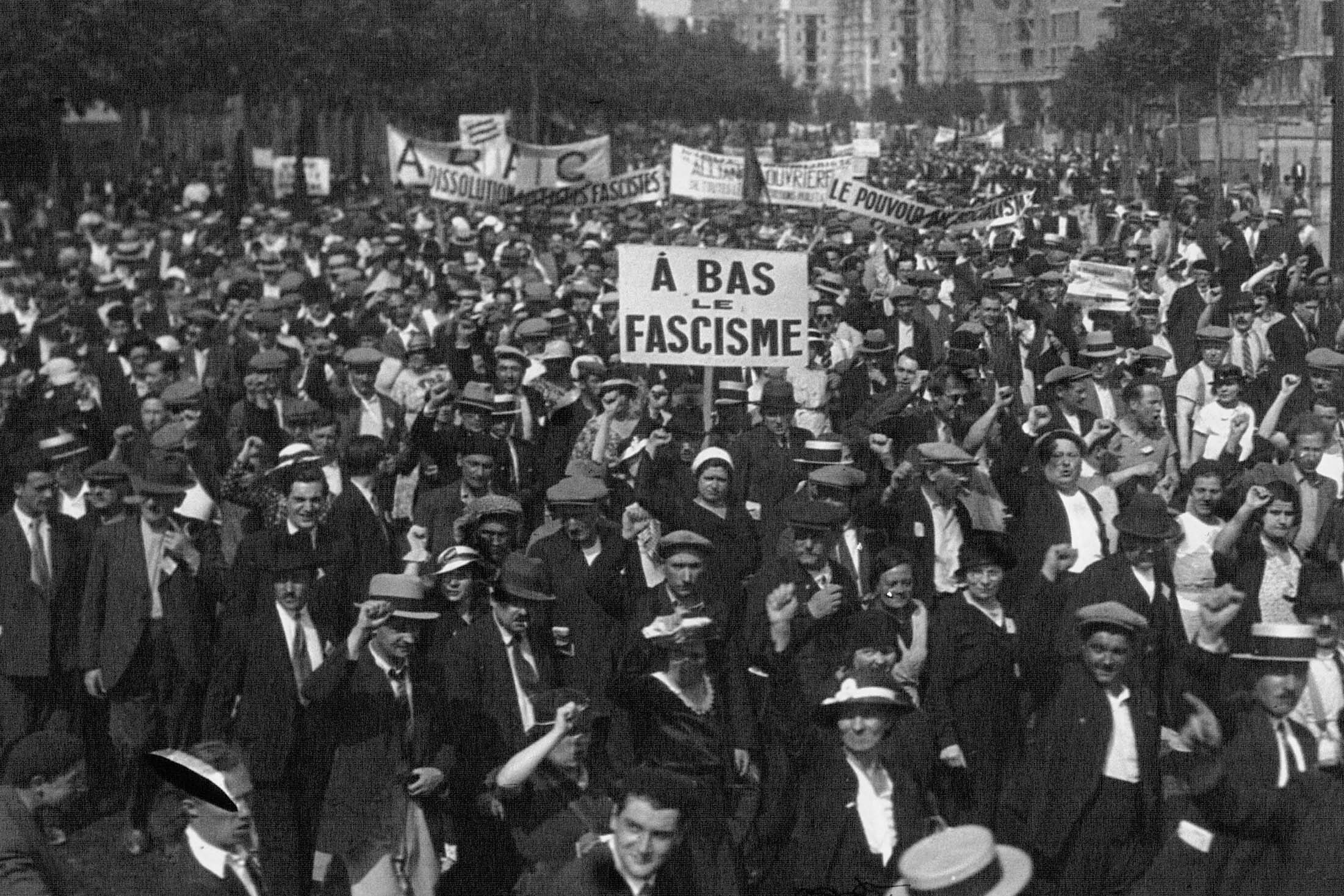
What did the PCF, SFIO, and CGT (General Confederation of Labour) do? Whilst their rank-and-file members – in particular those of the PCF and the CGT – were heavily involved in the movement, their leaders, like the capitalists, were seized by panic. On 3 June, even before taking office as Minister of the Interior, the ‘socialist’ MP Roger Salengro declared in the National Assembly:
“Let those whose task it is to lead the workers’ organisations do their duty. Let them hasten to put an end to this unjustified agitation. For my part, my choice is clear: order or anarchy. I shall uphold order against anarchy.”
Leon Trotsky commented:
“Order is the name that this person gives to capitalist anarchy. He gives the name anarchy to the struggle for a socialist order.”
The leaders of the PCF – who had pledged to support the Blum government “without reservation and without wavering” – used all of their authority to restore the ‘order’ demanded by Salengro and the Radical leaders. Together with Léon Jouhaux, the leader of the reunified CGT, Maurice Thorez declared that the aims of this movement were “purely economic”, and that any other interpretation could only be the work of provocateurs or irresponsible individuals.
After representatives of big business had signed the Matignon Agreement on the night of 7-8 June – which included, amongst other things, a 40-hour working week, two weeks’ paid holiday, and a 7-15 percent pay rise – Thorez declared: “One must know when to end a strike as soon as its demands have been met”.
At the same time, new strikes involving sit-ins were breaking out, particularly in Parisian department stores. But in the month of June, the leaderships of the CGT, SFIO, and PCF managed to channel the movement back into the realm of ‘economic demands’. Subsequently, the strike gradually petered out. In some cases, the Popular Front government mobilised the police to put an end to this “unjustified agitation”, to use Salengro’s phrase.
The counter-revolution rears its head
It is often said that the strikes of May-June 1936 were sparked by the ‘hopes’ that workers had placed in the Popular Front in the wake of its electoral victory. Whilst there is truth to this, it would be more accurate to say that the strikes were provoked by the masses’ lack of confidence in the Popular Front’s ability to break the resistance of big business. The workers were particularly wary of the Radicals, and quite rightly so. In their own way, the strikers wanted to ‘help’ the Popular Front take decisive action against the capitalists.
The leaders of the Popular Front – including those of the PCF – vehemently refused this aid. But by securing concessions from the employers that went far beyond the Popular Front’s programme, the workers proved, once again, that genuine reforms are always byproducts of revolutionary movements.
The ruling class only made concessions because it feared losing everything. However, once the revolutionary wave had passed, it still retained control of the economy, and used this to take back with one hand what it had been forced to give up with the other.
The parliamentary machinery – with its reactionary Senate, its bureaucratic administration, etc. – enabled it to sabotage government action. Furthermore, capital flight threatened the Blum government with bankruptcy. Yielding to pressure, he devalued the national currency (the franc), thereby exacerbating inflation, which rapidly eroded the wage increases granted in June 1936.
Failing to tackle the economic power of the ruling class, Léon Blum was condemned to impotence and resigned in June 1937. Subsequent governments drifted ever further to the right. Strikes were harshly suppressed, particularly those triggered in November and December 1938 by the Radical Daladier government’s challenge to the 40-hour week.
Demoralised and paralysed by its own leaders, the labour movement was led down the path of war, and was ultimately shattered by the Pétain regime in 1940. ‘Socialist revolution or reactionary dictatorship’: the perspective put forward by Trotsky as early as 1934 took shape amidst the ruins of one of the greatest revolutionary movements France had ever known. It was not until the uprising against the German occupation in August 1944 that the working class recovered from this severe defeat and regained confidence in its own strength.