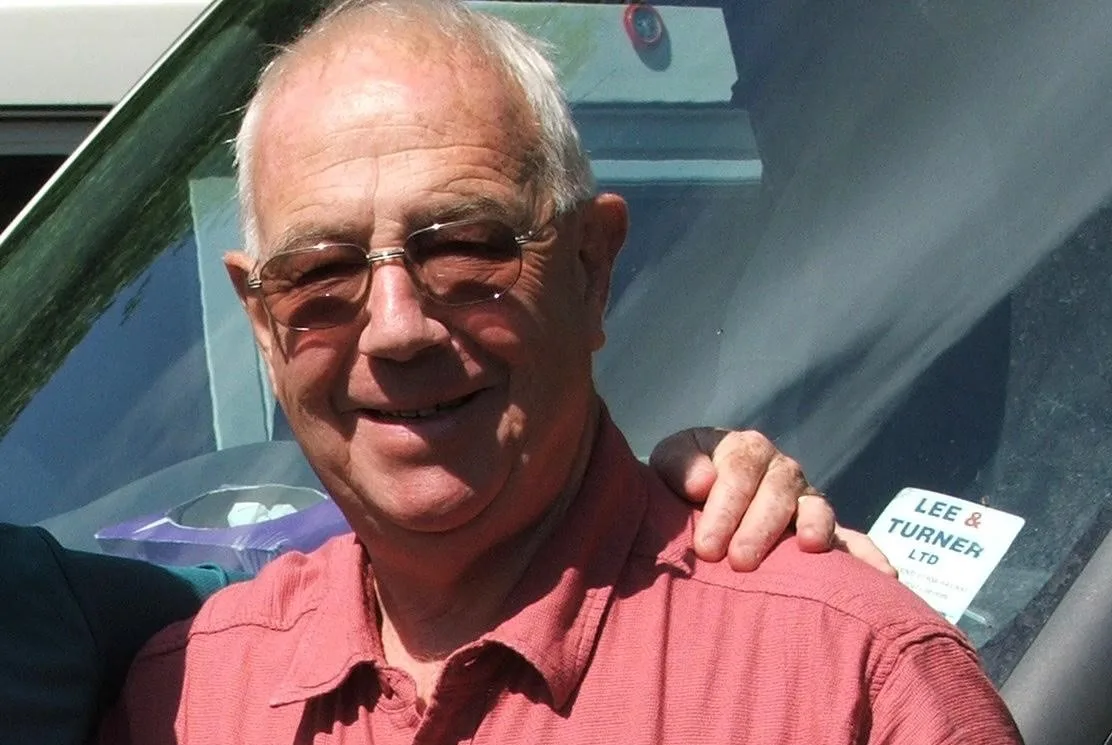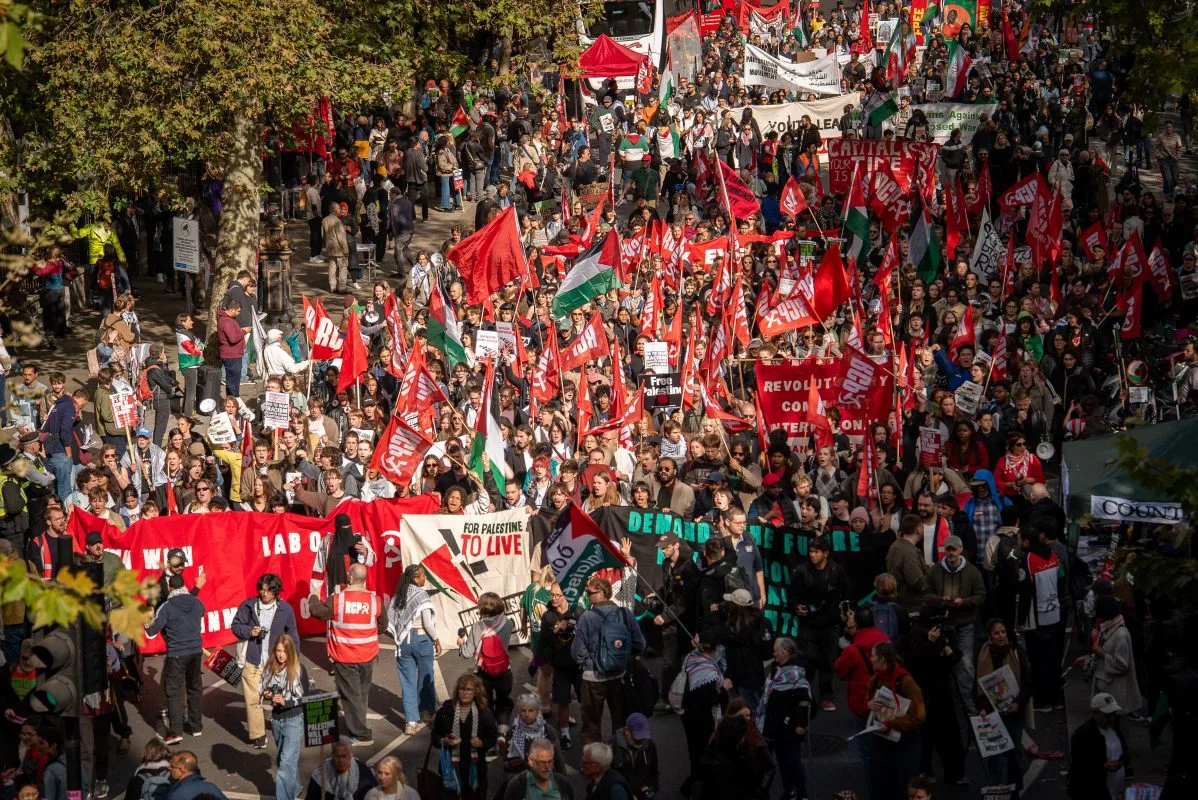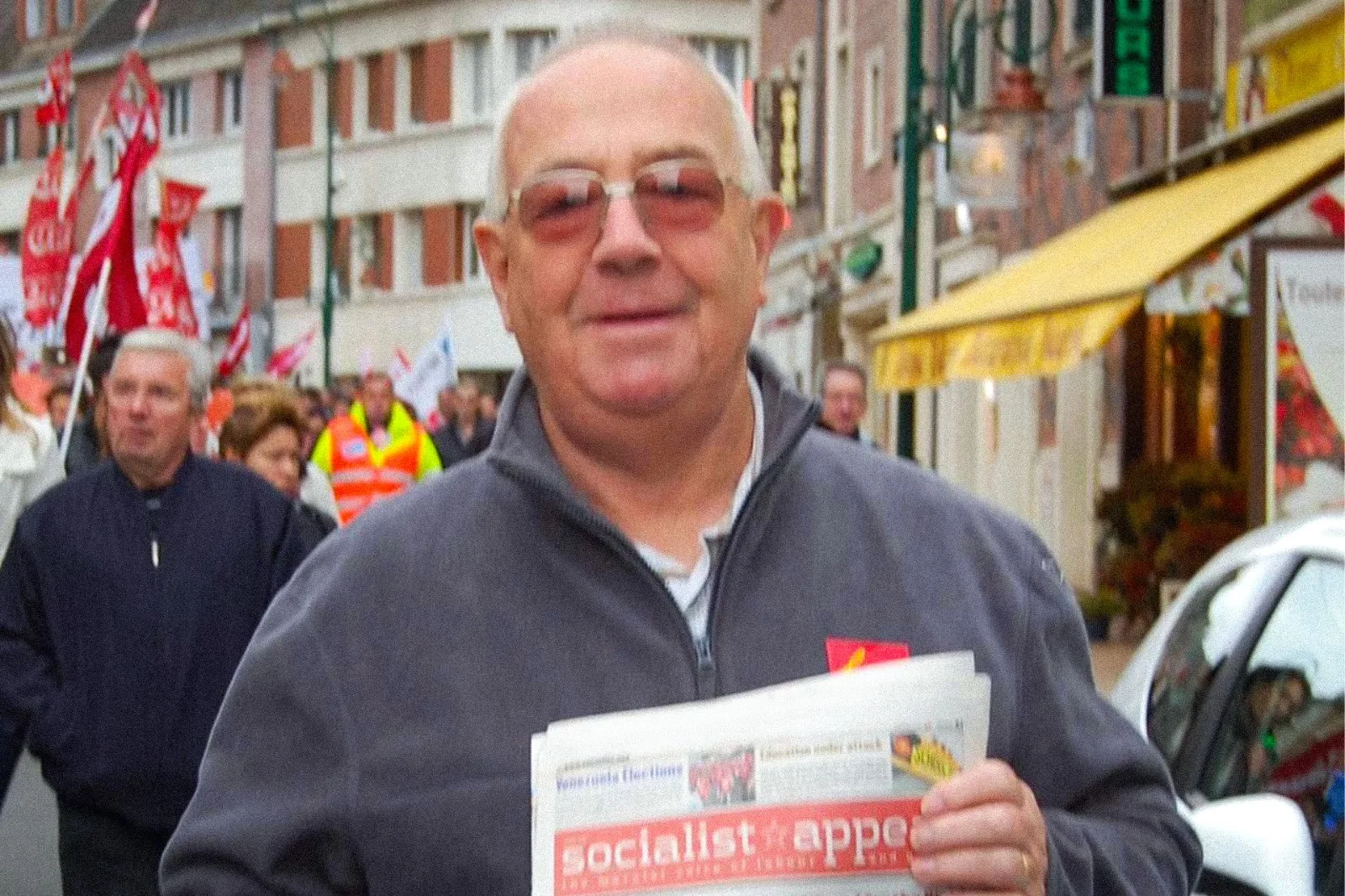
As we reported yesterday, the passing of Jim Brookshaw was a sad blow to all those who knew him. We publish below Jim’s last interview, originally conducted in 2024, which offers both those who knew him and those who did not, a look into Jim’s political development replete with his characteristic humour and insight.
This interview was originally produced in advance of the Founding Congress of the Revolutionary Communist Party in Britain, and the launch of The Communist. It traces Jim’s political trajectory from the Labour Party, through his time as National Chair of the Young Communist League, culminating in him joining Ted Grant and Alan Woods in what would become the Revolutionary Communist International.
How do you feel about the founding of the Revolutionary Communist Party?
Jim: I’ve sent a message to the centre letting them know that I’ll become a member of the RCP. I remember saying to Ted Grant: “Why have you got to call yourselves the Revolutionary Communist Party and not just the Communist Party?” And he said there was a big difference! We have to differentiate ourselves and explain it to people, including the youth in the Young Communist League (YCL) today.
I remember at the last Durham Miners’ Gala they had a picture, a full-sized picture of Stalin in uniform. This is their advert to the youth for their organisation! If you’re in a situation where everyone has been let down by the Communist Party and the Labour Party, we need to become something of our own.
Even in my days there were still a lot of people in the YCL. We wouldn’t have called ourselves Stalinists, but we were very proud of our past, our record. Churchill said the Red Army tore the guts out of the Nazis. If it hadn’t been for the Red Army, we wouldn’t be alive. We wouldn’t be here. So that was one good reason to join the YCL, wasn’t it?
Anthony Beevor was given great access to the archives at the end of the war alongside another writer. There were terrible horrors at the end of the Second World War in Poland or Germany. Slaughter, rape and murder. Just hellish.
When was the first time you became politically active?
Jim: I was an apprentice plumber, and the person I worked for was a horrible Tory shit. My family weren’t. My family were all Labour people, particularly my grandfather, who lived with us, who was an ex-Durham miner.
Macmillan had put forward the slogan “we’ve never had it so good”. And my mum would say, “he’s right, we’re better off than we were 10 years ago, but that’s because of the Labour government we had, not because of them”. We had a Labour-built house, school, hospital. All those things did influence people. So I had a lot of arguments with this bloke.
I used to go to the village hall in Horsham, Sussex, to listen to this Tory who had been in the war, which gave him some kudos. He went into the Labour Party and its claims – for example that pensioners live on 10 shillings a week. And he said that this was a lie from the Labour Party. But I had a feeling, this is what my grandfather lived off.
So I got to my feet and waved my arm about, and he said, “Yes, you?” And I said, “If you’re telling the truth, how come my grandfather only gets ten shillings a week pension?” And he said “how old are you boy? Come back to me when you’re old enough to vote and ask me again”. And I thought, “you nasty bastard!”
And when it came to the end, and they were coming down off the platform, I made my way up to sort of harass him. And there we go. I was 18 years old, and I didn’t know much about politics or anything, really, only what I’d been taught. And I went up to confront him. And then he had these bodyguards, who were coming at me.
And instantly, I had bodyguards. They were all blokes who’d had nothing to say, but they were workers from the brickworks, and where my dad worked, from local engineering. They were there, and they knew which side they were on, and they chased them away. And then one of them came up to me and said, “Why don’t you come and join the Labour Party?” And I said, “Well, yeah, all right then. I will.” And I went along to a Labour Party meeting.
Today I’m no longer in the Labour Party. I always said I wouldn’t actually leave, I’d put up a bit of a fight. But there was some nasty bollocks from Starmer about something, and I just said, I don’t want to be associated with that man. And why should I? So I’m not.
We were on the Amalgamated Engineering Union (AEU) branch [which became Unite]. And we represented that union in the Labour Party. So I used to think it was worthwhile having that link, but they didn’t deserve that.
In fact, when we were all chucked out of the Labour Party, I said at the meeting, “Hazel [Jim’s wife] and I are supposed to be representing this branch on the constituency Labour Party, but we’re not members any more. We’re not allowed to be members.” And the chairman said, “We decide who represents us on the Labour Party, not some fucking bureaucrat.” So we officially stayed. But eventually we decided to leave.
So I joined the Labour Party in 1959 for the General Election. And they said [the local Tory MP’s] doing a meeting in Slinfold, which is another little village down the road. And we went down and we heckled him, and we ruined the meeting for him. That didn’t get us one extra vote in that constituency. But that didn’t matter.
So then I went along to Labour Party meetings, and after a little while someone said the Labour Party has set up a new Young Socialists (YS). It existed during the war but was shut down for being too left-wing, in danger of being taken over by the Communist Party. So four of us set up a branch of the Young Socialists, and I went to the Labour Party Conference.
There was a man who was assistant general secretary of the AEU, he was a bit to the left, he would have articles in the Daily Worker, things of that kind. He was chosen by the Horsham and Crawley Labour Party to be the candidate, and the Labour Party said no. They barred him from standing.
So there were lots of protests. One was from our Labour Party Young Socialists, which was only five of us, I think. We put up a resolution, and I was sent as the delegate.
I went to some hall in London, I can’t remember. But it was a huge bloody hall, very noisy, very loud. And there were all sorts of people around, giving out pamphlets, selling papers. I’d never seen anything like it in my life.
And people were coming up to me with a little paper and saying, “Keep Left, Keep Left.” And I was saying, “Yeah, that’s right, keep left. I agree with that.” But these people who were selling Keep Left were saying, “We’ll support you in your resolution. All of our branches will support you.” I said, “What are your branches?”, “Well, we’ve got loads of branches." And it turns out Keep Left was the paper of the Healyites. I got into all kinds of discussions and arguments with them.
So I had to put this resolution forward, and the platform said the resolution’s banned. “You can’t have that.” So I said, “How the fuck am I not?” I was quite cross, quite stroppy. Anyway, there was so much bloody mayhem, people attacking the platform. You can’t imagine it now. A bloody Beargarden. And anyway, it did come to the point that my resolution could be put. So I went up and I put the resolution.
There’s a tiny picture of me putting it forward which Rob Sewell discovered and reprinted in Socialist Appeal!
So that was my introduction to organised politics. And I did think a lot of these people were quite barmy. I couldn’t see how they could get anywhere.
So we come to the General Election and I look around, and the workers I knew in Horsham and Crawley were all Communist Party members, and so I joined the Communist Party. They were salt of the earth, they were on the side of the workers, they fought for them, and they got none of this bullshit.
They had education classes, and I attended the first one on the class struggle and the origins of the family. So I had an education, albeit one from the Communist Party. I had nothing to dislike the Communist Party for, they weren’t insane like the rest. The only Trotskyists I knew were the Healyites, so that was in my head. I didn’t want to be on the side of the Trotskyists if they were like this.
What did the Healyites do that turned you off?
Jim: Well, they started fisticuffs, fights in the hall. And they would shout people down and insult people, and they thought that was a way of doing things, but it wasn’t.
So anyway, once I joined the Labour Party Young Socialists, we set up a branch in Horsham. We were guided by a worker called Dave. At our first meeting he gave us talks about the class struggle, and he thought about theory. I don’t know if he was right about it, but he was thinking about it, he was interested.
So after these meetings – these were still Labour Party Young Socialists meetings – I said to him, “I’m all agreed with what you say.” And he said “You should join and be a member of the Communist Party, secretly.” Although he was the treasurer of the Labour Party branch.
So were the Communist Party consciously doing entryist work in the Labour Party at that time?
Jim: I think so. Dave was definitely. Certainly our education classes were for people across various parties. But he had a family crisis and ended up going to prison unfortunately. I just thought there’s no point going on like this, so I properly joined the Communist Party.
I must have been 19 going 20. But I didn’t know any other communists in Sussex, only these one or two lads from the local factory. And they were real salt of the earth, real class fighters. I had real sympathy for them. They were good to me, they looked after me. I got a telegram, asking me to phone the Communist Party centre, so I phoned them up.
So when you joined the Communist Party, there weren’t any branches around you?
Jim: It was the Crawley Town branch, and there was the factory branch that I belonged to with members from a few factories. 60 or 70 workers. Quite a strong branch. I will tell you eventually about how they threw it all away.
A General Election came and the Communist Party put forward a candidate as the left Labour candidate was refused. I went to the house where they were running their committee rooms and offered my services. I was sent down the road with some leaflets.
The third house I get to, they start raving at me. “You? A young person like you is in the bloody Communist Party?” And I’m expecting all kinds of right-wing shit to come from him. But he was a Healyite! He had been a Communist Party member but had fallen out with them. And he just raved and ranted at me. I really had to feel that I’d betrayed Spain, I’d done this, I’d done that. It was just horrendous.
Eventually I had enough and went back to the Communist Party office and told them about the big row I had. A voice from the other side of the room yelled “what idiot sent this comrade to Idiotface’s house!”, which amused me.
So I was quite active in the Communist Party at the time. I went to a few CND events, some anti-apartheid meetings, as I had met a few people from South Africa. That’s what I used to do, go out leafleting and that kind of thing.
Then I got a telephone call from King Street, which was the head office of the Communist Party. A very friendly person was speaking, praising me for what I’d been doing in the area. “We’ve got some very, very good reports. But this is the question we want to ask you: how old are you?” And I said 19. “We want you to join the Young Communist League. You should be part of our youth organisation.”
So I said, “Well, I don’t mind, but you haven’t got one here.” “But we’ve got one in Brighton, you know, and you could do a lot of good work there.” And so on. So I got in touch with the Brighton people. Someone organised a weekend ramble or something, and we all met up in Steyning and went for walks in the countryside, talking about politics. I quite enjoyed the company of young comrades. That’s where I met my first wife, who I was with in the YCL.
I met Alan Woods in Brighton, and had no idea who he was. Turns out I had heard his name mentioned by young communists at the university. He was selling a paper. It was Ted’s paper. I saw him standing there in the town centre in Brighton, near the seafront.
So we get chatting to each other, in a friendly sort of way. And I asked, “Why are you wasting your time with that bloody organisation, the tinpot organisation, when you could come and join us? We’ve got lots of members.” And he said [imitating Alan’s accent]: “It’s not all to do with how many members you’ve got, you know. It’s their politics. What are they saying about politics? What do you discuss about politics?” I said, “Well, all sorts of things.”
We had quite a good chat over some food. I couldn’t find much to disagree with. He wasn’t a raving madman, accusing me of betraying the Spanish Revolution or whatever. We had a number of students join the YCL, who came to our branch. We had a couple of local people in the branch, but to be quite honest with you, many of them were a bit of a waste of space. They were completely unwilling to even sell Challenge [the newspaper of the YCL] on the weekend. There was one guy who spent the meeting wrapped around a girl, which was a bit stupid.
Were they quite student-y, and a bit petty bourgeois as well?
Jim: No, they were quite working class. But they would rave on about Alan all the time. They hated him! But that only got the fire going in me – I didn’t want anything to do with them!
I did a lot of work travelling around the place, I built the YCL up, quite well. But we only regularly had nine or 10 people coming to meetings. Most of them were active in a sense.
Summer came around when the students had left, and I went on holiday. When I came back the so-called leaders of the branch were these people who it was a mission to even get to branch. I was told that the branch had called a special meeting. That was bloody news to me, because I was the chairman of the branch, and I’d not known about it.
“That’s good, maybe” I thought. We went along to this meeting, and it was a majority coup of the YCL branch, carried out by people we didn’t know were Trotskyists, who had joined the Trotskyists in the university. The only two exceptions were close friends of mine, who didn’t want any part of it. They took over the branch. They elected various officers.
I was angry. They didn’t want a discussion or anything. These methods were childish.
Was this the Healyites?
Jim: No, our comrades. I can’t imagine Alan suggesting that. But maybe they thought this was the only way they could do this. In a proper discussion I probably would have shouted them down, I was a bit of a thug too, in more ways than one. We were left with a handful of comrades and we did as best we could.
I was on the National Committee of the YCL, the National Chairman. So I felt I had let everybody down, that was a terrible situation. King Street [the Communist Party centre] got on the phone to me and told me to stick it out and not to trust the Trotskyists. Whether I could have been won over at the time, I don’t know. But certainly not with these methods, so I stuck to the Communist Party.
I was working in ship repair in the docks in London, and was on various AEU committees. Every week the Daily Worker had a big rally in Festival Hall in London. I was walking across the bridge and saw Ted Coxhead and someone else, and they had this pamphlet. I was kind of friendly with them… alright well I wouldn’t have been nasty to them.
I asked Ted Coxhead, “what have you got there”. He replied, “just this little booklet, you wouldn’t be interested”, but I had a look and it was this offset printed copy of Lenin and Trotsky: What They Really Stood For. So I took it home with me. I said to [Jim’s then wife] Marion “this’ll be a load of bollocks, but I better read it”. Some of it I did think was bollocks, but other bits gave me a lightbulb moment. I thought it was really right. I didn’t do anything about it for a while.
In Woolwich, where we were then living, the left had set up a thing called the Model Parliament in the town hall. Apparently they existed in various places, and people would go along there and they would elect a parliament. These youngsters I met from Militant with leaflets told me to go there with them. I asked “why would you intervene in that” they said “we take people there who are strong”. They told me the National Front (NF) had taken over, they had won the majority. So we went to fuck it up basically, I made speeches and took the piss out of them. And they didn’t like me, you know. Blokes outside kept trying to frighten me. But we didn’t think much of it.
When it came to a new election for the Model Parliament, we thought we had to fight it. We thought it was a game, not serious. But we fought hard for it and won it back! I was elected Foreign Secretary.
Was this a youth project?
Jim: No, all ages. One of the things the NF made a big deal of was support for South Africa, and a lot of their supporters in the country sympathised with South Africa, or with the Smith regime in Zimbabwe, so they were putting forward a resolution against our approach to these questions.
I said "It's a big question. This is a very serious question. And we've had to look into all the factors involved: the television in South Africa, the actors, and all the people, the black people that are involved. We've had to look at all these things to see if they all congeal together and work." I said, "But we've come to a conclusion. We have discovered the only reason you can't have colour television, or mixed television, in South Africa is because you can't mix black and white together." Black and white TV! The place was falling about, with people just laughing. And these Nazis were leaving… I was saying, “Come here, then. Come here, then. Don't go there, come here. Have some of this.” And they went away. They didn't come any more.
How big were the fascist groups at the time?
Jim: They seemed quite big. I can’t say I counted them, but they had quite a presence on demos etc., they had a candidate in the election which gave them license to spread their material… bastards.
I’ve forgotten the date… [Referring to a rally led by Oswald Mosley in Trafalgar Square in 1962] Mosley reorganised his mob and it became known they had booked Trafalgar Square for a meeting. People had tried through all sorts of legal means to prevent it from taking place. This was when I was in the Communist Party. The Daily Worker put out a call for antifascists and I went up there and it was absolutely jam-packed.
I was making my way through the crowd and I stopped by some blokes and saw they had some bloody great wooden truncheons. “Oh Christ, there’s going to be some nasties here. I think I’ll go down a bit nearer the front.” So I made my way down through to where the police cordon was.
There was one point when the fascists were throwing things at us from their barriers. Even the coppers were angry at them. Eventually the police line broke and we swarmed through.
I must have smacked two or three of them. This bastard was trying to get up to the plinth and his friend was helping him. I thought I’d go and get them but something was thrown at my head – it hit me on the head and knocked me out, apparently it was a big lump of wood.
I went down for a second, as you do when you lose consciousness. And a couple of the Communist Party comrades picked me up, looking after me. I don’t know if you’ve ever had a cut on your head, but it’s just blood everywhere. It looks horrendous, you know. And they decided they’d better take me to get some first aid. And there was pushing and shoving, and there was a copper who came in – suddenly friendly, I don’t know why – and said, “come on, son.”
I went in a van down to a hospital near Trafalgar Square. I don't know what hospital it was. But they put some stitches in my head, and put a bandage on it. And I came out of there and met a couple of young Communist Party members outside, who said “oh, we wanted to come and see you. They wouldn’t let us in. You all right?”, “Yeah, I’m all right”, I replied.
We walked back up to Trafalgar Square. And there were these two bastards wearing the ‘flash in the pan’, the Mosley badge. It was a black badge with a flash of lightning in it. And we said, “you know what the flash in the pan is, don’t you? There's nothing to it. It goes off bang, and that’s it.” I told them to get it off their coat before I beat the shit out of them. And they just went “sorry sorry!!” and took it off, which made me chuckle.
How did you get on to reading Trotsky?
Jim: After I got the book from Ted Coxhead [Lenin and Trotsky: What They Really Stood For], I met a young woman who my wife was friends with. So I said to her “have you got any books by Trotsky” and she said she had a lot, and offered me something to read. So she got me this book, and it was called The Trotsky Anthology, and it was a number of articles put together in a book by someone.
When I read that, my wife said to me, “What do you think of that?” And I said, “Depends whether he’s telling the truth.” “Who?” I said, “Trotsky. Well, I know what he says, but it seems to make good sense to me.”
Anyway, [my wife’s friend] said, “How did you get on with the book?” I said, “Not bad. Got that book by your bloke Trotsky called Revolution something?” She said, “Revolution Betrayed.” I said, “Yeah, I think it’s something like that.” I didn’t even know what to ask for properly. This is how backward I was.
I read that book from cover to cover and didn’t put it down for a whole day. I showed it to my wife and I said, “you better read this”. She asked why, and I said “‘cause I cannot support the Communist Party anymore.”
What had been going through your mind previously to cause such a break?
Jim: I mean I was quite hostile to the [Left] Opposition because of the coup in Brighton. I was very hostile because of that. So it was surprising I had even read Lenin and Trotsky, but it just rang true to me. I thought, “They’re right”. So, anyway. Czechoslovakia of course, the invasion was a blow to the communist parties everywhere, and the YCL as well.
I was on the Executive Committee of the World Federation of Democratic Youth. I was the YCL representative on that, and I went to Prague and places like that for meetings. I had to go to a meeting around that time and the two reps of the Czech YCL came to this meeting and were barred, told they couldn’t come.
So I happened to be in the hall, and I said, “well, what’s happening here?”, and this bloke said, “you know what it is.” He said, “these bastards.” And I went, “no, I don’t.” I said, “well, you know the position of my party. We were opposed to the invasion.” “Invasion? There was no invasion.” I said, “These comrades are our comrades, and they are to come into the meeting.” Well, that got us a lot of silly threats and things like that. So I was quite disturbed by all that, you know.
Was that before or after you read Revolution Betrayed?
Jim: I think before. I think I was going through a lot of turmoil, and the book made me think, “Oh, that’s what’s happening”.
I can’t guarantee that my stories are all chronological.
The first time someone pointed Ted Grant out to me at a meeting, a communist said, “That’s a Trot, Ted Grant”. I thought, “I kind of recognise him.” He might have been at that Labour Party youth conference where, as I said, it all fell apart. He might have been there, selling some kind of paper.
Before this happened, this road to Damascus thing, I used to take the piss out of the people that left and joined the Trots.
But then I actually met him. What happened was, I had read this book and told Marion about it. And then I came home from work off an afternoon shift, and Alan Woods is sitting in my flat!
I said, “Hello, Alan, what brings you here?” “Well,” he says, [imitating Alan’s accent] “the book you’ve been reading, of course! Why did you find it so interesting?” And I had to sort of own up to him, you know!
He’s a bugger, isn’t he? He’s a really good debater and arguer. He’s very good at telling you things you already know but haven’t quite thought out. He is a very clever man, he really is. And so was Ted.
So Alan was in my flat that day, and he said, “Is it alright if I bring Ted over.” And I said, “Yeah, course you can. I owe him an apology anyway.” Lots of people owe him apologies. Water off a duck’s back to Ted.
So Ted came over as well, and after reading those books and two days of almost solid discussion and questions and answers, I was a Trotskyist. There was no question in my mind.
I said to my wife, “I’m a Trotskyist.”
And she said, “What happens to me?” I said, “Read the book!” And so she said she would.
Her father, Jim Saunders, had been a strong engineer, a fighter from the war times. And he was a Stalinist, as we would say. But he was a good man.
He was an engineering worker. Worked in a factory in Brighton. Been in the Communist Party since during the war. Never any question about whether I supported him or not, and the work he did. He even had problems with the petty bourgeois in Brighton. The Brighton Communist Party had lots of petty bourgeois. But he was a good bloke.
I said to my wife I’d talk to her dad, and she said, “Yeah, course you’ve got to talk to him. Not just drop it on him, talk to him.”
He was very understanding. He was thinking about some of the crises that had gone on in the communist movement in that period, you know, what with Czechoslovakia.
So you met Ted and Alan, what happened next?
Jim: Even Trotskyist movements have their ups and downs. Such is life. We weren’t immediately made members, but as Alan and Ted were concerned, we were.
They’d just divided the branches in London into north and south, and we were in the south. There was some concern that the south was the weakest branch, and they wanted to put me somewhere among the stronger comrades, you know. Alan more or less told me that, and I said, “Well, that’s alright, Alan. I’ll be alright, Alan.” And I did find very quickly that some of the petty bourgeois that were in the Tendency at that time weren’t the right sort of people, and they drifted away.
This must have been the late 60s? What were these people like?
[Jim pauses for thought]
Jim: Have you heard of Wilhelm Reich? He was said to be a communist in Germany, but his philosophy was all to do with sex. He was saying the Communist Party couldn’t, in its form, lead a sexual revolution. And I just think, what is this, fellas? We either will or we won’t. People of all sexes will either come with us or not.
It even came to a national congress with some resolution that had to be debated. It was just overwhelmingly rejected by the comrades.
We weren’t a very big organisation then, but we had enough people to see off a little tin-pot thing like that. But little niggly groups like that, in a local branch, it’s difficult to maintain the line, isn’t it?
It’s not easy to be a revolutionary in a non-revolutionary situation, when you’re one of a handful. It’s not easy. And it is quite easy for other people to dig away.
Did that express itself politically, in terms of ideas, or organisationally?
Jim: I mean, it’s not easy, is it? All these youngsters now that are joining the organisation. We’ve got the message, we’ve got the ideas, we’ve got the right things, but life is very difficult, isn’t it? You've got your little bit of pocket money, and your student union card, and Christ, what do you do, you know?
If I come across people who’ve got very weird ideas, I tend not to take part in the discussion, but to go on to other matters. That’s how I deal with it. If you’re here, you’re here to talk about politics, aren’t you? You’re here to talk about the revolution. That’s what I say, you know. You don’t have time to talk about what’s the best kind of haircut, especially if you haven’t got any hair.
But I’ve met some people who will be diamonds, given time, given a chance. It’s a pity we're not recruiting more young workers. But that’s always a struggle. That won’t come straight away. But when you do win them, you win them like that. There’s no doubt about that.
One of the things we see from the organisation at the moment is the turn from small study circles to increasingly being outward-facing and open. Did something similar happen to you in the Militant?
Jim: Always. That always happens. In a small group, we know what we stand for and there’s not much pain. But what’ll happen if I step out there? It’s difficult!
When you joined the Militant, I suppose it must have been only a few hundred members.
Jim: Probably 200, 300, I don’t know.
How did the feeling of it transform when Militant turned outwards?
Jim: It varied a lot, as we had places like Liverpool, Manchester, Brighton where we had workers, where we had a number of workers, and people who had a more solid sort of idea of where they were going and what they stood for.
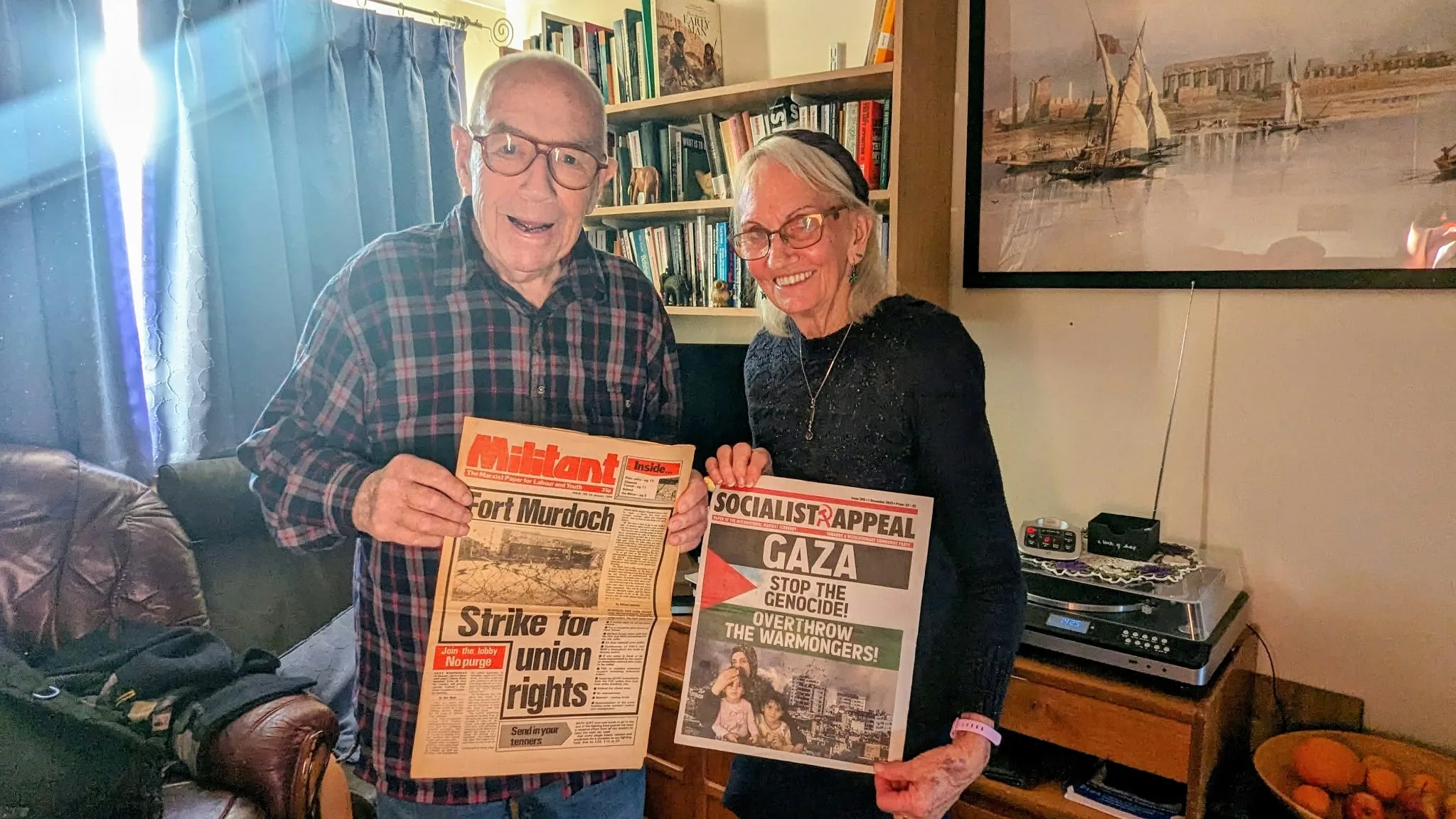
What was it like founding Socialist Appeal 30 years ago?
Hazel [Jim’s wife]: Was it that long ago!
Yes, 31 years!
Hazel: We didn’t know what was going on [during the split], really.
Jim: No. We were also up to our ears in a print strike. That was hard work, as far as our lives were concerned.
Hazel: I remember, I had a birthday party, and Eddie McPartlan came to that party. And you said, “What’s going on?”
Jim: That’s right. We were living in our little country cottage in Kings Langley, weren’t we? We’d left the world.
And I’d heard various things being said about the Tendency, and I said, “Eddie, what’s going on? What’s happening with the Tendency?”
He said a couple of things to me, and I said, “What’s Ted think of that?”
“Ted? What do you mean, Ted Grant? Ted Grant thinks he’s a descendant of Trotsky. He knows nothing.” And I said, “For Christ’s sake, Eddie,” and I just turned around and walked away from him.
And I knew then which side I was on, obviously. I didn’t need to read loads of bloody documents and have loads of arguments. Let somebody else do that. But that was horrible; I hated that. The nastiness towards Ted. They said nasty things about him, you know. He was a lovely bloke.
What do you think is the thing that keeps people going? What lights the fire?
Jim: It’s a good question. It’s a difficult one.
Hazel: It’s knowing you’re in the right place, really. And going to conferences with people like Alan Woods, and like Ted when he was there, you know. It enthused you. They always had such energy, and they were obviously old enough to have been doing this for years.
I wish I could remember names, but there were lots of people that built you up. It’s going to conferences and things like that that helps, I think. The day-to-day selling of papers and things is…
Jim: It’s hard work.
Hazel: Especially when you’re doing it in the cold and rain. The comrades in Bristol, especially Jane and Kevin are so good, they’re good at enthusing people. They’re brilliant… And Jorge.
And you think to yourself, they’ve done this, they know all the way through what they’ve done, and they still haven’t stepped back and said, “no, this is too much”. They’ve just carried on. And we haven’t stepped back really.
Jim: We might have sidestepped a little bit sometimes, but we still contribute. Never left, never stopped supporting the organisation.
How do you feel about the founding of the Revolutionary Communist Party?
Hazel: I think it's a bit scary, actually. Because people have set ideas about what a communist is. And the word is just poisonous to some people, isn’t it? Because of the way it's been used and abused in China and Russia.
Jim: But that can apply to anything, can’t it? When I joined the Communist Party, I was proud to say I’m a communist. I’m proud to say I’m a communist now! A lot of us have always positioned ourselves as being communists.
When I heard about the name change, I thought, you’ve gotta pick that up. That’s Ted’s party. You show them that Ted's party is alive and kicking, and there’s a lot of people who will come to us because of that. And Alan’s party.
What impact did Ted have on those around him? Most comrades haven’t met him today.
Jim: He was always the centre of the crowd. He never let any opportunity pass to enthuse you, encourage you. What was that he used to say? He was the oldest young socialist there!
What would you say to comrades reading the final issue of Socialist Appeal? No pressure!
Hazel: Believe in the theory!
Jim: The first political party I joined was the Labour Party, then shortly after that I joined the Communist Party. I believed in the Communist Party. I was in it for years. Now we’re gonna have a Communist Party that is a true communist party, that is true to the real ideas, you know? That’s the way I feel about it, really. At last, a communist party, a true communist party.
And we’re really going places, you know. You may snigger and think we’re not going places: well, don’t bloody well come with us, then! We don’t want you. We know what we want, and we know who we are and where we’re going.