The Alternative for Germany (AfD) is currently polling around 27 percent. Many warn that we are ‘five minutes away from 1933’. The established parties are campaigning with the slogan ‘save democracy’ to win back a dwindling electorate, which is abandoning them due to decades of cuts and attacks.
[Originally published in German at derkommunist.de]
Die Linke wants to be the ‘saviour’ of democracy, and is backing Merz. In the upcoming state election in Saxony-Anhalt, it is openly discussing the possibility of tolerating a CDU government in order to counter the AfD.
The crisis of the Weimar Republic holds relevant lessons for today. Most importantly, that it was the policy of ‘saving democracy’ that made the rise and victory of fascism possible in the first place. Even though the reactionary AfD is not a fascist party, it too is strengthened by this policy of ‘lesser evilism’.
At the time, the question was: fascism or socialism? But the reformist Social Democratic Party (SPD) leadership was stuck in the past. It looked back to the times when it was able to keep the class struggle at a tolerable level by offering crumbs to the working class, and was rewarded by the bourgeoisie for this endeavour. It attempted to collaborate with the ‘progressive’ bourgeoisie, but in the wake of the crisis from 1929 onwards, the bourgeoisie could no longer afford this class compromise.
Stuck in this previous period of class compromise, the SDP continued to attempt to collaborate with the bourgeoisie, and sought to keep the workers passive. As such, to the impoverished petty bourgeoisie, the Nazis (NSDAP) appeared as the only party with a solution.
At the same time, the ruling class was aware that the reformists were incapable of holding back the class struggle in the long term. From their perspective, a solution was needed to thwart the impending proletarian revolution: fascism.
The birth of the Weimar Republic
The bourgeois democracy of the Weimar Republic emerged as a class compromise in the wake of the 1918 November Revolution. The German workers and soldiers brought the First World War to an end, overthrew the Kaiser, and formed councils (which were, in effect, soviets). The socialist revolution was on the agenda.
The leadership of the SPD and the trade unions had built up an enormous amount of authority amongst the working class in the period leading up to this. On the basis of an upswing in the economy, they were able to fight for concessions, raising living standards. But following the revolution, the reformists used this authority to carry out a counter-revolution in a democratic form. They boasted of having fought for democracy, the eight-hour day, works councils, freedom of association, the SPD’s participation in government, and so on, yet they did so whilst having betrayed the cause of socialism.
The ruling class at that time had to accept this class compromise. For example, in 1920 during the Kapp Putsch, when a clique attempted to establish a military dictatorship, 12 million workers responded with the largest general strike in German history. After four days the coup collapsed.
The big bourgeoisie had to come to terms with the reformist leadership. They themselves were only a tiny minority who, through the reformist bureaucracy of the workers’ organisations, had to rally millions of workers and petty bourgeois behind their programme. Bourgeois democracy is the institutional expression of this class compromise.
Cracks in the economic foundations
In January 1923, France occupied the Ruhr region after the Weimar Republic defaulted on its reparations payments. Hyperinflation gripped the country, and strikes and protests intensified. The Communist Party (KPD) grew increasingly powerful, but failed to turn the situation into a successful revolution.
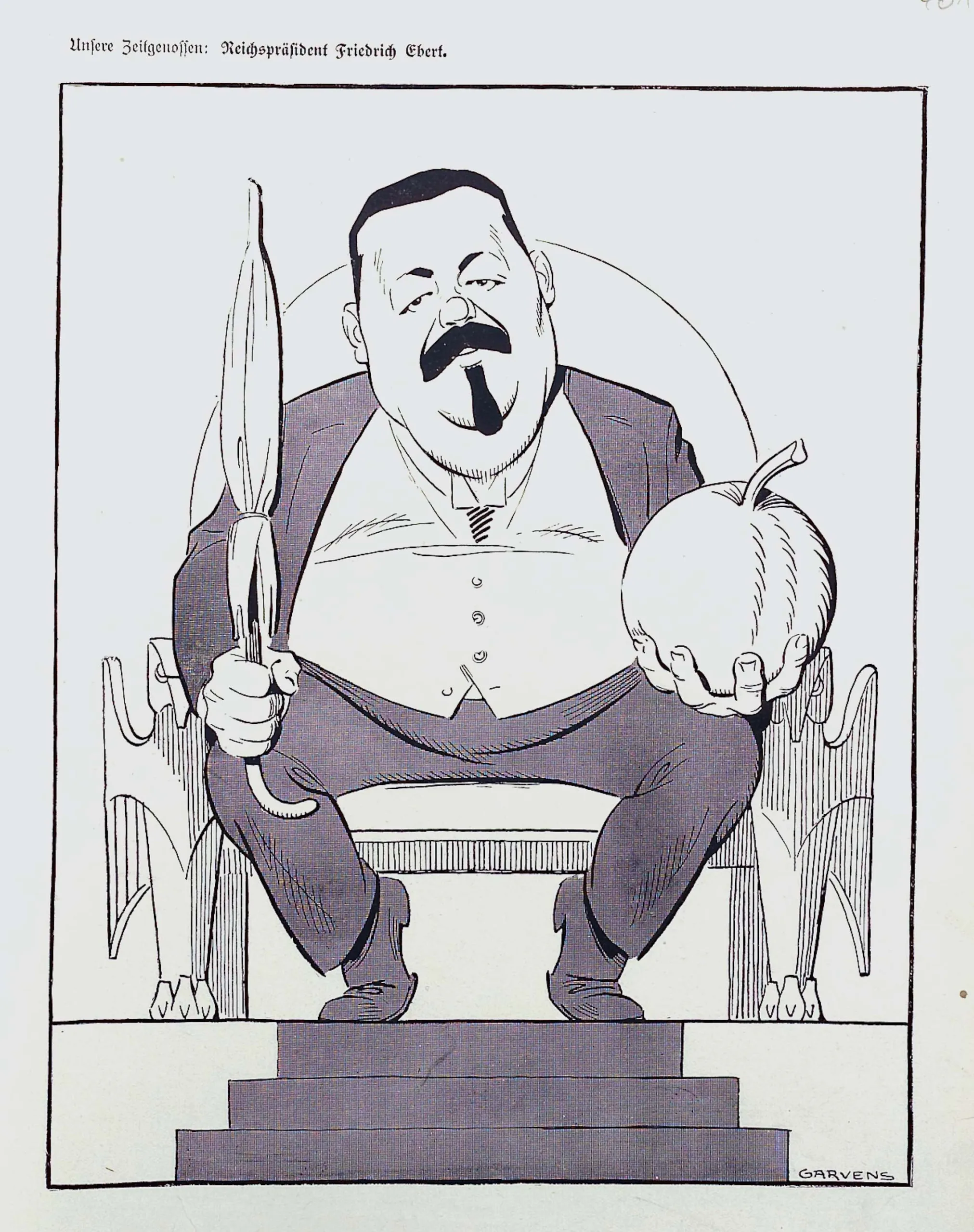
The SPD leadership stood firmly on the side of private property. President Friedrich Ebert (SPD) issued emergency decrees, banned the KPD, and supported the bourgeois government, which shifted the burden of the crisis onto the masses. This suppression of the revolutionary upsurge in 1923 laid the foundations for the economic recovery from 1924 onwards.
A currency reform was implemented to combat inflation, leading to further redistribution of wealth from the bottom to the top. The eight-hour working day was abolished, and taxes for the rich were cut. In addition, American loans were provided to help temporarily boost the economy.
The economy recovered temporarily, and by 1929, industrial production had reached pre-war levels. In the wake of this, huge monopolies emerged. Vereinigte Stahlwerke AG accounted for 50 percent of German coal and pig iron production and 40 percent of steel production. In 1929, IG Farben joined forces with other European conglomerates to form a dye cartel, which produced 80 percent of the world’s dyes.
At the same time, unemployment rose, as the economic upturn was based primarily on ‘rationalisation’ – that is, the harsher exploitation of workers. By the time that the Great Depression began, the number of unemployed in Germany had risen to almost two million. Unemployment benefits were eating an ever-larger hole in the national budget.
As early as 1927, there were the first signs of a recession in Germany. For a time, this was still offset by demand from the world market. But as capital increasingly came up against the limits of the national market, it sought new markets, which were blocked by other imperialist powers. The problem Germany had sought to resolve through the First World War arose once again.
The 1929 stock market crash in New York heralded a new chapter in world history. The global market collapsed; tariff barriers were erected everywhere and foreign loans were withdrawn. Banks fell like dominoes. German unemployment rose to over six million by 1932, and millions more were forced to accept shorter working hours and reduced pay.
Political instability grew. Those in power needed a political lackey who could implement a programme that would shift the burden of the crisis onto the masses, prepare for the next war, and prevent the working class from overthrowing capitalism.
Müller: captain of the sinking ship
In the Reichstag elections in May 1928, the SPD became the strongest party with almost 30 percent of the vote. After four years in opposition, riding the wave of the looming crisis, the SPD, under Chancellor Hermann Müller, once again entered into a coalition with the bourgeois parties.
The reformists faced a dilemma: they relied on the working class, whilst at the same time they sought to serve their capitalist masters well. This led to constant conflicts and increasingly eroded their social base.
In the 1928 election, the SPD had campaigned, amongst other things, with the slogan “Children’s food not armoured cruisers” (Kinderspeisung statt Panzerkreuzer). Once in government, however, the SPD ministers ultimately agreed to expand the German navy after their coalition partners threatened to bring down the government. Discontent within the SPD’s ranks grew, from which the KPD benefited.
At the end of 1928, the Ruhr was gripped by a major strike carried out by iron and steel workers. Collective bargaining had broken down, and the Müller government appointed a state arbiter to step in, who recommended pay rises and reduced working hours. This was unacceptable to the employers. The capitalists responded by locking out over 200,000 workers. In response, the government hastened to amend the arbiter’s ruling, to be more favourable to the employers.
During the Müller government, signs of an impending civil war began to emerge. The previously insignificant NSDAP gained support from 1928 onwards. There were increasing clashes between the growing fascist terror organisation, the Sturmabteilung (SA), and the KPD-led Red Front Fighters’ League.
Under the pretext of wishing to prevent such incidents, the Prussian SPD Minister of the Interior issued a ban on demonstrations in 1929. In defiance, the KPD held marches on May Day. First the police beat the demonstrators, then they opened fire. In what is now known as ‘Bloody May’, the police killed 33 people in this crackdown, including some SPD members.
The KPD had the potential to massively increase their support, on the back of the anti-worker policies carried out by the SPD leadership. But although the KPD grew steadily, its growth was slow. From 1929 onwards, the KPD espoused the theory of ‘social fascism’ – the idea that the Social Democrats were the real fascists. Events such as ‘Bloody May’ appeared to corroborate this, but the thesis was not a scientific analysis. It led to a practice of denouncing all Social Democrats, which prevented workers who supported the SPD from being convinced of a communist programme.
Meanwhile, the petty bourgeoisie increasingly turned to the Nazis, who achieved their first major successes in the 1929 state elections. The petty bourgeoisie had been left completely impoverished after the war. Although the economic upturn had stabilised the situation, it had not brought about a full recovery. Farmers, in particular, were falling deeper into debt; they could not compete with large-scale production, and their farms were being sold off at forced auctions.
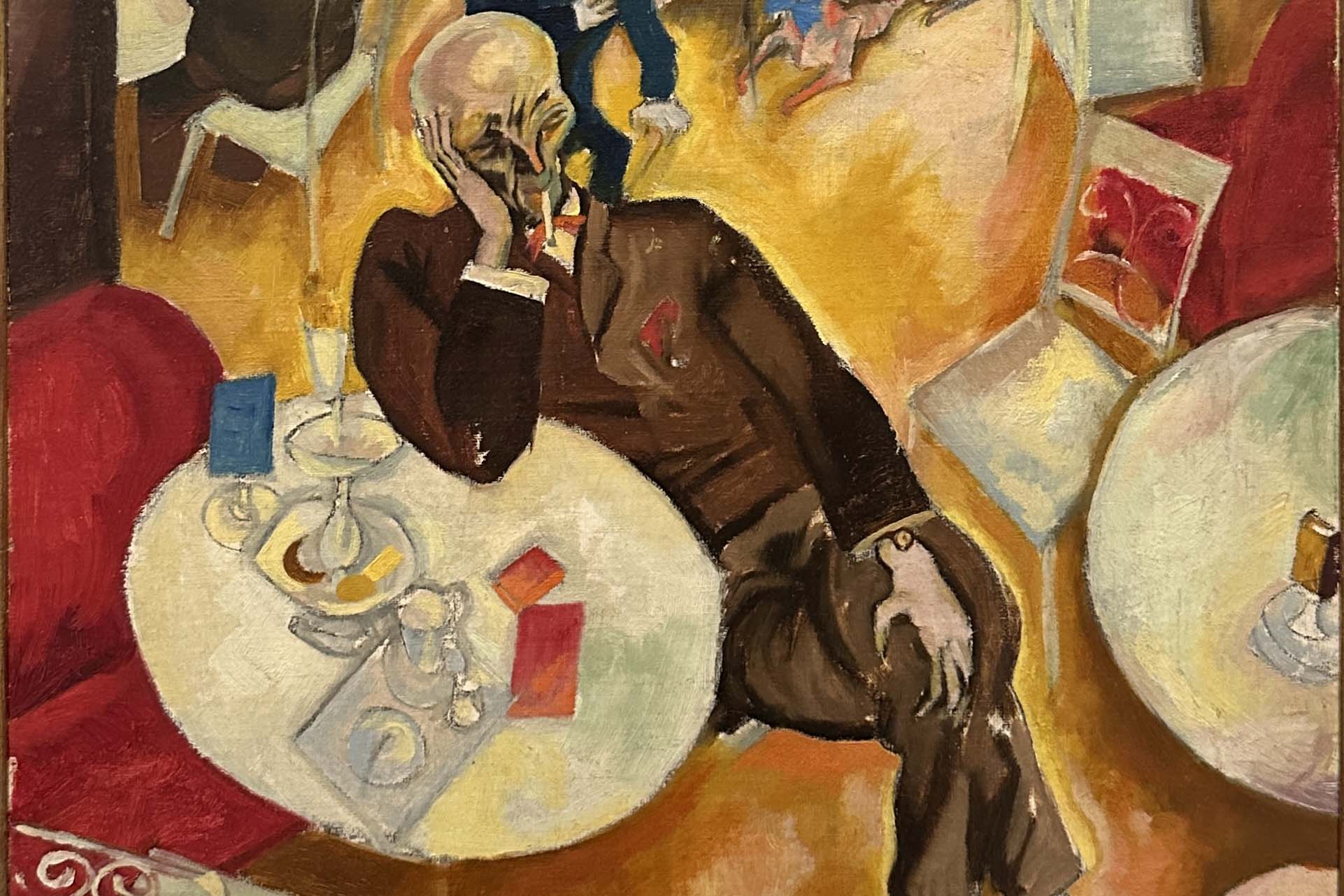
With the economic downturn from 1927 onwards and then the Great Depression, doctors, lawyers, small traders and those in similar positions found themselves without a paying clientele. Civil servants had their salaries cut, in order to stabilise public spending. With millions unemployed, the struggling petty bourgeoisie could not simply join the working class. Their only path was into destitution.
The policies of the SPD, KPD, and the established bourgeois parties alienated the petty bourgeoisie. The SPD, in particular, offered them no way out of the crisis, but merely acted as its administrator. The Müller government’s endorsement of the Young Plan – a plan intended to ensure that Germany paid off all of its war reparations – made this particularly clear to the petty bourgeoisie. Now even their grandchildren and great-grandchildren were to be made to pay for the reparations. The Nazis appeared to be the only untested force.
With the help of the Hugenberg media empire, the Nazis launched a campaign against the Young Plan. Their petition demanding a referendum on the Young Plan garnered almost six million signatures. This was the spark that ignited the rise of the Nazis, as it was through this that many people first learnt of their programme.
In 1930, the end of the Müller government was drawing near. The Federation of German Industries demanded tougher measures: tax relief for business owners, the abolition of compulsory arbitration, cuts to government spending, savings on unemployment insurance, and so on. When the SPD failed to comply with industry’s demands regarding unemployment insurance, the coalition government reached a breaking point.
Brüning’s dilemma
In March 1930, President Hindenburg appointed Heinrich Brüning as Chancellor. This government was explicitly ‘anti-Marxist’, i.e. directed against the SPD, the trade unions, and the KPD. The ruling elite’s agenda was enforced by this minority government through emergency decrees.
The SPD initially opposed this government, but that changed with the election results in September 1930. Within two years, the NSDAP had grown its share of the vote from 2.6 percent to 18.3 percent, making it the second-strongest party behind the SPD. Brüning’s unpopular measures, such as the increase in taxes on beer and petrol, as well as cuts to unemployment benefit, contributed to this.
In reality, however, the SPD and KPD combined still constituted the strongest force, with over 37 percent of the vote. Added to this were the powerful trade unions and the paramilitary groups and workers’ organisations aligned with the SPD or the KPD. The distorted picture presented by the composition of parliament obscured the reality: the labour movement could easily have defeated the looming fascist threat.
Instead, the SPD leadership now accepted Brüning as the ‘lesser evil’. They did not vote for his laws, but they did not vote against his emergency decrees either, in order to prevent the government from collapsing.
Brüning had set out to govern without and against the SPD. Now the government was faced with a dilemma: they could not implement the necessary attacks with the SPD, nor could they do so without it.
Unstable interim regimes
Brüning’s government, as well as the subsequent Bonapartist governments of Papen and Schleicher from 1932 onwards, enjoyed ever-dwindling support. Emergency decrees could be suspended by parliament, whilst with every election the opposition on the fringes grew stronger.
This was an extremely unstable regime, which relied on the hostility between two camps – the labour movement and the fascists. Had Brüning’s clique deployed the state apparatus against the Nazis, this would have led to splits, as many police officers and soldiers sympathised with the Nazis.
Moreover, without the threat of the Nazis, the SPD would not tolerate Brüning’s government as a ‘lesser evil’. Brüning needed the Nazis to counter the powerful workers’ organisations, but without the workers’ organisations, nothing would have stopped the Nazis. Brüning, Papen and Schleicher were only able to govern because a real showdown between the Nazis and the labour movement had not yet taken place.
The big bourgeoisie was still divided on the question of a solution. Trotsky explained: “The Social Democratic therapy repels one part of the big bourgeoisie by the uncertainty of its results, and by the danger of too large levies (taxes, social legislation, wages). The surgical intervention of fascism seems to the other part to be uncalled for by the situation and too risky.” Relying on the Nazis carried the danger of triggering a civil war, which could also have led to the victory of a socialist revolution.
These interim regimes were an attempt to find a path that would avoid both the costs of social democracy on the one hand, and the risk of a protracted civil war on the other.
The SPD continued to adhere to the strategy of ‘lesser evilism’. In the Presidential election in the spring of 1932, it supported the arch-reactionary Hindenburg against Hitler. In 1925, the SPD had argued that Hindenburg was the ‘greater evil’; now it was argued that he was loyal to the constitution and would block Hitler’s path.
In June 1932, Brüning fell out of favour and was replaced by Papen. Papen took a more overtly hostile stance towards the labour movement and, in July, ousted the SPD government in Prussia. Despite pressure from its members, the SPD remained passive. The KPD attempted to reach out to SPD workers by calling for a general strike. This proved unsuccessful, as it could not counteract the damage done by the policy of ‘social fascism’.
The threat of civil war loomed ever closer. Fear of Bolshevism was growing amongst the ruling classes worldwide. Papen, and later Schleicher, pressed for a constitutional amendment to grant themselves more control over the country. But the Reichswehr (the post-Versailles German military) calculated in a war game that it would not be able to contain the unrest that such a move would unleash.
The ruling class feared that the SPD would not be able to hold its membership back for much longer, which was becoming restless due to the rise of the Nazis, and was defecting to the KPD at an alarming rate. How long would the split between the SPD and the KPD last?
In December 1932, Schleicher was appointed Chancellor. He attempted to collaborate with the trade unions and ‘left-wing’ elements in the Nazi Party, such as Gregor Strasser, to restore order to the situation, but he ultimately failed.
The path taken by Brüning, Papen, Schleicher, and the SPD itself was a dead end. All of them had pinned their hopes on economic improvement bringing stability. When this failed to materialise, they were left exposed.
Transfer of power to Hitler
For the big bourgeoisie as a whole, the only way out became increasingly clear: they needed a force with mass support that would ensure the impending civil war would be resolved in their favour – a force capable of crushing the workers’ organisations.
This is precisely what Hitler’s fascist movement promised them. He convinced them that he firmly upheld the principle of private property and that national ‘socialism’ was merely a pretence. The Mussolini regime demonstrated that the plan was feasible.
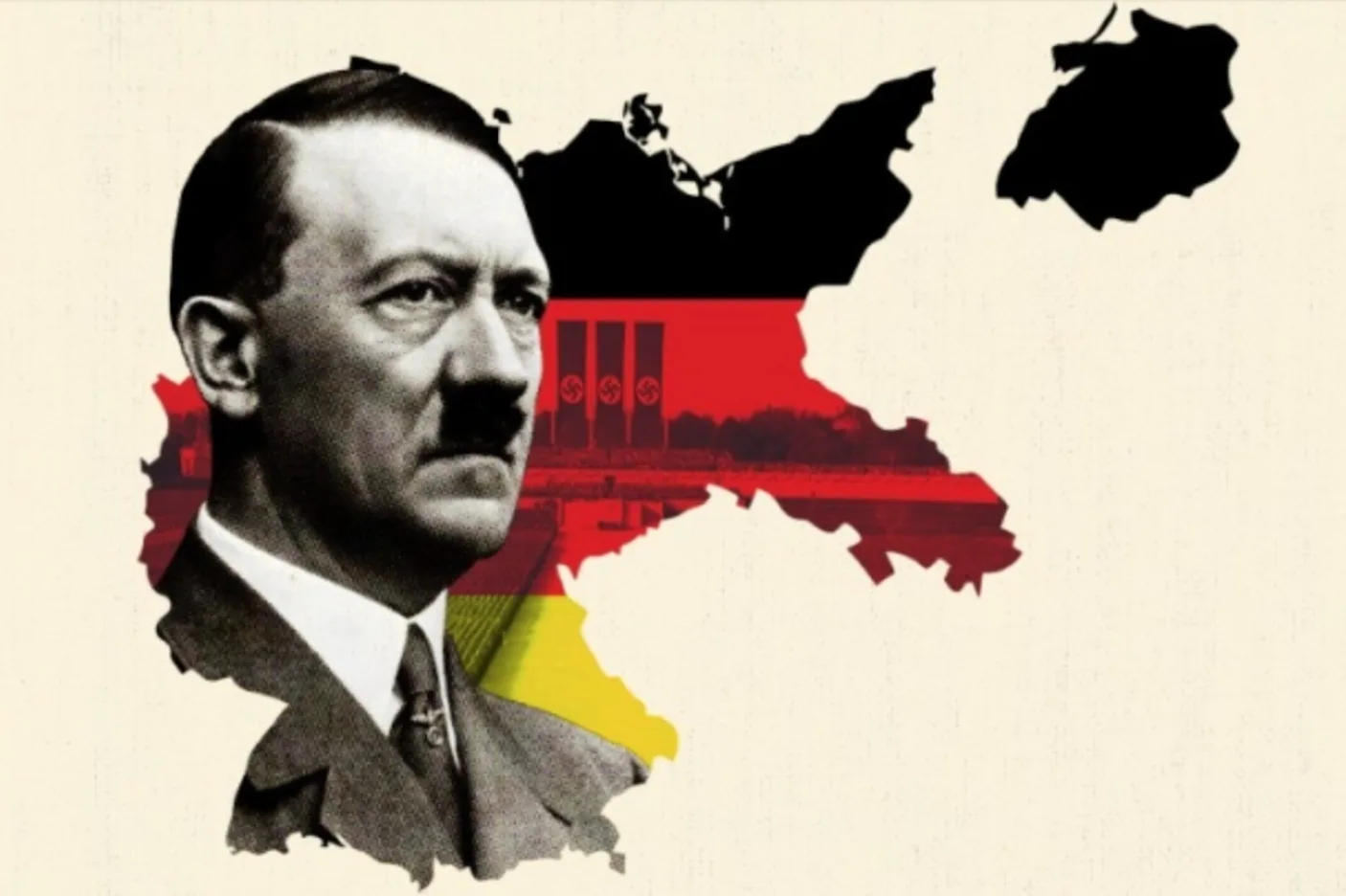
Ultimately, Hindenburg was convinced by a group of industrialists to appoint Hitler as chancellor, in January 1933. This legal transfer of power provided the perfect cover for the fascist coup d’état. The Nazis skilfully exploited their position within the state apparatus to integrate the SA into the state and crack down on the KPD and the SPD. The SPD leadership gave up without a fight, because it had always feared mobilising the working masses and losing control.
Bourgeois parliamentarism and fascism are forms of capitalist rule. Although the ruling class relinquished its political power to Hitler, he was all the more effective in implementing the interests of German imperialism. By destroying the workers’ organisations and murdering countless socialists and communists, the capitalists were able to implement their austerity programme and launch a new imperialist war unhindered. Countless atrocities followed.
Only those who fight can win
Instead of mobilising the forces of the working class, the SPD leadership consistently relied on the class compromise of the Weimar Republic: ‘we will pacify the workers, and in return the capitalists will grant reforms’. In the struggle against the Nazis, they placed their hopes in the state, the law, the Reichswehr, and the police. They did not want to provoke the Nazis or further destabilise the situation through mass mobilisation.
The SPD leadership believed the working class was too weak. But in truth, the workers were merely disoriented and demoralised due to the weakness of their reformist leadership.
The reformists feared civil war, but it was already present in its embryonic form in every attack by the SA and the Schutzstaffel. The SPD, together with the KPD, could have physically crushed the Nazi gangs.
The main obstacle in the struggle against fascism was the paralysing reformist leadership. It should have been the KPD’s task to overcome this. With a correctly implemented policy of a united front, it could have shown the SPD workers the weakness of their leadership. Instead, the KPD leadership supported the SPD leadership from the left, because its own policy of ‘social fascism’ contributed to the division of the labour movement.
Had the SPD and the KPD mobilised the workers, the working class would have recognised its real power and marched with giant strides towards the socialist revolution. That would have been the only progressive way out of the crisis of the Weimar Republic.
Today, because the SPD and Die Linke have consistently supported the attacks by big business, they have enabled the rise of the AfD. Now that the AfD is a force to be reckoned with, they want to continue the same policies under the banner of ‘defending democracy’.
Anyone who wants to fight the AfD needs to fight the class struggle. Reformism remains the main obstacle today. Because capitalist democracy offers the working class nothing but misery, we need to mobilise the labour movement with an independent class programme to replace it with socialism.