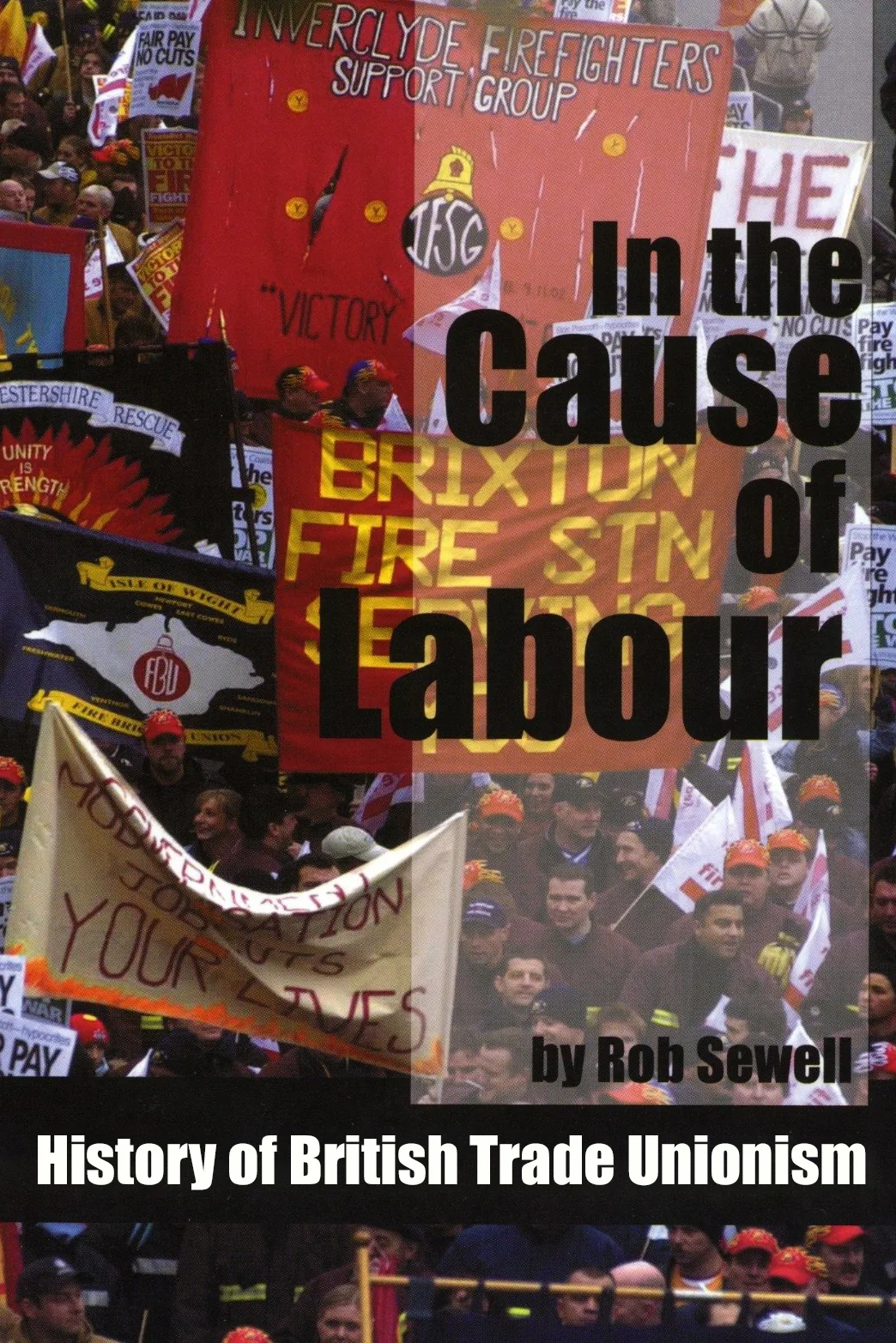
In the Cause of Labour – A History of British Trade Unionism

There are many narrative histories of the struggles of British workers. However, Rob Sewell’s book is different.
This book is aimed especially at class-conscious workers who are seeking to escape from the ills of the capitalist system, that has embroiled the world in a quagmire of wars, poverty and suffering. This history of trade unions is particularly relevant at the present time. After a long period of stagnation, the fresh winds of the class struggle are beginning to blow.
Rob Sewell’s book was written precisely with these new forces in mind.
The British labour movement is the oldest in the world. More than two hundred years ago, the pioneers of the movement created illegal revolutionary trade unions in the face of the most terrible violence and repression.
In the course of the nineteenth century they built trade unions of the downtrodden unskilled workers – those with “blistered hands and the unshorn chins,” as Feargus O’Connor called them. Finally, they established a mass party of Labour based on the trade unions, breaking the monopoly of the Tories and Liberals. In the stormy years following the Russian Revolution they engaged in ferocious class battles, culminating in the General Strike of 1926.
Nor did the achievements of the British trade union movement cease with the Depression and the Second World War. The post-war upswing served to strengthen the working class and heal the scars of the inter-war period. By the time of the industrial tidal wave of the early 1970s, they drove a Tory government from power, after turning Edward Heath’s anti-trade union laws into a dead letter. Later, the miners, the traditional vanguard of the British working class, waged an epic year-long struggle in 1984-85 against the juggernaut of Thatcherism. They could have succeeded, had the rightwing Labour and trade union leaders not abandoned them and left them isolated.
The book contains vital lessons and is essential reading for today’s worker militants. The foreword is written by Jeremy Dear, general secretary of the National Union of Journalists and member of the General Council of the TUC (personal capacity)

Start readingBuy the book
  1. Foreword
  2. Introduction

1. The Birth Pains

  1. The Class Divide
  2. Child Labour

2. Into the Abyss of Capitalism

  1. Anti-union Terror
  2. Unsung Herdes
  3. Peterloo Massacre

3. Schools of War

  1. “Captain Swing”
  2. The Grand National

4. Breaking the yoke

  1. The Newport Rising
  2. The “Plug Plot”
  3. The Demise

5. The “Pompous Trades”

  1. New Model Unions
  2. Marx and the First International
  3. Impact in Britain
  4. The Trade Union Congress
  5. Vicious circle

6. From a Spark to a Blaze

  1. From a Spark
  2. New Unionism Under Attack

7. “The First Giant Step”

  1. Mass Movements
  2. Independent Representation
  3. The Breakthrough
  4. Victory Grayson

8. The Great Unrest

  1. Strikes Spread
  2. “Rank and Fileism”

9. War and Revolution

  1. Voices Stifled
  2. Revolutionary Objectives
  3. Electrifying effect
  4. General Election

10. On the Brink of Revolution

  1. The Triple Alliance
  2. Soviet Support

11. “Black Friday”

  1. Lenin on Britain
  2. Employers’ Offensive
  3. The Political front

12. “Bayonets don’t cut coal”

  1. The Minority Movement
  2. Royal Comission

13. “Nine Days That Shook The World”

  1. Scarcely a wheel turns
  2. Unstoppable wave
  3. Stand firm!
  4. The Betrayal
  5. Next time

14. “Never Again”

  1. Coal Crisis Report

15. “Road to Wigan Pier”

  1. American Labour
  2. Consequences of 1931
  3. Popular Frontism
  4. Witch-Hunt

16. “Labour in the War”

  1. Integral Part
  2. June 1941

17. Post War Dreams

  1. Gradual Approach
  2. National Debts
  3. The Cold War
  4. Cold War

18. Business (Unionism) as usual

  1. The Blue Union
  2. ETU Trial
  3. Clause Four

19. In Place of Strife

  1. Wage Restraint
  2. Economic Difficulties
  3. In Place of Strife
  4. Discontent grows
  5. Pilkington

20. “Close the Gates!”

  1. State of emergency
  2. 1972 Miners’ Strike
  3. Saltley Gate

21. The Road to Pentonville

  1. Pentonville Five
  2. Shrewsbury trial

22. The Turning Point

  1. Ulster workers council
  2. Paramilitary solutions
  3. Wage Restraint
  4. Winter of Discontent

23. Preparing the Class War

  1. Premature confrontation
  2. Flexible rostering
  3. The Falklands War
  4. Warrington dispute

24. “The Enemy Within”

  1. Nottingham
  2. The Ballot
  3. The Orgreave
  4. Dock strikes
  5. Propaganda offensive
  6. Action not words

25. Aftermath of Defeat

  1. The Defeats
  2. 1987 General election
  3. Driven out

26. “Ignorance is Strength”

  1. “Counter-revolution”
  2. Rover
  3. Fruits of “New Realism”

27. Blairism and the Unions

  1. General Ebb
  2. The “project”
  3. Coalition Government
  4. Almighty row

28. The Class Divide Grows

  1. Privatisation Disaster
  2. Double-speak

29. Militancy is back!

  1. The pendulum
  2. Jackson’s defeat
  3. General Council

30. Should the unions disaffiliate?

  1. Keynesianism Abandoned
  2. National Government
  3. Justifiably angry
  4. Accountability
  5. Mass organisations
  6. Words into deeds

31. Future of the Unions

  1. “Partnership”
  2. Transformation
  3. Explosive situation
  1. 32The New View of Society

Results