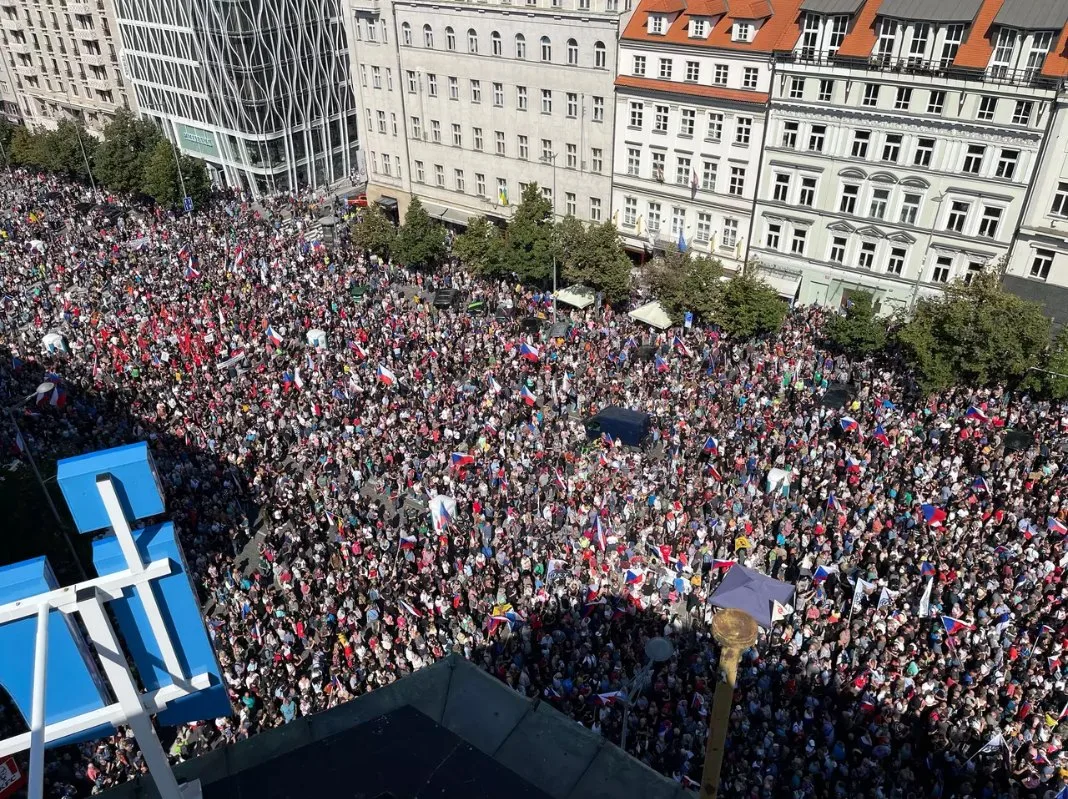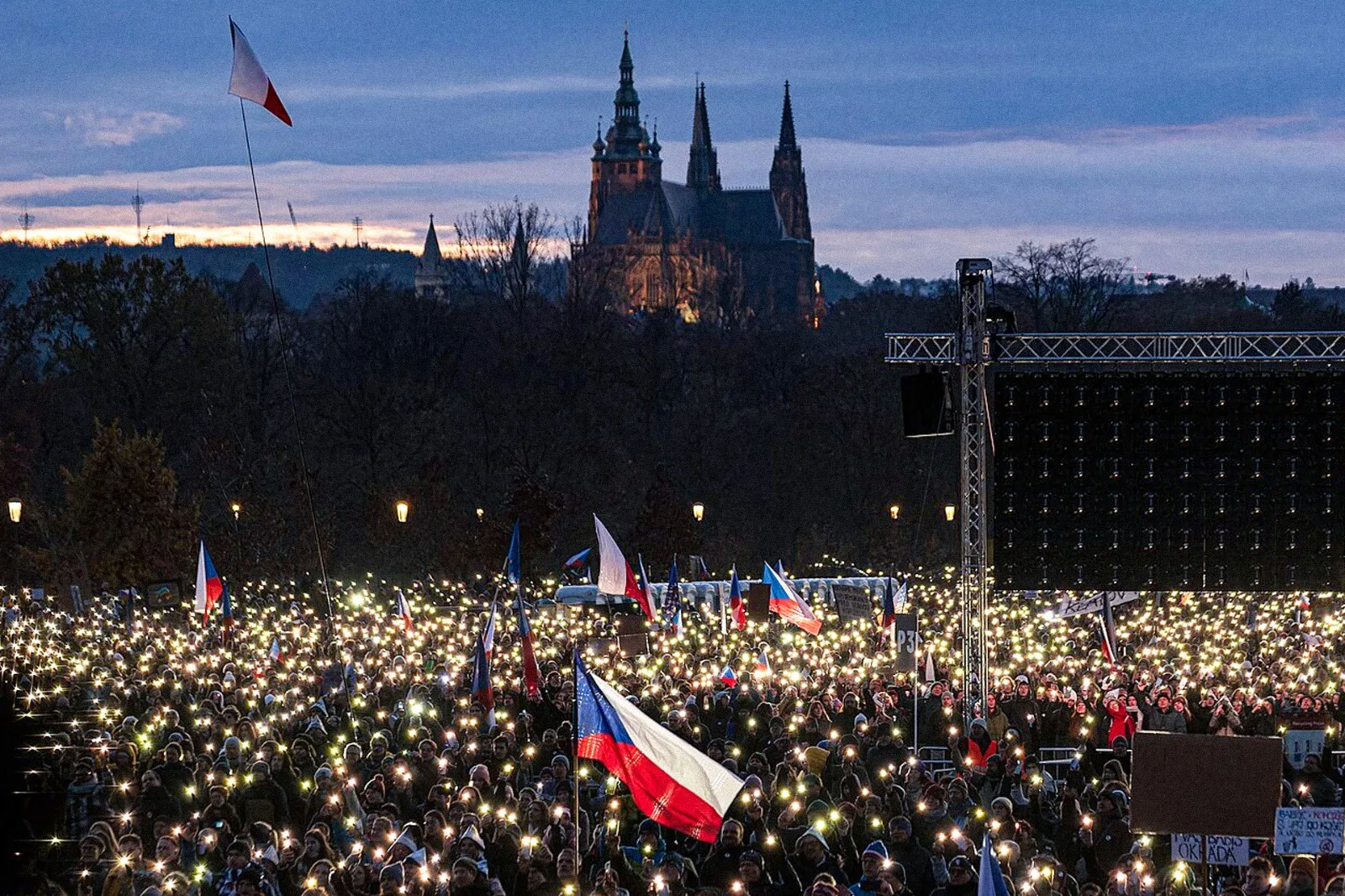
Since October, protests, demonstrations and student strikes have been taking place across the Czech Republic, culminating in a huge demonstration of almost half a million on the weekend in the capital.
Unlike in neighbouring western European countries, these are not primarily protests against the housing crisis, the deteriorating state of education, militarisation or austerity. Instead, they centre on defending the ‘independence of public-service media’ and are led by reactionary liberal elements.
However, these protests occur in the context of widespread discontent in Czech society and have drawn in a layer of youth who are inspired by the stormy struggles abroad. These factors help to explain why these protests have begun to spread across the country, whereas similar liberal-led demonstrations in the past have been confined to Prague and quickly fizzled out.
Culture war or class war?
The spark for these protests was struck on 24 October. In the early hours of the morning, the coalition government led by right-wing populist and billionaire oligarch Andrej Babiš provocatively snuck through a proposal to transfer the funding of Czech Radio and Czech Television from individually paid license fees to the state budget.
This came shortly after the governing coalition suffered a major defeat in the Senate elections. Babiš is attempting to regain support by allowing households to avoid paying broadcasting licence fees, tapping into the fact that many Czech workers don’t trust the media and don’t want their money funding it.
Meanwhile, the liberal, pro-EU opposition has seized on the proposal as an alleged ‘threat to media independence’ – by which they mean that instead of toeing the general line of the liberal ruling class, that it will be more inclined to Babiš’s line if it depends on tax funding.
Really speaking, the license fee controversy amounts to a ‘culture war’ issue: a surface-level distraction from the real issues that affect the lives of Czech people. It is ideal fodder for middle-class layers who are obsessed with Czechia’s status as part of the ‘democratic western alliance’ and consider Babiš an agent of Russia.
Looking at the rest of Czech society, polls suggest there is actually a slight majority for getting rid of the license fee. This is hardly surprising. Millions of people have no trust in the so-called ‘independent’ media and instinctively understand that it serves up nothing but lies and propaganda, regardless of who pays for it.
Character of Letná
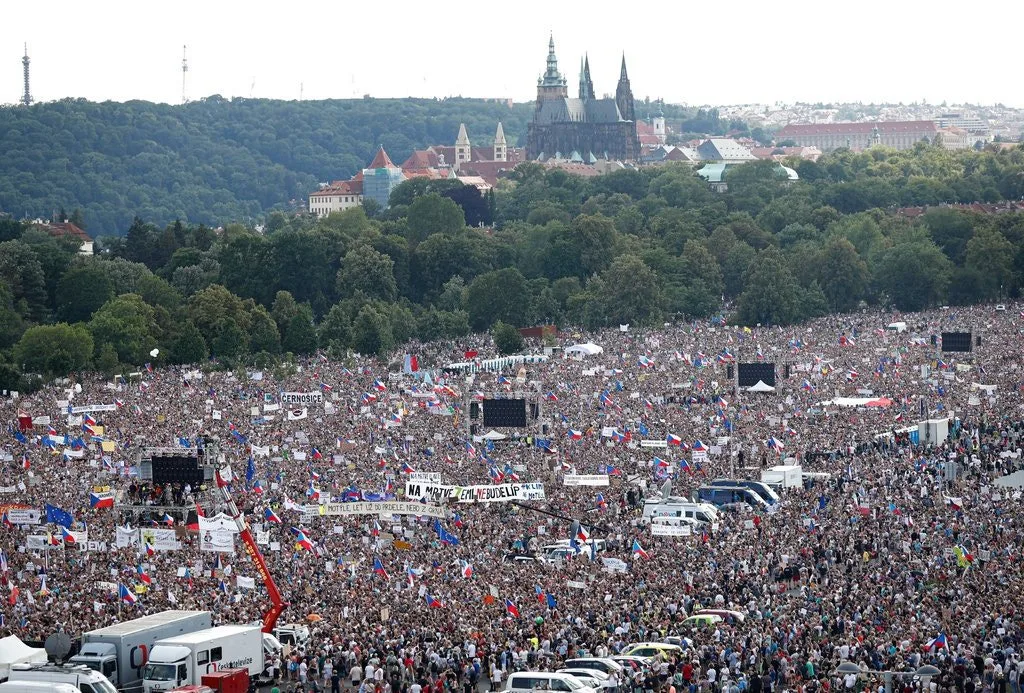
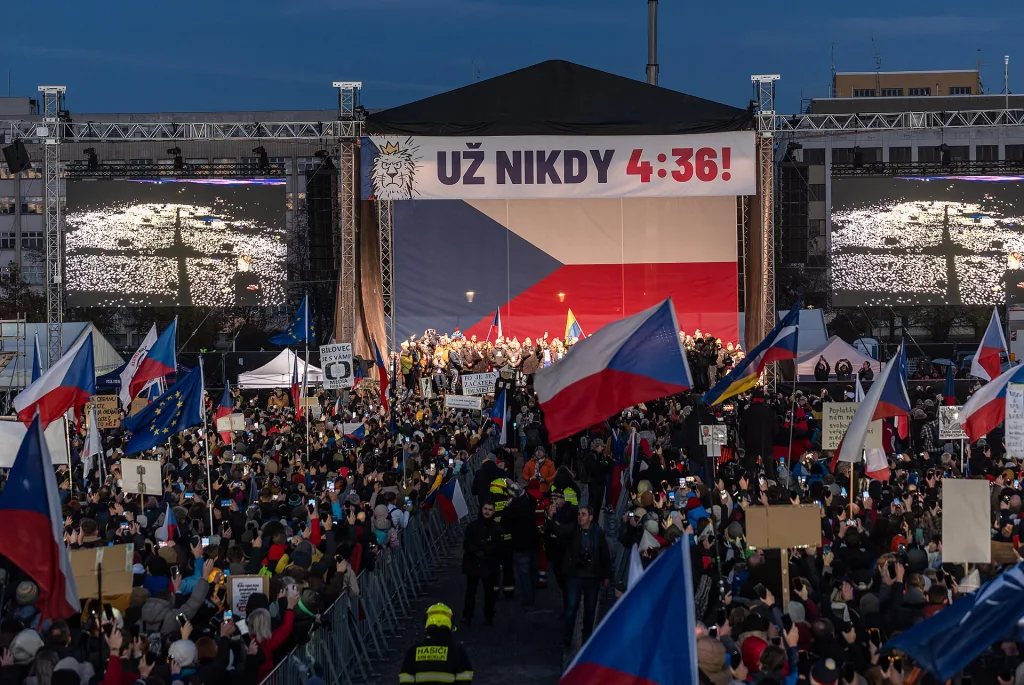
That being said, the demonstration at Prague’s Letná Plain on 15 November was massive: the biggest mobilisation since 1989. According to the organisers, between 350,000 and 450,000 people attended, making it one of the largest political gatherings in modern Czech history.
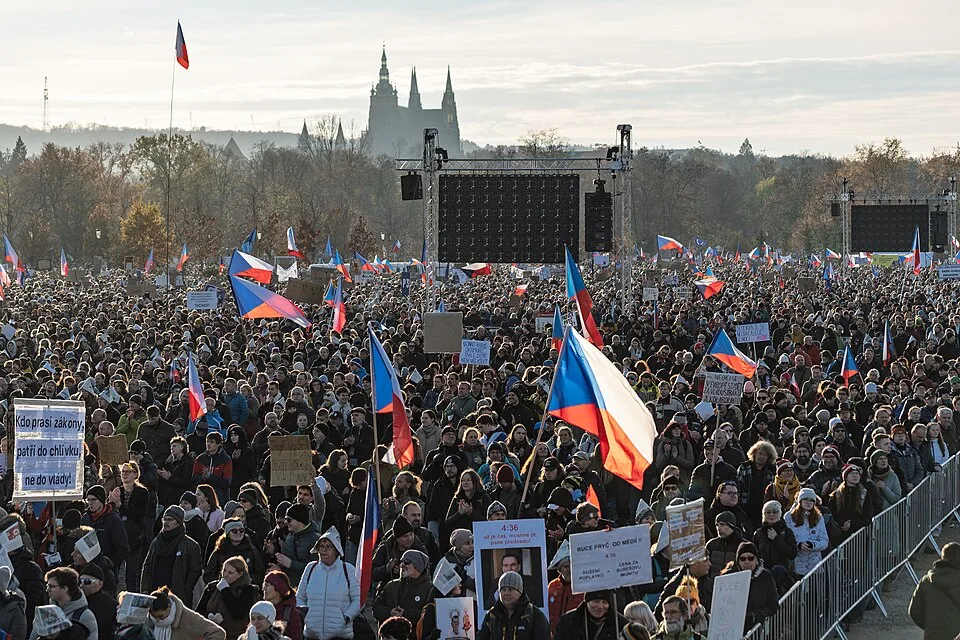
But what was the character of this demonstration? The leadership was dominated by the liberal ‘civic organisation’, ‘Million Moments for Democracy’.
Alongside demands to withdraw the proposed funding reform, the leaders of the protest called for an apology from the government, dialogue, and the removal of Tomio Okamura (SPD) from the leadership of Parliament. The floor was also given to representatives of a key minority group… three billionaires from Forbes’ list of top 100 richest Czechs.
The organisers also accused the government of underfunding national security in the face of Russian aggression! In other words, these ladies and gentlemen were cheering on further militarisation and arms spending in a country where arms manufacturers are recording enormous profits, while workers and students bear the costs.
Indeed, support for the Ukraine war has been used to justify cuts and austerity across Europe, becoming a motivating factor in the big protests we have seen in recent weeks in other countries.
We can be confident that western European think tanks and NGOs had their tentacles wrapped firmly around the leading bodies of this protest, where EU flags were prominent alongside the national flag. In that sense, this was a thoroughly middle-class demonstration, animated by a culture war demand, dominated by the same reactionaries who carried out austerity and followed the imperialist line on Ukraine and Palestine when they were in power.
However, looking below the surface, we can see how an atmosphere of profound discontent is seeking any sort of outlet. Despite the reactionary demands and slogans of the main leadership, broader social questions also emerged on 15 November. A number of speakers (particularly students) addressed the government’s broken promises concerning affordable housing and cheaper mortgages for young people. Demonstrators carried banners highlighting the housing crisis and other social problems.
While the liberal opposition hysterically howls about Babiš being ‘pro-Russia’ and ‘authoritarian’, his support is also dwindling amongst broad layers of society because he failed to fulfil his promises of lower taxes and more affordable housing. Just like the liberals who were booted out last year, his government is now carrying out a policy of austerity, cuts to education and measures allowing employers to circumvent their labour obligations.
Unsurprisingly, a poll from April 2026 found that only 25 percent expressed confidence in the government. The general mood of frustration helps to explain why this protest movement (which initially emerged spontaneously) has grown so large and spread so far, with demonstrations and solidarity rallies taking place in Brno, Ostrava, Olomouc, Plzeň, Opava and other cities.
Many people are hitting the streets, not primarily to defend the ‘independence of the media’, but to vent their anger at the government. In that sense, these protests are symptomatic of a molecular process of class anger, bubbling under the surface of Czech society.
Youth begin to move
The growing involvement of young people is an important new development. These protests are taking place amid a wave of student and workers’ movements across Europe.
In France, students and workers are mobilising against the disastrous state of education. In Spain, the eviction and subsequent death of disabled pensioner Maricarmen Abascal helped trigger a broader movement of students and workers. In Portugal, police violence against protesters demanding affordable housing provoked further mobilisation.
These events are not the same as in the Czech Republic. Nevertheless, they demonstrate how seemingly isolated grievances can develop into broader movements.
The Czech masses face many of the same problems as their brothers and sisters in western Europe: a severe housing crisis, chronically underfunded education, falling real wages for teachers and deteriorating university accommodation. Meanwhile, Czech arms manufacturers are recording record profits, supplying weapons to Ukraine and contributing to the destruction of Palestine.
At the demonstration on 24 October, the Student Solidarity Committee was established, calling on students to form their own committees connected to a central body. Similar structures have since emerged at numerous university faculties, in emulation of the movements of students in Serbia, France and elsewhere.
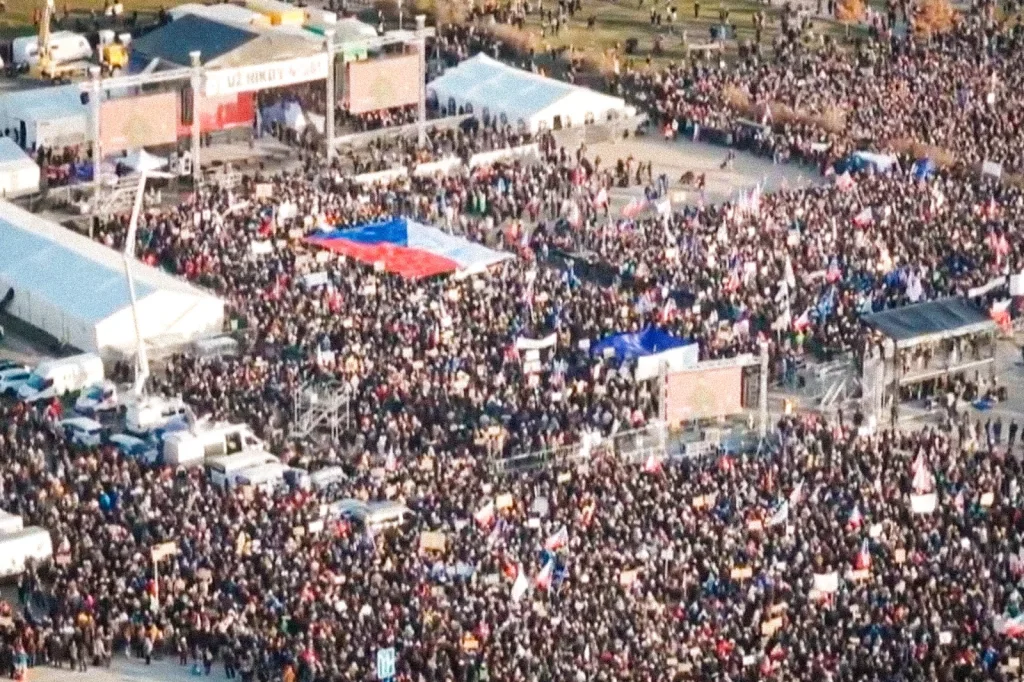
Students are also instinctively reaching out in solidarity to employees of Czech Television and Czech Radio who fear being sacked under the new funding model. Some have also called for strike action. Teachers and other education workers have also raised concerns about inadequate funding, deteriorating working conditions and the wider crisis in education.
The left and the ruling class
Letná does not prove that a movement comparable to those in France or Spain has already emerged in the Czech Republic. It does, however, reveal considerable social discontent that, as yet, is finding no expression on the left. This is in large part because workers and students have no independent platforms through which to organise.
The Czech left remains fragmented and politically marginal. The leadership of the Czech-Moravian Confederation of Trade Unions (ČMKOS), the country’s largest trade union federation, is completely inert.
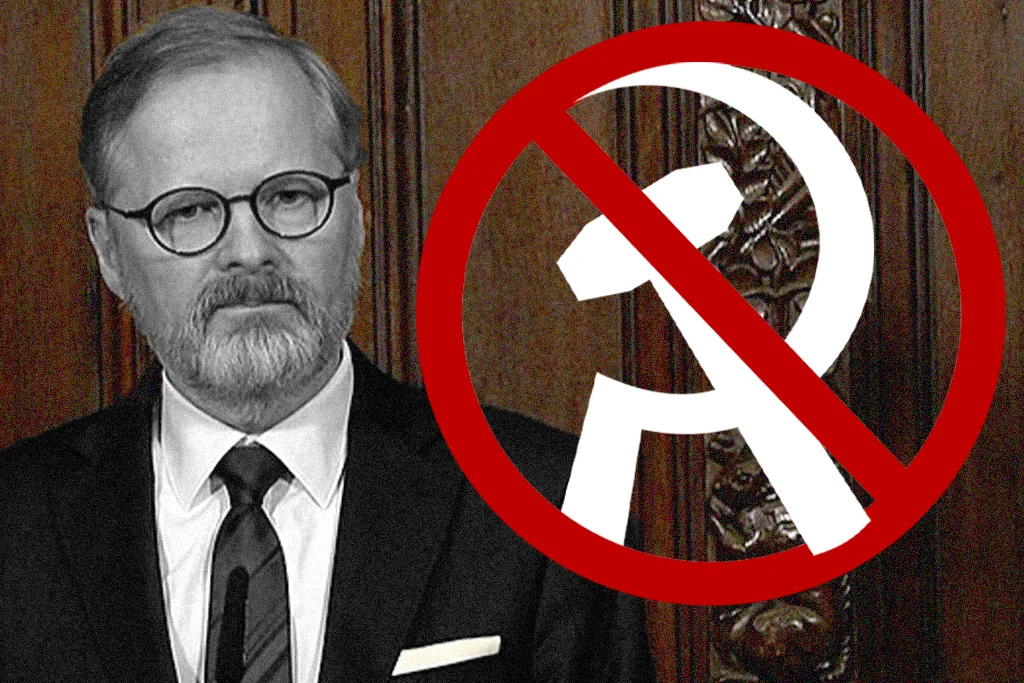
The Communist Party of Bohemia and Moravia (KSČM) organised its own small demonstration demanding the nationalisation of public-service media. Meanwhile, the left-reformist LEVICE party supports the demands of liberal activists, adding little more than a call for the creation of cooperative media.
In the absence of a class-based alternative, and without strong worker organisations to galvanise the masses’ anger around social demands, the frustration in Czech society has erupted around a culture war question that has been leapt upon by the liberal opposition.
However, the danger (from the perspective of the ruling class) lies not simply in what these protests are now, but what could be coming down the line. Some bourgeois commentators have already called for harsh police intervention against protest movements, while others have raised the prospect of martial law. Such reactions reveal how quickly the ruling class’ supposed defence of democracy can turn into demands for repression once its own interests are threatened.
One way in which the situation in the Czech Republic is not fundamentally different from that of France or Spain is the underlying social contradictions. The potential exists for something along the lines of Europe’s ‘Red Autumn’ to erupt, because the same capitalist crisis is bearing down on working people and the ruling class has no answers. Any incidental issue could light the touch paper.
Whither Czechia?
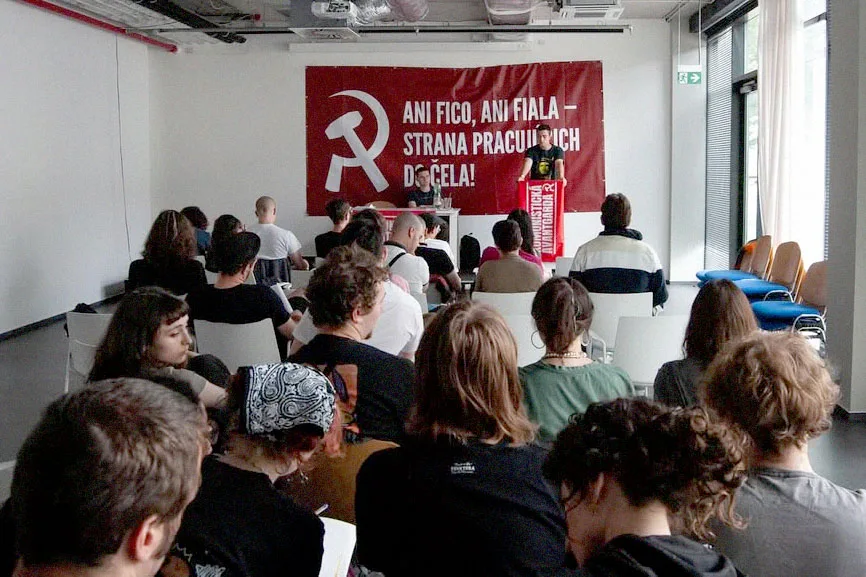
Rudá Avantgarda supports the students’ efforts towards self-organisation and solidarity with media and education workers. We also understand why many people support abolishing broadcasting licence fees. Workers are alienated from media institutions that they finance but have no control over, meaning they are used for nothing but churning out propaganda for the rich. This will not change until this entire rotten capitalist system is overthrown.
The only way for workers to trust the media is if it genuinely becomes their media, which means democratic control by the working class, through elected and recallable workplace committees, involving not only journalists but also technical and operational staff, but also through democratic control by the working class more broadly. This position has found a small but real echo when we have brought them to the streets.
But really speaking, we have to say that the particular question of the license fee is a distraction from much deeper issues. The risible leadership of these current protests means they may eventually fade away without anything changing.
However, the students and workers raising social demands today will learn from this experience. Behind their sirens’ songs about ‘democracy’, the liberal servants of European capital have no answers. They are not the allies but the mortal enemies of working people.
If the Czech masses are to join their French, Spanish and Portuguese brothers and sisters in struggle, then genuine social demands around education, housing and living standards that are beginning to emerge must become the focus.
The independent organisation of the Czech youth offers a road to building an independent platform to fight for these demands.
Life is a great teacher. In the coming months, the consciousness of the youth will develop by leaps and bounds. Letná will be seen in hindsight as merely the early tremors of an earthquake.