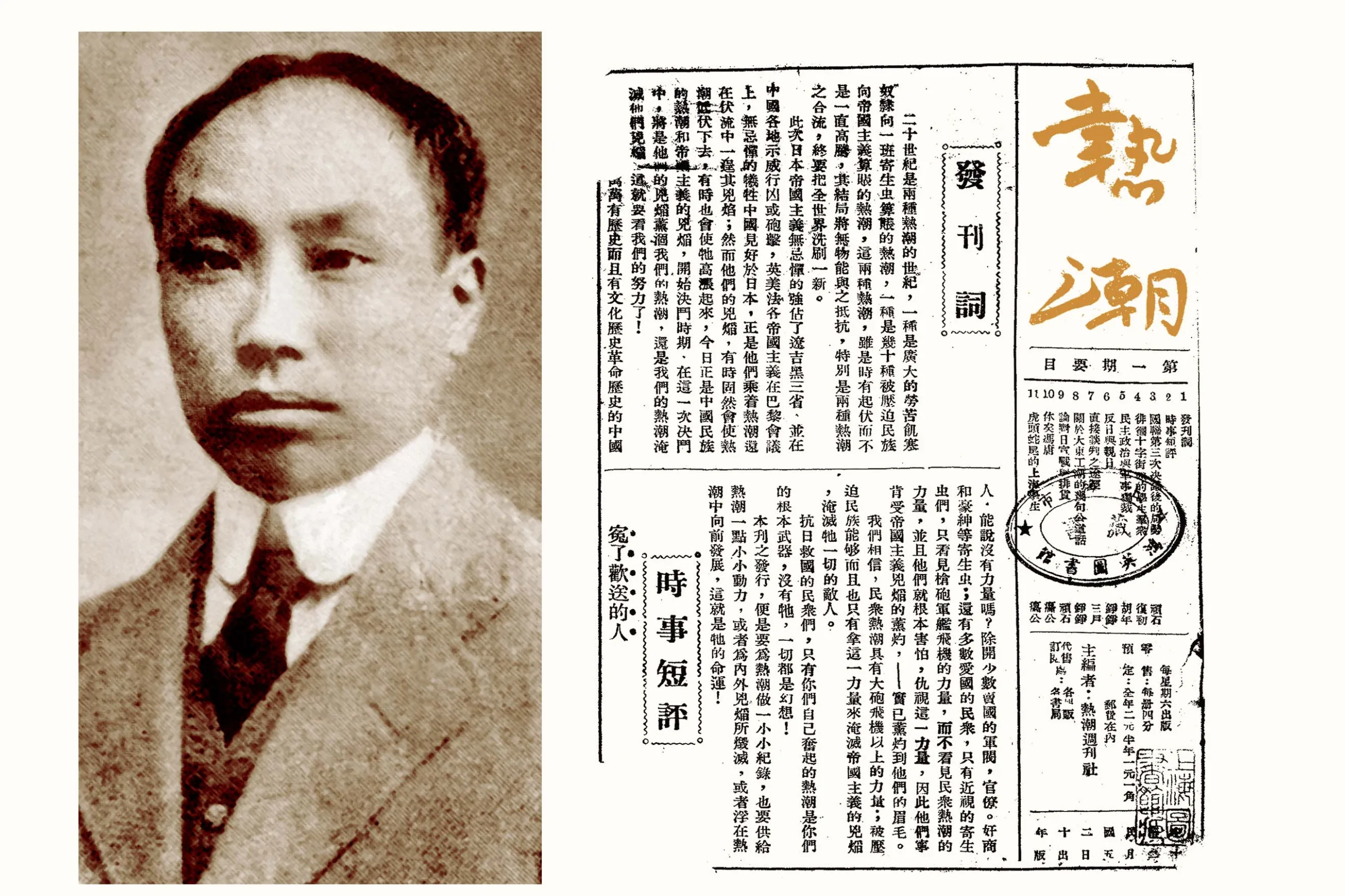
The history of the Chinese Communist Party (CCP) is intimately bound up with the Stalinist degeneration of the Communist International. In this article, Kenny Wallace explores the little-known struggle of the forces of Trotskyism in China, who heroically fought to defend the ideas and methods of genuine Marxism against all odds.
[This article was originally published as part of issue 51 of In Defence of Marxism magazine – the quarterly theoretical magazine of the Revolutionary Communist International. Subscribe and get your copy here]
The history of Chinese Trotskyism is an often overlooked part of the history of the Chinese workers’ movement. This is, of course, largely due to the victory of the Chinese Communist Party (CCP) in 1949 and the overthrow of capitalism under Mao’s leadership, which necessarily place the origins and development of Maoism at the forefront of any study of Marxism in China. But this is not the only reason.
The dominance of the official line of the CCP leadership has also been maintained by a policy of vigilant and ruthless repression, carried out against any trend that could present a political alternative for the Chinese working class, and above all Trotskyism.
This constant struggle to neutralise even the potential for the emergence of a Trotskyist tendency in China can be traced all the way back to the early years of the Left Opposition in the 1920s. It reached its climax with the rounding up and elimination of all known Trotskyists in China in 1951-52. In the course of this purge, the forces of Chinese Trotskyism were extinguished and their records destroyed.
However, it would be a serious mistake to assume that Trotskyism never had any influence inside the Chinese revolutionary movement. In fact, several of the founders of the CCP joined Trotsky’s Left Opposition in the 1920s.
Under conditions of vicious repression, counter-revolution and war, this small group of Trotskyists fought heroically to maintain the real ideas and methods of Bolshevism in China, and to establish an organised force capable of establishing links with the workers in the cities. This, they understood, was the only way to secure the Chinese revolution on a healthy basis.
This struggle was ultimately unsuccessful. But the history of how the Chinese Trotskyists faced up to the immense challenges of the period contains many important lessons for communists striving to build revolutionary parties across the world today.
The origin of the CCP
The roots of Chinese Trotskyism actually go back to the foundation of the Chinese Communist Party itself. The CCP was formed by a small group of revolutionaries who were inspired by the October Revolution of 1917, with Chen Duxiu being their principal leader.
Chen Duxiu’s participation was vital. Prior to his conversion to Marxism, he was already a renowned radical intellectual. He was a leading figure of the historic ‘May Fourth Movement’ in 1919, which saw thousands of students across China protest against imperialism, feudalism, and corruption.
By the end of that experience, Chen and his followers had realised that simply implementing western liberal democracy could not free China from the shackles of foreign domination. They saw socialist revolution as the way to liberate China from imperialism and backwardness, as the Bolsheviks were proving in Russia.
At the time of its founding congress in July 1921, the CCP had around 50 members in total, all of whom were intellectuals or students. The militants who founded the party did so on the basis of the ideas of Lenin and Trotsky, the recognised leaders of the Russian Revolution. Of course, the leadership of the CCP were themselves very new to Marxism, and necessarily relied on guidance in their work from the Communist International (‘Comintern’).
The CCP grew rapidly, first among young students and intellectuals, and then among the working class. From a small group of comrades at their founding congress, the CCP had grown to a thousand members just four years later in 1925. Two years after that, they had 57,000 party members, and controlled the vast majority of the trade unions.
The CCP’s rapid growth reflected the tremendous appeal that the October Revolution had among advanced Chinese workers and youth. They regarded it as an example for their own liberation. Li Dazhao, another co-founder of the CCP, summed up this sentiment:
“Our toiling masses, under double and even multiple layers of oppression, suddenly heard the cry of the October Revolution: ‘Overthrow world capitalism!’ ‘Overthrow world imperialism!’ This cry resounded in our ears with particular poignancy, particular gravity, and particular significance.”[1]
But it was also during this time that the leadership of the CCP began to receive increasingly distorted guidance from the leadership of the Comintern, which reflected the bureaucratic degeneration taking place within the USSR. This would have grave consequences for the party’s development.
The Kuomintang
At this time, China was less of a nation state and more of a semi-colony, carved up by many imperialist powers via their proxies amongst the Chinese warlords and the comprador bourgeoisie – that class of capitalists who acted as merchants and intermediaries between foreign capital and the Chinese market.
A proportionately small working class emerged in the handful of cities in which foreign imperialism had invested heavily, such as Shanghai, Guangdong and Hong Kong. The workers were subject to brutal conditions, in some cases sleeping 30-40 to a room and receiving beatings for errors in their work.
The vast majority of the population, however, were peasants trapped in extremely backward conditions, dominated by landlords whose interests were tied to the ruling classes in the cities. In many cases the peasants were semi-slaves, half starved, dressed in rags, and forced to pay ruinous taxes on the threat of torture. It has been estimated that in a bad year, a family of seven could expect three or four of its members to starve to death.
In these conditions, the most important political party in China was the Kuomintang (KMT): the Chinese Nationalist Party. This party was mainly dominated by bourgeois elements. But it also held a certain prestige among the masses, as its leader Sun Yat-sen was considered to be the leader of the Republican Revolution of 1911 that ended centuries of dynastic monarchy in China.
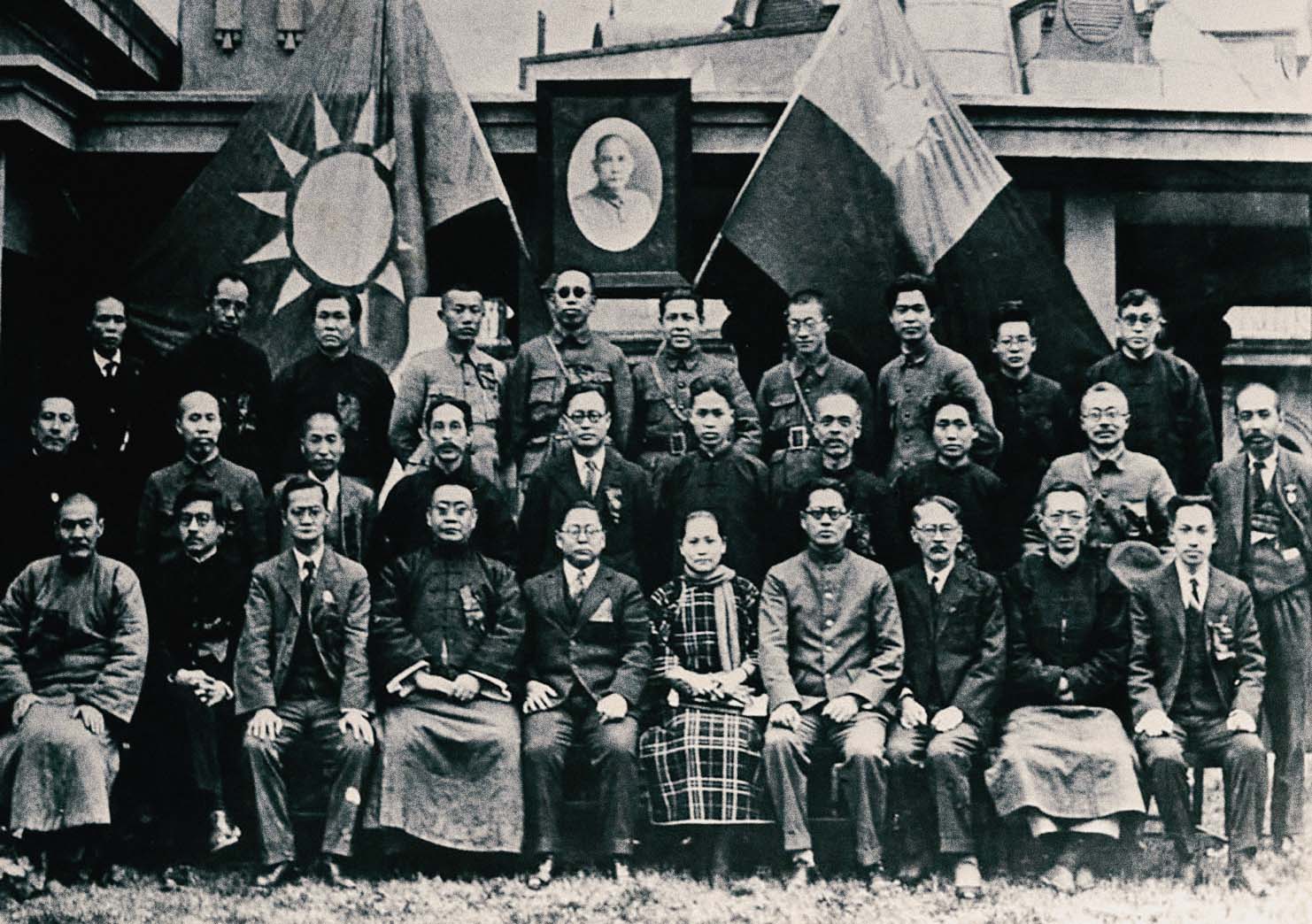
The early 1920s saw a surge of ferment against imperialism among a layer of the Chinese masses. Large numbers of workers and peasants, many of whom were radicalising to the left, joined the KMT due to a lack of a mainstream alternative. This presented both a problem and an opportunity for the young CCP. In particular, the CCP had to find a way to reach and win over this layer that looked to the KMT without sowing illusions in the so-called ‘progressive national bourgeoisie’ around Sun Yat-sen.
In 1922, the Comintern and the CCP took a series of evolving measures to orient towards the KMT’s rank and file. During the CCP’s Second Congress, a resolution was adopted for a united front to be formed with the KMT, while maintaining the CCP as an independent party. Soon after, following the intervention of Comintern representative Henk Sneevliet (Maring), leading members of the CCP were persuaded to join the KMT in an attempt to win over its ranks to socialism.
This was then followed in 1923 by the Soviet government's direct interaction with Sun Yat-sen. Sun was offered assistance with funds, military equipment, and help to strengthen the organisational structures of the KMT as a party, in an attempt to win him over to Marxism. Thus began what would become known as the ‘First United Front’.
The united front tactic had a long history in the development of the Bolshevik Party. It took the form of temporary agreements between the Bolsheviks and other organisations to fight for specific actions on the basis of ‘march separately, strike together’.
The idea was that on the basis of joint activity, communists could win over workers with reformist illusions, by proving the superiority of their ideas and methods in practice. It was discussed at the Third Congress of the Comintern in 1921, where Lenin and Trotsky were at pains to point out that a key condition of any united front is to maintain the political independence of the revolutionary party.
The First United Front was intended to be an application of this tactic to the conditions in China, a backward, semi-colonial country, where a large section of the working class held illusions in the bourgeois-nationalist KMT. Yet in contrast to the Leninist conception of the united front, the First United Front began with important concessions on both the political and organisational fronts.
In order to obtain an agreement with Sun Yat-sen, the Soviet representative, Adolphe Joffe, publicly agreed that “the Soviet system cannot be adopted in China” in the Sun-Joffe Manifesto, signed on 26 January 1923. This effectively meant that the end goal of the communist movement was publicly disavowed over the heads of the Chinese communists.
The Executive Committee of the Communist International (ECCI), under the leadership of Grigory Zinoviev, instructed the Communists to establish a ‘bloc within’ the KMT by joining the KMT as individual members, whilst maintaining the ‘independence’ of the CCP. The authority of the International was used to secure acceptance of its instructions at the Third National Congress of the CCP in June 1923, despite considerable opposition at all levels of the party.
In practice, the restrictions placed upon Communist members by the KMT meant they had to subordinate themselves to the discipline and objectives of the leadership for an unspecified period, without any freedom of criticism.
The guidance of the ECCI only worsened as Stalin began to consolidate power in the Soviet Union after Lenin was incapacitated by illness in 1923. Resting on the conservative state and party bureaucracy, Stalin first put forward his theory of ‘socialism in one country’ in the autumn of 1924.
Linked to this development, the foreign policy of the Soviet Union began to shift towards diplomacy and accommodation with capitalism, as opposed to world revolution. In China, what this meant was an increasingly friendly stance towards the bourgeois leadership of the KMT.
The majority of the ECCI argued that the Chinese working class was too weak to lead a revolution, in what was an overwhelmingly backward and peasant country. Therefore, according to them, the character of the coming revolution could only be bourgeois-democratic in nature, and led principally by the bourgeoisie. This was in spite of the fact that the proletariat was a small proportion of the Russian population in 1917, yet there the proletariat had succeeded in seizing power, whilst the weak bourgeoisie played a directly counter-revolutionary role. In China, the bourgeoisie was even weaker, and even more dependent on foreign imperialism.
The Comintern leaders had particularly strong illusions in the KMT leader Chiang Kai-shek, who succeeded Sun Yat-sen as party leader after the latter’s death. Indeed, at that time Chiang appeared to be amenable to working with Moscow in exchange for foreign aid. The ECCI majority tried to win Chiang over by admitting the KMT as an ‘associate party’ of the International in 1926, and even elected him as an ‘honorary member’ of its executive committee. Only Trotsky voted against this.
The ECCI’s position flew in the face of the ‘Theses on the National and Colonial Question’, as passed at the Second Congress of the Comintern in June 1920, which stated:
“A determined fight is necessary against the attempt to put a communist cloak around revolutionary liberation movements that are not really communist in the backward countries. […] The Communist International should accompany the revolutionary movement in the colonies and the backward countries for part of the way, should even make an alliance with it; it may not, however, fuse with it, but must unconditionally maintain the independent character of the proletarian movement, be it only in embryo.”[2]
The anti-Marxist ideas coming from Moscow were strongly resisted by Chen Duxiu and the bulk of the CCP leadership. The ECCI thus resorted to the threat of expulsions to steamroll the CCP leadership into submission. This was amplified in 1924, when the Comintern implemented a permanent ban on factions throughout all the parties of the International, thereby making open dissent with the leadership impermissible.
It was this experience that produced opposition to the Comintern’s agents inside the CCP from the very beginning.
Trotsky’s struggle
Trotsky, who took up the struggle to defend the ideas of genuine Marxism against the Stalinist degeneration of the USSR and the Comintern, closely followed the developments in China.
Trotsky always objected to the Comintern’s instructions to the CCP to unite with the bourgeois KMT, warning of the danger of class collaboration. Between 1923 to 1926, Trotsky repeatedly raised the need for the CCP to break with the KMT.
Trotsky explained that in China, as was the experience in Russia, the national bourgeoisie was unable to complete the tasks of the bourgeois-democratic revolution.
On the one hand, the Chinese bourgeoisie had developed as nothing more than a ‘comprador’ class, inextricably tied to the interests of western imperialism. Further, the Chinese bourgeoisie was tied to, and often even part of the small handful of the big landlords that owned 62 per cent of China’s arable land.[3]
This weak bourgeoisie would fear a revolutionary movement of the working class above all else, and was therefore organically incapable of waging any kind of determined struggle against either foreign imperialism or the remnants of feudalism in China – two of the most basic tasks of the Chinese revolution.
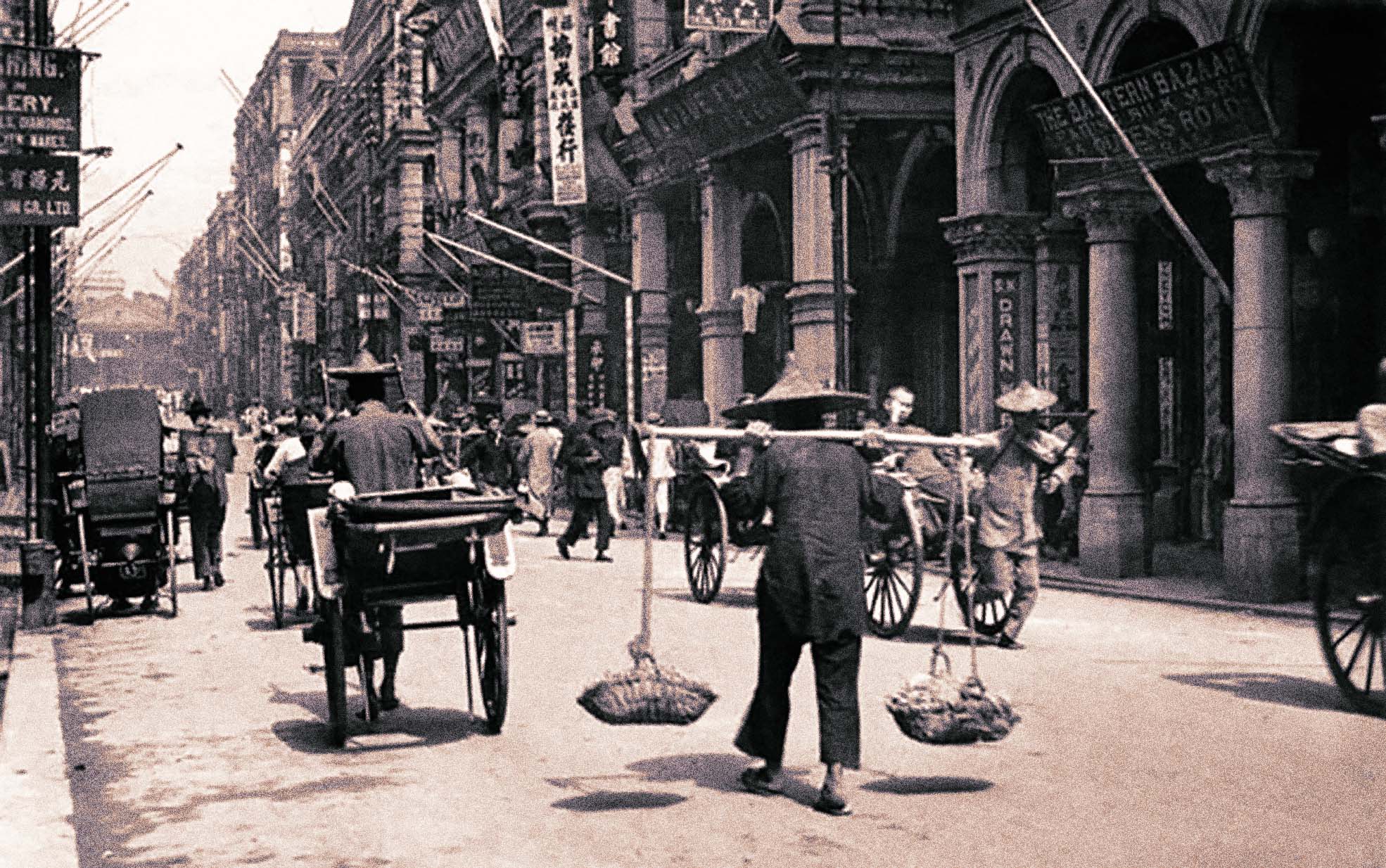
On the other hand, Trotsky argued that although the working class in China was numerically weak compared to the overwhelmingly peasant composition of the population, its economic role and weight in society meant that it could nevertheless play the leading role in a future revolution.
By adopting a correct policy of land to the peasants, it could forge a powerful alliance capable of expelling imperialism, and establish a regime of workers’ power, as in Russia in 1917. But in order to play this role, the working class needed its own, class-independent party, which must sow no illusions in the bourgeois nationalists among the worker and peasant masses.
This was precisely an application by Trotsky of his theory of the ‘permanent revolution’. The revolution would be ‘permanent’ in the sense that the working class must not limit itself to helping the bourgeoisie to establish its own ‘democratic’ regime, but could instead lead the revolution and take power itself in alliance with the peasants.
Further, once the workers took power, they would not stop at carrying out bourgeois-democratic tasks, such as unification of the country and land reform. The logic of the struggle would inevitably lead them to proceed to carry out socialist tasks, such as the nationalisation of industry. Finally, the revolution would have to spread internationally in order to succeed, since it would be impossible to build socialism in one country, particularly a backward country as China was at that time.
At this time, however, the Stalinists were engaged in a bitter faction fight against Trotsky's Left Opposition in the USSR. This reflected the clash between the conservative interests of the rising bureaucracy, under the leadership and protection of Stalin, and the genuine traditions of Leninism, with its emphasis on the strengthening of workers’ democracy and the struggle for world revolution. The ECCI, which at that time was headed by Zinoviev in league with Stalin, therefore outvoted Trotsky time and time again in accordance with this struggle.
The Moscow bureaucracy feared Trotsky’s views would reach the CCP’s members, so they began a campaign of slander against Trotsky within the CCP. Working through the Comintern’s agents stationed in Shanghai (called the Far East Bureau), they began this campaign by suddenly moving a resolution at the CCP’s Fourth Congress in 1925. In it they denounced Trotsky over a vague charge that his criticisms against the leadership of the Comintern at the time could have been used by the enemies of the world communist movement.[4]
According to Zheng Chaolin, who was present at the Congress and later became a Chinese Trotskyist, everyone in attendance was stunned by this resolution, as it seemed to come from nowhere. But they were only getting Zinoviev and Stalin’s side of the story, and had no means to access Trotsky’s writings. This resolution was passed, helped along by some willing collaborators within the CCP leadership who joined-in slandering Trotsky.[5]
Opposing anything that Trotsky said therefore became the party line of the CCP. The same process took place in communist parties all over the world under Zinoviev’s leadership in the Comintern. Politically, this meant that those representing the genuine ideas and tactics of revolutionary communism were isolated or purged from the leadership entirely in the name of ‘Bolshevising’ the communist parties, which led to one disastrous defeat after another.
But no amount of lies and slanders could withstand the shock of events.
The 1925-27 revolution
The rapid growth of the CCP coincided with a huge revolutionary wave that swept China between 1925 and 1927. Throughout this period, the CCP gained the support of hundreds of thousands of workers, but the Comintern insisted that the CCP refrain from winning the leadership of the working class on an independent basis. Instead, the communists were ordered to maintain their submission to the so-called ‘progressive bourgeoisie’ in the KMT, as Chiang Kai-shek appeared to be waging a military struggle against the warlords tied to imperialist interests in what was known as the ‘Northern Expedition’.
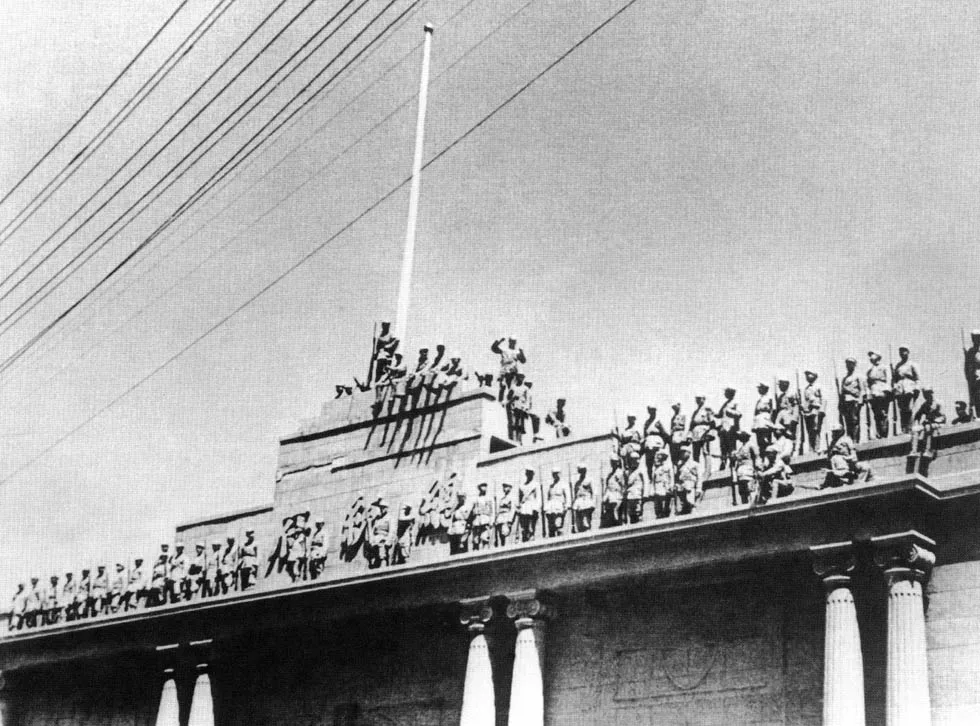
The gravest consequence of this policy came in Shanghai. In March 1927, the workers of Shanghai rallied behind the CCP. They staged a revolutionary general strike, which expelled the local warlord and left power in the hands of armed workers. The CCP could have used this tremendous victory to inspire workers in other Chinese cities to follow their example, which could have culminated in a socialist revolution throughout the country.
But the Comintern insisted that the CCP direct the workers to disarm and submit to the forces of Chiang Kai-shek, because in their view the Chinese Revolution was only ready for its ‘democratic’ stage. The CCP thus opened the gates of Shanghai to Chiang, who, following his class instinct, proceeded to massacre the disarmed workers and communists, drowning the revolution in blood.
The result was clear: the Comintern’s instructions had led the CCP and the Chinese working class to a traumatic defeat. Yet at the end of it, the Moscow bureaucracy placed all the blame on the party’s then-leader Chen Duxiu, who had followed the Comintern’s orders up to the Shanghai disaster, rather than honestly acknowledge their own enormous responsibility for the CCP’s mistakes.
New errors were then made in order to protect the prestige of the Moscow bureaucracy, such as the disastrous adventure of the ‘Canton soviet’. This series of zig-zags and defeats in turn led to the even more rapid bureaucratisation of the party.
These events led to more and more party members reassessing the advice and orders they had been given by Moscow. This happened among a number of groups independently from one another. Some of them were CCP members studying in Russia, who could speak Russian and found the writings of Trotsky on their own.
Some of them were older CCP leaders who were blamed by Moscow for the defeats, like the party’s founder Chen Duxiu, and Peng Shuzhi. They seriously reflected on the lessons from the defeats and came to Trotsky’s position. As a result, they were expelled from the CCP in 1929.
Others were petty-bourgeois types that disliked the Stalinist bureaucracy for their own confused reasons, and therefore expressed an interest in Trotsky’s Left Opposition.
These disparate groups formed independent tendencies within the CCP that would later coalesce to become the forces of Chinese Trotskyism.
The question of leadership
These initial layers of CCP sympathisers of Trotsky had a lot of potential. Some of them, including Chen Duxiu, were founding leaders of the party and had huge authority among rank-and-file members. Others, like Wang Fanxi, were younger members who studied in Moscow and knew Russian, which meant they could have formed a direct link with the Left Opposition in Russia and around the world.
Had they been able to consolidate a disciplined organisation in a timely way, there were many opportunities from the late 1920s onwards to recruit from the ranks of the CCP, which was in a deep crisis. This would have been an important step towards rebuilding Marxism as a force among the Chinese proletariat.
Unfortunately, this was not to be. Despite their alignment with Trotsky, they hadn’t mastered the theory and methods of Bolshevism for themselves. Yet this was precisely what was needed to navigate the period of harsh reaction that China was entering, with both the KMT and the CCP being fierce adversaries of their small forces.
The defeat of the revolution led to deeply cynical moods emerging amongst a certain layer. These were reflected in sectarian methods and behavior among many of those who were aligned with the Left Opposition. This was not only true in China but in many sections of the Left Opposition, where Trotsky was required to personally intervene in order to correct these mistakes.
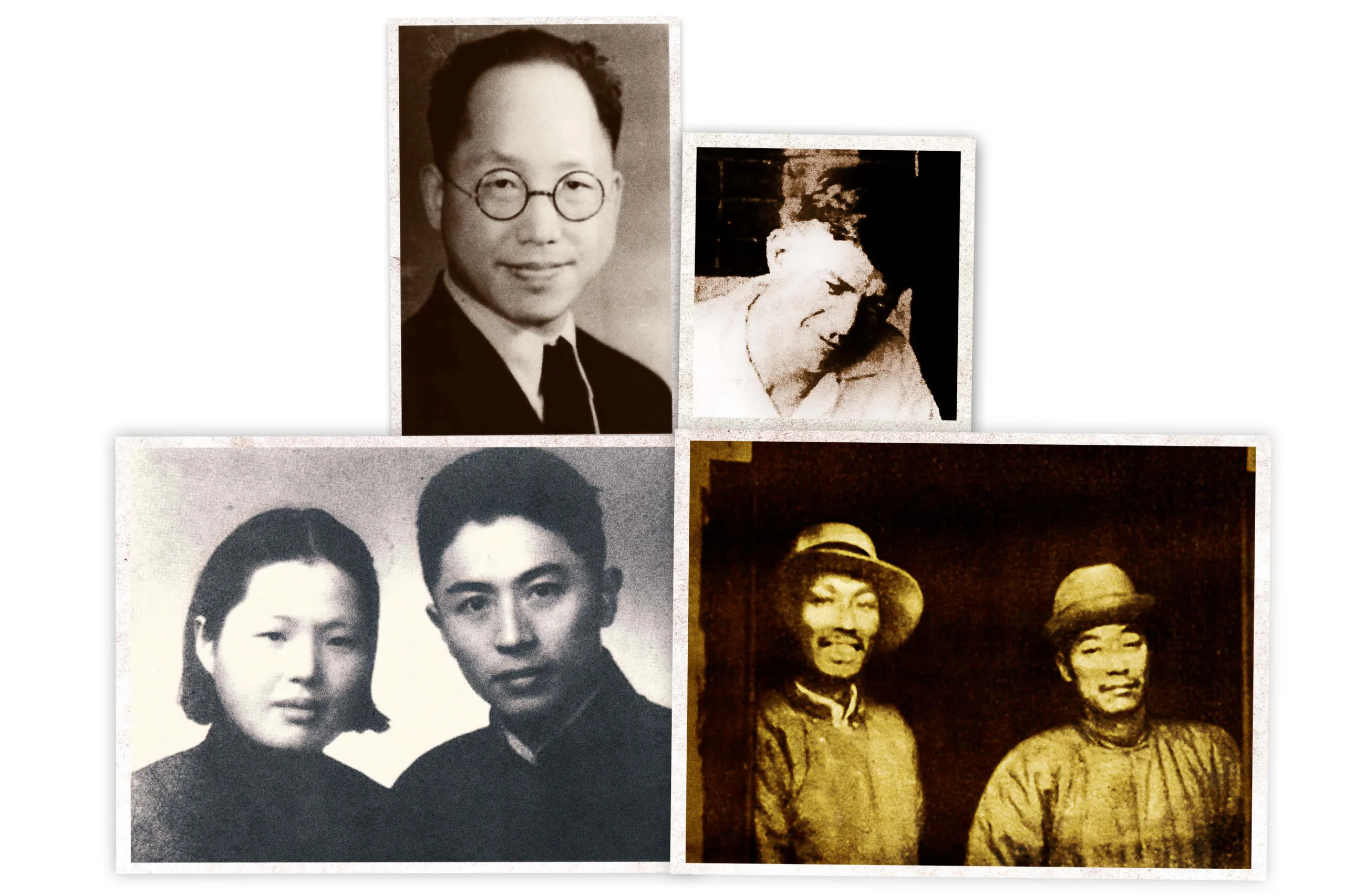
Thus, the Chinese Trotskyists began as four small sectarian groups who fought against one another for over a year and a half. The sources of contentions ranged from secondary political questions to outright interpersonal disputes.
What was required was a strong politically unifying force: a leadership with a clear understanding of the situation and sufficient authority to bring together the best elements on a principled basis. But sadly, this factor was precisely what was lacking.
Chen Duxiu was the only person who could have played this role, but many younger Trotskyists refused to work with him due to the fact that he had followed the disastrous line of the Comintern up until the Shanghai massacre, in spite of his reservations. And unfortunately even he lacked a strong grasp of Marxist theory, so that in many instances he lagged behind others, and was unable to provide the clarity of ideas necessary for such leadership.
Finally on 8 January 1931, Trotsky personally wrote a letter to all of the major groups. He assessed, based on some communications he received from all sides, that there was no reason for the split among groups to continue, and urged them to fuse into one.
From Trotsky’s point of view, as with many other sections of the International Left Opposition, the different groups of Chinese Trotskyists were mostly sincere revolutionaries, but were politically raw. He was willing to patiently guide them, even though there were many differences amongst themselves, as long as they all drew a line against any unprincipled elements. Thus he concluded his letter: “To bring unprincipled groups into the International Opposition would mean poisoning one's own organism.”[6]
What Trotsky couldn’t have seen was that there were, in fact, quite a few highly unprincipled elements among most of these groups. There were indeed people who were serious and brave, but they were mixed in with petty-bourgeois elements whose main priorities were to take leadership positions for their own prestige.
What Trotsky meant by a unification was that the sincere Chinese Trotskyists who held their perspectives, programmes, policies and methods generally in common, should unify into a single organisation. But when Trotsky’s letter reached China, it was interpreted in purely organisational, formal terms, i.e. anyone who declared solidarity with Trotsky from China, regardless of their political ideas or motivations, should be a part of this organisation.
The result was not the principled unity that Trotsky was hoping for, but a messy unprincipled fusion process that again dragged on for half a year, mired in bickering over each group’s representation on the Central Committee (CC).
On May Day 1931, a founding congress of the Chinese Left Opposition finally took place, which established the Communist League of China, with an Executive Committee with Chen Duxiu at its head. But very shortly after, a member called Ma Yufu, who was angry that he was not elected to the CC, decided to betray the entire organisation’s leadership by turning them over to the KMT.
Thus, shortly after their hard-won Unity Congress, the entire central leadership, with the exception of Chen Duxiu and Peng Shuzhi, were arrested and imprisoned. Chen and Peng were eventually arrested by the KMT on a different occasion the following year. The Chinese Trotskyists were thus deprived of a solid leadership from the very beginning.
Objective difficulties
Despite the decapitation of their leadership, there were still small grouplets of rank-and-file members, as well as South African Trotskyist Frank Glass, who worked hard to keep the embers of Trotskyism alive, mostly in Shanghai.
The situation initially seemed hopeless. The KMT regime, which was now a military dictatorship energetically pursuing a civil war ‘against communism’, saw no difference between the Trotskyists and the Stalinised CCP. In the years following 1927, Chiang Kai-shek was primarily obsessed with rooting out what he called ‘Communist Bandits’ from China, even as Imperial Japan invaded the country, seizing Manchuria in 1931.
In December 1936, Chiang Kai-shek was arrested by one of his generals and released on the condition that he sign a ceasefire with the CCP and to work with them to repel Japan together. Chiang reluctantly agreed on condition that the CCP suspend the class struggle, cease all communist propaganda, dissolve the Soviet Republic of Yenan (the government of the CCP-controlled zone), and incorporate the Red Army into the official national army. The CCP accepted these terms, and the so-called ‘Second United Front’ was formally established in the summer of 1937.
Chiang’s concession to work with the CCP included the release of all political prisoners in the KMT prisons. This fortunately benefited the Chinese Trotskyists, as important leaders like Chen Duxiu, Zheng Chaolin, Wang Fanxi and Peng Shuzhi were released under these terms.
With a small, inexperienced force with little resources, the Trotskyists were fighting a war on three fronts: against the KMT, against the CCP, and against the Japanese; all of whom viewed Trotskyism as deadly threats.
The KMT and the Japanese, of course, saw no difference between the CCP and the Trotskyists, and brutally repressed them both. Meanwhile, the CCP, in line with Stalin’s campaign to exterminate Trotskyism worldwide, also conducted rancorous anti-Trotskyist purges wherever they went towards the end of the 1930s. It is hard to overstate how complex and difficult the situation was for genuine Marxists in China at the time.
Against all odds, the Trotskyists established a provisional national leadership of the Communist League in Shanghai sometime between 1933 and 1934, and then the scattered forces in Hong Kong, Shandong and Guangxi managed to reestablish contact with this centre.
From here, the Communist League oriented towards the urban workers and students that were largely disconnected from the CCP, which had shifted its base to the countryside, and its orientation towards the peasants. They translated and published Trotsky’s works in Chinese, and produced a number of illegal newspapers, printed on presses designed and built by the comrades themselves. The fact that they managed to achieve these important conquests deserves the highest degree of respect.
The war
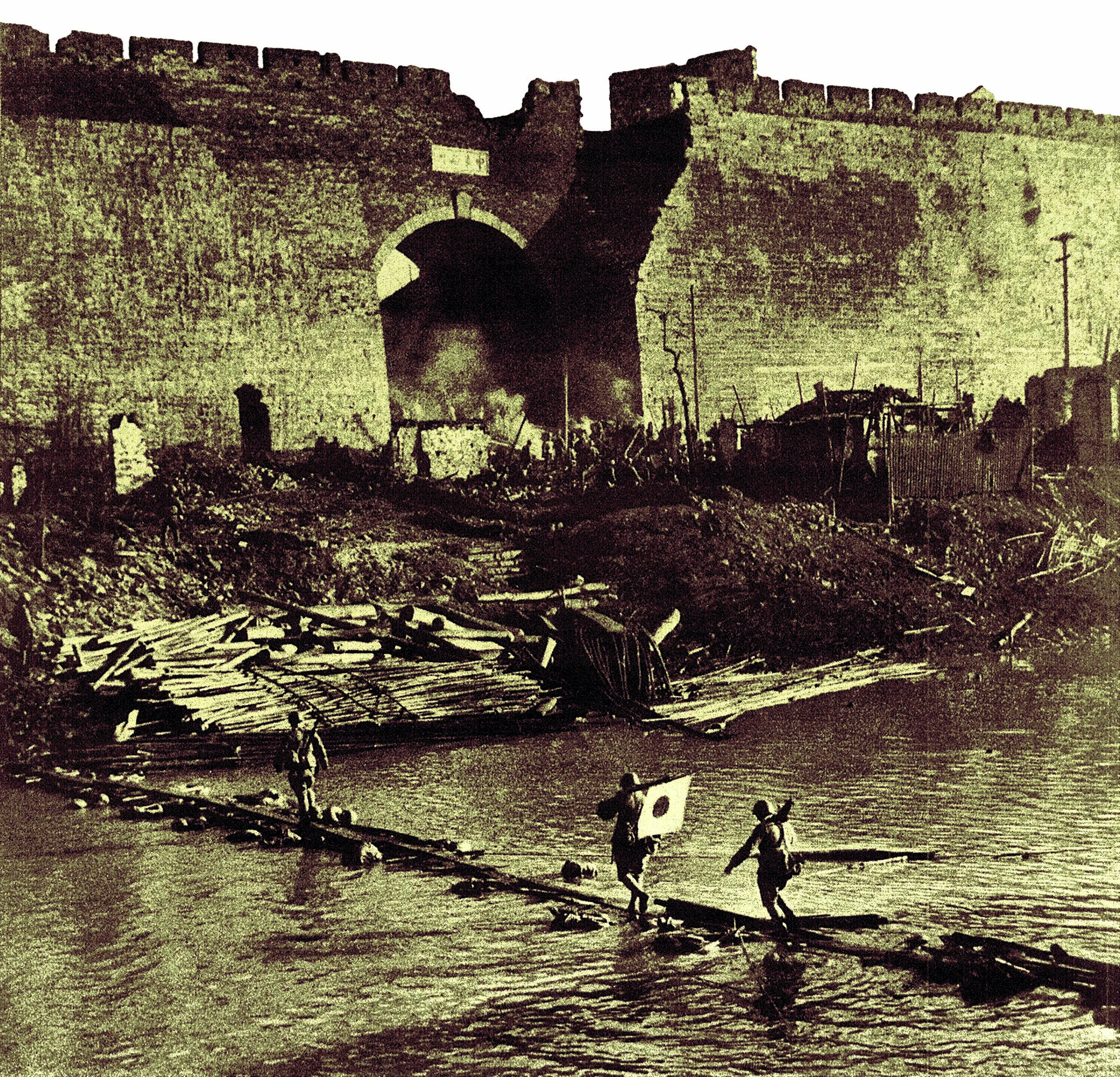
The onset of the full-scale invasion of China by Japan in 1937 posed a very serious question for the Chinese Trotskyists: what position should they take on the war?
It is true that Chiang Kai-shek was a butcher of the Chinese proletariat and an arch-reactionary. However, the nature of Japan’s invasion of China was that of a war between an imperialist power and an oppressed nation fighting for its national liberation.
Concretely, the brutality of the Japanese invaders instigated an extraordinary mood of resistance among the workers and peasants of China. This is especially true after the Nanjing Massacre in December 1937, where Japanese troops conducted one of the worst war crimes in history. Hundreds of thousands civilians were plundered, raped, and murdered.
Frank Glass gave a harrowing report of life under Japanese occupation in 1939:
“In the Japanese-controlled areas, the Japanese usually kill any Chinese found engaged in what is termed anti-Japanese work, under which charge comes anything from not having a cigarette for a Japanese soldier, incorrect bowing to sentries, and possession of a Kuomintang newspaper. In these areas the Japanese terror is directed not only against revolutionists, but against the entire population. Countless villages thought by the Japanese to have been assisting guerrilla forces have been wiped out by fire, the Japanese machine-gunning fleeing inhabitants.”[7]
The Chinese masses were burning with fury against the imperialist invaders. Yet although the CCP’s peasant army numbered around 100,000 at that time, it was poorly equipped, and mostly limited to the small and relatively remote region around Yenan in Shaanxi province. The fact was, like it or not, the biggest force that was fighting against this invasion that the masses could turn to was the KMT.
This presented the Chinese Trotskyists with a very complicated problem, at a time when they only had about 200 people scattered around China. How should they position themselves towards the KMT and the CCP, without either bending to pressures of opportunism or cutting themselves off from the working class? At that point, Trotsky provided very important guidance on how to approach this question.
A principled united front
To begin with, it is very clear that communists must side with the masses of the oppressed nation against imperialism. But here, the Chinese masses had not yet developed their own organs of power, and the revolutionaries of the Communist League of China were very far from big enough to make an impact on the situation on their own. The small forces of Trotskyism needed to be built up by connecting with this progressive mood for liberation from imperialism among the masses.
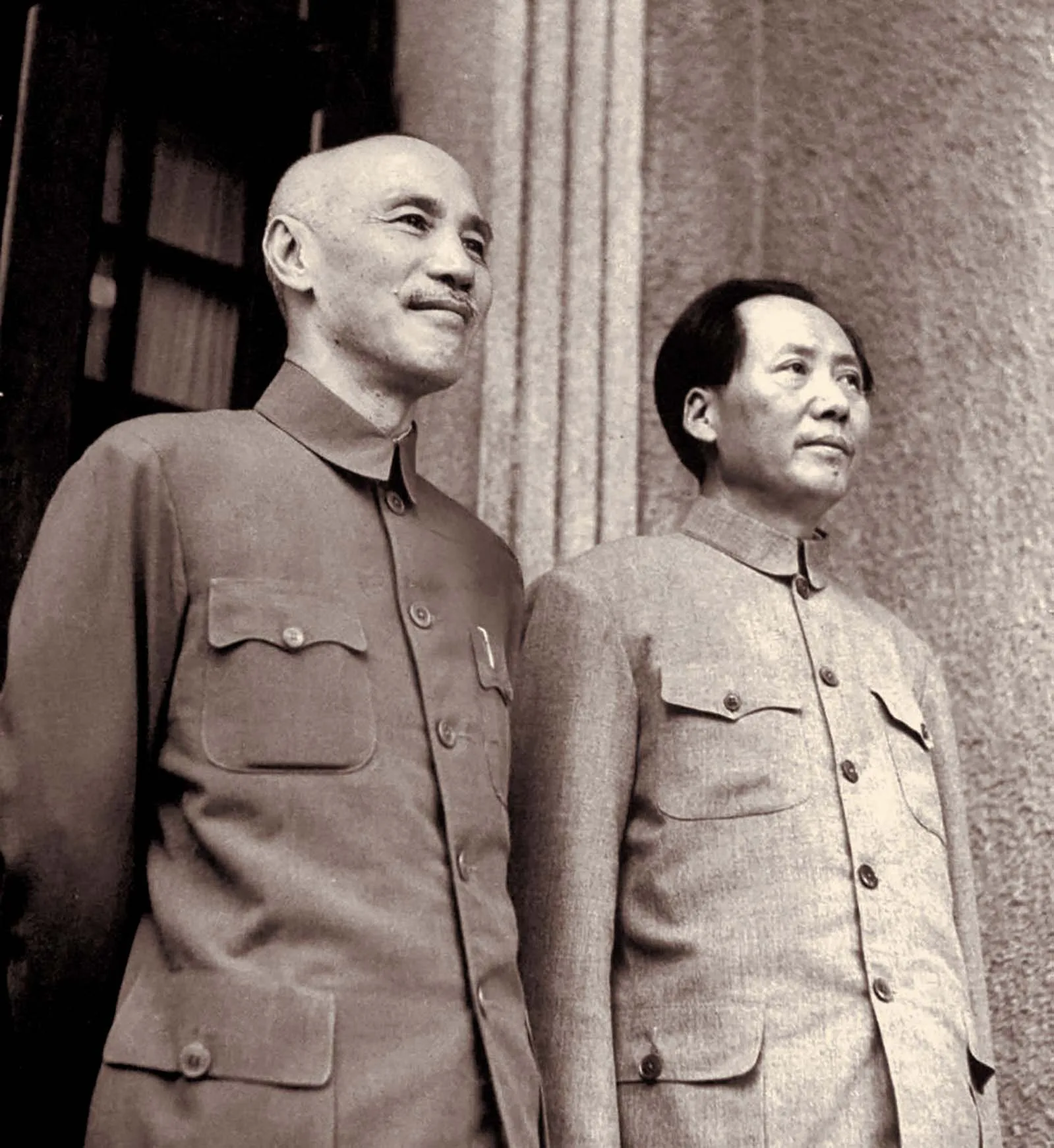
The only way to do that in this instance was for the Trotskyists to present themselves as a part of a principled military united front with the KMT and the CCP, whilst maintaining their class independence.
This was precisely what Trotsky advocated as a policy for China in 1937. He went as far as calling for revolutionaries to join the military struggle against Japan, even if that meant joining the KMT armies. This is how Trotsky analysed the situation in a letter to Diego Rivera that year:
“Chiang Kai-shek is the executioner of the Chinese workers and peasants. But today he is forced, despite himself, to struggle against Japan for the remainder of the independence of China. Tomorrow he may again betray. It is possible. It is probable. It is even inevitable. But today he is struggling. Only cowards, scoundrels, or complete imbeciles can refuse to participate in that struggle.
[…]
To participate actively and consciously in the war does not mean ‘to serve Chiang Kai-shek’ but to serve the independence of a colonial country in spite of Chiang Kai-shek. And the words directed against the Kuomintang are the means of educating the masses for the overthrow of Chiang Kai-shek. In participating in the military struggle under the orders of Chiang Kai-shek, since unfortunately it is he who has the command in the war for independence – to prepare politically the overthrow of Chiang Kai-shek… that is the only revolutionary policy.” (Trotsky’s emphasis.)[8]
This tactic was fundamentally distinguished from the Stalinist ‘Popular Fronts’ (i.e. cross-class coalitions), or what Mao called the ‘Second United Front’ with the KMT. Mao and the CCP in particular attempted to surrender all their territories to the KMT while accepting Chiang as their commander, and to dissolve their class independence into a general ‘national’ camp with the bourgeois KMT at its head.
In contrast, a genuine united front tactic would have had the revolutionary party form a bloc in the national struggle, without forgoing its political and organisational independence, and especially not its social demands. Rather than fostering illusions in the KMT’s ability to ‘fight imperialism’, its policy should have been directed at exposing the bankruptcy of the KMT to conduct the war. At all times it must have reserved the option to overthrow the bourgeois elements at the head of the national liberation struggle, even before the war was won.
As Trotsky explained:
“We must win influence and prestige in the military struggle against the foreign invasion and in the political struggle against the weaknesses, the deficiencies, and the internal betrayal. At a certain point, which we cannot fix in advance, this political opposition can and must be transformed into armed conflict, since the civil war, like war generally, is nothing more than the continuation of the political struggle. It is necessary, however, to know when and how to transform political opposition into armed insurrection.” (Trotsky’s emphasis.)[9]
Trotsky envisaged that with a correct application of the united front tactic to the conditions prevailing during the war, and above all the mood of the workers and youth, the Chinese Trotskyists could break out of their isolation, allowing them to recruit from a wider layer, and find a road to the working class, which was without any revolutionary leadership.
Divisions among the Trotskyists
Unfortunately, at the outbreak of the war, the Chinese Trotskyists were unclear on this key question.
In the leadership of the Communist League, Zheng Chaolin refused to support this war of resistance because he considered this would amount to ‘class collaboration’ with the KMT. In an article called ‘Under the Banner of Revolutionary Defeatism’, Zheng argued that in the imperialist epoch of capitalism, national liberation struggles no longer had any progressive content. Therefore, he argued, Marxists should support the defeat of Chiang in the war against Japan.
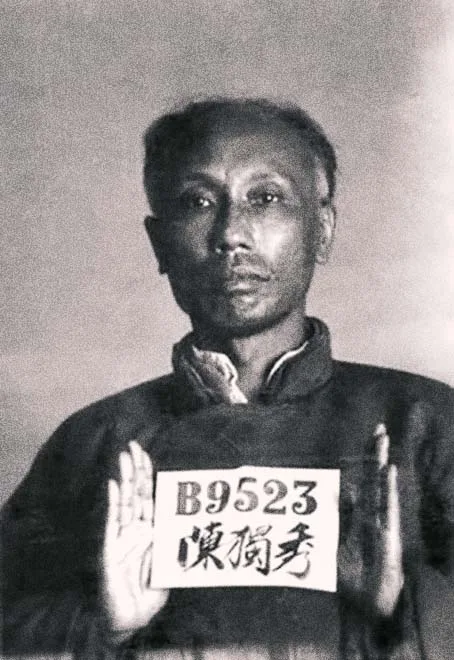
A majority, based in the party center in Shanghai, supported the resistance but also criticised the KMT leadership in a way that made them appear passive towards the war effort.
As Chen Duxiu described to Trotsky in a later letter:
“In the eyes of the masses, what they saw of the ‘Trotskyists’ was not anti-Japanese resistance, but page after page in every issue of their official newspaper filled with articles attacking and denouncing the Chinese Communist Party and the Kuomintang. As a result, the Stalinists’ propaganda about ‘Trotskyist traitors’ found an echo among all strata of society, such that even those sympathetic to us could not clearly understand who it was that the ‘Trotskyists’ were chiefly opposing at present.”[10]
The Trotskyists should have thrown their whole weight behind bold measures in agitating among the workers for revolutionary resistance against Japan, such as organising workers’ militias, while skillfully criticising the KMT in such a way as not to appear as outside the resistance effort. They should have also demanded the KMT provide arms and training to workers in the cities as the best way to stop Japanese imperialism. That way, the masses would see the Trotskyists as sincere fighters for liberation, and this authority could then be used to amplify their call for the masses to take a more class-independent and revolutionary approach to the war.
To be sure, there were individual comrades who did participate in the military struggle, either by joining the guerilla detachments organised by the KMT and the CCP, or by raising guerilla detachments of their own. Shandong was one of the hotspots of the Trotskyist-led guerilla war against Japan, but these tended to be largely detached from the party centre, and were often exterminated by either the KMT or the CCP. More importantly, these attempts at guerilla warfare tended to be detached from the working class in the cities, which then also isolated the revolutionaries.
Only a small minority, among them Chen Duxiu, thought that proactively supporting the war of resistance was necessary, or at least made attempts to do so.
However, while Chen was correct in arguing for the need to actively participate in the war effort, he had never fully mastered the method of Marxism himself and was undergoing a process of demoralisation at this time. While in prison, the news of the Moscow Trials caused him to fall into confusion about the nature of the Soviet Union. He therefore renewed his focus on the question of ‘democracy’ in the abstract, similar to the position he held before he turned to Marxism. This affected the political content of Chen’s proposal, which amounted to restricting the programme of the Trotskyists to the democratic and national struggles.
Chen’s demoralisation progressed further when he publicly announced in 1937 that he “no longer belongs to any party or organisation”, in an effort to forge some kind of united front between the Trotskyists and minor liberal-democratic parties. He completely broke with the Chinese Trotskyists by the end of the 1930s. He then lived in poverty and dropped out of politics, until he died, suffering from high blood pressure and heart disease, in 1942.
Revolutionary defeatism?
This disunity on the question of how to orient to the war with Japan would worsen. Along with a lack of actual unified organisational work, it caused a tremendous rift within the Communist League. In fact, some of the leading Chinese Trotskyists started to double down on their sectarian positions on the war, especially after the US declared war against Japan in December 1941.
A significant minority, led by Wang Fanxi, believed that since US imperialism was now backing China against Japan, the entire nature of the war had changed. Wang argued that China was no longer an oppressed nation fighting for its liberation, but a proxy of the US in its inter-imperialist conflict with Japan. He therefore reasoned that Chiang Kai-shek’s position was more like that of the Russian tsar in the First World War, which meant that revolutionaries could no longer support any side in the war. Zheng Chaolin, considered this to be fundamentally the same position as that which he had sustained since the full-scale invasion of China by Japan in 1937, and thus joined Wang’s faction.
But in the Sino-Japanese War, even when the US came to back China, the Chinese masses clearly understood that they were waging an existential fight as an oppressed nation to avoid becoming an outright Japanese colony. The fact that the US had its own imperialist conflict with Japan did not alter the nature of the anti-colonial independence struggle of the Chinese. Even among the advanced layers of the working class, who already had misgivings of Chiang Kai-shek, defeating Japanese imperialism remained their top priority.
Wang Fanxi attempted a slightly less crude but equally abstract position as Zheng Chaolin, which he called ‘revolutionary victoryism’. This is how he explained his idea based on his interpretation of Trotsky’s article in 1937:
“The revolutionary victoryist policy of Trotsky and the Chinese Trotskyists was derived from the fact that the Sino-Japanese War was part of the aftermath of the defeat of the Chinese Revolution of 1925-1927. This was based on the premise that the corrupt, degenerate, and steadily retreating Kuomintang regime could not possibly truly defeat the Japanese aggressors, and that the most reliable and assured way to defeat the Japanese invaders was to organise the workers and peasants under their own political banner.”[11]
Wang claimed that the Trotskyists should say to the Chinese masses: the KMT is too corrupt and servile to defeat the Japanese. In order to achieve victory, the workers and peasants must organise themselves and overthrow the KMT first.
In the abstract, this all sounded true. Indeed, if the Trotskyists had already won over the vanguard of the working class, it would have been the correct position to take. The problem was that, while the general aim of this policy was correct, there was still no viable alternative to the KMT-CCP ‘United Front’ as the leading force of resistance, no matter how inept and hated the KMT was.
As a force of a few hundred in a country with hundreds of millions of people, the Chinese Trotskyists were nowhere near to being a credible alternative leadership in the eyes of the masses. To tell the masses that the prerequisite of defeating the Japanese is to overthrow the KMT, while there was no mass alternative that could hope to replace the KMT-CCP alliance, could only be perceived by the masses as advocating putting the war effort on hold until such time as a viable mass revolutionary party would appear – as if Japan would kindly wait for this eventuality. Japan had to be fought now.
While those advocating these positions were in a minority within the forces of the Trotskyists themselves, they were very influential and published articles along these lines in some of the Chinese Trotskyists’ official theoretical journals. To this day, these articles are used by the CCP as proof that the Trotskyists were traitors.
Scattered forces
Although a majority around Peng Shuzhi did not agree with these positions, they themselves became scattered across the country. They therefore had to largely act on their own, with even smaller forces.
In Shanghai, where the national centre was, waves of arrests and a large exodus of workers fleeing the city from the Japanese rendered the branches inactive. In Hong Kong, the Trotskyists entered the factories and gradually recruited individual workers. However, they were still a small handful by the time the Japanese occupied Hong Kong, and all were forced to flee elsewhere.
Zhongshan and Wenzhou were two more successful places of work. In both cases, the success came from their focus on the youth. In Zhongshan, the Trotskyists built a youth front group called the ‘Wartime Youth Service Corp’, which organised school students to travel to villages to agitate for the war effort, as well as reading groups that included Trotskyist literature. The Wenzhou Trotskyists, beginning with a handful of school teacher comrades, recruited from their students through reading groups, and began to spread their influence across several middle schools.
Unfortunately, even where they were making headway, the Chinese Trotskyists were often working as miniscule forces left to their own devices. They often suffered severe repression from the KMT and the Japanese, which smashed up the work that they had built up. The Stalinists actively collaborated in this repression, often passing on information on Trotskyists and their activity to the authorities.
It was in such a state that the majority around Peng Shuzhi and the minority around Wang Fanxi conducted an acrimonious faction fight in 1942. This resulted in a split where Peng’s majority declared that the minority had ‘left the organisation’ by publishing their own papers. The forces of Chinese Trotskyism thus split once more, never to unify again.
The victory of Mao
Further opportunities and challenges would open up after the defeat of Japan in 1945. But unfortunately the Chinese Trotskyists would make a number of serious errors of perspective in this period. Fundamentally, they did not understand how to concretely measure the balance of forces, especially after the war.
By the time that fighting resumed between the KMT and CCP armies in the summer of 1946, Chinese Trotskyism existed de facto as two separate organisations with separate publications, but both claiming allegiance to Trotsky’s Fourth International.
The two factions waged bitter disputes on a range of political and tactical questions, with each labelling the other as ‘opportunist’, ‘sectarian’, and so on. However, on one important point they shared the same perspective: both expected the CCP to be defeated by the KMT. Indeed, they treated this prediction as an inevitability.
In 1947, Peng Shuzhi, the leader of the majority faction, wrote:
“We showed deepest sympathy to the war conducted by the Stalinist peasant armies, although we never ceased to point out that their defeat was, is, and will be caused by the treacherous policies of the party and the Kremlin.”[12]
In a response, published in 1948, Wang Fanxi of the minority wrote:
“As a peasant war, the civil war has a progressive character on the side of the peasants; but, as a peasant war only, the civil war is devoid of any perspective, and is even doomed to failure because of its Stalinist domination.”[13]
Their perspective was based purely on a mechanical interpretation of Trotsky’s analysis of China in the 1920s and 1930s, and of his theory of the permanent revolution.
Many times, Trotsky explained that the democratic tasks of the Chinese revolution could not be carried out by the Chinese bourgeoisie, and therefore could only be solved by the dictatorship of the proletariat in alliance with the peasantry, as in Russia. The bourgeois-democratic revolution in China would therefore ‘grow over’ into the socialist revolution.
Further, drawing on the catastrophic defeat of the 1925-27 revolution and the role of the Comintern, Trotsky also explained that the organic opportunism and class-collaborationism of Stalinism was a recipe for defeat: either the Communist Party would capitulate to Chiang Kai-shek, or to the bourgeoisie more generally.
In 1932 he wrote:
“Under present conditions the peasant war by itself, without the direct leadership of the proletarian vanguard, can only pass on the power to a new bourgeois clique, some ‘left’ Kuomintang or other, a ‘third party’, etc., etc., which in practice will differ very little from the Kuomintang of Chiang Kai-shek.”[14]
The serious error of both Trotskyist factions was to take up Trotsky’s analysis in a one-sided fashion, without applying it concretely to the conditions that existed in China and internationally after the Second World War.
This meant that the Chinese Trotskyists stubbornly insisted that Mao could not defeat the KMT, even as the CCP’s peasant army crossed the Yellow River in June 1947, launched a massive campaign against the dissolving KMT armies from late-1948, and crossed the Yangtze River in April 1949.
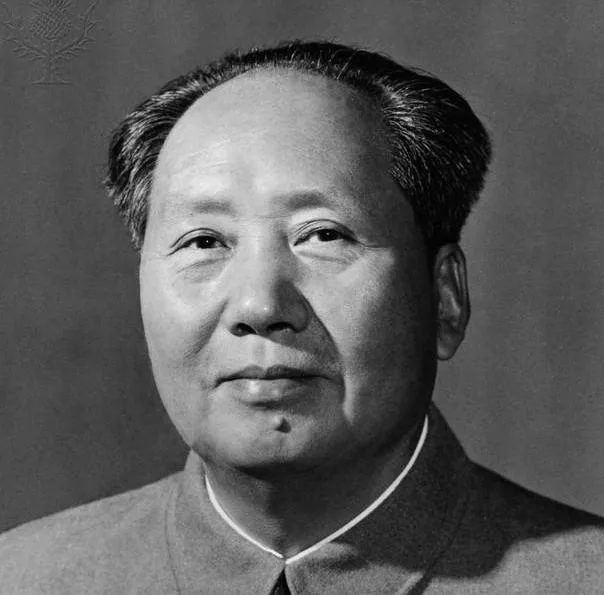
From the Yangtze Mao’s army (now called the People’s Liberation Army – PLA) swept across the rest of China, while the KMT forces frantically abandoned one city after another and retreated to Taiwan. Mao proclaimed the foundation of the People's Republic of China from Tiananmen Square on 1 October 1949.
Ted Grant
This rapid succession of events shocked the world. As Wang Fanxi later explained:
“The speed with which the edifice [of the KMT] collapsed not only shocked the Chiang Kai-shek regime and its masters in Washington, but also came as a surprise to Stalin. To a certain extent, it was even unexpected by Mao Zedong. Needless to say, we Chinese Trotskyists also did not expect it.”[15]
Later in 1951, in a belated attempt to understand what had happened, Peng Shuzhi revealed the mechanical outlook that was common among all Chinese Trotskyists prior to the revolution:
“The Trotskyists maintained that the overthrow of the bourgeois KMT regime was possible only if the urban working class stood up and led all the oppressed and exploited in the country, especially the peasant masses, carried forward a persistent struggle, and eventually brought about an armed insurrection. It was not possible to overthrow the bourgeois regime by relying exclusively on the peasant armed forces because, under the present conditions of society, the countryside is subordinated to the cities and the peasants can play a decisive role only under the leadership of the working class. But the fact now confronting us is exactly the contrary: it was a Stalinist party relying exclusively on the peasant armed forces that destroyed the old regime and seized power.
This extreme contradiction between the ‘facts’ and the ‘traditional conception’ first of all led to confusion and disputes among the Chinese comrades.”[16]
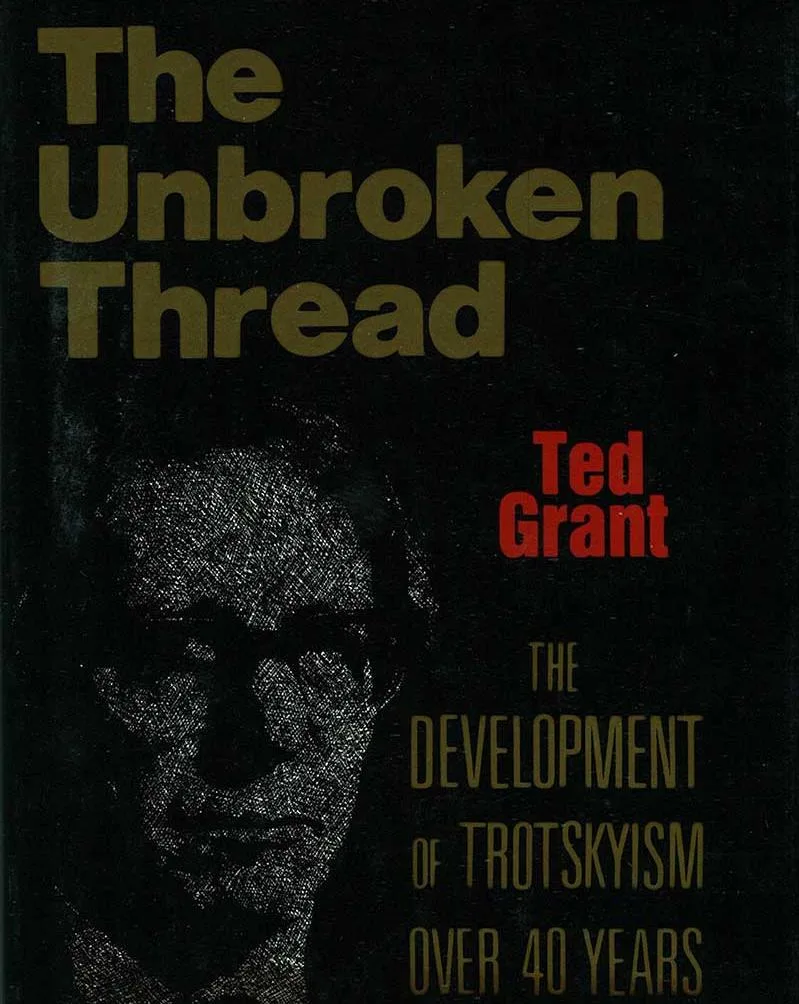
The only figure in the Fourth International who succeeded in making a clear and correct analysis of this process was Ted Grant. In an article published in January 1949 – nine months before the CCP took power – he predicted that the CCP under Mao would not only take power, but would even overthrow capitalism, modeling his regime after the Stalinist bureaucracy in the Soviet Union.
This did not refute the theory of permanent revolution at all, but rather was the realisation of the permanent revolution in a distorted form, arising from the peculiar set of circumstances that had emerged after the end of the Second World War, which were not present in the 1930s.
First, the power and prestige of the Soviet Union was tremendously strengthened by the end of the war. As a result, the CCP gained a massive boost in their military forces, as well as authority among the masses in China. Added to this, the CCP directly controlled huge swathes of territory as a result of their struggles against the KMT and the Japanese.
Another important feature of the international situation at the time was that most of the old imperialist powers had been shattered. Meanwhile, US imperialism, which had emerged as the overwhelmingly dominant imperialist power, was not able to intervene decisively at that time.
Finally, there was the extreme state of decay of the Chinese bourgeoisie and its regime. The KMT was rotten, depleted, and largely demoralised. Even though Mao did indeed for a short period try to conciliate with Chiang, the KMT’s army largely disintegrated in the face of Mao’s PLA, which promised land to peasant soldiers who joined it. The bourgeoisie fled in droves and the CCP easily advanced to take power on their own.
Ted Grant wrote in the spring of 1949:
“The peasant movement, Marxism teaches, must find a leadership in the cities either in the bourgeoisie or in the proletariat. Where it is the bourgeoisie then, of course, we have a capitalist development. Where the proletariat takes the lead, then we have the socialist revolution. Here we have a peculiar variant of the latter, in that the peasant movement has a centralised leadership in the form of the Stalinist party, which had its roots in Moscow. Basing itself on the peasantry, it enters the towns not with the aim and outlook of a genuine communist party, but with the aim of establishing its power by manoeuvring between the classes. It does so by transferring its social basis to the proletariat – not as the direct representative of the proletariat as would a Bolshevik party – but in a Bonapartist manner.”[17]
He continued:
“Stalinism makes a coalition under conditions where the back of the bourgeoisie has been broken, in order to play off the bourgeoisie against the danger of an insurgent proletariat. Thus the coalition which the Stalinists are proposing in China will not mean the victory or even the survival of the bourgeoisie. It will be used in order to gain a breathing space for the organisation of a Stalinist, Bonapartist state machine on the lines of Moscow.”[18]
This is precisely what happened following the seizure of power by the CCP in October. Through his mastery of the dialectical method of Marxism, Ted Grant was able to see reality as it was developing, not by dogmatically repeating abstract formulas but by enriching the general conclusions of Marxist theory and applying them concretely.
On the basis of this method, he was even able to predict in 1949 that, as the CCP would take power on a mass basis that was independent of Moscow, the two regimes would eventually come to blows over the conflicting national interests of their respective bureaucracies. All of this came true with the Sino-Soviet split in the late 1950s and early 1960s.
Disorientation
If the Chinese Trotskyists had shared Ted Grant’s perspective, preparations could have been made ahead of the CCP’s victory to regroup the forces of genuine Marxism. Sadly, they did not, and so when Mao took power, they had to retreat hastily.
Only a minority of them managed to flee to Hong Kong and Macau. A large number of them were left behind, only to be arrested as the PLA rolled through China. Many others were caught in 1952 when Mao launched ‘The Great Anti-Trotskyist Purge’ throughout China in his attempt to consolidate the position of the CCP bureaucracy, as well as to please Stalin.
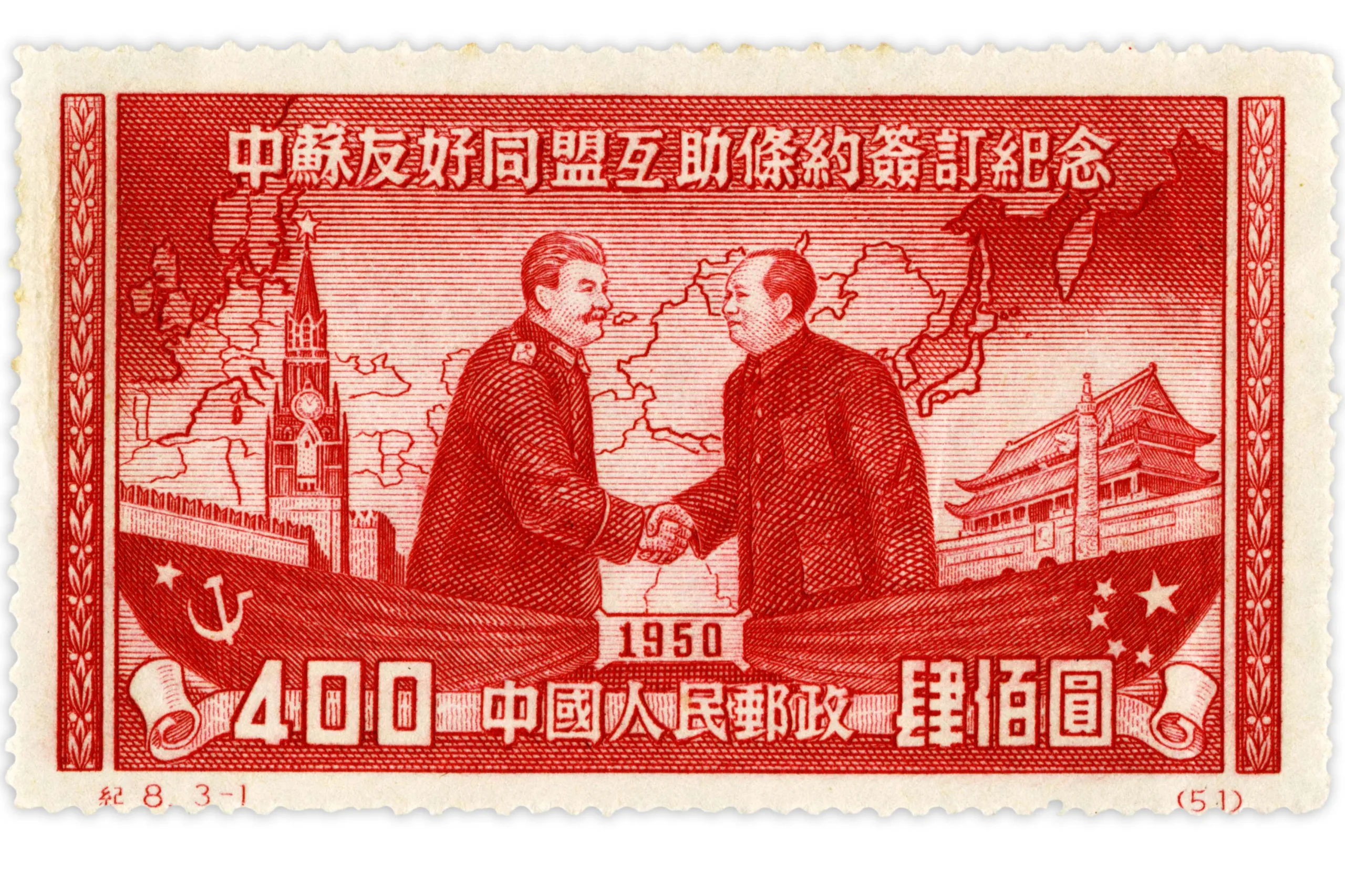
Mao’s seizure of power only added to the confusion and disorientation amongst Chinese Trotskyists. For a time after 1949, Peng’s Revolutionary Communist Party of China maintained that Mao’s government was merely a new bourgeois Bonapartist regime, rife with contradictions, and that it was pushing China towards involvement in a third world war.[19]
Wang Fanxi, on the other hand, adopted Max Shachtman’s theory of ‘bureaucratic collectivism’ that saw Stalinist regimes as a new form of class society, drawing the conclusion that revolutionaries should not defend these regimes against imperialist aggression.[20] Only years later did Wang abandon this confused idea.
No clarification could be hoped for from the leadership of the Fourth International either, which had the same mechanical approach. James Cannon, the head of the Socialist Workers’ Party in the USA, did not acknowledge that capitalism had been overthrown in China until as late as 1955.
In contrast, Ted Grant immediately celebrated the Chinese Revolution as the second greatest event in history after the Russian Revolution. Whilst welcoming the revolution, however, Grant warned that the Stalinist nature of the CCP regime – its complete lack of workers’ democracy, the existence of a privileged bureaucracy, and its outlook of ‘socialism in one country’ – would ultimately threaten the gains of the revolution. Rather than genuine socialism, Grant warned that:
“… only a horrible caricature of the Marxist conception of the revolution will result because of the leadership of the Stalinists. […] Undoubtedly, tremendous economic progress will be achieved. But the masses, both workers and peasants, will find themselves enslaved by the bureaucracy.”[21]
Unless the workers of China took power through a second – political – revolution, then at a certain stage a layer of the bureaucracy would be incentivised to restore capitalism. Hence Trotsky’s ideas on China, genuine Marxist ideas, retained all of their relevance as the only means of safeguarding the gains of the revolution by preparing the forces to lead such a political revolution.
With these ideas, the best elements of Chinese Trotskyism could have begun the painstaking work of rebuilding their forces and presenting the genuine ideas of Marxism in China. However, given their inability to understand the developments that were taking place, and their lack of a unified perspective, the scattered and repressed Chinese Trotskyists were extinguished in mainland China in the 1950s.
Thereafter, the Chinese Trotskyists became a marginal force that lasted in Hong Kong for a few decades, and underwent further splits amongst themselves. Today, all organisations that directly descended from the original Communist League of China have completely disappeared.
Legacy
Although this article focused on the key theoretical errors that the Chinese Trotskyists made in their three decades of activity, we recognise that these comrades were building in incredibly complicated and difficult conditions. Most of them were thrown into this situation with very little time or material with which to educate themselves in genuine Marxist ideas. All they had was a burning desire to liberate mankind and the willingness to barrel through all obstacles.
Amongst the best of them, there was not a shred of disdain for theory. As said, they strenuously translated and produced the theoretical materials they could find into Chinese, and studied them carefully. Unfortunately, however, none of them were able to rise to the immense political challenges which confronted them in the period following the Second World War.
Today, Trotsky’s ideas have not lost an ounce of their relevance to China. Capitalism has now been restored, under the leadership of the CCP, while hundreds of millions of Chinese proletarians and peasants are oppressed and exploited by their national bourgeoisie.
The importance of the future Chinese revolution for the world will be even greater than the last. China is now the world’s second most powerful imperialist power, and is now home to the largest proletariat in the world.
A month prior to his assassination by a Stalinist agent, Trotsky received the news that the Chinese translation of his History of the Russian Revolution was about to be published. Trotsky described receiving this news as “a holiday for me”, and began to pen a preface to this edition. Tragically, the preface could not be finished before Trotsky’s untimely demise, but in the draft preserved by Trotsky’s partner Natalia Sedova, we find the following remark:
“Only revolutionists, tempered revolutionists enriched by the experiences of the past, will be able to rise to the level of great events. The Chinese people are destined to occupy the first place in the future destinies of humankind.”[22]
The Chinese Trotskyists valiantly took up their duty as such revolutionists, but through tragic circumstances they were not able to succeed. It is up to the successors of their revolutionary valour to finish the fight.
References
[1] 李大钊,“十月革命与中国人民”,November 7 1922,Wikisource,https://zh.wikisource.org/zh-hans/%E5%8D%81%E6%9C%88%E9%9D%A9%E5%91%BD%E8%88%87%E4%B8%AD%E5%9C%8B%E4%BA%BA%E6%B0%91
[2] B Archer (trans.), Second Congress of the Communist International. Minutes of the Proceedings, Vol. 1, New Park Publications, 1977, pg 181
[3] 中国国民党中央执行委员会农民部土地委员会报告, June 1927, 摘自《第一次国内革命战争时期的农民运动资料》,人民出版社,1983年12月,https://www.marxists.org/chinese/pdf/history_of_international/china/1.pdf
[4] “ 对于托洛茨基同志态度之议决案”,12371.cn
[5] 郑超麟致双山信,《谎言与真实:对于历史事实的两种态度——评彭述之》,信达出版社,香港,1984,摘自中文马克思主义文库,Marxist Internet Archive
[6] L Trotsky, ‘To the Chinese Left Opposition’, Writings of Leon Trotsky 1930-31, Pathfinder Press, 1973, pg 132
[7] F Glass, ‘The Communist League of Chine’, Revolutionary History, Vol.2 No.4, 1990
[8] L Trotsky, ‘On the Sino-Japanese War’, Leon Trotsky on China, Pathfinder Press, 2022, pg 726
[9] ibid.
[10] Chen D, ‘陈独秀给托洛茨基的信’, 3 November 1939, Marxist Internet Archive, our translation
[11] G Benton,’就唐宝林《中国托派史》访问王凡西’, 摘自中文马克思主义文库, 1996, our translation
[12] Peng S, ‘Trotskyism in China’, Revolutionary History, Vol.2 No.4, 1990
[13] Wang F, ‘Problems of Chinese Trotskyism’, Revolutionary History, Vol.2 No.4, 1990
[14] L Trotsky, ‘Peasant War in China and the Proletariat’, Writings of Leon Trotsky (1932), Pathfinder Press, 1973, pg 197-198
[15] Wang F, “在战争与革命的日子里”,《双山回忆录》 , 1957,摘自中文马克思主义文库,our translation
[16] Peng S, ‘The Causes of the Victory of the Chinese Communist Party over Chiang Kai-shek, and the CCP’s Perspectives. Report on the Chinese Situation to the Third World Congress of the Fourth International, August-September 1951’, in G Benton (ed.), Prophets Unarmed: Chinese Trotskyists in Revolution, War, Jail, and the Return from Limbo, Haymarket Books, 2017, pg 950
[17] T Grant, ‘Reply to David James (Spring 1949)’, The Unbroken Thread, Fortress Books, 1989, pg 301
[18] ibid. pg 302
[19] 中共统治与我党底任务, 15 September 1951, Marxist Internet Archive
[20] 王凡西,“苏联与社会主义”, Marxist Internet Archive
[21] T Grant, ‘Stalinist land programme wins peasants. Chiang’s conscripts roped to prevent escape’, Socialist Appeal, No. 66, January 1949, pg 1
[22] L Trotsky, ‘China and the Russian Revolution’, in G Benton (ed.), Prophets Unarmed: Chinese Trotskyists in Revolution, War, Jail, and the Return from Limbo, Haymarket Books, 2017, pg 945