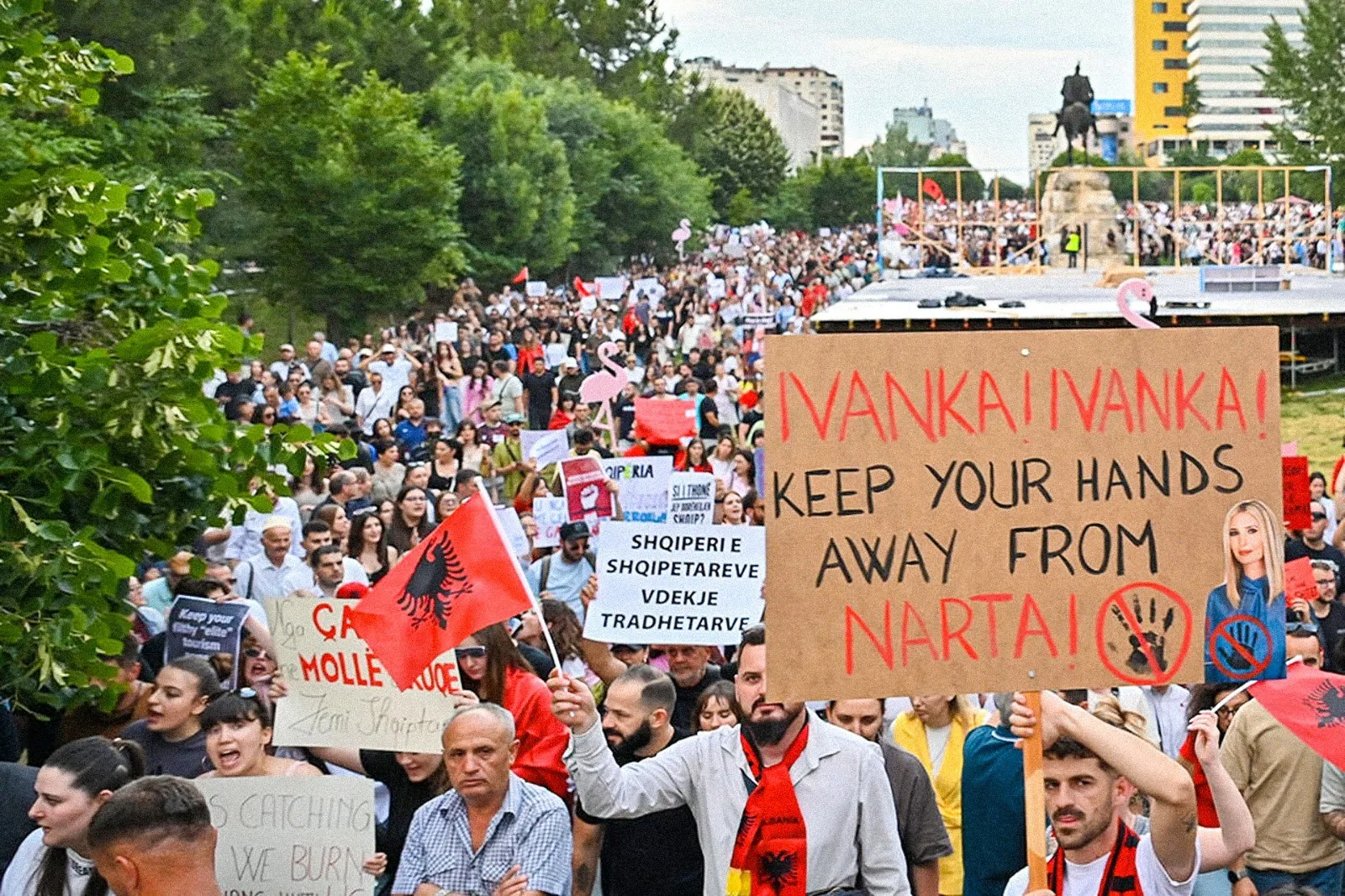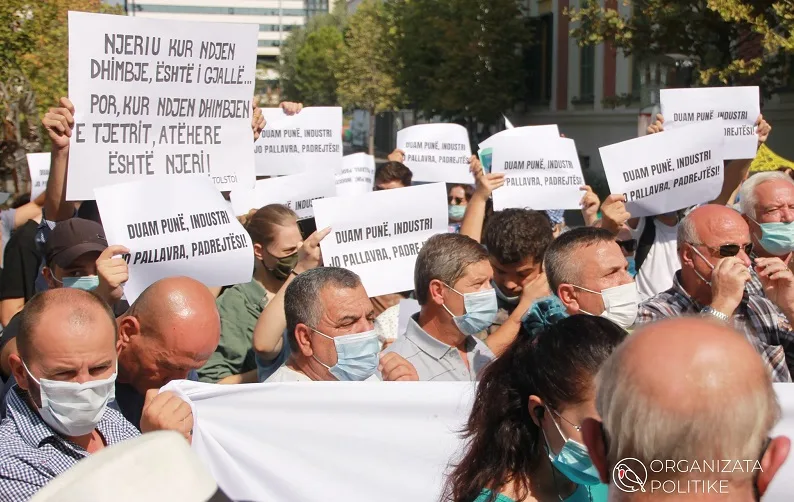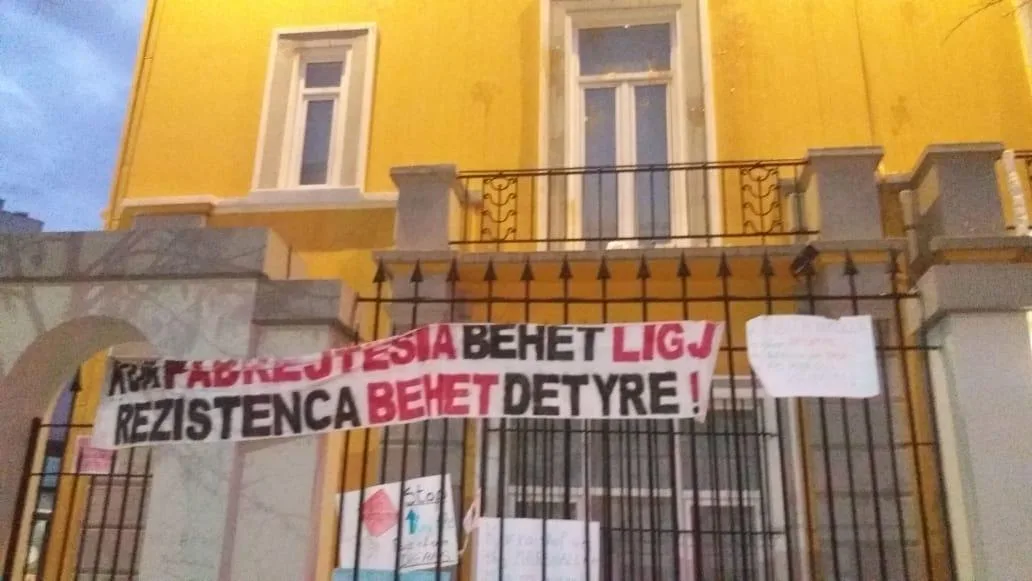
When the Flamingo Revolution began five months ago, the Albanian masses set out with a clear intention – to keep the protests peaceful. But five months on, very little had been achieved. As the movement began to ebb, Prime Minister Edi Rama continued to smear demonstrators as “foreign agents” in an effort to discredit and demoralise them.
But for the last ten days, taking inspiration from the revolt in France, the students and youth of Albania have breathed new life into the movement. They have taken to the streets, continuing with the slogans of the Flamingo Revolution: “Rama for prison, [opposition leader] Berisha for prison!” and “Albania belongs to the Albanians, death to the traitors!”
But another demand has also come to the fore: “Albania wants revolution.”
“When the youth awaken, the state trembles”
After five months of peaceful protests earlier this year, the students returned to their campuses at the start of the academic year to find the same crumbling conditions and bleak prospects that they had left them with.
They poured into the streets, joining the protestors already there. Immediately they were met by the riot police. Protestors began to dig up paving stones from the cobbled paths to hurl at the police, who responded with tear gas, water cannons, and batons.
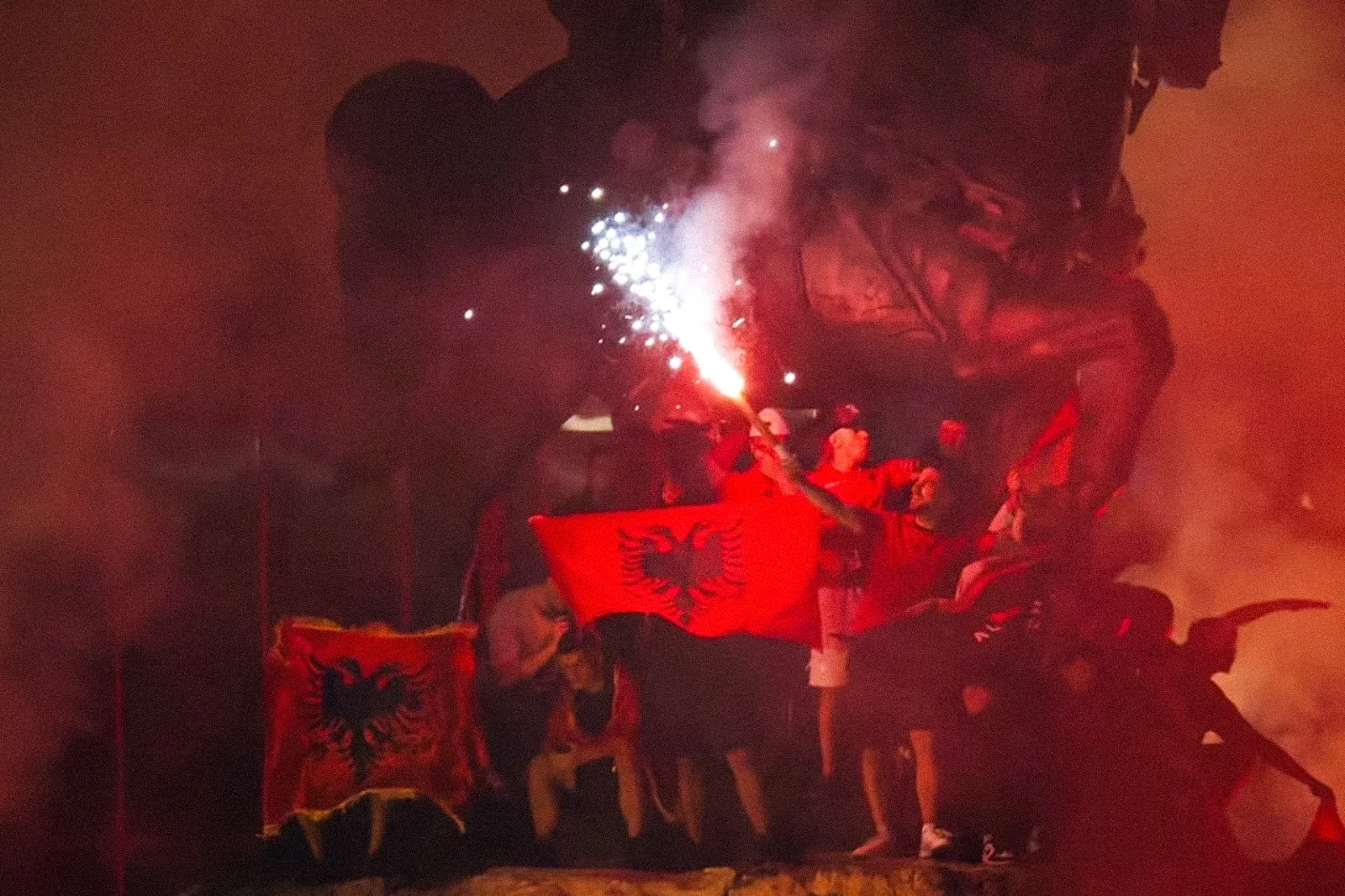
The next day, 14 October, the Ministry of Education building was up in flames. Hundreds of students continued to rally outside the ministry, ripping out nearby fencing and using it to block the streets. This escalation saw the police begin to use rubber bullets on protestors, to which they responded with bricks and fireworks.
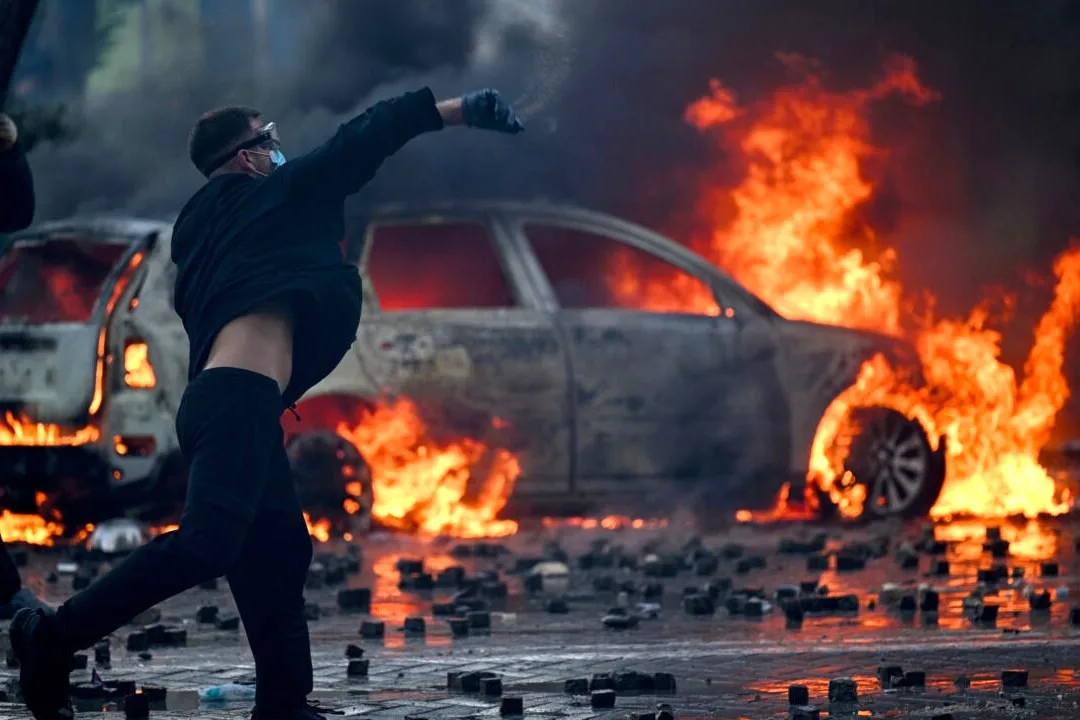
The disproportionate violence from the state has only strengthened the resolve of the youth. A video went viral in which a young student is dragged away by the police, as his broken leg dangles in the air. But this is not, as Rama has chalked it up to, because the youth out on the streets are “hooligans” looking for a fight. These students had exhausted themselves for five months, screaming demands at peaceful protests that fell on deaf ears. As one protestor puts it:
“For 135 days we protested without masks. But when the government gives us nothing in response, what are we, as the youth, supposed to do?”
The movement spreads
Over the last week, many more government buildings and police stations have been attacked. When protestors – many as young as 14 – are interviewed, many reveal that they are not even students. When asked why they aren’t in school anymore, they all give the same reason: what’s the point?
These teenagers have seen what awaits them in the country’s education system: corruption. They have accepted that they will end up emigrating in search of a better life, so why would they waste time on schooling?
So it is no wonder that the protests outgrew Tirana and its university students. Very quickly, secondary school students began to break through the gates of their schools, showing solidarity with the universities, because they knew the same bleak prospects await them.
After just three days, protests had spread far beyond the capital, to Elbasan, Shkodra, and Korça. After watching the students engage in street battle after street battle, the professors and academics, for the first time since the movement began, have now joined the students.
Rama’s illusions of grandeur
Since the beginning of the Flamingo Revolution, Rama has made every attempt to discredit and demoralise the movement. He hopes that by accusing demonstrators of being “foreign agents” and scaring them into submission with brutal repression, he can pretend all is well in Albania, so as to not jeopardise the country’s EU ascension.
But the chants of the youth in the streets have come back to haunt him. Rama is pulling out every weapon possible in an attempt to return Albania’s streets to normality, but nothing in his arsenal has made a difference. The one thing that would get the youth off the streets is the one thing Albanian capitalism cannot afford to offer them – a future. So instead, Rama has taken to clutching at the whip of counter-revolution.
On 19 October, Rama held a press conference with senior State Police officials, where he announced that for the “resistance, sacrifice, and courage” they have shown, monthly police wages will be raised to €2,500 in the coming year.
As demonstrators berate them for being mercenaries and meat shields for the state, police morale is at a critical low. While Rama spoke of the immense stress the police are under, the camera panned around the room to show officials with black eyes and their faces covered in bandages.
But this response has done nothing but pour fuel on the anger in the streets, as ordinary Albanians continue to face some of the lowest wages in the whole of Europe. The youth recognise that this is not a sign of strength from the state, but weakness. As a young protestor puts it:
“For the police, I have a question: are you ready to give your lives for €2,500? Because, I swear to God, we are ready to give our lives for Albania.”
The primary tool of the protestors has been the stones they have pulled from the cobbled streets. As the Prime Minister continues to run out of options, it seems he is prepared to quite literally destroy the very foundations of Albania to silence the protestors. During the night, excavators have been sent into Tirana to dig up stones from the streets, in an effort to disarm the students.
But for every excavator he sends, there is another group of elderly Albanians that stand behind protestors digging up stones to hand to the youth, so they may fight for their futures at the barricades.
Gen Z in revolt
As we’ve seen in the movements in France, the violence unleashed on young protestors has evoked sympathy and indignation from broader layers of the working class, and helped pull them into the struggle.
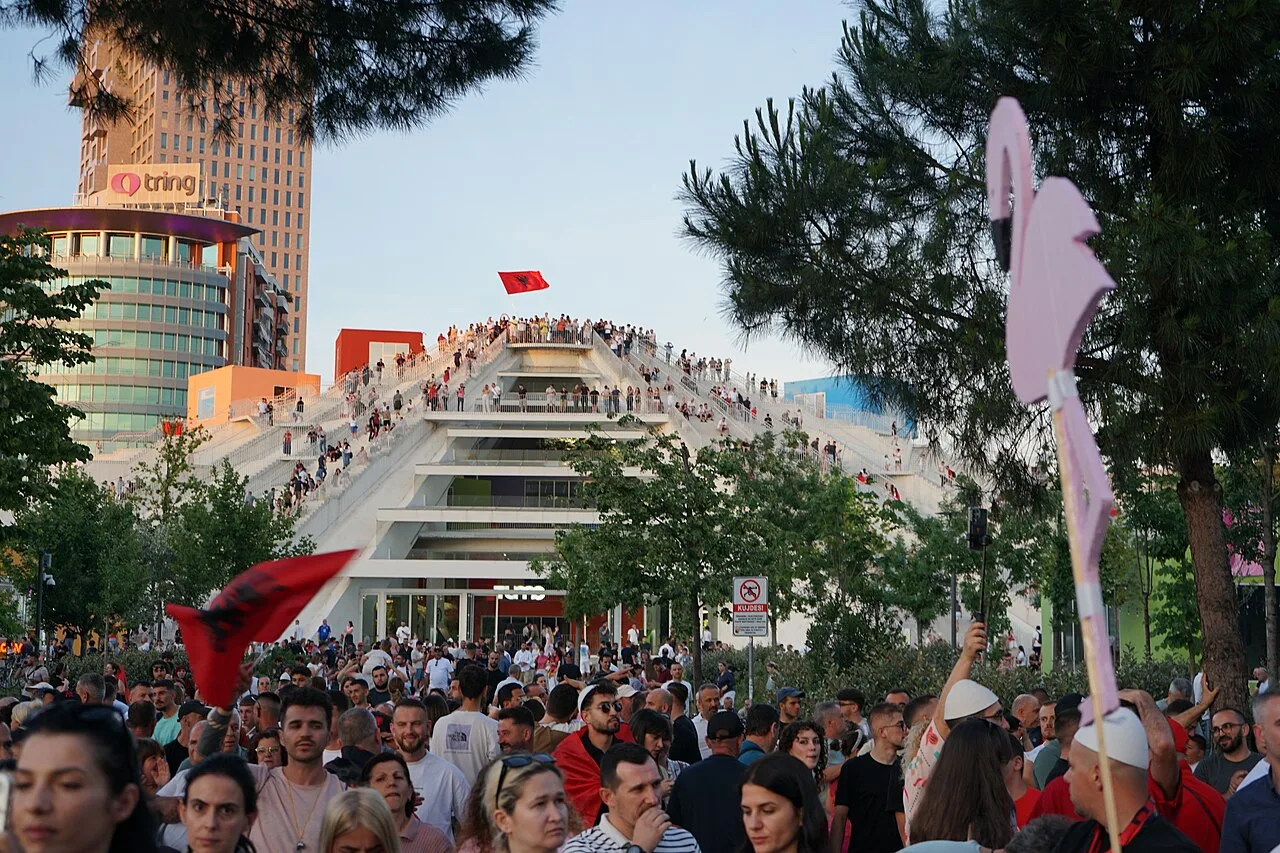
As more Albanian youth have their limbs broken and are chased down in the streets by police cars, the exact same process is unfolding there. As an elderly woman put it in an interview:
“Set the whole of Albania aflame, along with the police. If the youth die, then we will die with them. May Edi Rama leave immediately. May Berisha leave immediately. The youth will wait in line. Let the new generations take over the state! […] Those criminals! By God, may they all die.”
Rama’s regime is on its knees. For every stone he removes, the youth have already begun preparing hundreds of molotov cocktails. The weakness of the Albanian state is no longer up for debate, but the question is – what happens if Rama does fall?
The youth are not just demanding that Rama falls, they want to bring down the entire political establishment. And as they continue to beat down the doors of parliament with makeshift battering rams, this question cannot go unanswered. Sections of the movement have begun to put forward the idea of a student-led party, composed of ordinary Albanians, taking inspiration from the Gen Z revolutions last summer.
A new political party is precisely what is needed, but it must be a party of a completely different type to the old parties: a revolutionary vehicle for the masses, rather than an organ of organised patronage and corruption.
It must decisively set itself apart in two ways.
Firstly, by its programme, based upon breaking with capitalism, and proving the youth a future by nationalising the ill-gotten wealth of the imperialists and their cronies, the Albanian capitalist class.
And secondly, by a clear orientation towards the working class, the only class with an interest in waging a struggle against the bosses to the very end. They must be drawn into any such party.
As we’ve seen with the student leaders elsewhere in the Gen Z revolutions, if these movements fail to break with the system, the old establishment has many means of absorbing them into their own apparatus – the historical crisis of humanity has once again been reduced to the crisis of revolutionary leadership.