The integration of the economies of the Republics under a common plan was beneficial to all the peoples of the USSR. The advantages were particularly evident in the formerly backward Republics of Central Asia. A Western journalist commented on the remarkable transformation in this area:
Certainly, Central Asia has seen a stupendous economic and social transformation in the past 70 years. In 1917 these steppes and mountains were inhabited by a virtually illiterate population, living in romantic but often abject poverty. Today, in Tashkent (population two million) the old silk route is transected by a Moscow-style metro, and a 200-acre botanical garden miraculously evokes, in what was once semi-desert, the illusion of a Buckinghamshire woodland. (The Observer, 30/3/86.)
But this was only one side of the picture. The Stalinist regime created a whole series of miniature bureaucracies in the Republics, which accurately reproduced all the negative features of the original from which they were copied. The national bureaucracies in the Republics gathered increasing power into their hands thanks to the successive measures of decentralisation pursued under Khrushchev and Brezhnev. Decentralisation without the check of workers’ democracy led to a flowering of unprecedented corruption. For example, one local bigwig in Turkmenistan, Gapurov by name, was pensioned off at the Turkmen Party Congress in December 1982. “Under him cadres were often promoted to leading posts on grounds of personal loyalty, family ties or birth place,” reads a report of the Congress.
He had created “a breeding ground for nepotism, flattery and careerism, created an atmosphere of laxity and back scratching, and gave rise to servility and irresponsibility”. (Financial Times, 27/3/86, my emphasis.)
This was not untypical, but Gapurov was unlucky to be found out.
Venal, inefficient and oppressive, these local bureaucracies also displayed the same chauvinist tendencies that are an inevitable feature of all brands of Stalinism. In order to bolster their own power and privileges, they leaned on the local chauvinists. Arrogant, narrow-minded and without a shred of internationalism, they deliberately played up to nationalist sentiments. Local bureaucracies battened themselves onto national grievances seeking to develop their power basis. The consequences of this were disastrous, as we saw later with the vicious fratricidal wars fought out between Azeris and Armenians, Georgians and Abkhazians, Trans-Dniester Russians and Moldovans, the national hatred against the Russian minorities in the Baltic States, and so on.
Gorbachev at first attempted to keep the USSR intact by blaming the policies of the Stalinist era for deforming Lenin’s ‘unique’ creation of a federal state in which national and cultural rights had been granted to peoples deprived of them under tsarist rule. He stated he would reassert Lenin’s nationalities policy, including the basic right to ‘self-determination’. However, Gorbachev claimed it was simplistic to describe self-determination solely as a right of secession (a right already ‘guaranteed’ to the Republics theoretically by the 1977 Soviet constitution). He described it more in terms of a “process of affirming national dignity, developing language and culture, consolidating political independence and advancing economic and social progress”.
Gorbachev warned:
It should be borne in mind that more than 60 million people (21 per cent of the total population) live outside their national republics as a result of economic, social and demographic processes and inter-ethnic migration. Naturally it is impossible to solve any problems without taking into account the legitimate interests and rights of fellow citizens.
In practice, Gorbachev’s line had nothing in common with Lenin’s. It echoed the opportunist position of Otto Bauer and the ‘Austro-Marxists’ who, before the First World War advanced the slogan of ‘national-cultural autonomy’ as an alternative to Lenin’s policy of the right to self-determination. What was really required was a genuinely voluntary union. But this was only possible on the basis of a regime of workers’ democracy.
With the slowdown and deepening crisis of Stalinism, together with the ‘reforms’ under Gorbachev, which partially lifted the bureaucratic central control, centrifugal tendencies were inevitably released which burst forth with extreme force, breaking apart the old Soviet Union and opening up a period of ethnic and nationalist turmoil. In order to further their own interests, some of these conflicts were stirred up by the local bureaucracies, basing themselves on nationalism, eager to assert their independence from Moscow. The breakaway of the Baltic republics gave the others the green light. One by one, the Republics came out in favour of independence.
Once the fear of Stalinist terror had diminished, the crisis of Stalinism led rapidly to the break-up of the USSR in December 1990. The speed with which this occurred is sufficient proof of the unsoundness of the previous relationship. This was the final punishment for decades of national oppression by the Moscow bureaucracy. Whereas Lenin’s careful policy on the national question resulted in the adhesion of almost all the oppressed nationalities to the revolution, the abandonment of Lenin’s policy under Stalin and his successors had the opposite effect. As soon as they had the opportunity, they broke away from the Union.
The move towards capitalism and the unleashing of all the pent-up tensions prepared the way for terrible bloody conflicts within the former Soviet Union. It was only recently, after five years of turmoil and Russian occupation, that some kind of truce was declared in the bloody conflict between Azerbaijan and Armenia over the predominantly Armenian enclave of Nagorno-Karabakh. Both the Armenian and Azeri bureaucracies are concerned for their own power, prestige and privileges, and not the peoples of both areas. The Azeri bureaucracy denied the Armenian majority linguistic rights when they controlled the enclave, and encouraged pogroms against the Armenians in Sumgait and Baku.
Yet there is nothing inevitable about the conflict between Azeris and Armenians. After the Revolution, good relations were established between the two peoples. So much so that when in 1923 the leader of the Azeri CP offered to return Nagorno-Karabakh to Armenia, the offer was declined. The issue appeared irrelevant. Only after decades of Stalinist misrule, when every local bureaucracy attempted to strengthen its base by appealing to the nationalist sentiments of the most backward layers of the population, was the basis laid for the return of the old demons.
Explosive developments have taken place in Moldavia, Georgia and Chechnya, which the Russian government has been incapable of solving even by force. Moreover, the break-up of the USSR gave rise to acute economic problems given the extreme interdependence of all the Republics after decades of centralised planned economy. As a result, both centrifugal and centripetal tendencies are at work. Only the Ukraine has a relative economic basis for independence, but even there, the Ukrainian economy is still tied by a thousand links to that of its powerful neighbour.
Decades of Stalinist repression has produced a powerful urge of the peoples to be free from the yoke of Moscow, but, as Gorbachev remarked, the populations of all Republics are mixed. The chauvinists of each Republic display the most brutal intolerance towards the national minorities in their own states, who, in turn, are terrified of becoming oppressed minorities in small newly ‘independent’ Republics. The Baltic nationalists combine a vicious chauvinistic attitude to the Russian, Polish and other nationalities with the most obsequious kowtowing to Western imperialism.
Experience has shown that the break-up of the USSR in which the economies of all the republics were linked together, signifies a disaster for all the peoples. The situation is not viable. Sooner or later, one way or another, they will be reunited with Russia. If this is done on a capitalist basis, the national oppression will be enormously intensified in what will then be an imperialist relationship. But the experience of ‘standing on their own’ has been so disastrous that even a great proportion of the people of the Ukraine, with gritted teeth, would probably prefer to go back. Only a regime of workers’ democracy would guarantee genuine freedom for all the republics in a free federation with a common plan of production, in which control would be in the hands of the working people, with the fullest autonomy and a guarantee of the right to self-determination.
Endnotes
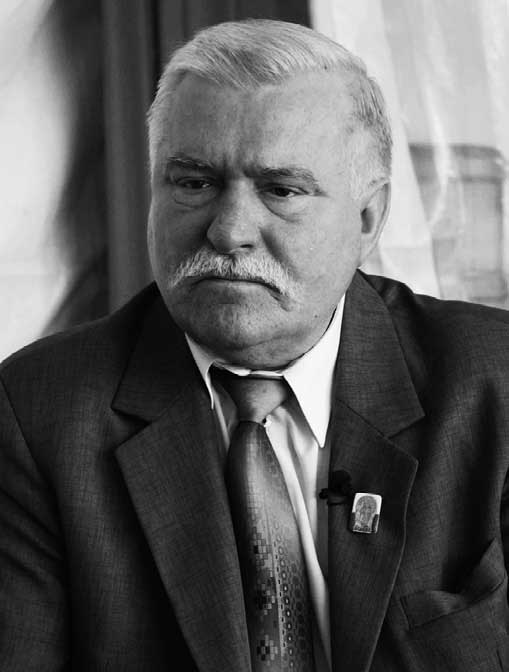
37. Lech Wałesa.
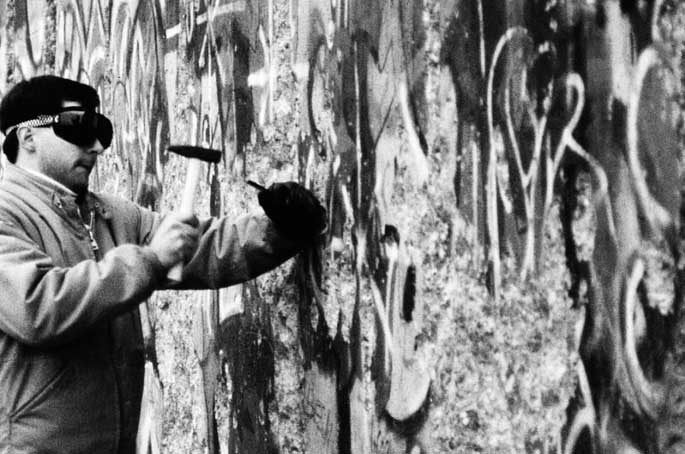
38. Breaking the Berlin Wall.