The first part of the book deals with the Russian Revolution and draws an historical balance sheet of October, answering many of the criticisms, distortions and misconceptions that have surrounded it for decades. In the course of this section there are a number of chapters which provide a detailed exposition of the Marxist theory of the state in relation to the transitional regime that emerged from the October Revolution. The rise of the bureaucracy and the Stalinist political counter-revolution is traced through all its stages.
This part, especially the critique of the theory of ‘state capitalism’ (including a valuable appendix on the law of value in the transitional period) presents more difficulties for the reader than other parts of the book. But it is essential to grasp these points in order to understand the process as a whole. It should be pointed out that these sections were originally published in the late 1940s in an important work by Ted called The Marxist Theory of the State. In order to make this and other material available in book form, a considerable amount of editing was necessary. Any variations in style which the reader may notice are entirely due to this.
In the light of subsequent experience, it is not necessary to alter what was written at the time concerning the reasons for the crisis of Stalinism, and the inevitability of its collapse. When the book was written, the movement towards capitalism in Russia had not yet been carried to a definitive conclusion, and Ted strongly believed that it could be reversed. The movement towards capitalism still had an unfinished character. Different outcomes were possible. One might add that this view was also held by the bourgeois analysts.
When one reads today what the strategists of capital were writing at the time it is very clear that the question of the re-establishment of capitalism in Russia was not at all settled once and for all. On the contrary, in the period immediately following the collapse of 1998 it could easily have been reversed. This was clearly understood by the serious representatives of international capital.
The Independent on Sunday of 23 August 1998 reported Marcel Cassard, a former International Monetary Fund official now working for Deutsche Bank in London, as saying, “the measures taken could lead to the re-nationalisation of the banks. If we get to that point, that’s not good.”
The most significant analysis was provided in the August 1998 issue of the magazine Transitions. This is a magazine that studies “Changes in Post-Communist Societies” published in the Czech Republic, but which also acknowledges support from such institutions as the German Marshall Fund of the United States. In one article analysing developments in Russia we read the following:
By autumn 1997, a banking war that became the main constituent of Russian internal politics began. The conflicts between different financial groups over attractive property, even if conducted with underhanded methods and with the deployment of compromising materials and the financiers’ personal contacts reflected, so it was believed, the growing power of the Russian bourgeoisie. It was reckoned that this bourgeoisie had enough resources not only to take over the property but to keep it in working order, ensuring the growth in the economy and the preservation of the state.
Today, it is clear that the role of the bourgeoisie was overestimated. The ‘new Russians’ and the rest of the economy live separate lives. It is also clear that the economy has still not reached a turning point, which it will have to do in the near future.
What is most interesting in the same article is a section called ‘Back to central planning’. There we read the following:
The long-term prognosis for the Russian economy does not look rosy. It is possible the country will be obliged to return to the system it left behind ten years ago, central planning.
An economy built on state property would probably also be highly inefficient as it was before, in Soviet times. But is there an alternative? Russia’s economic reformers believed that private property would magically produce a rise in efficiency and an increase in production. But as we have seen, this growth did not take place.
Despite these concerns, the movement towards capitalism swept all before it and the Stalinist regime was consigned to the dustbin of history. The final part of the book has therefore been completely revised in light of developments that occurred after the first edition had seen the light of day. Subsequent developments enabled us to fill in many gaps in our knowledge, correcting mistakes and making a definitive judgement concerning the class nature of Russia, which was still an unfinished process at the time of writing. Much of what was written then is now out of date, and has been replaced by a new afterword written by Alan Woods, who collaborated closely with Ted Grant for many years.
To this day, one would seek in vain for an explanation of the real causes of the crisis of Stalinism in all the writings of the bourgeois, reformists and ex-Stalinists, not to speak of the myriad sects on the fringes of the labour movement. Yet they were analysed in advance in the documents written by Ted in International Perspectives, as early as August 1972. Unfortunately, at the time this material was read by only a small number. The present work will make this detailed and profound analysis available to a wider public. The present work not only asks questions, but provides answers.
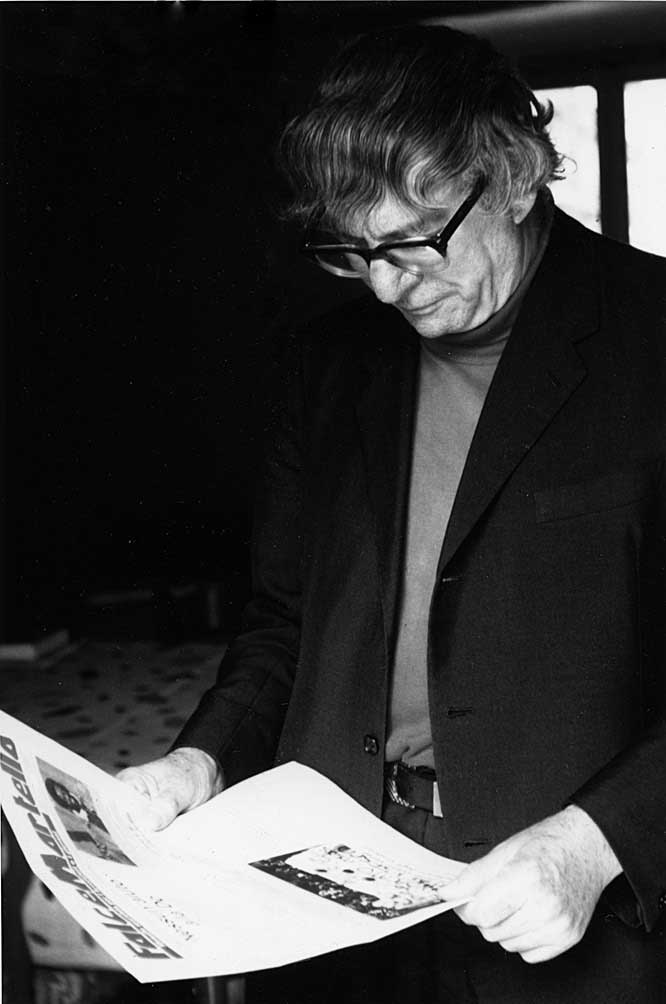
1. Ted Grant.