[Read the original reports on the Marxist Schools in Los Angeles, Chicago and New York City at communistusa.org]
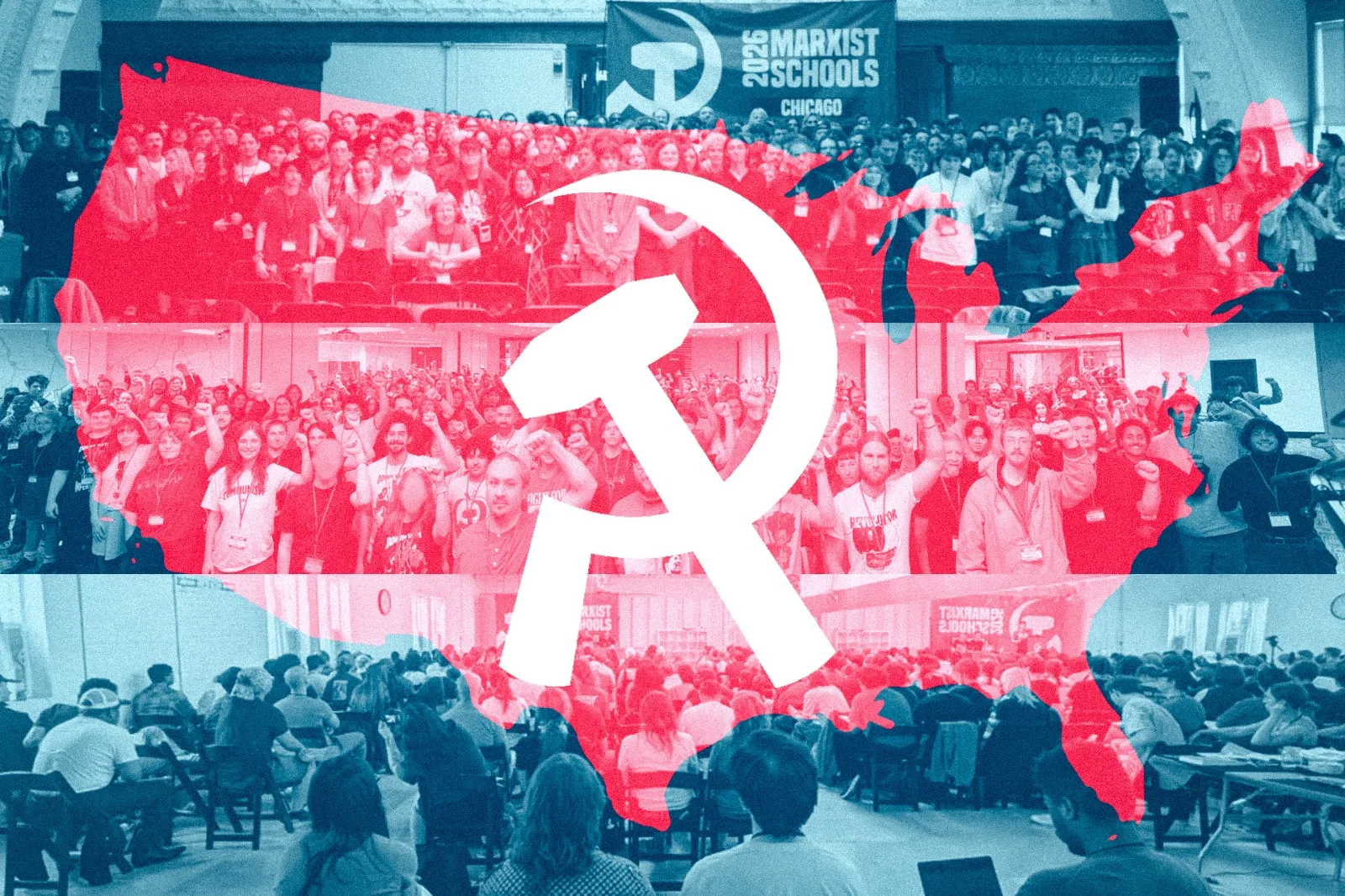
Over the course of the last month, the Revolutionary Communists of America have held a series of Marxist Schools in Los Angeles, Chicago, and New York City. Across 33 discussions on revolutionary theory and practice, the schools have helped steel over 800 attendees in the ideas needed to overthrow capitalism in the belly of the imperialist beast.
The Marxist Schools brought together a galaxy of talent from the rapidly growing forces of communism in the United States. At the event in New York City, John Peterson – executive editor of the RCA’s paper, The Communist – reflected on how far the RCA has come since the organisation’s first New York Marxist School in 2008, which hosted just ten people in a cold, windowless basement.
By comparison, this year’s school in New York City was attended by almost 400 people and was held “a stone’s throw from Times Square”! This is the result of years of patient work by comrades who committed their lives to building the party, overcoming all obstacles in the process.
This firm commitment to building the RCA was also on display at the Marxist Schools, which raised a combined total of over $32,000 from fundraising and raffles. But even this marvellous figure is dwarfed by the over $38,000 that comrades spent purchasing revolutionary literature at the events.
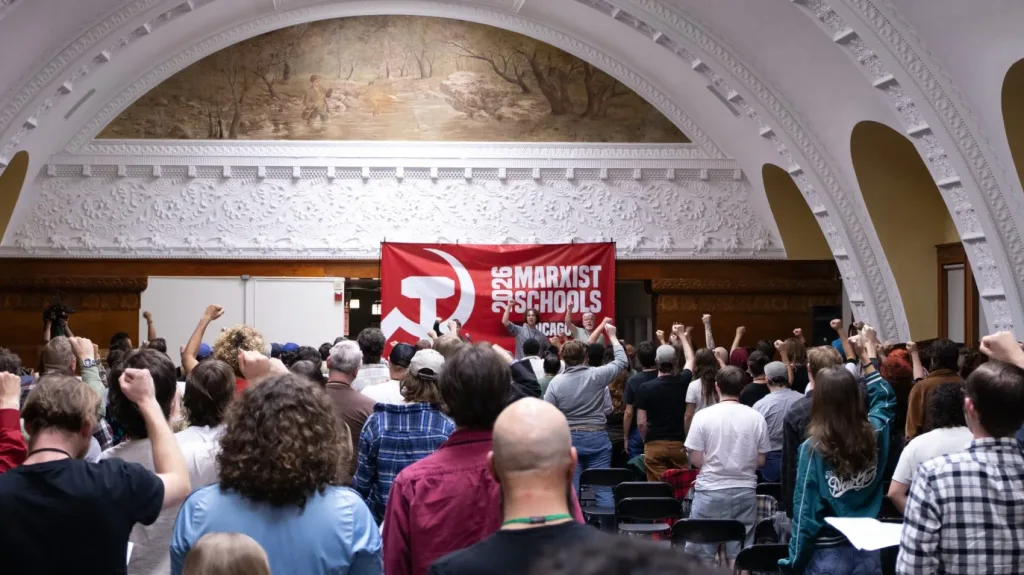
Indeed, all of the schools were characterised by an insatiable appetite for the ideas needed to put this decrepit capitalist system out of its misery once and for all. This is best shown by the breadth of discussions that were held.
All three schools opened with a talk on a classic piece of revolutionary theory.
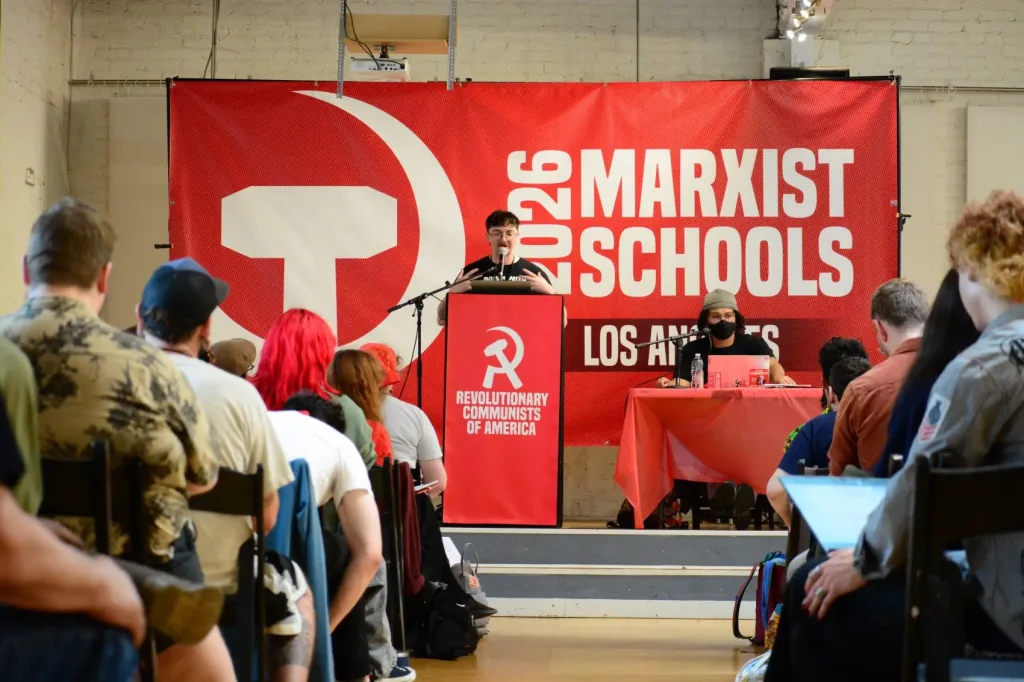
In LA, at the weekend’s opening plenary, John Peterson spoke on Lenin’s The State and Revolution, a masterpiece of Marxism. Drawing on the ideas of Marx and Engels and the concrete experience of proletarian revolutions, Lenin explained that, in the final analysis, the state consists of “special bodies of armed men.” The state’s monopoly on violence ensures the ruling class’s ability to exploit the vast majority of society.
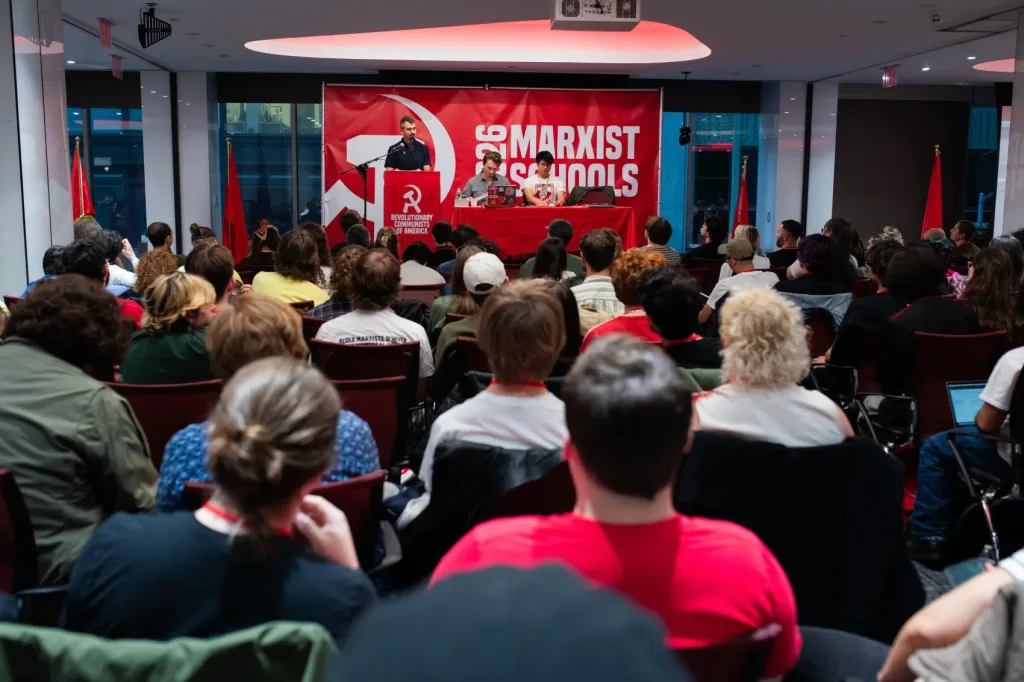
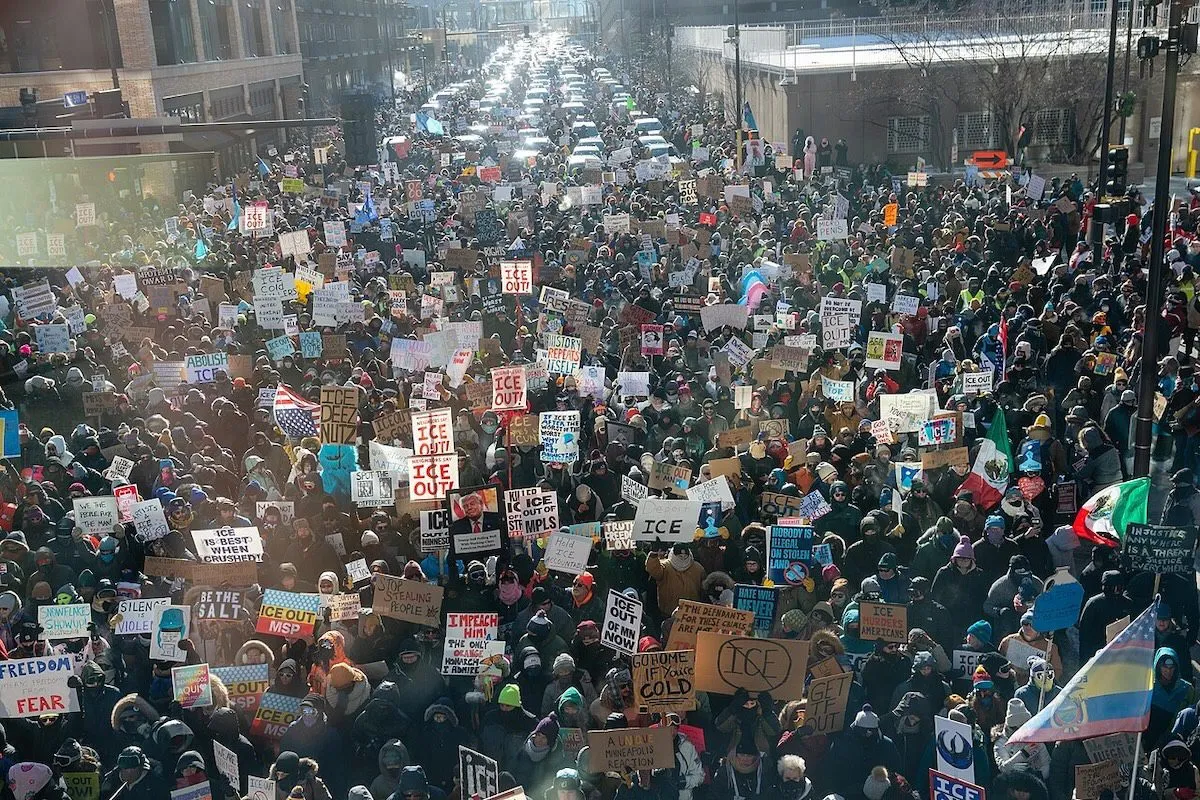
Recent struggles lent the discussion a particularly concrete character. Since Trump’s return to office, the naked force of the capitalist state has been on full display during the ICE offensives across the country, which sparked mass movements in California, Chicago, and Minneapolis–St. Paul.
In Chicago, the first session of the weekend was on The Communist Manifesto, which is more relevant today than when it was written 178 years ago. Every year, because of capitalism’s senile decay, more workers reject the system. In 2026, there’s an estimated 3.6 billion-person workforce worldwide – far more than in Marx and Engels’s day.
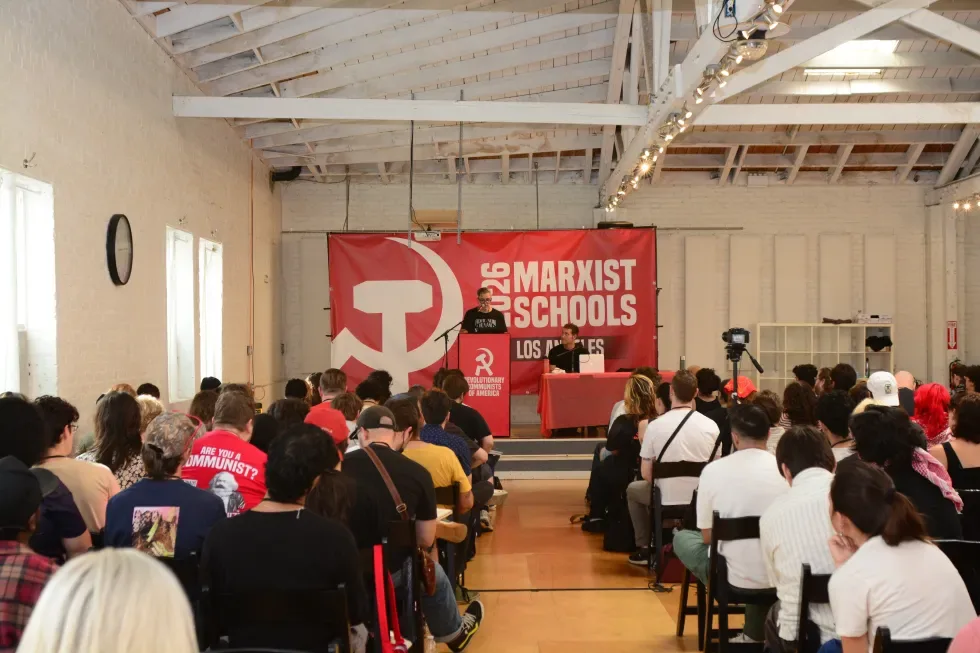
Millions are turning towards communism. To paraphrase Marx, the communists have “no interests separate or apart from those of the proletariat as a whole.” They are only distinguished by their ability to bring forward the common interests of the whole working class – independent of nationality, gender, or race. What they lack is training in the Marxist method, which is the purpose of the revolutionary party.
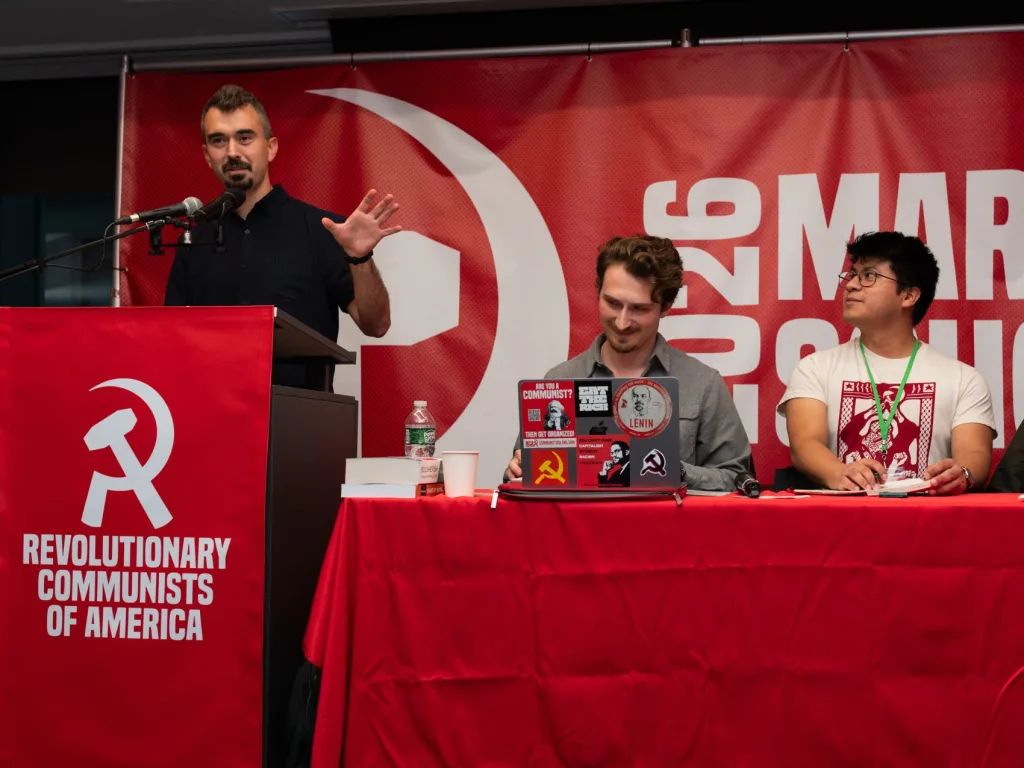
Finally, in New York City, the weekend opened with a discussion of Friedrich Engels’ excellent introductory work Socialism: Utopian and Scientific. The capitalist class and their apologists insist that socialism is a utopian pipe dream and incompatible with human nature. For Marxists, however, our conviction in the socialist transformation of society arises from a scientific study of capitalism’s development and its insoluble contradictions.
In the context of the deepening crisis of capitalism internationally, revolutionaries need a scientific understanding of the world to explain these developments and link up with the newest members of the proletarian vanguard. For this reason, the discussions of these masterpieces of revolutionary theory served as the anchor for all the talks that followed.
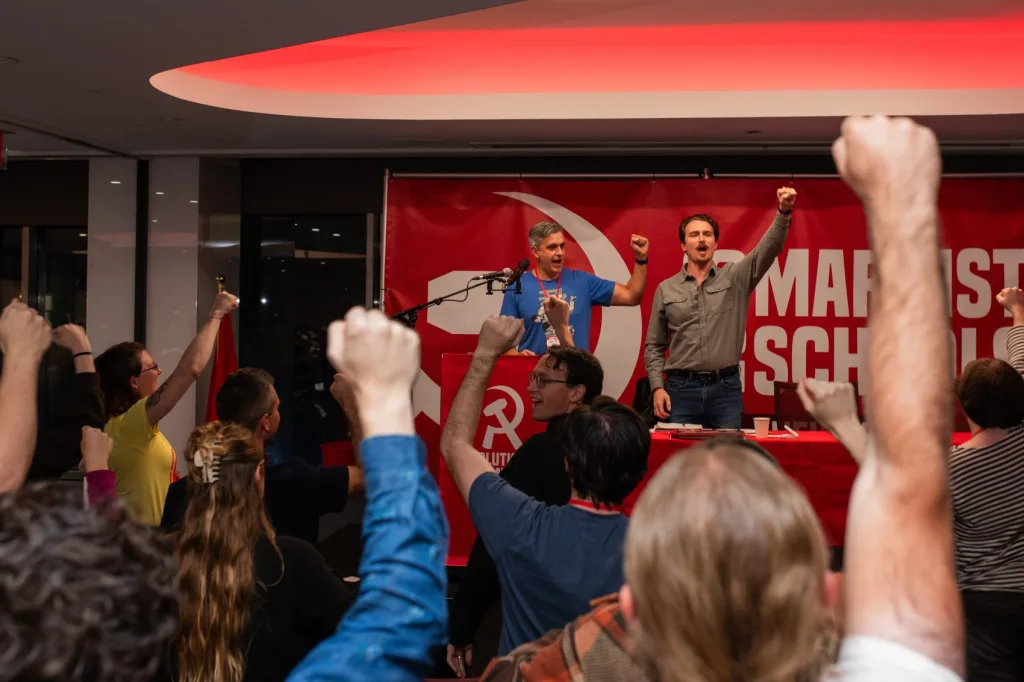
The following sessions dealt with the full breadth of what Marxism has to offer. Comrades spoke on topics including the 1919 Seattle General Strike, the Venezuelan Revolution, and the life of Eugene V. Debs. Other sessions tackled the Marxist theory of knowledge, artificial intelligence, and the origins of racism in the US.
But the method of Marxism is not restricted to analysing history, economics or philosophy. Multiple talks also tackled cultural questions such as Marxism and art, or music and the class struggle.
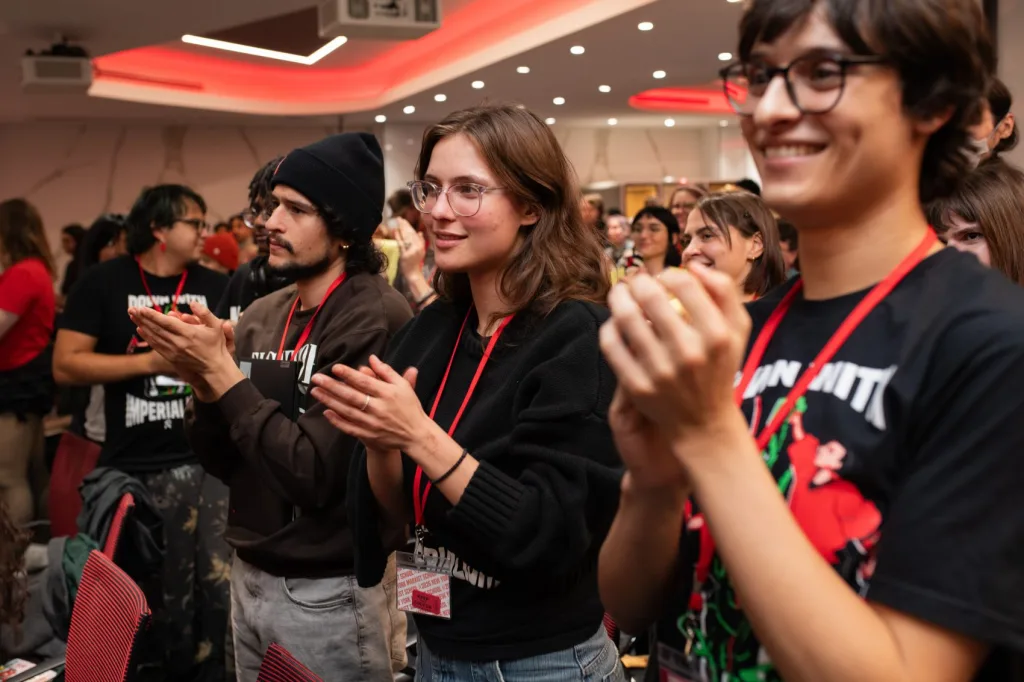
Overall, the Marxist Schools have shown that, despite the best efforts of Trump and the US ruling class, communism is on an unstoppable march across the country. As John Peterson explained, these schools were not merely an academic exercise. Marxist ideas are a guide to action. They keep us grounded amidst the ebb and flow of party building.
If we continue building upon the granite foundation of Marxism, there’s no reason we won’t succeed in preparing a force that will establish socialism in our lifetimes.